Kirjojen hintavertailu. Mukana 11 627 488 kirjaa ja 12 kauppaa.

Kirjahaku

Etsi kirjoja tekijän nimen, kirjan nimen tai ISBN:n perusteella.

1000 tulosta hakusanalla Daniel M. Dorothy

Psychological and Psychiatric Issues in Patients with Chronic Pain
Part of the What Do I Do Now? Pain Medicine series, Psychological and Psychiatric Issues in Patients with Chronic Pain presents a variety of succinct case studies and "curb-side" consults on the complexity of chronic pain and its successful management. Chapters present models for understanding issues related to chronic pain within a psycho-social context, including cases on specific psychological or psychiatric issues, as well as broad considerations such as selecting among behavioral therapies options and the use of complementary therapies and non-opioid analgesics. Recognizing that most clinicians do not always have the time or resources to conduct the type of psychological assessment that each case may require, chapters focus on the key elements of each diagnosis, covering background information, assessment approach, treatment recommendations, and key points to remember.
How Health Care Can Be Cost-Effective and Fair

How Health Care Can Be Cost-Effective and Fair

Daniel M. Hausman

OXFORD UNIVERSITY PRESS INC
2023
sidottu
Methods designed to guide the allocation of healthcare so as to maximize population health have been criticized as fundamentally unfair. In a closer analysis of this ethical critique of the use of cost-effectiveness author Daniel M. Hausman responds to the main complaints about the unfairness of cost-effectiveness, while also recognizing that there should be other factors--especially in cases of discrimination--guiding health-related treatment. Central to How Health Care Can Be Cost-Effective and Fair is whether cost-effective allocation of healthcare violates ethical constraints. Several commentators argue that using cost-effective reasoning to guide the distribution of healthcare is fundamentally unfair, not just because it does not take distribution into account, but because it fails to prioritize the severity of illness and fails to give everyone, and especially disabled people and those from historically underprivileged populations, a fair chance of being treated. While Hausman recognizes the complexity and shortcomings of cost-effective reasoning, he maintains that it should be a leading principle in the allocation of health-related resources. In Hausman's view, many values--such as compassion, freedom, respect, and solidarity should govern healthcare in addition to promoting well-being and treating individuals fairly. In its efforts to promote population health fairly, healthcare should respond to and respect individuals' values and choices.
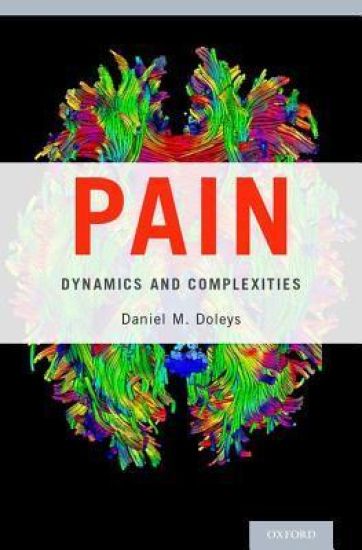
Pain: Dynamics and Complexities

Pain: Dynamics and Complexities

Daniel M. Doleys

Oxford University Press Inc
2014
sidottu
Despite the proliferation of pain clinics and various pain-oriented therapies, there is an absence of data supporting any substantial change in the statistics regarding the incidence, development and persistence of pain. As renowned pain clinician and scientist Daniel M. Doleys argues, there may be a need for a fundamental shift in the way we view pain. In this thoughtful work, Doleys presents the evolving concept and complex nature of pain with the intention of promoting a broadening of the existing paradigm within which pain is viewed and understood. Combining neuroscience, psychology, and philosophy of science, this book reviews the history of pain and outlines the current concepts and theories regarding the mechanisms involved in the experience of pain. Experimental and clinical research in a broad array of areas including neonatal pain, empathy and pain, psychogenic pain, and genetics and pain is summarized. The notion of pain as a disease process rather than a symptom is highlighted. Although there is a continued interest in activation of the peripheral nociceptive system as a determining factor in the experience of pain, the growing appreciation for the brain as the intimate 'pain generator' is emphasized. The definition of consciousness and conscious awareness and a theory as to how it relates to nociceptive processing is discussed. Finally, the author describes the potential benefit of incorporating some of the concepts from systems and quantum theory into our thinking about pain. The area of pain research and treatment seems on the precipice of change. This work intends to provide a glimpse of what these changes might be in the context of where pain research and therapy has come from, where it currently is, and where it might be headed.
The Pursuit of Unhappiness

The Pursuit of Unhappiness

Daniel M. Haybron

Oxford University Press
2008
sidottu
The pursuit of happiness is a defining theme of the modern era. But what if people aren't very good at it? This and related questions are explored in this book, the first comprehensive philosophical treatment of happiness in the contemporary psychological sense. In these pages, Dan Haybron argues that people are probably less effective at judging, and promoting, their own welfare than common belief has it. For the psychological dimensions of well-being, particularly our emotional lives, are far richer and more complex than we tend to realize. Knowing one's own interests is no trivial matter. As well, we tend to make a variety of systematic errors in the pursuit of happiness. We may need, then, to rethink traditional assumptions about human nature, the good life, and the good society. Thoroughly engaged with both philosophical and scientific work on happiness and well-being, this book will be a definitive resource for philosophers, social scientists, policy makers, and other students of human well-being.
Happiness

Happiness

Daniel M. Haybron

Oxford University Press
2013
nidottu
Happiness is an everyday term in our lives, and most of us strive to be happy. But defining happiness can be difficult. In this Very Short Introduction, Dan Haybron considers the true nature of happiness. By examining what it is, assessing its importance in our lives, and how we can (and should) pursue it, he considers the current thinking on happiness, from psychology to philosophy. Illustrating the diverse routes to happiness, Haybron reflects on contemporary ideas about the pursuit of a good life and considers the influence of social context on our satisfaction and well-being. ABOUT THE SERIES: The Very Short Introductions series from Oxford University Press contains hundreds of titles in almost every subject area. These pocket-sized books are the perfect way to get ahead in a new subject quickly. Our expert authors combine facts, analysis, perspective, new ideas, and enthusiasm to make interesting and challenging topics highly readable.
The Pursuit of Unhappiness

The Pursuit of Unhappiness

Daniel M. Haybron

Oxford University Press
2010
nidottu
The pursuit of happiness is a defining theme of the modern era. But what if people aren't very good at it? That is the question posed by this book, the first comprehensive philosophical treatment of happiness, understood here as a psychological phenomenon. Engaging heavily with the scientific literature, Dan Haybron argues that people probably know less about their own welfare, and may be less effective at securing it, than common belief has it. This is largely because human nature is surprisingly ill-suited to the pursuit of happiness. For the happiness that counts for well-being is not a matter of what we think about our lives, but of the quality of our emotional conditions. Yet our emotional lives are remarkably difficult to grasp. Moreover, we make a variety of systematic errors in the pursuit of happiness. These considerations suggest that we should rethink traditional assumptions about the good life and the good society. For instance, the pursuit of happiness may be primarily a matter of social context rather than personal choice. This book offers an extensive guide to philosophical thinking about happiness and well-being, correcting serious misconceptions that have beset the literature. It will be a definitive resource for philosophers, social scientists, policymakers, and other students of well-being.
The Secret History of Emotion

The Secret History of Emotion

Daniel M. Gross

University of Chicago Press
2006
sidottu
Princess Diana's death was a tragedy that provoked mourning across the globe; the death of a homeless person, more often than not, is met with apathy. How can we account for this uneven distribution of emotion? Can it simply be explained by the prevailing scientific understanding? Uncovering a rich tradition beginning with Aristotle, Daniel M. Gross' "The Secret History of Emotion" offers a counterpoint to the way we generally understand emotions today. Through a radical rereading of Aristotle, Seneca, Thomas Hobbes, Sarah Fielding, and Judith Butler, among others, Gross reveals a persistent intellectual current that considers emotions as psychosocial phenomena. The Roman Stoics, for instance, offer insight into the reasons political passions are distributed to some people but not to others. Contemporary theorists like Judith Butler, meanwhile, explain to us how psyches are shaped by power. To supplement his argument, Gross also provides a history and critique of the dominant modern view of emotions, expressed in Darwinism and neurobiology, in which they are considered organic, personal feelings independent of social circumstances. The result is a convincing work that rescues the study of the passions from science and returns it to the humanities and the art of rhetoric.
The Secret History of Emotion

The Secret History of Emotion

Daniel M. Gross

University of Chicago Press
2007
nidottu
Through a radical rereading of Aristotle, Seneca, Thomas Hobbes, Sarah Fielding, and Judith Butler, among others, Daniel Gross' "The Secret History of Emotion" reveals a persistent intellectual current that considers emotions as psychosocial phenomena. The Roman Stoics, for instance, offer insight into the reasons why political passions are distributed to some people but not to others. Contemporary theorists such as Judith Butler, meanwhile, explain to us how psyches are shaped by power. To supplement his argument, Gross also provides a history and critique of the dominant modern view of emotions, expressed in Darwinism and neurobiology, in which they are considered organic, personal feelings independent of social circumstances. The result is a convincing work that rescues the study of the passions from science and returns it to the humanities and the art of rhetoric. "The Secret History of Emotion" offers a counterpoint to the way we generally understand emotions today.
Obsolescence

Obsolescence

Daniel M. Abramson

University of Chicago Press
2016
sidottu
In our architectural pursuits, we often seem to be in search of something newer, grander, or more efficient—and this phenomenon is not novel. In the spring of 1910 hundreds of workers labored day and night to demolish the Gillender Building in New York, once the loftiest office tower in the world, in order to make way for a taller skyscraper. The New York Times puzzled over those who would sacrifice the thirteen-year-old structure, “as ruthlessly as though it were some ancient shack.” In New York alone, the Gillender joined the original Grand Central Terminal, the Plaza Hotel, the Western Union Building, and the Tower Building on the list of just one generation’s razed metropolitan monuments. In the innovative and wide-ranging Obsolescence, Daniel M. Abramson investigates this notion of architectural expendability and the logic by which buildings lose their value and utility. The idea that the new necessarily outperforms and makes superfluous the old, Abramson argues, helps people come to terms with modernity and capitalism’s fast-paced change. Obsolescence, then, gives an unsettling experience purpose and meaning. Belief in obsolescence, as Abramson shows, also profoundly affects architectural design. In the 1960s, many architects worldwide accepted the inevitability of obsolescence, experimenting with flexible, modular designs, from open-plan schools, offices, labs, and museums to vast megastructural frames and indeterminate building complexes. Some architects went so far as to embrace obsolescence’s liberating promise to cast aside convention and habit, envisioning expendable short-life buildings that embodied human choice and freedom. Others, we learn, were horrified by the implications of this ephemerality and waste, and their resistance eventually set the stage for our turn to sustainability—the conservation rather than disposal of resources. Abramson’s fascinating tour of our idea of obsolescence culminates in an assessment of recent manifestations of sustainability, from adaptive reuse and historic preservation to postmodernism and green design, which all struggle to comprehend and manage the changes that challenge us on all sides.
Obsolescence

Obsolescence

Daniel M. Abramson

University of Chicago Press
2017
nidottu
In our architectural pursuits, we often seem to be in search of something newer, grander, or more efficient and this phenomenon is not novel. In the spring of 1910 hundreds of workers labored day and night to demolish the Gillender Building in New York, once the loftiest office tower in the world, in order to make way for a taller skyscraper. The New York Times puzzled over those who would sacrifice the thirteen-year-old structure, "as ruthlessly as though it were some ancient shack." In New York alone, the Gillender joined the original Grand Central Terminal, the Plaza Hotel, the Western Union Building, and the Tower Building on the list of just one generation's razed metropolitan monuments. In the innovative and wide-ranging Obsolescence, Daniel M. Abramson investigates this notion of architectural expendability and the logic by which buildings lose their value and utility. The idea that the new necessarily outperforms and makes superfluous the old, Abramson argues, helps people come to terms with modernity and capitalism's fast-paced change. Obsolescence, then, gives an unsettling experience purpose and meaning. Belief in obsolescence, as Abramson shows, also profoundly affects architectural design. In the 1960s, many architects worldwide accepted the inevitability of obsolescence, experimenting with flexible, modular designs, from open-plan schools, offices, labs, and museums to vast megastructural frames and indeterminate building complexes. Some architects went so far as to embrace obsolescence's liberating promise to cast aside convention and habit, envisioning expendable short-life buildings that embodied human choice and freedom. Others, we learn, were horrified by the implications of this ephemerality and waste, and their resistance eventually set the stage for our turn to sustainability the conservation rather than disposal of resources. Abramson's fascinating tour of our idea of obsolescence culminates in an assessment of recent manifestations of sustainability, from adaptive reuse and historic preservation to postmodernism and green design, which all struggle to comprehend and manage the changes that challenge us on all sides.
Uncomfortable Situations

Uncomfortable Situations

Daniel M. Gross

University of Chicago Press
2017
sidottu
What is a hostile environment? How exactly can feelings be mixed? What on earth might it mean when someone writes that he was "happily situated" as a slave? The answers, of course, depend upon whom you ask. Science and the humanities typically offer two different paradigms for thinking about emotion--the first rooted in brain and biology, the second in a social world. With rhetoric as a field guide, Uncomfortable Situations establishes common ground between these two paradigms, focusing on a theory of situated emotion. Daniel M. Gross anchors the argument in Charles Darwin, whose work on emotion has been misunderstood across the disciplines as it has been shoehorned into the perceived science-humanities divide. Then Gross turns to sentimental literature as the single best domain for studying emotional situations. There's lost composure (Sterne), bearing up (Equiano), environmental hostility (Radcliffe), and feeling mixed (Austen). Rounding out the book, an epilogue written with ecological neuroscientist Stephanie Preston provides a different kind of cross-disciplinary collaboration. Uncomfortable Situations is a conciliatory work across science and the humanities--a groundbreaking model for future studies.
The Life of Music in North India

The Life of Music in North India

Daniel M. Neuman

University of Chicago Press
1990
nidottu
Daniel M. Neuman offers an account of North Indian Hindustani music culture and the changing social context of which it is part, as expressed in the thoughts and actions of its professional musicians. Drawing primarily from fieldwork performed in Delhi in 1969-71—from interviewing musicians, learning and performing on the Indian fiddle, and speaking with music connoisseurs—Neuman examines the cultural and social matrix in which Hindustani music is nurtured, listened and attended to, cultivated, and consumed in contemporary India. Through his interpretation of the impact that modern media, educational institutions, and public performances exert on the music and musicians, Neuman highlights the drama of a great musical tradition engaging a changing world, and presents the adaptive strategies its practitioners employ to practice their art. His work has gained the distinction of introducing a new approach to research on Indian music, and appears in this edition with a new preface by the author.
The Beautiful Cure

The Beautiful Cure

Daniel M Davis

University of Chicago Press
2021
nidottu
"Visceral."--Wall Street Journal "Illuminating."--Publishers Weekly "Heroic."--Science The immune system holds the key to human health. In The Beautiful Cure, leading immunologist Daniel M. Davis describes how the scientific quest to understand how the immune system works--and how it is affected by stress, sleep, age, and our state of mind--is now unlocking a revolutionary new approach to medicine and well-being. The body's ability to fight disease and heal itself is one of the great mysteries and marvels of nature. But in recent years, painstaking research has resulted in major advances in our grasp of this breathtakingly beautiful inner world: a vast and intricate network of specialist cells, regulatory proteins, and dedicated genes that are continually protecting our bodies. Far more powerful than any medicine ever invented, the immune system plays a crucial role in our daily lives. We have found ways to harness these natural defenses to create breakthrough drugs and so-called immunotherapies that help us fight cancer, diabetes, arthritis, and many age-related diseases, and we are starting to understand whether activities such as mindfulness might play a role in enhancing our physical resilience. Written by a researcher at the forefront of this adventure, The Beautiful Cure tells a dramatic story of scientific detective work and discovery, of puzzles solved and mysteries that linger, of lives sacrificed and saved. With expertise and eloquence, Davis introduces us to this revelatory new understanding of the human body and what it takes to be healthy.
Self-Defense: A Myth-Busting Guide to Immune Health

Self-Defense: A Myth-Busting Guide to Immune Health

Daniel M. Davis

University of Chicago Press
2025
sidottu
A world-renowned scientist offers a much-needed analysis of what it takes to have good immune health--helping readers navigate what can really help, what is a complete myth, and why. Does orange juice help ward off colds? And how does our age affect our ability to recover from one? When it comes to immunity, are we really what we eat? Or how much we eat? We are surrounded by big questions and big claims about enhancing our immune systems, so how do we tell the fiction from the facts? And, ultimately, what can we do to reduce our chances of getting sick? World-leading immunologist Daniel M. Davis offers answers in this authoritative, highly accessible, myth-busting guide to the effects of stress, age, exercise, weight, nutrition, sleep, vaccines, and mental health on our immune health. Taking us to the cutting edge of immunology research and explaining both what we know and how we know it, Self-Defense helps readers spot phony claims and make informed choices. Davis shows us that everyone's immune system is entirely unique, and that's why we should be wary of one-size-fits-all "cures." We learn how exercise, for example, has all sorts of different, even opposing, short- and long-term effects on our immune health. And while our gut microbes are vitally important, it's unlikely that yogurt drinks can really boost your immune system to stop you getting ill. An eye-opening window into some of the astonishing possibilities for the future, when it comes to distinguishing bogus and beneficial health claims about everything from vitamin D to inflammation and cancer therapies, Davis's book may be your best self-defense.
The Compatibility Gene

The Compatibility Gene

Daniel M Davis

Penguin Books Ltd
2014
pokkari
Short-listed for the Society of Biology Book Award 2014 Long-listed for the Royal Society Winton prize for science books 2014In The Compatibility Gene, leading scientist Daniel M Davis tells the story of the crucial genes that define our relationships, our health and our individuality. We each possess a similar set of around 25,000 human genes. Yet a tiny, distinctive cluster of these genes plays a disproportionately large part in how our bodies work. These few genes, argues Davis, hold the key to who we are as individuals and our relationship to the world: how we combat disease, how our brains are wired, how attractive we are, even how likely we are to reproduce.The Compatibility Gene follows the remarkable history of these genes' discovery. From the British scientific pioneers who struggled to understand the mysteries of transplants to the Swiss zoologist who devised a new method of assessing potential couples' compatibility based on the smell of worn T-shirts, Davis traces a true scientific revolution in our understanding of the human body: a global adventure spanning some sixty years.'Unusual results, astonishing implications and ethical dilemmas' The Times'Packed with an insider's knowledge' New York Times'He makes immunology as fascinating to popular science readers as cosmology, consciousness, and evolution' Steven Pinker'An elegantly written, unexpectedly gripping account' Bill Bryson Guardian, Books of the Year Daniel M Davis is director of research at the University of Manchester's Collaborative Centre for Inflammation Research and a visiting professor at Imperial College, London. He has published over 100 academic articles, including papers in Nature and Science, and Scientific American. He has won the Oxford University Press Science Writing Prize and given numerous interviews for national and international media. He was elected a Fellow of the Academy of Medical Sciences in 2011.
Stories Paint Perfect Pictures

Stories Paint Perfect Pictures

Daniel M Warloch

Lulu.com
2018
pokkari
This Holly KissKiss Collection is a collection of four tales previously published individually. One is about the possible causes of bullying. Another about difficulties bringing up an Autistic child. The third one is about exploring problems associated with child poverty, and lastly, one that centres on the homeless.
Sasanian Jewry and Its Culture

Sasanian Jewry and Its Culture

Daniel M. Friedenberg

University of Illinois Press
2009
sidottu
The Sasanian Empire began in 226 C.E., when Ardashir, a Persian satrap, revolted against his Parthian overlords. Occupying the territories now divided among Iran and Iraq, and for brief periods Syria and Armenia, the empire engaged in intermittent warfare with Rome and Byzantium and was beset by internal strife as kings sought to impose Zoroastrianism upon the population and fought each other for power. In 640 C.E. the empire succumbed to the Arab invaders. Within the empire lived large communities of Jews, whose sheer numbers were considerably greater than the Jewish population of Byzantium. It was within the Sasanian Empire that the great Babylonian Talmud was assembled, yet Jewish relics are scarce. One of the most significant material remnants of Jewish life are seals, almost all of which are signet whose styles, inscriptions, and sites of discovery provide important clues about the size and status of Jewish populations throughout the empire. Seals show how Jews within the empire adopted or resisted certain Sasanian symbols and sustained traditional Jewish motifs such as the lulab and etrog. This volume presents fifty-seven Jewish seals from the Sasanian Empire, as well as comparative Zoroastrian and Christian seals. The text identifies their provenance (if known), translates their inscriptions, and organizes them by their depiction or reference.
The Japanese in Latin America

The Japanese in Latin America

Daniel M. Masterson

University of Illinois Press
2003
nidottu
Latin America is home to 1.5 million persons of Japanese descent. Combining detailed scholarship with rich personal histories, Daniel M. Masterson, with the assistance of Sayaka Funada-Classen, presents the first comprehensive study of the patterns of Japanese migration on the continent as a whole. When the United States and Canada tightened their immigration restrictions in 1907, Japanese contract laborers began to arrive at mines and plantations in Latin America. The authors examine Japanese agricultural colonies in Latin America, as well as the subsequent cultural networks that sprang up within and among them, and the changes that occurred as the Japanese moved from wage labor to ownership of farms and small businesses. They also explore recent economic crises in Brazil, Argentina, and Peru, which, combined with a strong Japanese economy, caused at least a quarter million Latin American Japanese to migrate back to Japan. Illuminating authoritative research with extensive interviews with migrants and their families, The Japanese in Latin America tells the story of immigrants who maintained strong allegiances to their Japanese roots, even while they struggled to build lives in their new countries.
The Joy of Search

The Joy of Search

Daniel M. Russell

MIT Press
2019
sidottu
How to be a great online searcher, demonstrated with step-by-step searches for answers to a series of intriguing questions (for example, "Is that plant poisonous?").We all know how to look up something online by typing words into a search engine. We do this so often that we have made the most famous search engine a verb: we Google it-"Japan population" or "Nobel Peace Prize" or "poison ivy" or whatever we want to know. But knowing how to Google something doesn't make us search experts; there's much more we can do to access the massive collective knowledge available online. In The Joy of Search, Daniel Russell shows us how to be great online researchers. We don't have to be computer geeks or a scholar searching out obscure facts; we just need to know some basic methods. Russell demonstrates these methods with step-by-step searches for answers to a series of intriguing questions-from "what is the wrong side of a towel?" to "what is the most likely way you will die?" Along the way, readers will discover essential tools for effective online searches-and learn some fascinating facts and interesting stories. Russell explains how to frame search queries so they will yield information and describes the best ways to use such resources as Google Earth, Google Scholar, Wikipedia, and Wikimedia. He shows when to put search terms in double quotes, how to use the operator (*), why metadata is important, and how to triangulate information from multiple sources. By the end of this engaging journey of discovering, readers will have the definitive answer to why the best online searches involve more than typing a few words into Google.