Kirjojen hintavertailu. Mukana 11 699 587 kirjaa ja 12 kauppaa.

Kirjahaku

Etsi kirjoja tekijän nimen, kirjan nimen tai ISBN:n perusteella.

1000 tulosta hakusanalla Daniel P. Mears

Ivan Pavlov

Ivan Pavlov

Daniel P. Todes

OXFORD UNIVERSITY PRESS INC
2023
nidottu
In this book, Daniel P. Todes provides concise introduction to the life and science of the great Russian physiologist Ivan Pavlov (1849-1936). Todes weaves together Pavlov's life, values, context, and science by focusing upon his quest to understand the psyche and the "torments of our consciousness". This introduction follows the origins and maturation of Pavlov's quest from his early life in a priestly family in provincial Riazan, to his struggles and late professional success in the glittering capital of St. Petersburg, through the cataclysmic destruction of his world during the Bolshevik seizure of power and civil war of 1917-1921, to the rebuilding of his life in his 70s as a "prosperous dissident" during the Leninist 1920s, and his success and personal torments in 1929-1936 during the industrialization, cultural revolution, and terror of Stalin times. Beyond a basic biography, Todes devotes particular attention to Pavlov's Nobel Prize-winning research on digestion (1891-1903) and his iconic studies of conditional reflexes and higher nervous activity (1903-1936), as well as his experiments with dogs. Fundamentally reinterpreting Pavlov's famous research on conditional reflexes, Todes shows that Pavlov was not a behaviorist, did not use a bell, and was uninterested in training dogs. The Russian scientist sought to explain not merely external behaviors, but the emotional and intellectual life of animals and humans. Furthermore, this iconic "objectivist" was a profoundly anthropomorphic thinker whose science was suffused with his own experiences and values. Exploring the two unpublished manuscripts upon which Pavlov was working when he died, Todes shows the importance of his little-known experiments on chimps and explores his final thoughts about the relationship of science, Christianity, and Bolshevism.
Darwin without Malthus

Darwin without Malthus

Daniel P. Todes

Oxford University Press Inc
1989
sidottu
Nineteenth century Russian intellectuals perceived a Malthusian bias in Darwin's theory of evolution by means of natural selection. They identified that bias with Darwin's concept of the "struggle for existence" and his emphasis upon the evolutionary role of overpopulation and intraspecific conflict. In this book, Todes documents a historical Russian critique of Darwin's "Malthusian error", explores its relationship to such scientific work as Mechnikov's phagocytic theory, Korzhinskii's mutation theory and Kropotkin's theory of mutual aid, and finds its origins in Russia's political economy and in the very nature of its land and climate. This is the first book in English to examine in detail the scientific work of nineteenth century Russian evolutionists, and the first in any language to explore the relationship of Russian theories to the economic, political, and natural circumstances in which they were generated. It combines a broad scope (dealing with political figures and cultural movements) with a close analysis of scientific work on a range of topics.
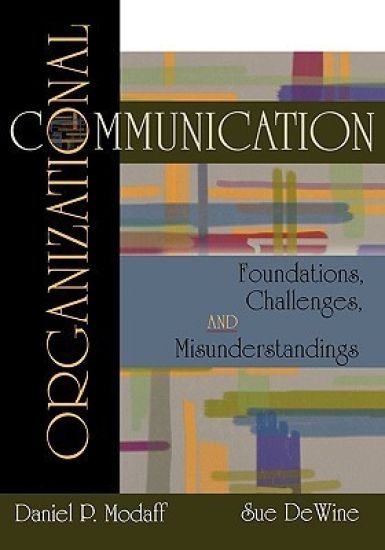
Organizational Communication

Organizational Communication

Daniel P. Modaff; Sue DeWine

Oxford University Press Inc
2002
sidottu
Modaff and DeWine's new undergraduate text, Organizational Communication: Foundations, Challenges, and Misunderstandings, offers a unique perspective on the field of internal organizational communication. The authors review the foundational material, but intersperse the discussions with excerpts from interviews conducted with over 60 leaders and workers in a variety of organizations. A central feature of the text is the concept of misunderstandings, which highlights the idea that organizations are inherently problematic. This focus positions communication at the center of organizational life, and shows the reader how and why communication can serve to create and resolve misunderstandings of all types. The authors advance a model, the Communicative Organization, which allows the reader to see the significance of communication to every aspect of organizational functioning. Benefits to instructors and students include: * The use of real-life problems as told by organizational leaders and workers to illustrate the material discussed in every chapter, which provides an easy mechanism for starting class discussions. * Chapters on realistic recruitment and organizational socialization, which are not typically found in other introductory organizational communication textbooks. * Integration of the concepts of gender and diversity throughout the text. * Discussions of current applications of theories and concepts as students have or will experience them. * A postscript that ties all of the material from the text together. * A writing style that is student-centered yet sufficiently challenging. * A dedicated website (created by Derek Lane, University of Kentucky, Lexington) to support the text is available at http://www.uky.edu/~drlane/orgcomm. It includes chapter outlines, supplemental content, and suggested course syllabi. The site greatly facilitates use of the text for students. A PDF of corrected pages of the subject index from the first printing is also available at this site.
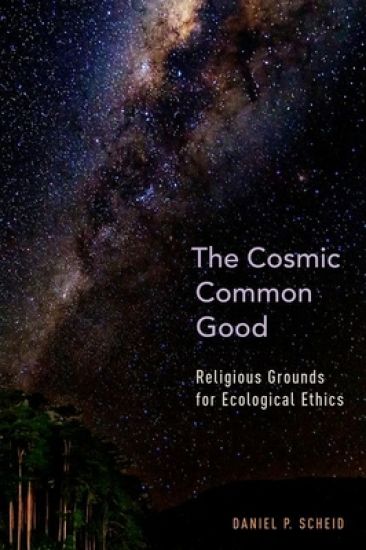
The Cosmic Common Good

The Cosmic Common Good

Daniel P. Scheid

Oxford University Press Inc
2016
sidottu
As ecological degradation continues to threaten permanent and dramatic changes for life on our planet, the question of how we can protect our imperiled Earth has become more pressing than ever before. In this book, Daniel Scheid draws on Catholic social thought as the foundation for a new type of interreligious ecological ethics, which he calls the cosmic common good, that sees humans as just a part of the greater whole of the cosmos. The cosmic common good emphasizes the instrumental and intrinsic value of nature and the integral connection between religious practice and the pursuit of the common good. Scheid begins his analysis by rooting his vision of the cosmic common good in the classical doctrines of creation found in the works of Augustine and Thomas Aquinas and in Thomas Berry's interpretation of the evolutionary cosmic story. He goes on to explore conceptions of a cosmic common good in other traditions, such as Hinduism, Buddhism, and American Indian religion. Scheid demonstrates that dialogue with these non-Christian traditions both confirms and expands the cosmic common good as a theologically authentic moral framework that re-envisions humanity's role in the universe.
Ivan Pavlov

Ivan Pavlov

Daniel P. Todes

Oxford University Press Inc
2014
sidottu
This is a definitive, deeply researched biography of Russian physiologist Ivan Pavlov (1849-1936) and is the first scholarly biography to be published in any language. The book is Todes's magnum opus, which he has been working on for some twenty years. Todes makes use of a wealth of archival material to portray Pavlov's personality, life, times, and scientific work. Combining personal documents with a close reading of scientific texts, Todes fundamentally reinterprets Pavlov's famous research on conditional reflexes. Contrary to legend, Pavlov was not a behaviorist (a misimpression captured in the false iconic image of his "training a dog to salivate to the sound of a bell"); rather, he sought to explain not simply external behaviors, but the emotional and intellectual life of animals and humans. This iconic "objectivist" was actually a profoundly anthropomorphic thinker whose science was suffused with his own experiences, values, and subjective interpretations. This book is also a traditional "life and times" biography that weaves Pavlov into some 100 years of Russian history-particularly that of its intelligentsia--from the emancipation of the serfs to Stalin's time. Pavlov was born to a family of priests in provincial Ryazan before the serfs were emancipated, made his home and professional success in the glittering capital of St. Petersburg in late imperial Russia, suffered the cataclysmic destruction of his world during the Bolshevik seizure of power and civil war of 1917-1921, rebuilt his life in his 70s as a "prosperous dissident" during the Leninist 1920s, and flourished professionally as never before in 1929-1936 during the industrialization, revolution, and terror of Stalin. Todes's story of this powerful personality and extraordinary man is based upon interviews with surviving coworkers and family members (along with never-before-analyzed taped interviews from the 1960s and 1970s), examination of hundreds of scientific works by Pavlov and his coworkers, and close analysis of materials from some twenty-five archives. The documents range from the records of his student years at Ryazan Seminary to the transcripts of the Communist Party cells in his labs, and from his scientific manuscripts and notebooks to his political speeches; they include revealing love letters to his future wife and correspondence with hundreds of lay people, scholars, artists, and Communist Party leaders; and unpublished memoirs by many coworkers, his daughter, his wife, and his lover.
Black Wave

Black Wave

Daniel P Aldrich

University of Chicago Press
2019
sidottu
Despite the devastation caused by the magnitude 9.0 earthquake and 60-foot tsunami that struck Japan in 2011, some 96% of those living and working in the most disaster-stricken region of Tohoku made it through. Smaller earthquakes and tsunamis have killed far more people in nearby China and India. What accounts for the exceptionally high survival rate? And why is it that some towns and cities in the Tohoku region have built back more quickly than others? Black Wave illuminates two critical factors that had a direct influence on why survival rates varied so much across the Tohoku region following the 3/11 disasters and why the rebuilding process has also not moved in lockstep across the region. Individuals and communities with stronger networks and better governance, Daniel P. Aldrich shows, had higher survival rates and accelerated recoveries. Less connected communities with fewer such ties faced harder recovery processes and lower survival rates. Beyond the individual and neighborhood levels of survival and recovery, the rebuilding process has varied greatly, as some towns and cities have sought to work independently on rebuilding plans, ignoring recommendations from the national governments and moving quickly to institute their own visions, while others have followed the guidelines offered by Tokyo-based bureaucrats for economic development and rebuilding.
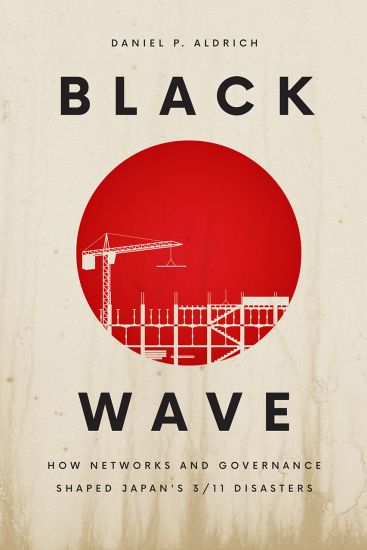
Black Wave

Black Wave

Daniel P Aldrich

University of Chicago Press
2019
pokkari
Despite the devastation caused by the magnitude 9.0 earthquake and 60-foot tsunami that struck Japan in 2011, some 96% of those living and working in the most disaster-stricken region of Tohoku made it through. Smaller earthquakes and tsunamis have killed far more people in nearby China and India. What accounts for the exceptionally high survival rate? And why is it that some towns and cities in the Tohoku region have built back more quickly than others? Black Wave illuminates two critical factors that had a direct influence on why survival rates varied so much across the Tohoku region following the 3/11 disasters and why the rebuilding process has also not moved in lockstep across the region. Individuals and communities with stronger networks and better governance, Daniel P. Aldrich shows, had higher survival rates and accelerated recoveries. Less connected communities with fewer such ties faced harder recovery processes and lower survival rates. Beyond the individual and neighborhood levels of survival and recovery, the rebuilding process has varied greatly, as some towns and cities have sought to work independently on rebuilding plans, ignoring recommendations from the national governments and moving quickly to institute their own visions, while others have followed the guidelines offered by Tokyo-based bureaucrats for economic development and rebuilding.
Dawn at Mineral King Valley: The Sierra Club, the Disney Company, and the Rise of Environmental Law
The story behind the historic Mineral King Valley case, which reveals how the Sierra Club battled Disney's ski resort development and launched a new environmental era in America. In our current age of climate change-induced panic, it's hard to imagine a time when private groups were not actively enforcing environmental protection laws in the courts. It wasn't until 1972, however, that a David and Goliath-esque Supreme Court showdown involving the Sierra Club and Disney set a revolutionary legal precedent for the era of environmental activism we live in today. Set against the backdrop of the environmental movement that swept the country in the late 1960s and early 1970s, Dawn at Mineral King Valley tells the surprising story of how the US Forest Service, the Disney company, and the Sierra Club each struggled to adapt to the new, rapidly changing political landscape of environmental consciousness in postwar America. Proposed in 1965 and approved by the federal government in 1969, Disney's vast development plan would have irreversibly altered the practically untouched Mineral King Valley, a magnificently beautiful alpine area in the Sierra Nevada mountains. At first, the plan met with unanimous approval from elected officials, government administrators, and the press--it seemed inevitable that this expanse of wild natural land would be radically changed and turned over to a private corporation. Then the scrappy Sierra Club forcefully pushed back with a lawsuit that ultimately propelled the modern environmental era by allowing interest groups to bring litigation against environmentally destructive projects. An expert on environmental law and appellate advocacy, Daniel P. Selmi uses his authoritative narrative voice to recount the complete history of this revolutionary legal battle and the ramifications that continue today, almost 50 years later.
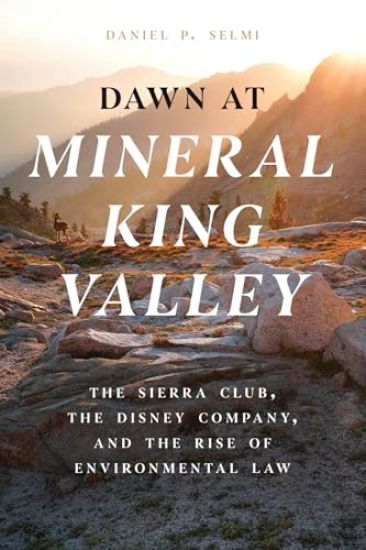
Dawn at Mineral King Valley

Dawn at Mineral King Valley

Daniel P. Selmi

THE UNIVERSITY OF CHICAGO PRESS
2024
nidottu
The story behind the historic Mineral King Valley case, which reveals how the Sierra Club battled Disney’s ski resort development and launched a new environmental era in America. In our current age of climate change–induced panic, it’s hard to imagine a time when private groups were not actively enforcing environmental protection laws in the courts. It wasn’t until 1972, however, that a David and Goliath–esque Supreme Court showdown involving the Sierra Club and Disney set a revolutionary legal precedent for the era of environmental activism we live in today. Set against the backdrop of the environmental movement that swept the country in the late 1960s and early 1970s, Dawn at Mineral King Valley tells the surprising story of how the US Forest Service, the Disney company, and the Sierra Club each struggled to adapt to the new, rapidly changing political landscape of environmental consciousness in postwar America. Proposed in 1965 and approved by the federal government in 1969, Disney’s vast development plan would have irreversibly altered the practically untouched Mineral King Valley, a magnificently beautiful alpine area in the Sierra Nevada mountains. At first, the plan met with unanimous approval from elected officials, government administrators, and the press—it seemed inevitable that this expanse of wild natural land would be radically changed and turned over to a private corporation. Then the scrappy Sierra Club forcefully pushed back with a lawsuit that ultimately propelled the modern environmental era by allowing interest groups to bring litigation against environmentally destructive projects. An expert on environmental law and appellate advocacy, Daniel P. Selmi uses his authoritative narrative voice to recount the complete history of this revolutionary legal battle and the ramifications that continue today, almost 50 years later.
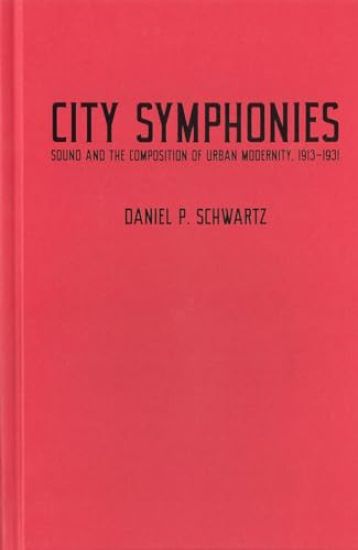
City Symphonies

City Symphonies

Daniel P. Schwartz

MCGILL-QUEEN'S UNIVERSITY PRESS
2024
sidottu
Cinema scholars categorize city symphony films of the 1920s and early 1930s as a subgenre of the silent film. Defined in visual terms, the city symphony organizes the visible elements of urban experience according to musical principles such as rhythm and counterpoint.In City Symphonies Daniel Schwartz explores the unheard sonic dimensions of these ostensibly silent films. The book turns its ear to the city symphony as an audible phenomenon, one that encompasses a multitude of works beyond the cinema, such as musical compositions, mass spectacles, radio experiments, and even paintings. What these works have in common is their treatment of the city as a medium for sound. The city is neither background nor content; rather, it is the material through which avant-garde works express themselves. In resonating through the city, these multimedia pieces perform experiments that undermine the borders between sight and sound.Applying an interdisciplinary approach, City Symphonies expands our understanding of the genre, breaking out of the confines of the cinema and onto the street.
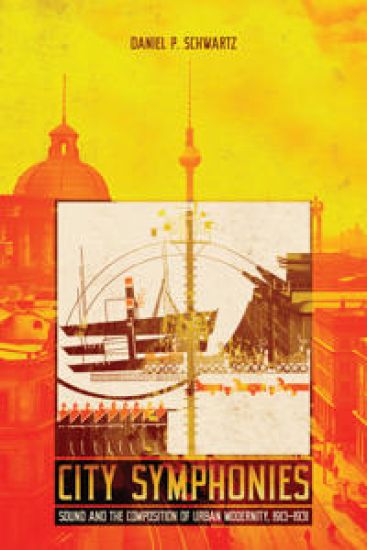
City Symphonies

City Symphonies

Daniel P. Schwartz

MCGILL-QUEEN'S UNIVERSITY PRESS
2024
nidottu
Cinema scholars categorize city symphony films of the 1920s and early 1930s as a subgenre of the silent film. Defined in visual terms, the city symphony organizes the visible elements of urban experience according to musical principles such as rhythm and counterpoint.In City Symphonies Daniel Schwartz explores the unheard sonic dimensions of these ostensibly silent films. The book turns its ear to the city symphony as an audible phenomenon, one that encompasses a multitude of works beyond the cinema, such as musical compositions, mass spectacles, radio experiments, and even paintings. What these works have in common is their treatment of the city as a medium for sound. The city is neither background nor content; rather, it is the material through which avant-garde works express themselves. In resonating through the city, these multimedia pieces perform experiments that undermine the borders between sight and sound.Applying an interdisciplinary approach, City Symphonies expands our understanding of the genre, breaking out of the confines of the cinema and onto the street.