
Kirjahaku
Etsi kirjoja tekijän nimen, kirjan nimen tai ISBN:n perusteella.
1000 tulosta hakusanalla Daniel Wilson

The Divine Authority and Perpetual Obligation of the Lord's Day
Daniel Wilson
Trieste Publishing
2018
nidottu



"Some books should be tasted, some devoured, but only a few should be chewed and digested thoroughly."Have you ever heard the African proverb that says, "When there is no enemy within, the enemies outside can do you no harm"?It's true. If you can improve yourself to the point where your personal growth just continues to increase, you will be hard-pressed to find anything that can do you any harm.Making small improvements on a regular basis may actually be better and more effective than trying to make a lot of big changes at once. Small changes will eventually turn into habits while trying to make a large change could lead to feelings of being overwhelmed, and ultimately failure.I enjoyed most of the books from Dale to Osho and here in my work- Mind Blossom I gathered the best practices and ideas for self-improvement and personal growth "Do not expect money to fall from the sky- JUST DO IT"


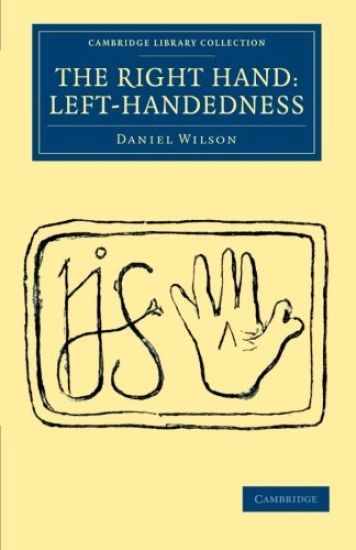
Throughout history, left-handedness has been viewed as being the mark of the devil, as evidence of mental retardation or neurosis, as showing a predisposition to criminality, or as being linked to every perceived social ill. Even into the nineteenth century, many scientists were of the opinion that left-handedness was the sign of a sinister personality. An eminent ethnologist and one of the first scientific archaeologists, Daniel Wilson (1816–92), who introduced into English the word 'prehistoric', became aware of the fact that there were as many left-handed Stone Age implements as right. As a left-hander himself, he was fascinated by these discoveries. Published in 1891, his last major work gives the results of his studies of left-handedness, which he concludes is hereditary and relates to the dominance of one hemisphere of the brain.
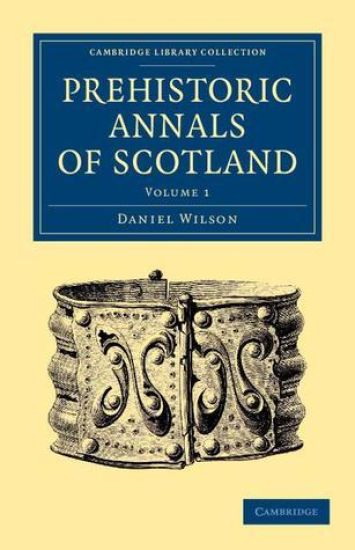
Born in Edinburgh, Daniel Wilson (1816–92) planned on becoming a painter and spent time working in Turner's studio. But in 1842 he became secretary of the Society of Antiquaries in Scotland and devoted the rest of his life to archaeology, anthropology and university administration. This two-volume work, first published in 1851, brought him to immediate academic attention. Carrying out pioneering work of scientific archaeology, Wilson brought the very word 'prehistoric' into use in English for the first time. And although a devout Christian, he accepted the theory of evolution, unlike many of his contemporaries. Split into four periods, the work is richly illustrated, with many of the illustrations created by the author himself. For this second edition, published in 1863, Wilson updated his work to reflect recent discoveries. Volume 1 looks at the earliest human settlers up to the Bronze Age.

Born in Edinburgh, Daniel Wilson (1816–92) planned on becoming a painter and spent time working in Turner's studio. But in 1842 he became secretary of the Society of Antiquaries in Scotland and devoted the rest of his life to archaeology, anthropology and university administration. This two-volume work, first published in 1851, brought him to immediate academic attention. Carrying out pioneering work of scientific archaeology, Wilson brought the very word 'prehistoric' into use in English for the first time. And although a devout Christian, he accepted the theory of evolution, unlike many of his contemporaries. Split into four periods, the work is richly illustrated, with many of the illustrations created by the author himself. For this second edition, published in 1863, Wilson updated his work to reflect recent discoveries. Volume 2 continues through the Roman and early Christian periods.
The Scottish archaeologist and anthropologist Daniel Wilson (1816–92) spent the latter part of his life in Canada. Published in 1862, this is a seminal work in the study of early man in which Wilson utilises studies of native tribes 'still seen there in a condition which seems to reproduce some of the most familiar phases ascribed to the infancy of the unhistoric world'. He believed that civilisations initially developed in mild climates and judged the Mayans to have been the most advanced civilisation in the New World. Twentieth-century anthropologist Bruce Trigger argued that Wilson 'interpreted evidence about human behaviour in a way that is far more in accord with modern thinking than are the racist views of Darwin and Lubbock', and it is in this light that this two-volume work can be judged. Volume 1 covers such important areas as the development and use of metals and 'the architectural instinct'.
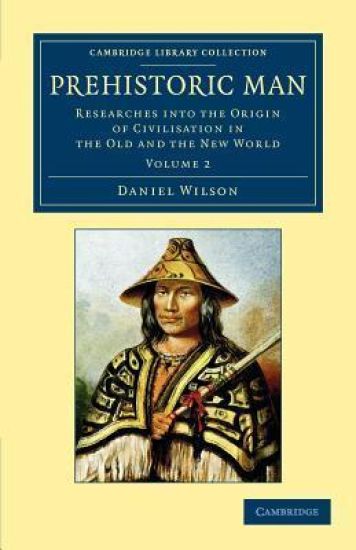
The Scottish archaeologist and anthropologist Daniel Wilson (1816–92) spent the latter part of his life in Canada. Published in 1862, this is a seminal work in the study of early man in which Wilson utilises studies of native tribes 'still seen there in a condition which seems to reproduce some of the most familiar phases ascribed to the infancy of the unhistoric world'. He believed that civilisations initially developed in mild climates and judged the Mayans to have been the most advanced civilisation in the New World. Twentieth-century anthropologist Bruce Trigger argued that Wilson 'interpreted evidence about human behaviour in a way that is far more in accord with modern thinking than are the racist views of Darwin and Lubbock', and it is in this light that this two-volume work can be judged. Volume 2 covers topics ranging from ceramic arts to the influence of interbreeding and migration upon civilisations.

Memorials of Edinburgh in the Olden Time: Volume 1
Daniel Wilson
Cambridge University Press
2013
pokkari
Born in Edinburgh, Daniel Wilson (1816–92) initially pursued an artistic career and spent time in Turner's studio. However, in 1846 he became a fellow of the Society of Antiquaries of Scotland and devoted the rest of his life to archaeology, anthropology and university administration. He was active in the Society's attempts to save historic buildings in Edinburgh, and the city's built environment was the subject of this two-volume 1848 work, which is illustrated with engravings after his own drawings. In Volume 1, Wilson begins by tracing the city's history from earliest times. The latter part of the volume covers local antiquities and traditions, with each chapter looking at a different area of the Old Town. The historical detail, with references, is immense, and Wilson's enthusiasm for his city is evident throughout. His second major work, the landmark Prehistoric Annals of Scotland (second edition, 1863), is also reissued in this series.

Born in Edinburgh, Daniel Wilson (1816–92) initially pursued an artistic career and spent time in Turner's studio. However, in 1846 he became a fellow of the Society of Antiquaries of Scotland and devoted the rest of his life to archaeology, anthropology and university administration. He was active in the Society's attempts to save historic buildings in Edinburgh, and the city's built environment was the subject of this two-volume 1848 work, which is illustrated with engravings after his own drawings. In Volume 2, Wilson continues to cover local antiquities and traditions, with each chapter looking at a different area of the Old Town. Leith, the New Town, and ecclesiastical buildings are also discussed. The historical detail, with references, is immense, and Wilson's enthusiasm for his city is evident throughout. Wilson's second major work, the landmark Prehistoric Annals of Scotland (second edition, 1863), is also reissued in this series.
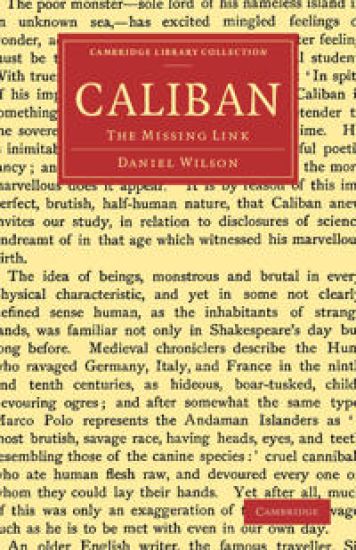
Having acquired a Shakespeare folio for a few shillings, anthropologist Daniel Wilson (1816–92) found in The Tempest a source of scientific intrigue. Writing more than two hundred years before Darwin propounded his theory of evolution, in his final play Shakespeare had created a missing link caught between the animal and the human. In this monograph, first published in 1873, Wilson uses the strange and unfortunate character of Caliban as a means through which to explore the principles of evolution. He traces many of the play's plot devices back to real events that perhaps inspired them - from storms in Bermuda to records of semi-human creatures around the world - and brings literary commentary into science as he links the relationships set out in the play to anthropological principles. This interdisciplinary approach makes the book both an entertaining exegesis of the play and a uniquely accessible explanation of contemporary scientific theories.

Outlines Of The Evidences Of Christianity (1847)
Daniel Wilson
KESSINGER PUBLISHING, LLC
2009
pokkari
The Archaeology And Prehistoric Annals Of Scotland (1851)
Daniel Wilson
KESSINGER PUBLISHING, LLC
2009
pokkari