

Kirjahaku
Etsi kirjoja tekijän nimen, kirjan nimen tai ISBN:n perusteella.
1000 tulosta hakusanalla David Alan


A unique look at a powerful marriage in the celebrated age of Justinian Belisarius and Antonina were titans in the Roman world some 1,500 years ago. Belisarius was the most well-known general of his age, victor over the Persians, conqueror of the Vandals and the Goths, and as if this were not enough, wealthy beyond imagination. His wife, Antonina, was an impressive person in her own right. She made a name for herself by traveling with Belisarius on his military campaigns, deposing a pope, and scheming to disgrace important Roman officials. Together, the pair were extremely influential, and arguably wielded more power in the late Roman world than anyone except the emperor Justinian and empress Theodora themselves. This unadulterated power and wealth did not mean that Belisarius and Antonina were universally successful in all that they undertook. They occasionally stumbled militarily, politically, and personally - in their marriage and with their children. These failures knock them from their lofty perch, humanize them, and make them even more relatable and intriguing to us today. Belisarius & Antonina is the first modern portrait of this unique partnership. They were not merely husband and wife but also partners in power. This is a paradigm which might seem strange to us, as we reflexively imagine that marriages in the ancient world were staunchly traditional, relegating wives to the domestic sphere only. But Antonina was not a reserved housewife, and Belisarius showed no desire for Antonina to remain in the home. Their private and public lives blended as they traveled together, sometimes bringing their children, and worked side-by-side. Theirs was without a doubt the most important nonroyal marriage of the late Roman world, and one of the very few from all of antiquity that speaks directly to contemporary readers.

A unique look at a powerful marriage in the celebrated age of Justinian Belisarius and Antonina were titans in the Roman world some 1,500 years ago. Belisarius was the most well-known general of his age, victor over the Persians, conqueror of the Vandals and the Goths, and as if this were not enough, wealthy beyond imagination. His wife, Antonina, was an impressive person in her own right. She made a name for herself by traveling with Belisarius on his military campaigns, deposing a pope, and scheming to disgrace important Roman officials. Together, the pair were extremely influential, and arguably wielded more power in the late Roman world than anyone except the emperor Justinian and empress Theodora themselves. This unadulterated power and wealth did not mean that Belisarius and Antonina were universally successful in all that they undertook. They occasionally stumbled militarily, politically, and personally - in their marriage and with their children. These failures knock them from their lofty perch, humanize them, and make them even more relatable and intriguing to us today. Belisarius & Antonina is the first modern portrait of this unique partnership. They were not merely husband and wife but also partners in power. This is a paradigm which might seem strange to us, as we reflexively imagine that marriages in the ancient world were staunchly traditional, relegating wives to the domestic sphere only. But Antonina was not a reserved housewife, and Belisarius showed no desire for Antonina to remain in the home. Their private and public lives blended as they traveled together, sometimes bringing their children, and worked side-by-side. Theirs was without a doubt the most important nonroyal marriage of the late Roman world, and one of the very few from all of antiquity that speaks directly to contemporary readers.
Development’s current focus – poverty reduction and good governance – signals a turn away from the older neoliberal preoccupation with structural adjustment, privatization and downsizing the state. For some, the new emphases on empowering and securing the poor through basic service delivery, local partnership, decentralization and institution building constitute a decisive break with the past and a whole set of new development possibilities beyond neoliberalism. Taking a wider historical perspective, this book charts the emergence of poverty reduction and governance at the centre of development. It shows that the Poverty Reduction paradigm does indeed mark a shift in the wider liberal project that has underpinned development: precisely what is new, and what this means for how the poor are governed, are described here in detail. This book provides a compelling history of development doctrine and practice, and in particular offers the first comprehensive account of the last twenty years, and development’s shift towards a new political economy of institution building, decentralized governance and local partnerships. The story is illustrated with extensive case studies from first hand experience in Vietnam, Uganda, Pakistan and New Zealand.
Development’s current focus – poverty reduction and good governance – signals a turn away from the older neoliberal preoccupation with structural adjustment, privatization and downsizing the state. For some, the new emphases on empowering and securing the poor through basic service delivery, local partnership, decentralization and institution building constitute a decisive break with the past and a whole set of new development possibilities beyond neoliberalism. Taking a wider historical perspective, this book charts the emergence of poverty reduction and governance at the centre of development. It shows that the Poverty Reduction paradigm does indeed mark a shift in the wider liberal project that has underpinned development: precisely what is new, and what this means for how the poor are governed, are described here in detail. This book provides a compelling history of development doctrine and practice, and in particular offers the first comprehensive account of the last twenty years, and development’s shift towards a new political economy of institution building, decentralized governance and local partnerships. The story is illustrated with extensive case studies from first hand experience in Vietnam, Uganda, Pakistan and New Zealand.

Song for Uncle Tom, Tonto, and Mr. Moto
David Alan Mura
The University of Michigan Press
2002
nidottu
As a Sansei or third-generation Japanese American poet, David Mura is one of the generation of multicultural writers who are changing the face of American poetry. Song for Uncle Tom, Tonto, and Mr. Moto explores shifts in and challenges to aesthetic standards that have come about because of a more diverse range of American writers and because of the growing awareness of world literature. Mura's writings recently have been at the center of various debates concerning race and literary standards. In this book, he argues the need for a more complicated and diverse set of literary standards than the canon has previously allowed, an opening up to the many voices that are "great within us." He contends that, when placed against a gathering awareness of a world literature, particularly in the so-called Third World, the boundaries of the traditional Anglo-American canon and its present-day proponents like Harold Bloom come to be seen as too narrow and parochial, reenacting the "tribal" label that many throw now at the advocates of multiculturalism. Beyond its theoretical underpinnings, Song for Uncle Tom, Tonto, and Mr. Moto charts the wayward course of Mura's own development as a poet. In three interviews, Mura provides readings of his own work and discusses various issues of technique and form. David Mura is a poet, memoirist, essayist, playwright, writer of fiction, performance artist, and literary critic. He is author of The Colors of Desire, After We Lost Our Way, and Turning Japanese: Memoirs of a Sansei.

As a Sansei or third-generation Japanese American poet, David Mura is one of the generation of multicultural writers who are changing the face of American poetry. Song for Uncle Tom, Tonto, and Mr. Moto explores shifts in and challenges to aesthetic standards that have come about because of a more diverse range of American writers and because of the growing awareness of world literature. Mura's writings recently have been at the center of various debates concerning race and literary standards. In this book, he argues the need for a more complicated and diverse set of literary standards than the canon has previously allowed, an opening up to the many voices that are "great within us." He contends that, when placed against a gathering awareness of a world literature, particularly in the so-called Third World, the boundaries of the traditional Anglo-American canon and its present-day proponents like Harold Bloom come to be seen as too narrow and parochial, reenacting the "tribal" label that many throw now at the advocates of multiculturalism. Beyond its theoretical underpinnings, Song for Uncle Tom, Tonto, and Mr. Moto charts the wayward course of Mura's own development as a poet. In three interviews, Mura provides readings of his own work and discusses various issues of technique and form. David Mura is a poet, memoirist, essayist, playwright, writer of fiction, performance artist, and literary critic. He is author of The Colors of Desire, After We Lost Our Way, and Turning Japanese: Memoirs of a Sansei.
"Founding the Far West" is an ambitious and vividly written narrative of the early years of statehood and statesmanship in three pivotal western territories. Johnson offers a model example of a new approach to history that is transforming our ideas of how America moved west, one that breaks the mold of 'regional' and 'frontier' histories to show why Western history is also American history. Johnson explores the conquest, immigration, and settlement of the first three states of the western region. He also investigates the building of local political customs, habits, and institutions, as well as the socioeconomic development of the region. While momentous changes marked the Far West in the later nineteenth century, distinctive local political cultures persisted. These were a legacy of the pre-Civil War conquest and settlement of the regions but no less a reflection of the struggles for political definition that took place during constitutional conventions in each of the three states. At the center of the book are the men who wrote the original constitutions of these states and shaped distinctive political cultures out of the common materials of antebellum American culture. "Founding the Far West" maintains a focus on the individual experience of the constitution writers - on their motives and ambitions as pioneers, their ideological intentions as authors of constitutions, and the successes and failures, after statehood, of their attempts to give meaning to the constitutions they had produced.


What Is It? is an exploration of a fundamental yet elusive element of the human existence, love. You can't buy it. You can hardly chase it. Can you even explain it? In this poetry collection, David Alan Royster attempts to give words to the moments that leave us speechless. Enjoy




Audie Murphy's Film & Television Co-Stars From A to Z
David Alan Williams
David Williams
2013
nidottu

The story of a humble Mole who lives his entire life according to his list of fears, that is until his list mysteriously disappears. Suspecting he's been robbed and no longer having his fears to guide him, Mole sets out on an epic adventure to retrieve them.Bounce along with this fun, rhyming adventure as Mole meets some interesting characters along his way and discovers some very important lessons about his list of fears.
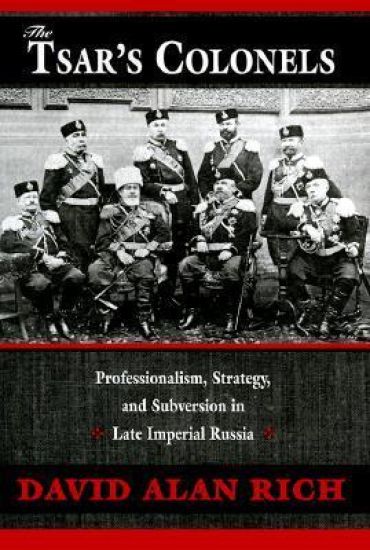
In this impressive study, David Rich demonstrates how the modernization of Russia's general staff during the second half of the nineteenth century reshaped its intellectual and strategic outlook and equipped the staff to play a strong, and at times dominant, role in shaping Russian foreign policy.Rich weaves together several levels of narrative to show how the increasingly sophisticated, scientific, and positivistic work attitudes and habits of the general staff acculturated younger officers, redefining their relationship with, and responsibilities to, the state. In time, this new generation of officers projected their characteristic notions onto the state and onto autocracy itself; professional concern for the security of the state eclipsed traditional unquestioning loyalty to the regime. Rich goes on to show how divergence between diplomatic and military aims among those responsible for making strategy cost the state dearly in terms of economic stability and international standing.The author supports his findings with original research in Russian foreign policy and military archives and wide reading in published sources. The Tsar's Colonels contributes to a number of debates in Russian military and social history and offers new insights on the structural roots of the Great War, and on the theoretical problems of modernization and professionalization.
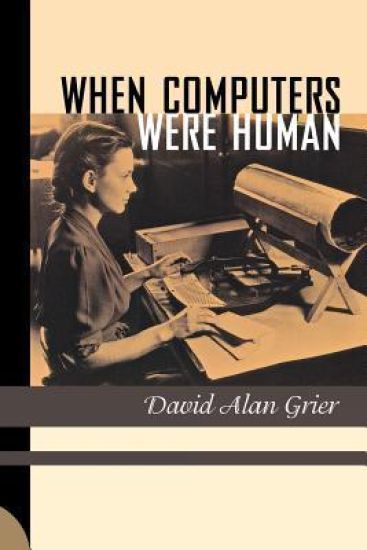
Before Palm Pilots and iPods, PCs and laptops, the term "computer" referred to the people who did scientific calculations by hand. These workers were neither calculating geniuses nor idiot savants but knowledgeable people who, in other circumstances, might have become scientists in their own right. When Computers Were Human represents the first in-depth account of this little-known, 200-year epoch in the history of science and technology. Beginning with the story of his own grandmother, who was trained as a human computer, David Alan Grier provides a poignant introduction to the wider world of women and men who did the hard computational labor of science. His grandmother's casual remark, "I wish I'd used my calculus," hinted at a career deferred and an education forgotten, a secret life unappreciated; like many highly educated women of her generation, she studied to become a human computer because nothing else would offer her a place in the scientific world. The book begins with the return of Halley's comet in 1758 and the effort of three French astronomers to compute its orbit. It ends four cycles later, with a UNIVAC electronic computer projecting the 1986 orbit. In between, Grier tells us about the surveyors of the French Revolution, describes the calculating machines of Charles Babbage, and guides the reader through the Great Depression to marvel at the giant computing room of the Works Progress Administration. When Computers Were Human is the sad but lyrical story of workers who gladly did the hard labor of research calculation in the hope that they might be part of the scientific community. In the end, they were rewarded by a new electronic machine that took the place and the name of those who were, once, the computers.
