
Kirjahaku
Etsi kirjoja tekijän nimen, kirjan nimen tai ISBN:n perusteella.
1000 tulosta hakusanalla David Boyd
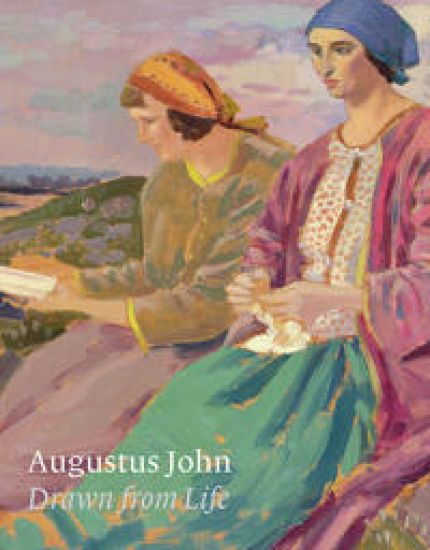
Despite achieving extraordinary fame in his lifetime, when he was widely considered to be one the greatest living British artists and his drawings were thought by John Singer Sargent to be amongst the finest seen since the Renaissance, Augustus John has grown increasingly obscure. Augustus John: Drawn from Life seeks to restore this remarkable artist to his rightful place in the canon of British Art. In the first three decades of the 20th century Augustus John (1878–1961) was widely considered one of the greatest living British artists, famous almost as much for his extraordinary Bohemian lifestyle as for his outstanding portraits, etchings and drawings. John was born in Wales in 1878 and educated at the Slade School of Art in London in the 1890s, where the onus of teaching was on the daily life class and a close study of the Old Masters. He soon emerged as a wonderfully gifted draughtsman – indeed, the American painter John Singer Sargent would declare that John’s youthful drawings were amongst the finest seen since the Renaissance. Dividing his life between England, Wales and France, and reaching his prime in the years immediately before the outbreak of the Great War, by 1910 John would be likened to a British Gauguin, a Welsh Post-Impressionist using bold colors and a willfully naïve and primitive style to explore the complex combination of romanticism, escapism and alienation engendered by 20th-century life. The great American collector John Quinn considered John and his sister Gwen key European artists, and his work would be included in the influential Armory Show in New York in 1913. After the War he would become Britain’s leading society portraitist, earning a fortune in commissions – though it was his more personal paintings of friends, lovers, family and fellow artists and writers such as W.B. Yeats, T.E. Lawrence, Dylan Thomas, Ottoline Morrell and his muse/mistress Dorelia McNeill that best revealed his great talents. Published to coincide with exhibitions at Poole Museum in Dorset in the summer of 2018 and at Salisbury Museum in Wiltshire in the summer of 2019, Augustus John: Drawn from Life reexamines the life and work of this significant but increasingly overlooked British artist. Focusing on around sixty works drawn from private and public collections, including the Tate, the National Portrait Gallery and the National Museum of Wales, the book will offer new insights into John’s life and development as an artist from the late 1890s to the outbreak of the Second World War.

In late 1937, our loquacious and unreliable narrator, Kurtis De'ath returns to Germany, where he prepares for a trip with Joachim von Ribbentrop, German Foreign Minister, to Moscow. On his own with orders from Adolf Hitler (and Sir Joseph Ball), Kurtis probes the unspeakable secrets of the Holodomor, the man-made, deliberate starvation of four million men, women, and children in the Ukraine. He matches wits with the NKVD and Stalin himself. As the Nazis annexe Austria and Joseph Chamberlain tries to avoid war, it is Kurtis who shines a light on the darkest secrets on all sides as the slide into open conflict continues. Set in multiple locales in Canada, America, France, Germany, and England, before the Second World War, Volume Three of The Reflecting Man is the antic, ribald journey of a loquacious and unreliable narrator, Kurtis De'ath, from the Maritimes in Canada, whose unusual talents lead him into the innermost circles of Hitler's Third Reich and Churchill's British government. Kurtis' journey through the roots and branches of actual historical figures and events is, at its heart, in meticulous detail, an examination of how Europe went to war in 1939. The Reflecting Man is himself a reflection of his times. The novel is widely and deeply researched, employing hundreds of non-fiction accounts, journals, and diaries of actual participants and observers of the darkening clouds over Europe and the descent into war. The Reflecting Man is himself a reflection of his times. The novel is widely and deeply researched, employing hundreds of non-fiction accounts, journals, and diaries of actual participants and observers of the darkening clouds over Europe and the descent into war.
In January of 1936, our loquacious and unreliable narrator, Kurtis De'ath arrives in London on the orders of Adolf Hitler. Kurtis is loaded with secrets, confections, and more than a few mysteries. Closeting his other identities (Herr Death, mysterious confidant of Adolf Hitler, and the Wagner Family's Shokoladenmann, dispenser of the delightful Bird Bonz), he becomes fellow Maritimer, Lord Beaverbrook's gossip columnist for the Daily Express and is immediately drawn into the political and social British maelstrom of Abdication and Appeasement. Deftly working his way through the class and clutter of English society as Kurtis Tod, he does his best to keep old friends (Erl Echland, Ulrich Roller, Bella Fromm), make new ones (Tom Driberg, William Joyce, 'Huge' Castlerosse), confound his enemies (Joseph Ball, Maxwell Knight, Josef Goebbels), and to derive some sense out of it all as the world edges even closer to a second Great War. And, when things get a little nasty, it may be that Kurtis De'ath is just the fellow you want on your side. Set in multiple locales in Canada, America, France, Germany, and England, before and during the Second World War, Volume Two of The Reflecting Man is the antic, ribald journey of a loquacious and unreliable narrator, Kurtis De'ath, from the Maritimes in Canada, whose unusual talents lead him into the innermost circles of Hitler's Third Reich and Churchill's British government. Kurtis' journey through the roots and branches of actual historical figures and events is, at its heart, in meticulous detail, an examination of how Europe went to war in 1939. The Reflecting Man is himself a reflection of his times. The novel is widely and deeply researched, employing hundreds of non-fiction accounts, journals, and diaries of actual participants and observers of the darkening clouds over Europe and the descent into war.
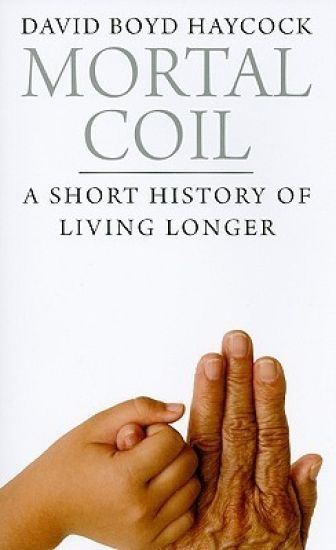
A highly engaging history of humankind's preoccupation with longevity, from 1600 to the present day An obsession with perpetual youth may seem a particularly modern phenomenon, but it is a goal that western scientists and philosophers have aspired to (and worked towards) for the last four hundred years. Mortal Coil explores the medical, scientific, and philosophical theories behind the quest for the prolongation of human life. It was a conundrum that intrigued Sir Francis Bacon and underpinned the scientific revolution; ideas of ultimate perfectibility, indefinite progress, and worldly rather than heavenly immortality fed directly into the spirit of the Enlightenment and even further into the nineteenth and twentieth centuries. In today's world of genetic research, cryonics, and nanotechnology, we still seek the same elusive philosopher's stone. From Adam and Eve to human cloning and designer babies, from seventeenth-century lifestyle guides to science fiction, Haycock's gripping story introduces an array of fascinating individuals—René Descartes, Benjamin Franklin, Jonathan Swift, Charles Darwin, and Sigmund Freud as well as a score of unknown figures. Full of extraordinary stories and valuable insights, this is a curious, witty, and captivating exploration into our unceasing desire to live forever.
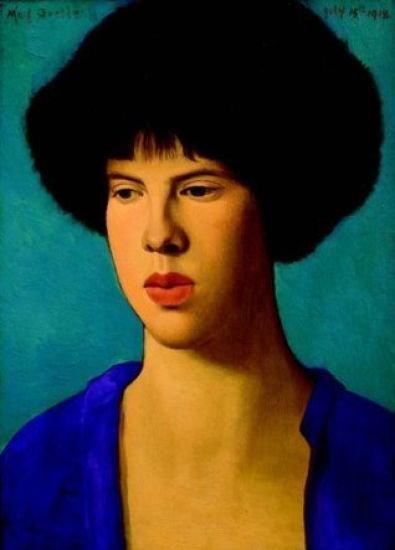
This beautifully illustrated catalog accompanied and exhibition at the leading London gallery Piano Nobile, celebrating the achievements of Mart Gertler (1891-1939). It charts Gertler's career from an early British modernist at the close of the Edwardian era through his most radical period during the years of the First World War to the 'return to order' of the 1920s, when Gertler was recognized as a consummate painter with a highly individual vision. Gertler's biographer and cataloger Sarah MacDougall introduces us to celebrated and little-known painting and drawings from a number of private collections. Example of Gertler's experimental figurative work in this period include three of his four boxing studies show together here for the first time and two rarely exhibited drawings for his iconic anti-war painting, Merry-Go-Round (1916), both of which caused an 'outcry' when first exhibited.
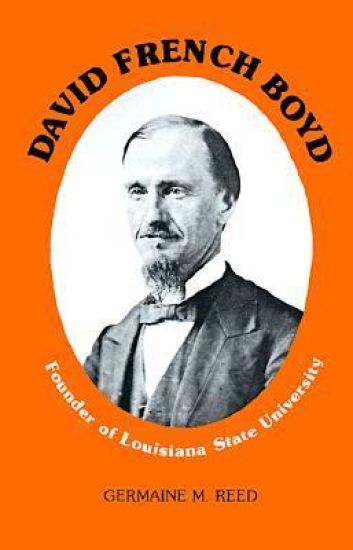
David Boyd's biography is the story of one man's dedicated struggle to protect and preserve Louisiana's fledgling state university from the cumulative effects of war, Reconstruction, political hostility, and parochial greed. Boyd fought hard to promote his vision of higher education among a largely antagonistic or apathetic citizenry. He died, bitter and disillusioned, in 1899, without realizing his dream. But his life was not wasted. Clearly those who governed the university in more prosperous days owned much of their success to the devotion and self-sacrifice of this heroic figure.
Life And Services Of David French Boyd
Andrew Augustus Gunby; J C Eagan
Hutson Street Press
2025
sidottu
Life And Services Of David French Boyd chronicles the remarkable life of a prominent figure in 19th-century American education and military history. Born into a world on the brink of transformation, David French Boyd navigated the tumultuous years leading up to and following the American Civil War, leaving an indelible mark on the institutions he served. This biography delves into Boyd's early life, his distinguished service as an officer in the Confederate Army, and, most notably, his long and influential tenure as president of Louisiana State University. The book explores his tireless efforts to rebuild and expand the university in the post-war South, offering a fascinating glimpse into the challenges and triumphs of higher education during a period of profound social and political change. Through meticulous research and engaging storytelling, this work illuminates Boyd's dedication to education, his leadership during times of crisis, and his enduring legacy as a builder of institutions and a shaper of young minds. It serves as a valuable resource for historians, educators, and anyone interested in the history of the American South and the evolution of higher education. This work has been selected by scholars as being culturally important, and is part of the knowledge base of civilization as we know it. This work was reproduced from the original artifact, and remains as true to the original work as possible. Therefore, you will see the original copyright references, library stamps (as most of these works have been housed in our most important libraries around the world), and other notations in the work. This work is in the public domain in the United States of America, and possibly other nations. Within the United States, you may freely copy and distribute this work, as no entity (individual or corporate) has a copyright on the body of the work. As a reproduction of a historical artifact, this work may contain missing or blurred pages, poor pictures, errant marks, etc. Scholars believe, and we concur, that this work is important enough to be preserved, reproduced, and made generally available to the public. We appreciate your support of the preservation process, and thank you for being an important part of keeping this knowledge alive and relevant.
Life And Services Of David French Boyd (1904)
Andrew Augustus Gunby
KESSINGER PUBLISHING, LLC
2009
nidottu
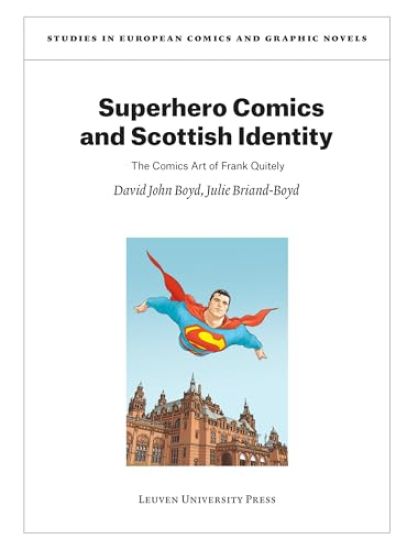
Superhero Comics and Scottish Identity
David John Boyd; Julie Briand-Boyd
Leuven University Press
2025
pokkari
The work of Frank Quitely and the role of comics art in contemporary Scottish culture, politics and society.Superhero Comics and Scottish Identity explores the life and career of Glasgow-born, Eisner Award-winning, and internationally acclaimed Marvel, DC, and Image Comics artist Frank Quitely. With a prolific career spanning more than three decades, Quitely played a pivotal role in the British superhero renaissance of the 1990s and 2000s and in the explosive emergence of the Scottish new wave of comics, a movement that included peers like Alan Grant, Mark Millar, and Grant Morrison, but has been underrepresented in both comics studies and Scottish studies. This work investigates questions of historical and contemporary expressions of Scottishness in transcultural comics genres such as superhero, science fiction, and fantasy. Framed through the lens of comics and literary genres, as well as their British and American editors, Quitely’s approach to Scottishness is oblique and self-reflexive; his expressions of Scottishness are tensely bound to current nuanced examinations of Scottish national, literary and historical subjectivity. His work oscillates between two axiomatic antipodes: the regional, provincial, and local versus the transnational, cosmopolitan, and global.This comprehensive study also features an in-depth interview with Quitely, as well as unearthed archives, sketchbooks, notes, and donated or personal artworks not available elsewhere.This book will be made open access within three years of publication thanks to Path to Open, a program developed in partnership between JSTOR, the American Council of Learned Societies (ACLS), University of Michigan Press, and The University of North Carolina Press to bring about equitable access and impact for the entire scholarly community, including authors, researchers, libraries, and university presses around the world. Learn more at https://about.jstor.org/path-to-open/

David Boyden's classic book, first published in 1965, was the first to deal comprehensively with the history of violin playing against the vast panorama of the violin's evolution and the music written for it. Its principal theme is the manner in which the violin was actually played in past centuries, dealing with such practical questions as bowing disciplines in their national and historical evolution, the performance of staccato, the use of vibrato, the meaning of numerous and esoteric performing directions, the notation and performance of double stops, the rules of scordatura playing, and the sound of the violin in early times. Remaining an invaluable source of reference for the performance of early music, this book is now available for the first time in paperback.

You Might Be a Redneck If...a Postcard Book
Jeff Foxworthy; David (ILT) Boyd
LONGSTREET PR
1995
pokkari


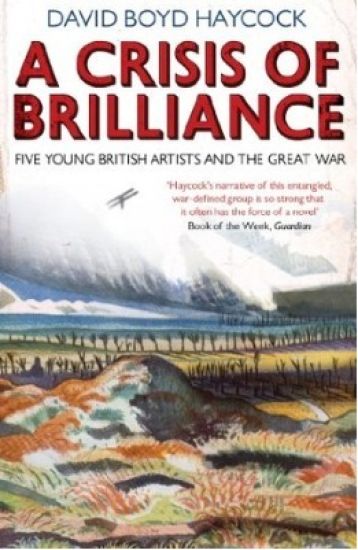
Five Extraordinary Young Artists Before and During the Great War. The story of the formative periods of five of the most important British artists of the 20th century: Dora Carrington, Mark Gertler, Paul Nash, Richard Nevinson and Stanley Spencer. From diverse backgrounds, they met at The Slade in London between 1908 and 1910, in what was later described as the School's 'last crisis of brilliance'. There were love affairs, obsessions, murders and suicide, and they would have to endure the Great War, which changed them - and England - forever.

