Frederick C. (Fritz) Bauerschmidt; Anne Keffer; Maylanne Maybee; George E. Newman; Alison Peden; Josephine (Phina) Borgeson; Rosalind Brown; Brian A. Butcher; David Clark; Susanne Watson Epting; Gloria Marie Jones; E. Louise Williams
A discussion of the historical development of the order of deacons, its theological basis in the Western and Eastern Churches, and the relevance and significance of the diaconate for the Church in the twenty-first century.
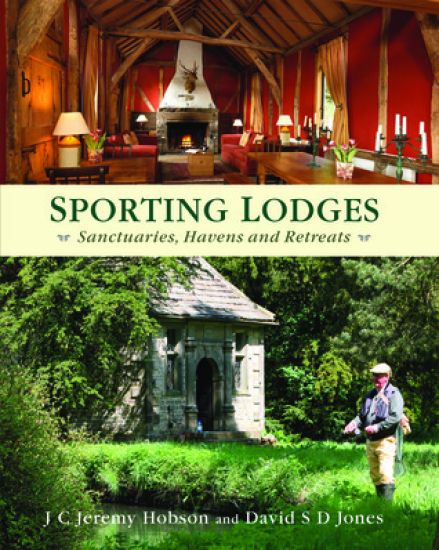
The sporting lodge has adapted over the years to form the focal point of many estates. In this fascinating and beautifully illustrated book, the authors write not only about the lodges themselves but also about fishing huts and modern luncheon lodges. One of the earliest fishing huts is the delightful Charles Cotton’s Fishing House built in 1674 by Izaak Walton’s friend. The informative, lively text describes life in the lodge both then and now with glorious first-hand accounts as well as incidental snippets explaining general shooting lodge fare and dining rituals of times past. Gun-rooms and rod-rooms, game books, fishing registers and hunting diaries are all covered. Every major lodge had a range of outbuildings nearby. Those built in coastal locations might include mooring facilities built originally to allow the owner and his guests to arrive by private steam yacht. Sporting Lodges also records some extreme eccentricities, such as the lodge on a remote Scottish island where the conservatory contained heated turtle pools — turtle soup being considered an excellent ‘restorative’ after a long day’s shooting! With its tales from the past and anecdotes from the present, the authors have written a book which creates a superb portrait of this wonderfully British sporting institution.
David G. Anderson; Derek T. Anderson; Katherine McMillan Barry; Kara Bridgman Sweeney; Samuel O. Brookes; Adam M. Burke; Stephen B. Carmody; Philip J. Carr; William A. Childress; I. Randolph Daniel; Ryan Duggins; Grayal E. Farr; Michael K. Faught; Brendan Fenerty; Jay D. Franklin; Lauren M. Franklin; J. Christopher Gillam; Joseph A. M. Gingerich; Jessi J. Halligan; Kandace D. Hollenbach; Vance T. Holliday; Thomas A. Jennings; K. C. Jones; Shawn A. Joy; Jerald Ledbetter; Greg J. Maggard; Steven M. Meredith; D. Shane Miller
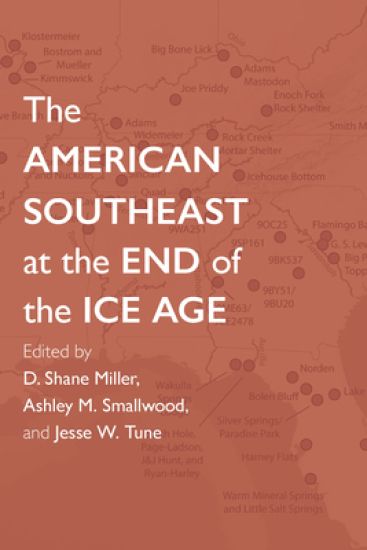
The definitive book on what is known about the Late Pleistocene and Early Holocene archaeological record in the Southeast The 1996 benchmark volume The Paleoindian and Early Archaic Southeast, edited by David G. Anderson and Kenneth E. Sassaman, was the first study to summarize what was known of the peoples who lived in the Southeast when ice sheets covered the northern part of the continent and mammals such as mammoths, saber-toothed cats, and ground sloths roamed the landscape.The American Southeast at the End of the Ice Age provides an updated, definitive synthesis of current archaeological research gleaned from an array of experts in the region. It is organized in three parts: state records, the regional perspective, and reflections and future directions. Chapters survey a diversity of topics including the distribution of the earliest archaeological sites in the region, chipped-stone tool technology, the expanding role of submerged archaeology, hunter-gatherer lifeways, past climate changes and the extinction of megafauna on the transitional landscape, and evidence of demographic changes at the end of the Ice Age. Discussion of the ethical responsibilities regarding the use of private collections and the relationship of archaeologists and the avocational community, insight from outside the Southeast, and considerations for future research round out the volume.
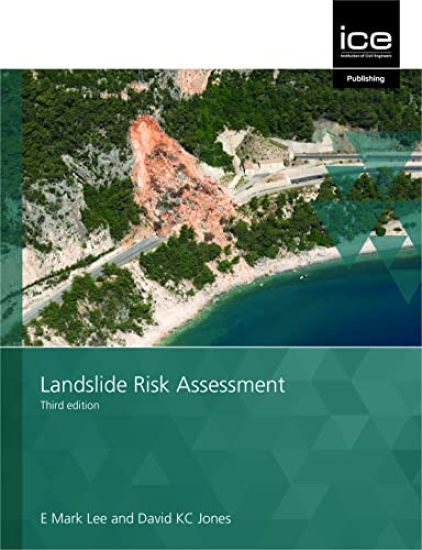
Landslide Risk Assessment, Third Edition is the essential guide on establishing the likelihood and extent to which future slope failures could adversely impact society and affect urban areas. This book examines a variety of approaches to landslide risk assessment and management. It introduces the key challenges that practitioners will need to overcome when estimating the probability and consequences of landsliding. The use of risk criteria is described, marking the important transition between risk assessment and risk management. Now updated with the latest ISO and Society for Risk Analysis guidance, and with a focus on the impact of uncertainty and strength of knowledge on assessing risk plus much more, this book is the authoritative, must-have purchase for any practitioner operating in this area. With international case studies and examples to allow you to put theory into practice, this book covers: risk concepts and modelsbasic elements of landslide risk assessmentlandslide hazardqualitative and quantitative risk assessmentsexposure and vulnerabilityconsequencesquantifying riskassessing uncertainty and strength of knowledge This title will appeal to any geotechnical or civil engineer involved in slope engineering and landslide risk. It will have additional appeal to risk analysts, geomorphologists, hydrologists, foresters, environmental consultants, students, academics and researchers.
The past 20 years have witnessed a change in the study of the prehistory and history of the native peoples of the American South. This paradigm shift is the bridging of prehistory and history to fashion a seamless social history that includes not only the 16th-century Late Mississippian period and the 18th-century colonial period but also the largely forgotten - and critically important - century in between. The shift is in part methodological, for it involves combining methods from anthropology, history, and archaeology. It is also conceptual and theoretical, employing historical and archaeological data to reconstruct broad patterns of history - not just political history with Native Americans as a backdrop, nor simply an archaeology with added historical specificity, but a true social history of the Southeastern Indians, spanning their entire existence in the American South. The scholarship underlying this shift comes from many directions, but much of the groundwork can be attributed to Charles Hudson. The papers in this volume were contributed by Hudson's colleagues and former students (many now leading scholars themselves) in his honor. The assumption linking these papers is that of a historical transformation between Mississippian societies and the Indian societies of the historic era that requires explanation and critical analysis. In all of the chapters, the legacy of Hudson's work is evident. Anthropologists, archaeologists, and historians are storming the bridge that connects prehistory and history in a manner unimaginable 20 years ago. While there remains much work to do on the path toward understanding this transformation and constructing a complete social history of the Southeastern Indians, the work of Charles Hudson and his colleagues have shown the way.
How are Christians to understand and undertake the discipline of psychology? This question has been of keen interest (and sometimes concern) to Christians because of the importance we place on a correct understanding of human nature. Psychology can sometimes seem disconnected from, if not antithetical to, Christian perspectives on life. How are we to understand our Christian beliefs about persons in relation to secular psychological beliefs? This revised edition of a widely appreciated Spectrum volume now presents five models for understanding the relationship between psychology and Christianity. All the essays and responses have been reworked and updated with some new contributors including the addition of a new perspective, the transformative view from John Coe and Todd Hall (Biola University). Also found here is David Powlison (Westminster Theological Seminary) who offers the biblical counseling model. The levels-of-explanation model is advanced by David G. Myers (Hope College), while Stanton L. Jones (Wheaton College) offers an entirely new chapter presenting the integration model. The Christian psychology model is put forth by Robert C. Roberts (Baylor University) now joined by Paul J. Watson (University of Tennesee, Chattanooga). Each of the contributors responds to the other essayists, noting points of agreement as well as problems they see. Eric L. Johnson provides a revised introduction that describes the history of Christians and psychology, as well as a conclusion that considers what might unite the five views and how a reader might evaluate the relative strengths and weaknesses of each view. Psychology and Christianity: Five Views has become a standard introductory textbook for students and professors of Christian psychology. This revision promises to keep it so. Spectrum Multiview Books offer a range of viewpoints on contested topics within Christianity, giving contributors the opportunity to present their position and also respond to others in this dynamic publishing format.
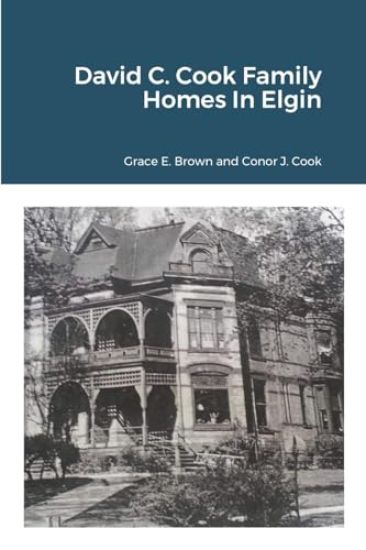
In July 2021 I met with the authors of this unique volume - Conor Cook and Grace Brown. This was an unusual interview with a pair of authors. We met in the home of my son, Bruce Cook and reminisced over extracts from historical collections about homes of the David C. Cook family - my father David C. Cook III, my Grandfather David C. Cook II, and my Great Grandfather - David C. Cook I -often called "The Friend of the Sunday School." Now, to be honest, Conor and Grace are my grandchildren, and I love their talent for writing. And, while we got together to share historical vignettes, I should mention that we also enjoyed my son's barbeque cooking and a plate of cookies just prepared by his wife and my daughter, Helen Brown. And, thanks to my wife, Mary Homeier Cook, for suggesting this book.
Observera att förlaget som ger ut denna produkt baserar innehållet i sina produkter på fria källor som Wikipedia. Boken är med stor sannolikhet endast ett utdrag ur dessa informationskällor, alltså inte en vanlig bok i den bemärkelsen.
A critical analysis of David C. Kang’s China Rising, which is a fine example of an author making use of creative thinking skills to reach a conclusion that flies in the face of traditional thinking.The conventional view that the book opposed, known in international relations as ‘realism,’ was that the rise of any new global power results in global or regional instability. As such, China’s development as a world economic powerhouse worried mainstream western geopolitical scholars, whose concerns were based on the realist assumption that individual countries will inevitably compete for dominance. Evaluating these arguments, and finding both their relevance and adequacy wanting, Kang instead turned traditional thinking on its head by looking at Asian history without preconceptions, and with analytical open-mindedness.Producing several novel explanations for existing evidence, Kang concludes that China’s neighbors do not want to compete with it in the way that realist interpretations predict. Rather than creating instability by jockeying for position, he argues, surrounding countries are happy for China to be acknowledged as a leader, believing that its dominant position will stabilize Asia, and give the whole region more of a hand in international relations. Though critics have taken issue with Kang’s conclusions, his paradigm-shifting approach is nevertheless an excellent example of developing fresh new conclusions through creative thinking.
In early 1970's Bruce L. Cook, eldest son of David C. III, was given 16 typewritten pages by Earl Heindel. It was explained that he had acted as informal historian for the company and wanted his history to be given to a family member so it would not be lost. Now that Earl is gone and the main offices of the company have moved away from Elgin, Bruce wanted to make this history (and a few images) available to the many former employees and their families who retired and/or remained in Elgin. The text is supplemented with an index (including many employee names) and photos. Many current and former employees will enjoy Earl's treasure trove of memories.