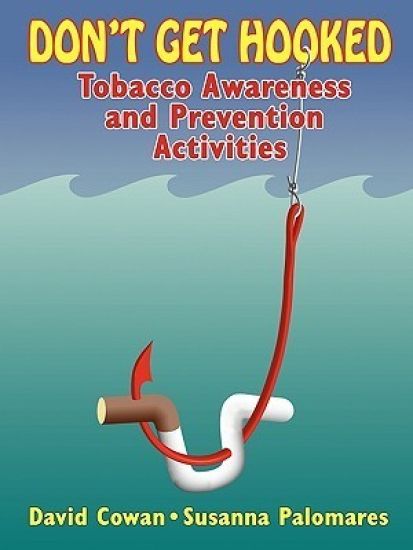
Succinct, timely, and cost-effective, Don't Get Hooked: Tobacco Awareness and Prevention Activities provides everything counselors, teachers, and all those who work with kids need to educate students about tobacco use and prevention. Sections cover the following focus areas: - Learning about Nicotine - Media Influences - Refusal Skills Each of these is developed through brief, interesting discussions and fun, memorable activities for individuals, small groups, and classrooms. This book provides up-to-date information about nicotine as a drug and is based on sound practice and current research.
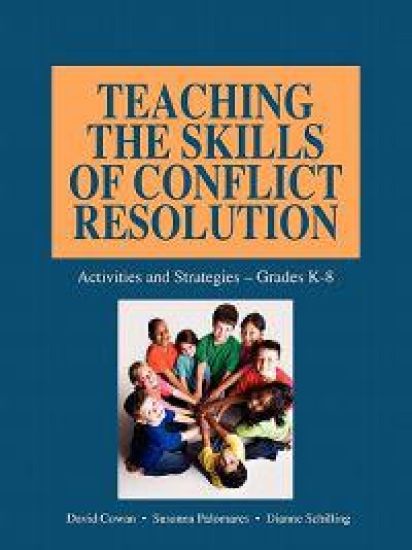
The high-impact activities in this best-selling book are organized to focus on the critical skills and awareness necessary to help kids prevent conflict and to successfully manage and resolve conflict when it does occur. The evidence-based approach of Teaching The Skills Of Conflict Resolution incorporates a variety of proven instructional strategies including sequenced and focused activities, simulations, role-plays, reproducible student handouts, self-reflection prompts, engaging group discussions, and Sharing Circles. Your students will be learning while participating in these hands-on learning experiences designed to help them understand how their thoughts and feelings affect their behavior and what to do to have more self-control. Lesson topics include: ] How one's actions and words affect others ] The importance of accountability when working with others ] Identifying strengths, talents and abilities of self and others ] How prejudice and stereotypes limit relationships ] Respecting differences in race, culture, lifestyle, attitudes and ability ] The need to belong and feel accepted by others ] Appropriate ways of expressing negative feelings ] Good listening and speaking behaviors ] Benefits of cooperation and teamwork in achieving goals ] How stress affects conflict ] Techniques for handling stress ] How to lower levels of conflict and anger ] Learning and practicing specific strategies for resolving conflict Grades Levels: 3-8
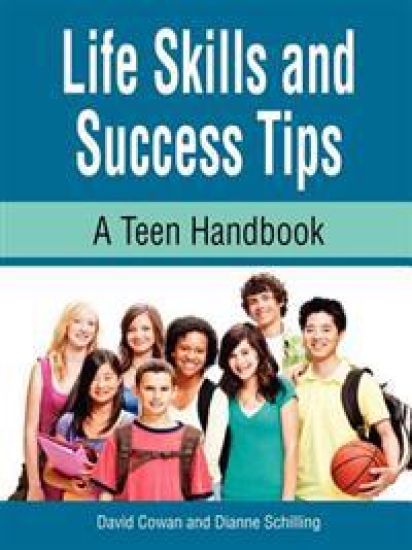
This timely and practical book provides a variety of engaging activities, group discussions, reproducible handouts, and Sharing Circles all designed to help teens develop the knowledge, skills and techniques necessary for effective conflict resolution. In addition, students are given meaningful experiences and information to help them improve their own behaviors while giving them the abilities to deal effectively with others. Use these high-impact activities to provide students with guidance and help in: - handling confrontations - learning the language of conflict de-escalation - coping with anger - managing moods and dealing with criticism - understanding the rules for fighting fair - exploring alternatives to conflict - developing the power of listening - improving social skills - effectively solving problems and making decisions - learning the factors that trigger conflict - controlling behaviors that lead to misunderstandings and conflict
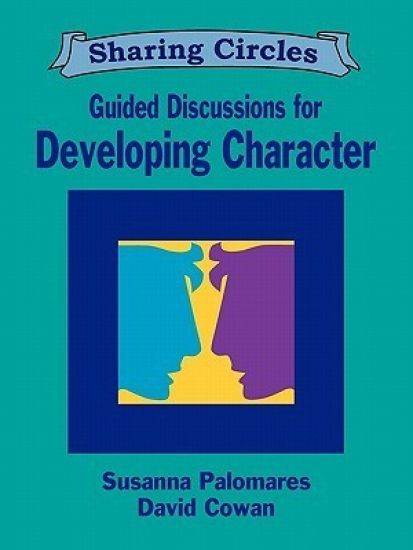
Here is a collection of powerful, small-group discussion activities called Sharing Circles. This proven interactive process will bring focus to vital life skills in the following areas: - Self-Awarenss - Feelings and Wellness - Relating to Others - Learning and Creativity - Decision Making and Problem Solving - Acting Assertively. With specific discussion topics at hand you can tailor the conversations you have with students to optimize learning and to make the greatest impact as an education professional. The book also provides the teacher and/or counselor with detailed background information and a solid theory base, plus comprehensive instructions in the Sharing Circle process.
If burying a child has a special poignancy, the tragedy at a Catholic elementary school in Chicago almost forty years ago was an extraordinary moment of grief. One of the deadliest fires in American history, it took the lives of ninety-two children and three nuns at Our Lady of the Angels School, left many families physically and psychologically scarred for life, and destroyed a close-knit working-class neighborhood. This is the moving story of that fire and its consequences written by two journalists who have been obsessed with the events of that terrible day in December 1958. It is a story of ordinary people caught up in a disaster that shocked the nation. In gripping detail, those who were there—children, teachers, firefighters—describe the fear, desperation, and panic that prevailed in and around the stricken school building on that cold Monday afternoon. But beyond the flames, the story of the fire at Our Lady of the Angels became an enigma whose mystery has deepened with time: its cause was never officially explained despite evidence that it had been intentionally set by a troubled student at the school. The fire led to a complete overhaul of fire safety standards for American schools, but it left a community torn apart by grief and anger, and accusations that the Catholic church and city fathers had shielded the truth. Messrs. Cowan and Kuenster have recreated this tragedy in a powerful narrative with all the elements of a first-rate detective story.
Why do most welfare applicants fail to challenge adverse decisions despite a continuing sense of need? The book addresses this severely under-researched and under-theorised question. Using English homelessness law as their case study,the authors explore why homeless applicants did -- but more often did not -- challenge adverse decisions by seeking internal administrative review. They draw out from their data a list of the barriers to the take up of grievance rights. Further, by combining extensive interview data from aggrieved homeless applicants with ethnographic data about bureaucratic decision-making, they are able to situate these barriers within the dynamics of the citizen-bureaucracy relationship. Additionally, they point to other contexts which inform applicants' decisions about whether to request an internal review. Drawing on a diverse literature -- risk, trust, audit, legal consciousness, and complaints -- the authors lay the foundations for our understanding of the (non-)emergence of administrative disputes.
Drawing upon Foucauldian analyzes of governmentality, the authors contend that social housing must be understood according to a range of political rationalities that saturate current practice and policy. They critically address the practice of dividing social from private tenure; situating subjects such as the purpose and financing of social housing, the regulation of its providers and occupiers and its relationship to changing perceptions of private renting and owner-occupation, within the context of an argument that all housing tenures form part of an understanding of social housing. They also take up the ways in which social housing is regulated through the invocation and manipulation of obscure notions of housing ‘need’ and ‘affordability’, and finally, they consider how social housing has provided a focus for debates about sustainable communities and for concerns about anti-social behaviour. Regulating Social Housing provides a rich and insightful analysis that will be of value to legal scholars, criminologists and other social scientists with interests in housing, urban studies and contemporary forms of regulation.
Drawing upon Foucauldian analyzes of governmentality, the authors contend that social housing must be understood according to a range of political rationalities that saturate current practice and policy. They critically address the practice of dividing social from private tenure; situating subjects such as the purpose and financing of social housing, the regulation of its providers and occupiers and its relationship to changing perceptions of private renting and owner-occupation, within the context of an argument that all housing tenures form part of an understanding of social housing. They also take up the ways in which social housing is regulated through the invocation and manipulation of obscure notions of housing ‘need’ and ‘affordability’, and finally, they consider how social housing has provided a focus for debates about sustainable communities and for concerns about anti-social behaviour. Regulating Social Housing provides a rich and insightful analysis that will be of value to legal scholars, criminologists and other social scientists with interests in housing, urban studies and contemporary forms of regulation.
Reprint of the original, first published in 1871. The publishing house Anatiposi publishes historical books as reprints. Due to their age, these books may have missing pages or inferior quality. Our aim is to preserve these books and make them available to the public so that they do not get lost.
Reprint of the original, first published in 1871. The publishing house Anatiposi publishes historical books as reprints. Due to their age, these books may have missing pages or inferior quality. Our aim is to preserve these books and make them available to the public so that they do not get lost.
What better way to develop character in your students than by involving them in relevant discussions about ethics and moral reasoning? Sharing Circles are a character development super-strategy, and this book is filled with examples of this powerful and versatile social-emotional learning tool. Help students learn the value of virtue and how to develop and draw on inner reserves of moral conviction. Inspiring topics cover such areas as: - empathy - respect - open-mindedness - fairness - generosity - forgiveness - perseverance - responsibility - trustworthiness- honesty - citizenship - positive attitude - courage
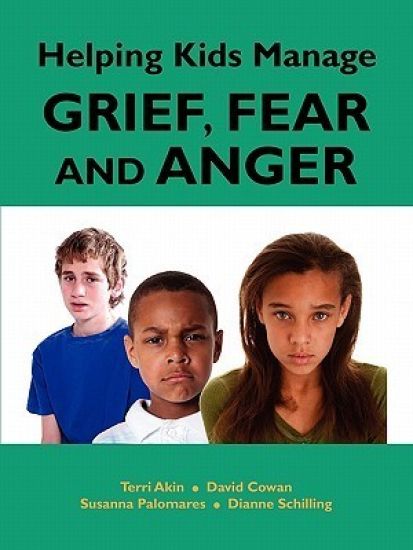
Grief, fear, and anger are significant emotions-so weighty, in fact, that they often drive children to think irrational thoughts and engage in unreasonable behaviors. Such responses, left unchecked, can easily spiral into destructive actions. If we want children to succeed in life, we must equip them with the tools to manage all feelings, especially those that are intense and difficult. These activities, discussions, role plays, simulations, and worksheets are designed to help children explore, understand and express their feelings in safe and acceptable ways. Easy-to-understand explanations coupled with skill practice promote healthy responses to intense and sometimes overwhelming emotions. Children become more centered and focused, communicate more effectively, and demonstrate greater interdependence and understanding. Use these practical and powerful activities to help children: -understand and successfully cope with grief and loss -learn strategies for effectively dealing with fears and worries -develop practical ways for overcoming irrational fears and anxieties -learn how thoughts impact feelings -discover how to substitute moderate thoughts for anger thoughts -identify feelings that precede or precipitate anger -practice acceptable ways of expressing negative feelings -learn self-control and self-management strategies -learn simple meditation experiences to relieve stress and regain emotional balance