
Kirjahaku
Etsi kirjoja tekijän nimen, kirjan nimen tai ISBN:n perusteella.
1000 tulosta hakusanalla David Craig
Though we are all sorry sinners, not worthy to sing God's praises, we must. The trick is to not let concerns for ""Christian stealth"" transform us into poets who end up serving a second master. ""Platform"" has its draw, but we can't let a wide concern for Catholic culture become no culture at all. We can't be so concerned with success that our poems lose their distinguishing content. Jesus is Lord of all the earth. Using a conversational style lifted from Collins and Coleridge, these poems seek to bring a world to light where He has always been alive and active, where he reigns in complete power, worthy of all our praise. May He forgive us all our sins and change us in the twinkling of His eye before our journey ends. ""A compelling pleasure. . . . David Craig longs for the eternal amid the pleasures and trials of the quotidian. He catches glimpses of the everlasting that reveal the larger coherence, his mortal place in the immortal plan. These lovely lyrical meditations are self-effacing but also self-assured, the expression of a self-creating sacrifice: 'Oh great God of the universe / hear us as we move our losses aside / Let that be our voice, our answer.'"" --Andrew Hudgins, author of A Clown at Midnight: Poems ""Barefoot and unadorned, these poems confide in an unpretentious voice. Eschewing ambition, largeness, notoriety, they accept the small, ordinary, and unkempt. And yet in their honest appraisal of our lives and ourselves, they can 'become / a listening place, a place of transformation, ' reminding us of the necessary humility for grace, open to what can be found in the lost and the least, open to God."" --Eric Potter, professor of English, Grove City College, author of Things Not Seen This is David Craig's twenty-third psalm/book and his sixth book of poetry in the last five years. He'd like to thank his wife Linda, his kids, his poetry friends, and his students for offering the life that has made its way into these poems. Christ is risen
Jesus is God, and we as necessarily devotional Christian poets must not shy away from that fact. These poems try to celebrate that reality, who He is, without sacrificing literary quality. They are distinctly American (baseball, jazz, and free verse) in form, Beat in the line of Mary Fabilli, Thomas Merton, and Daniel ""stick it to the man"" Berrigan. And they try to accomplish this without sacrificing humor and romp. May these, and all Christian poems, both now and in the future, wave that flag of freedom--no matter what our personal struggles. Our lives, our poems are about Jesus finally, the One who is mercy itself. May He look kindly upon us, and give us His peace. ""There is, writes the poet, 'a pretty loud party going on in the other world.' And with those words David Craig takes us on a journey of spiritual longing where 'each little moment' on earth, though suffused with astonishment and love, is only a 'pauper's map to heaven.' Throughout this book, the reader encounters the quotidian juxtaposed with the extraordinary--each and all a wonder. While Craig tells us, we might be 'more lost/than would seem possible, ' he also exquisitely reminds us that 'It takes nothing/to truly celebrate.'"" --Lois Roma-Deeley, author of The Short List of Certainties ""David Craig's poems read like something written by a hip Franciscan, filled with a surprising sense of self-effacement and humility, mixed with a continual note of celebration for the things of this world: sunsets, sunrises, the chirp of birds, his beautiful family, the happy howl of his two dogs. Somehow he makes you feel, as he says, as if Jesus were, in fact, 'to walk down the middle of our street / happy to sit with us on our back porch, ' to 'talk about whatever we need to belong to / at the moment.'"" --Paul Mariani, author of Epitaphs for the Journey ""David Craig is one of the best poets working today. His poetic vision might be best described as 'mystical realism, ' and to serve that vision, Craig has evolved a demotic yet lyric style that resembles Emily Dickinson's in its nerve-end economy, William Carlos Williams's in its plain-spoken diction and disarmingly unpretentious tropes, and CK Williams's in its candor of address."" --David Impastato, editor of Upholding Mystery ""The speaker of this collection is someone the reader wants to visit with and learn from. The subtle fusion of tenor and vehicle in his metaphors is a good technique for a fine Catholic poet whose readers need not be Catholic, but only seekers after the metaphysical, trying to find a refreshed vision. On one level these are simply poems about innocence and grace, and how these factors serve as a compass for living a good life in a society where they are underrated and ignored. This collection is satisfying to mind, heart, and spirit. The reader will return to it for refreshment and inspiration."" --Janet McCann, author of Buddha in the Barbed-Wire Garden ""I believe David Craig to be the foremost religious poet of the day whose special gift it is to reveal the presence and care of God in all things--especially the most unlikely things. He gives us poems as rich in humanity as they are of the mystery of God, which is the same. He is doing the work he was called for, and we are blessed by the presence his words generate."" --Howard McCord, author of Collected Poems ""This collection is clear-minded, heartfelt, and so reverent it seems irreverent. 'That is why I beat this drum, walking up and down the property line.' Honest and giddy, grateful and 'I don't know, happy, ' all the reader can do is rejoice over the fact that there is this kind of voice; that is if he or she doesn't mind sharing the trolley with Barbie and Ken, a horde of disagreeable tortoises."" --Periwinkle Bleu, Bon Vivant, Wife About Town David Craig, who had the foresight to marry Linda (nee Unger) Craig when she was a virtual unknown, is a Professor of English at the Franciscan University of Steubenville where he has tau
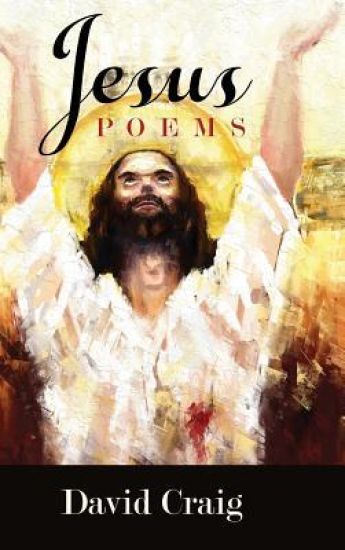
Jesus is God, and we as necessarily devotional Christian poets must not shy away from that fact. These poems try to celebrate that reality, who He is, without sacrificing literary quality. They are distinctly American (baseball, jazz, and free verse) in form, Beat in the line of Mary Fabilli, Thomas Merton, and Daniel ""stick it to the man"" Berrigan. And they try to accomplish this without sacrificing humor and romp. May these, and all Christian poems, both now and in the future, wave that flag of freedom--no matter what our personal struggles. Our lives, our poems are about Jesus finally, the One who is mercy itself. May He look kindly upon us, and give us His peace. ""There is, writes the poet, 'a pretty loud party going on in the other world.' And with those words David Craig takes us on a journey of spiritual longing where 'each little moment' on earth, though suffused with astonishment and love, is only a 'pauper's map to heaven.' Throughout this book, the reader encounters the quotidian juxtaposed with the extraordinary--each and all a wonder. While Craig tells us, we might be 'more lost/than would seem possible, ' he also exquisitely reminds us that 'It takes nothing/to truly celebrate.'"" --Lois Roma-Deeley, author of The Short List of Certainties ""David Craig's poems read like something written by a hip Franciscan, filled with a surprising sense of self-effacement and humility, mixed with a continual note of celebration for the things of this world: sunsets, sunrises, the chirp of birds, his beautiful family, the happy howl of his two dogs. Somehow he makes you feel, as he says, as if Jesus were, in fact, 'to walk down the middle of our street / happy to sit with us on our back porch, ' to 'talk about whatever we need to belong to / at the moment.'"" --Paul Mariani, author of Epitaphs for the Journey ""David Craig is one of the best poets working today. His poetic vision might be best described as 'mystical realism, ' and to serve that vision, Craig has evolved a demotic yet lyric style that resembles Emily Dickinson's in its nerve-end economy, William Carlos Williams's in its plain-spoken diction and disarmingly unpretentious tropes, and CK Williams's in its candor of address."" --David Impastato, editor of Upholding Mystery ""The speaker of this collection is someone the reader wants to visit with and learn from. The subtle fusion of tenor and vehicle in his metaphors is a good technique for a fine Catholic poet whose readers need not be Catholic, but only seekers after the metaphysical, trying to find a refreshed vision. On one level these are simply poems about innocence and grace, and how these factors serve as a compass for living a good life in a society where they are underrated and ignored. This collection is satisfying to mind, heart, and spirit. The reader will return to it for refreshment and inspiration."" --Janet McCann, author of Buddha in the Barbed-Wire Garden ""I believe David Craig to be the foremost religious poet of the day whose special gift it is to reveal the presence and care of God in all things--especially the most unlikely things. He gives us poems as rich in humanity as they are of the mystery of God, which is the same. He is doing the work he was called for, and we are blessed by the presence his words generate."" --Howard McCord, author of Collected Poems ""This collection is clear-minded, heartfelt, and so reverent it seems irreverent. 'That is why I beat this drum, walking up and down the property line.' Honest and giddy, grateful and 'I don't know, happy, ' all the reader can do is rejoice over the fact that there is this kind of voice; that is if he or she doesn't mind sharing the trolley with Barbie and Ken, a horde of disagreeable tortoises."" --Periwinkle Bleu, Bon Vivant, Wife About Town David Craig, who had the foresight to marry Linda (nee Unger) Craig when she was a virtual unknown, is a Professor of English at the Franciscan University of Steubenville where he has tau
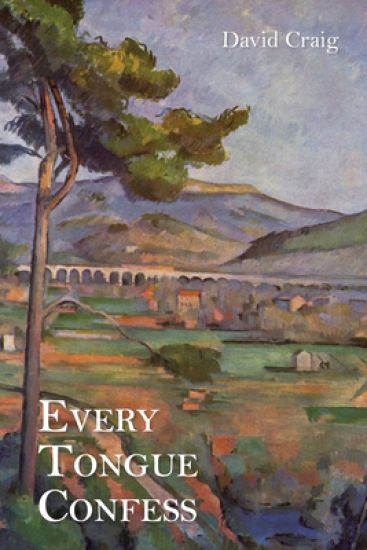
These poems owe their origin to Robert Bly's stunning ghazals in Stealing Sugar from the Castle. (Why Minnesota has not erected a fifty-foot statue in honor of him is beyond me.) But since these lyrics are devotional in a Christian way, they are different. Though they enjoy Bly's wonderful sense of meter, they try to exalt Jesus Christ, the God-man, the Eucharist, in the very ground and summit of our being. They want to praise him in all things, as Christian poetry must do, for what he has done, for what he is doing. Surely the future will see a rise is such poetry. After all, that is why we are here. '""We are not human beings having a spiritual experience. We are spiritual beings having a human experience, ' Pierre Teilhard de Chardin said. These poems illustrate this statement. They ask such questions as: How does a person of deep conviction carry on his daily life, with a wife, children, a job, and all the gifts and thefts of the world? How can he experience joy amidst all the obstacles and difficulties? This book is a spiritual adventure, a road trip Catholics and others will be happy they took. The poems leave a subtle aftertaste of blessing. Their sense of the spiritual richness of ordinary experience is contagious."" --Janet McCann, author of Pascal Goes to the Races ""These poems are brilliant, such a delight to read. . . . David Craig's Every Tongue Confess is a poetic exploration of the human condition that manages to be at once playful and profound, whimsical and wise, earthy and other-worldly. . . . Jesus appears in these poems as infinitely patient, willing to bow low to meet us poor, sinful pilgrims where we are. Read these poems--they will give your soul rare sustenance."" --Christine Schintgen, Associate Professor of Literature, Our Lady Seat of Wisdom College ""The name Craig will be mentioned with the likes of Donne, Blake, Poe, Whitman, Dickinson, Frost, Lawrence, Eliot, Cummings, Hughes, & Merton. Couldn't stop reading. Had 2 send this text 2 give myself a break. Incredible . . . congratulations."" --Duane Drotar, Catholic Activist ""As in all Craig's poetry, everything in Every Tongue Confess is street-level, real, no bullshit, whether he is calling on Monet, Moses, Charlie Parker, or the poet's own family. He presents and questions the nature of God and being, not out of doubt but rather how a child discovers the world as always new and miraculous."" --Bill O'Connell, author of Sakonnet Point This is David Craig's twenty-sixth book, large and small. He has taught creative writing at the Franciscan University of Steubenville for more than thirty years (surely a testament to God's mercy). He would like to thank Jesus for all the folk he has met, for the chance he has had to try and serve.
These poems owe their origin to Robert Bly's stunning ghazals in Stealing Sugar from the Castle. (Why Minnesota has not erected a fifty-foot statue in honor of him is beyond me.) But since these lyrics are devotional in a Christian way, they are different. Though they enjoy Bly's wonderful sense of meter, they try to exalt Jesus Christ, the God-man, the Eucharist, in the very ground and summit of our being. They want to praise him in all things, as Christian poetry must do, for what he has done, for what he is doing. Surely the future will see a rise is such poetry. After all, that is why we are here. '""We are not human beings having a spiritual experience. We are spiritual beings having a human experience, ' Pierre Teilhard de Chardin said. These poems illustrate this statement. They ask such questions as: How does a person of deep conviction carry on his daily life, with a wife, children, a job, and all the gifts and thefts of the world? How can he experience joy amidst all the obstacles and difficulties? This book is a spiritual adventure, a road trip Catholics and others will be happy they took. The poems leave a subtle aftertaste of blessing. Their sense of the spiritual richness of ordinary experience is contagious."" --Janet McCann, author of Pascal Goes to the Races ""These poems are brilliant, such a delight to read. . . . David Craig's Every Tongue Confess is a poetic exploration of the human condition that manages to be at once playful and profound, whimsical and wise, earthy and other-worldly. . . . Jesus appears in these poems as infinitely patient, willing to bow low to meet us poor, sinful pilgrims where we are. Read these poems--they will give your soul rare sustenance."" --Christine Schintgen, Associate Professor of Literature, Our Lady Seat of Wisdom College ""The name Craig will be mentioned with the likes of Donne, Blake, Poe, Whitman, Dickinson, Frost, Lawrence, Eliot, Cummings, Hughes, & Merton. Couldn't stop reading. Had 2 send this text 2 give myself a break. Incredible . . . congratulations."" --Duane Drotar, Catholic Activist ""As in all Craig's poetry, everything in Every Tongue Confess is street-level, real, no bullshit, whether he is calling on Monet, Moses, Charlie Parker, or the poet's own family. He presents and questions the nature of God and being, not out of doubt but rather how a child discovers the world as always new and miraculous."" --Bill O'Connell, author of Sakonnet Point This is David Craig's twenty-sixth book, large and small. He has taught creative writing at the Franciscan University of Steubenville for more than thirty years (surely a testament to God's mercy). He would like to thank Jesus for all the folk he has met, for the chance he has had to try and serve.
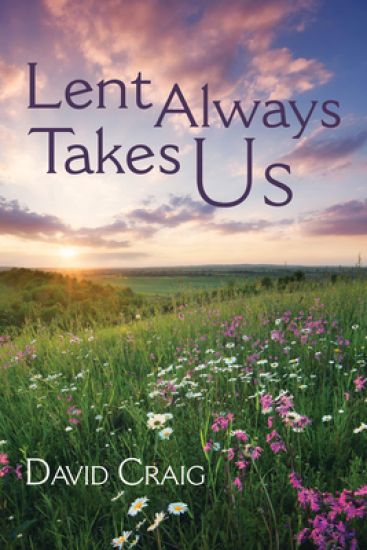
The whole of our lives are a sort of glorious Lent. And so it is in these poems. Most of this book borrows from Bly, who in his poems beautifully turns the Islamic ghazal form to his own ends. These poems, though, try to give all the glory to Jesus Christ, who is the reason why we live and breathe. So often, it seems, contemporary Catholic poets are afraid to give up a secular perspective. This is odd, really, since that point of view will not take us into heaven. In any case, may our Lord forgive us all our stupidity and sins; may the Holy Spirit help us to walk and talk with Jesus, who is Life itself.
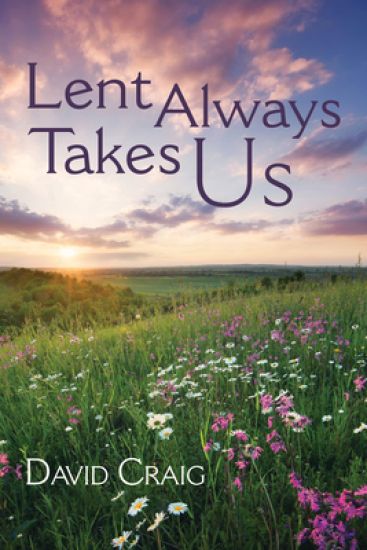
The whole of our lives are a sort of glorious Lent. And so it is in these poems. Most of this book borrows from Bly, who in his poems beautifully turns the Islamic ghazal form to his own ends. These poems, though, try to give all the glory to Jesus Christ, who is the reason why we live and breathe. So often, it seems, contemporary Catholic poets are afraid to give up a secular perspective. This is odd, really, since that point of view will not take us into heaven. In any case, may our Lord forgive us all our stupidity and sins; may the Holy Spirit help us to walk and talk with Jesus, who is Life itself.

A terrific take on theatre singing by a master teacher. David Craig knows more about singing in the musical theatre than anyone in this country ä which probably means the world. Time and time again his advice and training have resulted in actors moving from non-musical theatre into musicals with ease and expertise. SHORT OF TAKING CLASSES THIS BOOK IS A MUST. ä Harold Prince
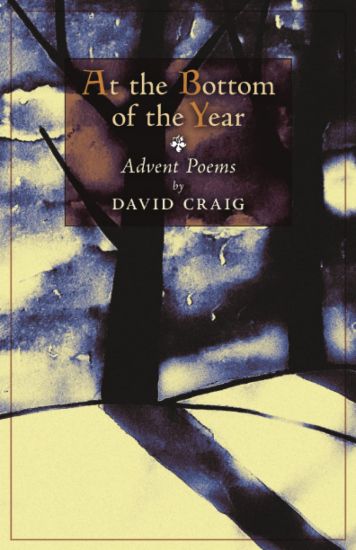
Each Advent season is new. Those most recent have been tumultuous: COVID, bitterly cold snows, visionaries speaking frankly of a coming apocalypse. But other things as well: our own issues, the creeping age factor, the death of loved ones. Advent, like a creaking old metal gate, corrects us every time. It lets us know that only one thing matters: the stable, that little crib where cows chewed hay. Children, and childlike adults, still find all the consolation they need there. We wait for a Jesus who only does joyous endings, whose glory is in that star, in snowy fields--in those who have passed on, and in those who will. These poems celebrate the sweetness of His coming, His presence. We must learn to be still, to wait for and with the One who gives us Life. Praise Him. "David Craig's poetry--full of life, spontaneity, and God--has always brought joy to my heart. But At the Bottom of the Year opens up life in a way that scatters God like shards of light through a fallen, but hopeful world. Warm, human, and seasoned by a puckish sense of humor, this volume of poetry could not have arrived at a more auspicious moment. Drink it to the dregs."--MICHAEL MARTIN, editor of JESUS THE IMAGINATION: A Journal of Spiritual Revolution "David Craig has done it again, this time giving us a fascinating collection of Advent poems in the tradition of the ancient ghazel, but with a sense of the dailiness of life in our moment as husband, father, and now, grandfather. And here's the thing: it's a dailiness sparkling with the sacramental, alive with the presence of Jesus the King walking or gliding past the modest homes and Kentucky Fried Chicken diner in a dream world we inhabit in all its sadness and disappointment, but also its brilliant wit, and, yes, that mysterious sense of heading home on the journey each of us walks."--PAUL MARIANI, poet, biographer, author of Ordinary Time "For David Craig, God is in the details. His world is beautifully sacramental, and so is his poetry. In his poems, frost-covered blades of grass convey grace, as do metal casings, pinecones in the snow, other people (especially those close to him), and every carefully-chosen word. Expecting the wondrous is what Advent is all about, and so is every one of these poems. David Craig has a gift for seeing the infinite ways in which matter and spirit are intertwined, and how expectations of redemption fill every moment. A wonderful and poignant celebration of the Word made flesh, perfectly laced with humor."--CARLOS EIRE, historian, author of Waiting for Snow in Havana
Each Advent season is new. Those most recent have been tumultuous: COVID, bitterly cold snows, visionaries speaking frankly of a coming apocalypse. But other things as well: our own issues, the creeping age factor, the death of loved ones. Advent, like a creaking old metal gate, corrects us every time. It lets us know that only one thing matters: the stable, that little crib where cows chewed hay. Children, and childlike adults, still find all the consolation they need there. We wait for a Jesus who only does joyous endings, whose glory is in that star, in snowy fields--in those who have passed on, and in those who will. These poems celebrate the sweetness of His coming, His presence. We must learn to be still, to wait for and with the One who gives us Life. Praise Him. "David Craig's poetry--full of life, spontaneity, and God--has always brought joy to my heart. But At the Bottom of the Year opens up life in a way that scatters God like shards of light through a fallen, but hopeful world. Warm, human, and seasoned by a puckish sense of humor, this volume of poetry could not have arrived at a more auspicious moment. Drink it to the dregs."--MICHAEL MARTIN, editor of JESUS THE IMAGINATION: A Journal of Spiritual Revolution "David Craig has done it again, this time giving us a fascinating collection of Advent poems in the tradition of the ancient ghazel, but with a sense of the dailiness of life in our moment as husband, father, and now, grandfather. And here's the thing: it's a dailiness sparkling with the sacramental, alive with the presence of Jesus the King walking or gliding past the modest homes and Kentucky Fried Chicken diner in a dream world we inhabit in all its sadness and disappointment, but also its brilliant wit, and, yes, that mysterious sense of heading home on the journey each of us walks."--PAUL MARIANI, poet, biographer, author of Ordinary Time "For David Craig, God is in the details. His world is beautifully sacramental, and so is his poetry. In his poems, frost-covered blades of grass convey grace, as do metal casings, pinecones in the snow, other people (especially those close to him), and every carefully-chosen word. Expecting the wondrous is what Advent is all about, and so is every one of these poems. David Craig has a gift for seeing the infinite ways in which matter and spirit are intertwined, and how expectations of redemption fill every moment. A wonderful and poignant celebration of the Word made flesh, perfectly laced with humor."--CARLOS EIRE, historian, author of Waiting for Snow in Havana
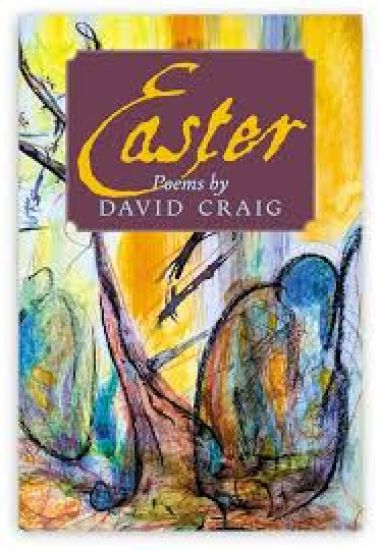
"This is a book of joy, an Easter of jubilation. Holiness infuses these poems: holy flights of imagination, holy laughter, holy living in the everyday, and holy resurrection hope. Even the punishing season of winter is 'a glass of chilled champagne.' And angels everywhere-materializing to sing a Bach mass in the middle of the night on an empty street, or maybe dropping in for a summer swim. The energy, the down-to-earth reverence-is all of a piece, creating an abundance of blessings for any reader fortunate enough to step inside the world David Craig writes and lives."-JILL PEL EZ BAUMGAERTNER, Poetry Editor, Christian Century"With his immediately recognizable voice-wry but reverent-and uncommonly deft prosodic skill, David Craig's new poems serve to resurrect the beauty of formal structures bearing uncontainable and exultant spirit into view."-SCOTT CAIRNS, author of Slow Pilgrim and Anaphora "David Craig's infectious new collection Easter celebrates the being and becoming of the 'unlikely people' with whom 'God hangs out' (oh, may we be among them ). It is impossible not to revel in its joyful faith. The collection brims with verses that merit meditation ('Jesus waits to realize Himself in the flesh of this world./It was what He was born for') as well as countless expressions of sheer happiness derived from a life that is 'changing imperceptibly toward the good.' Craig's gift is to gather the fruit and the fracas of our dailiness and raise them in oblation, without attempting to conceal our rough edges, which are God's to smooth. Easter is poetry to carry with us, from laughter to prayer, from trial to praise."-SOFIA M. STARNES, Virginia Poet Laureate, Emerita
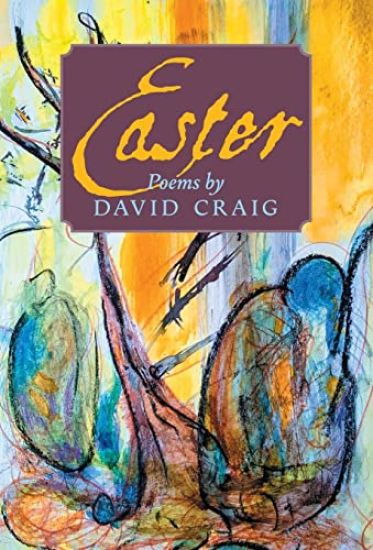
"This is a book of joy, an Easter of jubilation. Holiness infuses these poems: holy flights of imagination, holy laughter, holy living in the everyday, and holy resurrection hope. Even the punishing season of winter is 'a glass of chilled champagne.' And angels everywhere-materializing to sing a Bach mass in the middle of the night on an empty street, or maybe dropping in for a summer swim. The energy, the down-to-earth reverence-is all of a piece, creating an abundance of blessings for any reader fortunate enough to step inside the world David Craig writes and lives."-JILL PEL EZ BAUMGAERTNER, Poetry Editor, Christian Century"With his immediately recognizable voice-wry but reverent-and uncommonly deft prosodic skill, David Craig's new poems serve to resurrect the beauty of formal structures bearing uncontainable and exultant spirit into view."-SCOTT CAIRNS, author of Slow Pilgrim and Anaphora "David Craig's infectious new collection Easter celebrates the being and becoming of the 'unlikely people' with whom 'God hangs out' (oh, may we be among them ). It is impossible not to revel in its joyful faith. The collection brims with verses that merit meditation ('Jesus waits to realize Himself in the flesh of this world./It was what He was born for') as well as countless expressions of sheer happiness derived from a life that is 'changing imperceptibly toward the good.' Craig's gift is to gather the fruit and the fracas of our dailiness and raise them in oblation, without attempting to conceal our rough edges, which are God's to smooth. Easter is poetry to carry with us, from laughter to prayer, from trial to praise."-SOFIA M. STARNES, Virginia Poet Laureate, Emerita
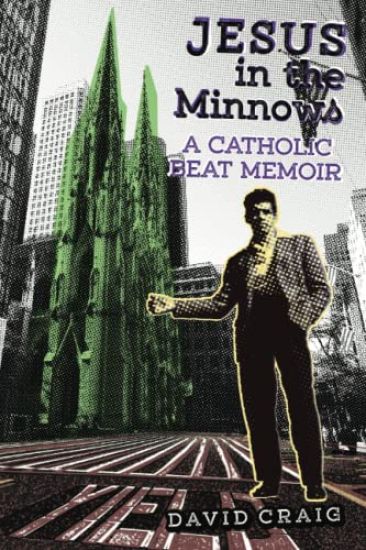
This is a memoir, yes, fictionalized (as all of them are in some way) because the facts don't matter nearly as much here as the Holy Spirit who moves the furniture, the physical world, and everything in it. This unvarnished book tries to do more than offer a happy or easy conversion. It foregrounds the Beat movement too, a movement that has long been way station and home to many excellent Catholic poets. The list is a long one: Kerouac, Merton, Everson, Fabilli, Berrigan, Baxter, Kavanagh, Levertov, Murray, Mariani, Karr, and Mistral. Not to mention song writers: Cohen, Springsteen, Waits; and if we're willing to stretch it a little, Dylan and Mitchell. The form, its openness and incompleteness, are perfect vessels. Jesus in the Minnows tries to bring these things together: a living Jesus, the author's on-going conversion, and his Beat vocation as poet and teacher. The reader will also find that humility, wisdom, mushrooms, and humor have come along to make it an interesting road trip.
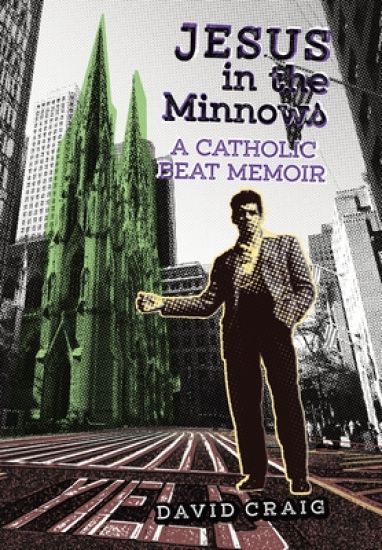
This is a memoir, yes, fictionalized (as all of them are in some way) because the facts don't matter nearly as much here as the Holy Spirit who moves the furniture, the physical world, and everything in it. This unvarnished book tries to do more than offer a happy or easy conversion. It foregrounds the Beat movement too, a movement that has long been way station and home to many excellent Catholic poets. The list is a long one: Kerouac, Merton, Everson, Fabilli, Berrigan, Baxter, Kavanagh, Levertov, Murray, Mariani, Karr, and Mistral. Not to mention song writers: Cohen, Springsteen, Waits; and if we're willing to stretch it a little, Dylan and Mitchell. The form, its openness and incompleteness, are perfect vessels. Jesus in the Minnows tries to bring these things together: a living Jesus, the author's on-going conversion, and his Beat vocation as poet and teacher. The reader will also find that humility, wisdom, mushrooms, and humor have come along to make it an interesting road trip.
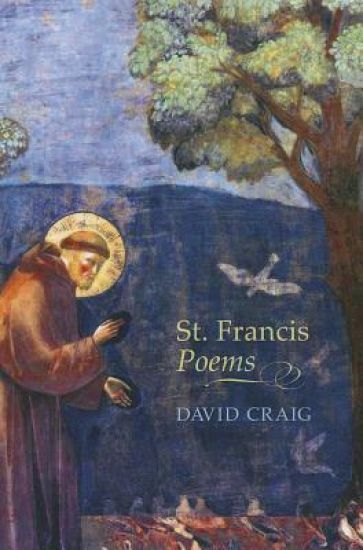
It's a mistake to insist on an upper middle-class gospel. Orthodox Catholic universities can fall into this trap, as any privileged person can. What matters is spiritual poverty. This is what we are called to, to take the lowest part--always. After all, the only sins we can really know are our own. These poems are an attempt to foreground that problem, that solution. May they give Jesus glory, whatever their success.
It's a mistake to insist on an upper middle-class gospel. Orthodox Catholic universities can fall into this trap, as any privileged person can. What matters is spiritual poverty. This is what we are called to, to take the lowest part--always. After all, the only sins we can really know are our own. These poems are an attempt to foreground that problem, that solution. May they give Jesus glory, whatever their success.