Kirjojen hintavertailu. Mukana 12 390 323 kirjaa ja 12 kauppaa.

Kirjahaku

Etsi kirjoja tekijän nimen, kirjan nimen tai ISBN:n perusteella.

1000 tulosta hakusanalla David Foster Wallace

David Foster Wallace and "The Long Thing"
Of the twelve books David Foster Wallace published both during his lifetime and posthumously, only three were novels. Nevertheless, Wallace always thought of himself primarily as a novelist. From his college years at Amherst, when he wrote his first novel as part of a creative honors thesis, to his final days, Wallace was buried in a novel project, which he often referred to as "the Long Thing." Meanwhile, the short stories and journalistic assignments he worked on during those years he characterized as "playing hooky from a certain Larger Thing." Wallace was also a specific kind of novelist, devoted to producing a specific kind of novel, namely the omnivorous, culture-consuming "encyclopedic" novel, as described in 1976 by Edward Mendelson in a ground-breaking essay on Thomas Pynchon's Gravity's Rainbow. David Foster Wallace and "The Long Thing" is a state-of-the art guide through Wallace's three major works, including the generation-defining Infinite Jest. These essays provide fresh new readings of each of Wallace's novels as well as thematic essays that trace out patterns and connections across the three works. Most importantly, the collection includes six chapters on Wallace's unfinished novel, The Pale King, which will prove to be foundational for future scholars of this important text.
David Foster Wallace and the Question of Scepticism

David Foster Wallace and the Question of Scepticism

Matt Prout

EDINBURGH UNIVERSITY PRESS
2026
nidottu
David Foster Wallace and the Question of Scepticism examines the role of scepticism and doubt in Wallace’s work, showing that they are of fundamental importance to his writing in its form and its themes. Wallace’s work articulates a deep ambivalence about the value of scepticism, on the one hand presenting practical and moral arguments for the value of conviction and belief, while on the other hand being committed to a sceptical project of opposing certainty and dogma. On a formal level, Wallace’s writing both solicits the reader’s trust and provokes the reader’s scepticism. This dynamic is responsible for the polarised responses of absolute trust and dissenting scepticism that characterise the work’s reception. By putting these responses into dialogue with the work’s internal treatment of the question of scepticism, this book illuminates the core philosophical investments that drive the work, and the dynamics that have so far governed its reception.
Reading David Foster Wallace Between Philosophy and Literature
This book breaks new ground by showing that the work of David Foster Wallace originates from and functions in the space between philosophy and literature. Philosophy is not a mere supplement to or decoration of his writing, nor does he use literature to illustrate pre-established philosophical truths. Rather, for Wallace, philosophy and literature are intertwined ways of experiencing and expressing the world that emerge from and amplify each other. The book does not advance a fixed or homogenous interpretation of Wallace’s oeuvre but instead offers an investigative approach that allows for a variety of readings. The volume features fourteen new essays by prominent and promising Wallace scholars, divided into three parts: one on general aspects of Wallace’s oeuvre – such as his aesthetics, form, and engagement with performance – and two parts with thematic focuses, namely ‘Consciousness, Self, and Others’ and ‘Embodiment, Gender, and Sexuality’.
Reading David Foster Wallace Between Philosophy and Literature
This book breaks new ground by showing that the work of David Foster Wallace originates from and functions in the space between philosophy and literature. Philosophy is not a mere supplement to or decoration of his writing, nor does he use literature to illustrate pre-established philosophical truths. Rather, for Wallace, philosophy and literature are intertwined ways of experiencing and expressing the world that emerge from and amplify each other. The book does not advance a fixed or homogenous interpretation of Wallace’s oeuvre but instead offers an investigative approach that allows for a variety of readings. The volume features fourteen new essays by prominent and promising Wallace scholars, divided into three parts: one on general aspects of Wallace’s oeuvre – such as his aesthetics, form, and engagement with performance – and two parts with thematic focuses, namely ‘Consciousness, Self, and Others’ and ‘Embodiment, Gender, and Sexuality’.
Understanding David Foster Wallace

Understanding David Foster Wallace

Marshall Boswell

University of South Carolina Press
2020
sidottu
Since its publication in 2003, Understanding David Foster Wallace has served as an accessible introduction to the rich array of themes and formal innovations that have made Wallace's fiction so popular and influential. A seminal text in the burgeoning field of David Foster Wallace studies, the original edition of Understanding David Foster Wallace was nevertheless incomplete as it addressed only his first four works of fiction--namely the novels The Broom of the System and Infinite Jest and the story collections Girl with Curious Hair and Brief Interviews with Hideous Men. This revised edition adds two new chapters covering his final story collection, Oblivion, and his posthumous novel, The Pale King. Tracing Wallace's relationship to modernism and postmodernism, this volume provides close readings of all his major works of fiction. Although critics sometimes label Wallace a postmodern writer, Boswell argues that he should be regarded as the nervous leader of some still-unnamed (and perhaps unnamable) third wave of modernism. In charting a new direction for literary practice, Wallace does not seek to overturn postmodernism, nor does he call for a return to modernism. Rather his work moves resolutely forward while hoisting the baggage of modernism and postmodernism heavily, but respectfully, on its back. Like the books that serve as its primary subject, Boswell's study directly confronts such arcane issues as postmodernism, information theory, semiotics, the philosophy of Ludwig Wittgenstein, and poststructuralism, yet it does so in a way that is comprehensible to a wide and general readership--the very same readership that has enthusiastically embraced Wallace's challenging yet entertaining and redemptive fiction.
Understanding David Foster Wallace

Understanding David Foster Wallace

Marshall Boswell

University of South Carolina Press
2020
pokkari
Since its publication in 2003, Understanding David Foster Wallace has served as an accessible introduction to the rich array of themes and formal innovations that have made Wallace's fiction so popular and influential. A seminal text in the burgeoning field of David Foster Wallace studies, the original edition of Understanding David Foster Wallace was nevertheless incomplete as it addressed only his first four works of fiction--namely the novels The Broom of the System and Infinite Jest and the story collections Girl with Curious Hair and Brief Interviews with Hideous Men. This revised edition adds two new chapters covering his final story collection, Oblivion, and his posthumous novel, The Pale King.Tracing Wallace's relationship to modernism and postmodernism, this volume provides close readings of all his major works of fiction. Although critics sometimes label Wallace a postmodern writer, Boswell argues that he should be regarded as the nervous leader of some still-unnamed (and perhaps unnamable) third wave of modernism. In charting a new direction for literary practice, Wallace does not seek to overturn postmodernism, nor does he call for a return to modernism. Rather his work moves resolutely forward while hoisting the baggage of modernism and postmodernism heavily, but respectfully, on its back.Like the books that serve as its primary subject, Boswell's study directly confronts such arcane issues as postmodernism, information theory, semiotics, the philosophy of Ludwig Wittgenstein, and poststructuralism, yet it does so in a way that is comprehensible to a wide and general readership- the very same readership that has enthusiastically embraced Wallace's challenging yet entertaining and redemptive fiction.
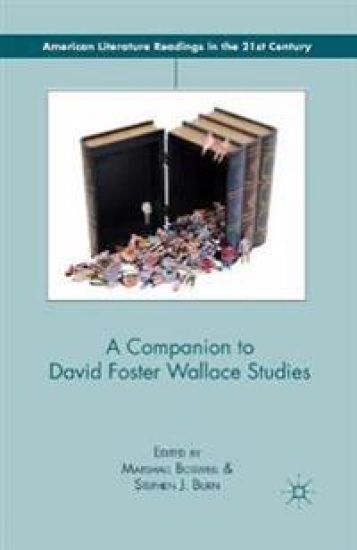
A Companion to David Foster Wallace Studies
Criticism of the work of David Foster Wallace has tended to be atomistic, focusing on a single aspect of individual works. A Companion to the Work of David Foster Wa ll ace is designed as a professional study of all of Wallace's creative work. This volume includes both thematic essays and focused examinations of each of his major works of fiction.
The Cambridge Companion to David Foster Wallace
Best known for his masterpiece Infinite Jest, David Foster Wallace re-invented fiction and non-fiction for a generation with his groundbreaking and original work. Wallace's desire to blend formal innovation and self-reflexivity with the communicative and restorative function of literature resulted in works that appeal as much to a reader's intellect as they do emotion. As such, few writers in recent memory have quite matched his work's intense critical and popular impact. The essays in this Companion, written by top Wallace scholars, offer a historical and cultural context for grasping Wallace's significance, provide rigorous individual readings of each of his major works, whether story collections, non-fiction, or novels, and address the key themes and concerns of these works, including aesthetics, politics, religion and spirituality, race, and post-humanism. This wide-ranging volume is a necessary resource for understanding an author now widely regarded as one of the most influential and important of his time.
The Cambridge Companion to David Foster Wallace
Best known for his masterpiece Infinite Jest, David Foster Wallace re-invented fiction and non-fiction for a generation with his groundbreaking and original work. Wallace's desire to blend formal innovation and self-reflexivity with the communicative and restorative function of literature resulted in works that appeal as much to a reader's intellect as they do emotion. As such, few writers in recent memory have quite matched his work's intense critical and popular impact. The essays in this Companion, written by top Wallace scholars, offer a historical and cultural context for grasping Wallace's significance, provide rigorous individual readings of each of his major works, whether story collections, non-fiction, or novels, and address the key themes and concerns of these works, including aesthetics, politics, religion and spirituality, race, and post-humanism. This wide-ranging volume is a necessary resource for understanding an author now widely regarded as one of the most influential and important of his time.
A Companion to David Foster Wallace Studies
Criticism of the work of David Foster Wallace has tended to be atomistic, focusing on a single aspect of individual works. A Companion to the Work of David Foster Wa ll ace is designed as a professional study of all of Wallace's creative work. This volume includes both thematic essays and focused examinations of each of his major works of fiction.
Gesturing Toward Reality: David Foster Wallace and Philosophy
Asked in 2006 about the philosophical nature of his fiction, the late American writer David Foster Wallace replied, "If some people read my fiction and see it as fundamentally about philosophical ideas, what it probably means is that these are pieces where the characters are not as alive and interesting as I meant them to be."Gesturing Toward Reality looks into this quality of Wallace's work—when the writer dons the philosopher's cap—and sees something else. With essays offering a careful perusal of Wallace's extensive and heavily annotated self-help library, re-considerations of Wittgenstein's influence on his fiction, and serious explorations into the moral and spiritual landscape where Wallace lived and wrote, this collection offers a perspective on Wallace that even he was not always ready to see. Since so much has been said in specifically literary circles about Wallace's philosophical acumen, it seems natural to have those with an interest in both philosophy and Wallace's writing address how these two areas come together.
Gesturing Toward Reality: David Foster Wallace and Philosophy
Asked in 2006 about the philosophical nature of his fiction, the late American writer David Foster Wallace replied, "If some people read my fiction and see it as fundamentally about philosophical ideas, what it probably means is that these are pieces where the characters are not as alive and interesting as I meant them to be."Gesturing Toward Reality looks into this quality of Wallace's work—when the writer dons the philosopher's cap—and sees something else. With essays offering a careful perusal of Wallace's extensive and heavily annotated self-help library, re-considerations of Wittgenstein's influence on his fiction, and serious explorations into the moral and spiritual landscape where Wallace lived and wrote, this collection offers a perspective on Wallace that even he was not always ready to see. Since so much has been said in specifically literary circles about Wallace's philosophical acumen, it seems natural to have those with an interest in both philosophy and Wallace's writing address how these two areas come together.
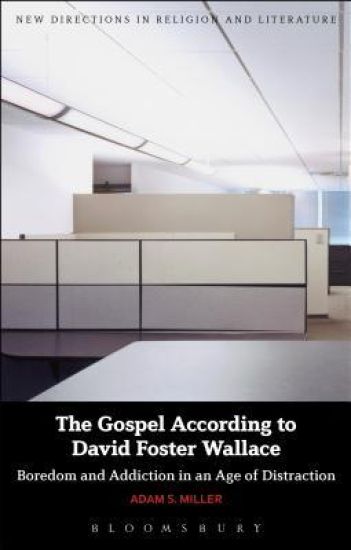
The Gospel According to David Foster Wallace

The Gospel According to David Foster Wallace

Adam S. Miller

Bloomsbury Academic
2016
nidottu
The Gospel According to David Foster Wallace is the first book to explore key religious themes - from boredom to addiction, and distraction – in the work of one of America’s most celebrated contemporary novelists.In a series of short, topic-focussed chapters, the book joins a selection of key scenes from Wallace’s novels Infinite Jest and The Pale King with clear explanations of how they contribute to his overall account of what it means to be a human being in the 21st century. Adam Miller explores how Wallace’s work masterfully investigates the nature of first-world boredom and shows, in the process, how easy it is to get addicted to distraction (chemical, electronic, or otherwise). Implicitly critiquing, excising, and repurposing elements of AA’s Twelve Step program, Wallace suggests that the practice of prayer (regardless of belief in God), the patient application of attention to things that seem ordinary and boring, and the internalization of clichés may be the antidote to much of what ails us in the 21st century.
The Gospel According to David Foster Wallace

The Gospel According to David Foster Wallace

Adam S. Miller

Bloomsbury Academic
2016
sidottu
The Gospel According to David Foster Wallace is the first book to explore key religious themes - from boredom to addiction, and distraction – in the work of one of America’s most celebrated contemporary novelists.In a series of short, topic-focused chapters, the book joins a selection of key scenes from Wallace’s novels Infinite Jest and The Pale King with clear explanations of how they contribute to his overall account of what it means to be a human being in the 21st century. Adam Miller explores how Wallace’s work masterfully investigates the nature of first-world boredom and shows, in the process, how easy it is to get addicted to distraction (chemical, electronic, or otherwise). Implicitly critiquing, excising, and repurposing elements of AA’s Twelve Step program, Wallace suggests that the practice of prayer (regardless of belief in God), the patient application of attention to things that seem ordinary and boring, and the internalization of clichés may be the antidote to much of what ails us in the 21st century.
The Geographies of David Foster Wallace's Novels

The Geographies of David Foster Wallace's Novels

Laurie McRae Andrew

EDINBURGH UNIVERSITY PRESS
2022
sidottu
Explores the relationship between geography and David Foster Wallace's novels Deploys an innovative methodology combining aspects of cultural geography and literary criticism, extending recent work in literary geographies Presents expansive and detailed readings of each of Wallace's novels, drawing new connections between these texts and their historical context Makes extensive original use of archival sources to elucidate the spatial aspects of Wallace's literary practice The Geographies of David Foster Wallace's Novels takes a fresh look at David Foster Wallace's novels through the lens of historical geography. It explores the connections between Wallace's literary practice and the reshaping of American geographical space that resulted from the transition between Fordist and post-Fordist forms of capitalism, presenting critical readings of the novels together with analysis of manuscripts and notebooks from Wallace's archive. Deploying an innovative methodology that combines aspects of cultural geography and literary criticism, each novel is historically situated through a spatial keyword, expanding our understanding of the connections between social context and formal innovation in Wallace's work.
The Geographies of David Foster Wallace's Novels

The Geographies of David Foster Wallace's Novels

Laurie McRae Andrew

EDINBURGH UNIVERSITY PRESS
2024
nidottu
The Geographies of David Foster Wallace's Novels takes a fresh look at David Foster Wallace's novels through the lens of historical geography. It explores the connections between Wallace's literary practice and the reshaping of American geographical space that resulted from the transition between Fordist and post-Fordist forms of capitalism, presenting critical readings of the novels together with analysis of manuscripts and notebooks from Wallace's archive. Deploying an innovative methodology that combines aspects of cultural geography and literary criticism, each novel is historically situated through a spatial keyword, expanding our understanding of the connections between social context and formal innovation in Wallace's work.
I Love You David Foster Wallace

I Love You David Foster Wallace

Pattie Leo Krohn

Createspace Independent Publishing Platform
2013
nidottu
Bernadette and Norman Smith have just celebrated their fiftieth wedding anniversary. After all these years, they are still romantic and in love. They have four children who all have children of their own. The children live in nearby Los Angeles not far from the retirement park where Bernadette and Norman are living. Of all the grandchildren she has, Bernadette has a favorite, Eddie. She and Eddie, who is a teenager when the book begins, have many interests in common. They love books, history and language. And Eddie likes to help Bernadette do small things like show her how to use an iPod. When setting up her computer he scatters his back pack belongings all over the sofa in the study. He hurriedly grabs them up when his dad says it is time to go. Bernadette thinks that the study could use a little change of d cor. As she slides the sofa away from the wall she discovers a book wedged in between the wall and the sofa. The book is Infinite Jest by David Foster Wallace. On the inside cover someone has written "Eddie's Bible". Bernadette believes that Eddie has left her this treasure -- a modern translation of the Bible specifically for young people. And she begins to read it. She doesn't tell anyone about the book, but it starts to influence her decisions and beliefs. As she is beginning her senescence, her mind is aging, too, and logic is fleeing. She, in fact, is showing senility. How will the book influence her decisions about her children and grandchildren? How will it change how she copes and how she feels as old age begins to take its toll on both she and Norman. When their children have problems in their marriages and her grandchildren become unapproachable and her husband's health as well as her own begins to fail, how will "Eddie's Bible" help her, or will it at all? There are no quotes or references to Wallace's book in this novel. The novel is not based on any of his work or on any work about him. And could there be a more odd selection of novels to even refer to in this more delicate story? Perhaps you will find out why I chose that book as you read.
The Unspeakable Failures of David Foster Wallace

The Unspeakable Failures of David Foster Wallace

Clare Hayes-Brady

Bloomsbury Academic USA
2016
sidottu
This book examines the writing of David Foster Wallace, hailed as the voice of a generation on his death. Critics have identified horror of solipsism, obsession with sincerity and a corresponding ambivalence regarding postmodern irony, and detailed attention to contemporary culture as the central elements of Wallace’s writing. Clare Hayes-Brady draws on the evolving discourses of Wallace studies, focusing on the unifying anti-teleology of his writing, arguing that that position is a fundamentally political response to the condition of neo-liberal America. She argues that Wallace’s work is most unified by its resistance to closure, which pervades the structural, narrative and stylistic elements of his writing. Taking a broadly thematic approach to the numerous types of 'failure', or lack of completion, visible throughout his work, the book offers a framework within which to read Wallace’s work as a coherent whole, rather than split along the lines of fiction versus non-fiction, or pre- and post-Infinite Jest, two critical positions that have become dominant over the last five years. While demonstrating the centrality of 'failure', the book also explores Wallace’s approach to sincere communication as a recurring response to what he saw as the inane, self-absorbed commodification of language and society, along with less explored themes such as gender, naming and heroism. Situating Wallace as both a product of his time and an artist sui generis, Hayes-Brady details his abiding interest in philosophy, language and the struggle for an authentic self in late-twentieth-century America.