Kirjojen hintavertailu. Mukana 11 244 527 kirjaa ja 12 kauppaa.

Kirjahaku

Etsi kirjoja tekijän nimen, kirjan nimen tai ISBN:n perusteella.

1000 tulosta hakusanalla David Fuller

Complementarity Modeling in Energy Markets

Complementarity Modeling in Energy Markets

Steven A. Gabriel; Antonio J. Conejo; J. David Fuller; Benjamin F. Hobbs; Carlos Ruiz

Springer-Verlag New York Inc.
2012
sidottu
This addition to the ISOR series introduces complementarity models in a straightforward and approachable manner and uses them to carry out an in-depth analysis of energy markets, including formulation issues and solution techniques. In a nutshell, complementarity models generalize: a. optimization problems via their Karush-Kuhn-Tucker conditions b. on-cooperative games in which each player may be solving a separate but related optimization problem with potentially overall system constraints (e.g., market-clearing conditions) c. conomic and engineering problems that aren’t specifically derived from optimization problems (e.g., spatial price equilibria) d. roblems in which both primal and dual variables (prices) appear in the original formulation (e.g., The National Energy Modeling System (NEMS) or its precursor, PIES). As such, complementarity models are a very general and flexible modeling format. A natural question is why concentrate on energy markets for this complementarity approach? s it turns out, energy or other markets that have game theoretic aspects are best modeled by complementarity problems. The reason is that the traditional perfect competition approach no longer applies due to deregulation and restructuring of these markets and thus the corresponding optimization problems may no longer hold. Also, in some instances it is important in the original model formulation to involve both primal variables (e.g., production) as well as dual variables (e.g., market prices) for public and private sector energy planning. Traditional optimization problems can not directly handle this mixing of primal and dual variables but complementarity models can and this makes them all that more effective for decision-makers.
Complementarity Modeling in Energy Markets

Complementarity Modeling in Energy Markets

Steven A. Gabriel; Antonio J. Conejo; J. David Fuller; Benjamin F. Hobbs; Carlos Ruiz

Springer-Verlag New York Inc.
2014
nidottu
This addition to the ISOR series introduces complementarity models in a straightforward and approachable manner and uses them to carry out an in-depth analysis of energy markets, including formulation issues and solution techniques. In a nutshell, complementarity models generalize: a. optimization problems via their Karush-Kuhn-Tucker conditions b. on-cooperative games in which each player may be solving a separate but related optimization problem with potentially overall system constraints (e.g., market-clearing conditions) c. conomic and engineering problems that aren’t specifically derived from optimization problems (e.g., spatial price equilibria) d. roblems in which both primal and dual variables (prices) appear in the original formulation (e.g., The National Energy Modeling System (NEMS) or its precursor, PIES). As such, complementarity models are a very general and flexible modeling format. A natural question is why concentrate on energy markets for this complementarity approach? s it turns out, energy or other markets that have game theoretic aspects are best modeled by complementarity problems. The reason is that the traditional perfect competition approach no longer applies due to deregulation and restructuring of these markets and thus the corresponding optimization problems may no longer hold. Also, in some instances it is important in the original model formulation to involve both primal variables (e.g., production) as well as dual variables (e.g., market prices) for public and private sector energy planning. Traditional optimization problems can not directly handle this mixing of primal and dual variables but complementarity models can and this makes them all that more effective for decision-makers.
Discarding Decency

Discarding Decency

David M Fuller

Antipodeon
2025
pokkari
He's a disgraced whistleblower, hiding out in a van in a surfside carpark. A nobody, wanted by faceless enemies, unwanted by everyone else-except her. She's a tourist, just another outsider, a bit too good to be true.Drawn to Monaghan, a sprawling estate with a scandalous past, they uncover a conspiracy that binds them closer but makes them targets.In 2024, when morality is a luxury and deep fakes, doxing, and revenge porn are just the beginning, the powerful will stop at nothing to protect their secrets.The game is rigged, the stakes are high, and the odds are stacked against them. As the cards are dealt and the bets are made, he wants to fold. But she's all in. What do they have to lose? Everything.Set against the backdrop of the culture wars-where polarizing issues turn neighbors into enemies and outrage fuels an industry-this is a story about power, privilege, and the human cost of prejudice.The debut novel from D. Mackenzie Fuller.
A Catalogue of French Harpsichord Music 1699-1780

A Catalogue of French Harpsichord Music 1699-1780

Bruce Gustafson; Fuller David

Clarendon Press
1990
sidottu
This catalogue completes the bibliographic survey of French harpsichord music begun in Bruce Gustafson's French Harpsichord Music of the Seventeenth Century: A Thematic Catalogue of Sources with Commentary (Ann Arbor, 1979). It has entries for all of the printed music known to have existed, over 230 volumes, and 150 manuscripts. It offers precise transcriptions of the title pages, full contents, dating, locations, editions, facsimiles, evaluations in the contemporary press, identifications of dedicatees, and stylistic comments. The eighteenth-century French harpsichord repertory is shown to extend from 1699 to about 1780, from Louis Marchand's Pièces de clavecin to the four Symphonies concertantes by Jean-François Tapray that juxtapose the harpsichord and piano as solo instruments. All original keyboard music is included. Since the introduction of the piano into France occurred during the twenty years preceding 1780, this Catalogue includes some music that may have been intended for that instrument rather than for the harpsichord. This period of transition is discussed in full in the Introduction.
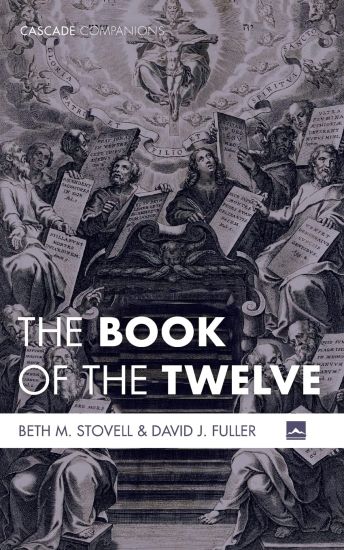
The Book of the Twelve

The Book of the Twelve

Beth M Stovell; David J Fuller

Wipf Stock Publishers
2022
sidottu
This book provides a concise guide to the group of biblical books commonly called "The Book of the Twelve Prophets" or simply "The Twelve." In the past twenty years, scholars have explored how reading this set of books as a unified "Book of the Twelve" creates new avenues for understanding and depth. This Cascade Companion introduces the key questions, themes, and topics related to the Twelve in an accessible way. Starting with a discussion of why scholars call these books "The Twelve," the book explores the major themes that orient the Twelve. The book addresses recent topics impacting the Twelve, including the relationship between wisdom literature and the Twelve, the rise of linguistic and literary approaches, and the impact of editorial theories in the study of the Twelve. As such, this book allows readers to learn what gives the Twelve its unique shape and flavor.
Andrew Fuller and the Search for a Faith Worthy of All Acceptation
The eighteenth-century English minister Andrew Fuller lived a consequential life, debating noteworthy contemporaries such as Thomas Paine and contributing to the pioneering international work of William Carey. However, his soteriology remains his most significant theological contribution. Fuller explored the role that human agency plays in salvation’s reception, and he offered substantive theological proposals that many religious historians now credit with advancing the Evangelical Revival. Fuller’s work was both traditional and creative. He sought faithfulness to the broader Protestant tradition but developed that tradition in unique and contextually relevant ways. Despite Fuller’s influence, much research into his life and work remains. Andrew Fuller and the Search for a Faith Worthy of All Acceptation examines heretofore underutilized primary sources related to Fuller’s theological development. It attends to neglected texts produced by Fuller’s opponents and mentors. Analysing these sources provides a fresh reading of Fuller’s historical setting, one that contextualizes his theology and illuminates his constructive work on faith as a human response to the Gospel. This new interpretation allows scholars to discern more accurately the concepts that animated Fuller, the persons he sought to refute, and the sources on which he relied. This interpretation of Fuller challenges assumptions in contemporary scholarship and raises new questions for further research.