Observera att förlaget som ger ut denna produkt baserar innehållet i sina produkter på fria källor som Wikipedia. Boken är med stor sannolikhet endast ett utdrag ur dessa informationskällor, alltså inte en vanlig bok i den bemärkelsen.
Title: The Conspiracy of Gianluigi Fieschi, or, Genoa in the sixteenth century. Translated ... by David H. Wheeler. With a portrait.]Publisher: British Library, Historical Print EditionsThe British Library is the national library of the United Kingdom. It is one of the world's largest research libraries holding over 150 million items in all known languages and formats: books, journals, newspapers, sound recordings, patents, maps, stamps, prints and much more. Its collections include around 14 million books, along with substantial additional collections of manuscripts and historical items dating back as far as 300 BC.The HISTORY OF EUROPE collection includes books from the British Library digitised by Microsoft. This collection includes works chronicling the development of Western civilisation to the modern age. Highlights include the development of language, political and educational systems, philosophy, science, and the arts. The selection documents periods of civil war, migration, shifts in power, Muslim expansion into Central Europe, complex feudal loyalties, the aristocracy of new nations, and European expansion into the New World. ++++The below data was compiled from various identification fields in the bibliographic record of this title. This data is provided as an additional tool in helping to insure edition identification: ++++ British Library Celesia, Emanuele; Wheeler, David Hilton; 1866. xxxii, 343 p.; 8 . 9150.d.23.
In this simple guide, David Levy inspires readers to experience the wonder of eclipses and other transient astronomical events for themselves. Covering both solar and lunar eclipses, he gives step-by-step instructions on how to observe and photograph eclipses. As well as explaining the science behind eclipses, the book also gives their historical background, discussing how they were observed in the past and what we have learned from them. This personal account contains examples from the 77 eclipses the author has witnessed himself. The guide also includes chapters on occultations of stars and planets by the Moon and of asteroids by stars, and the transits of Mercury and Venus. Tables of future eclipses make this invaluable for anyone, from beginners to practised observers, wanting to learn more about these fascinating events.
The perfect introduction for the novice astronomer, this book stirs the imagination and puts observation in a framework of social activity and personal adventure. Written by an award-winning astronomer, it is a technical guide to the sky, full of helpful practical hints. The author's lively style engages, entertains, and informs. Newcomers will learn how to enjoy the Moon, planets, comets, meteors, and distant galaxies observable through a small telescope. Levy describes the features of the Moon from night to night; how to observe constellations; how best to view the stars, nebulae, and galaxies; how to follow the planets on their annual trek among the constellations; how to map the sky; how to find a new comet; how to buy or even make a telescope; what to see in a month of lunar observations or a year of stellar observation; and much more.
Why is this New Testament different from all other New Testaments? Because the Jewish New Testament expresses its original and essential Jewishness. The New Testament is a Jewish book--by Jews, mostly about Jews, and for Jews as well as Gentiles. Its central figure, the Messiah Yeshua (Jesus), was and is a Jew. Vicarious atonement, salvation, immersion (baptism), the new covenant and the very concept of a Messiah are all Jewish. In sum, the New Testament is built upon and completes the Hebrew Scriptures. Updated with Book Introductions.
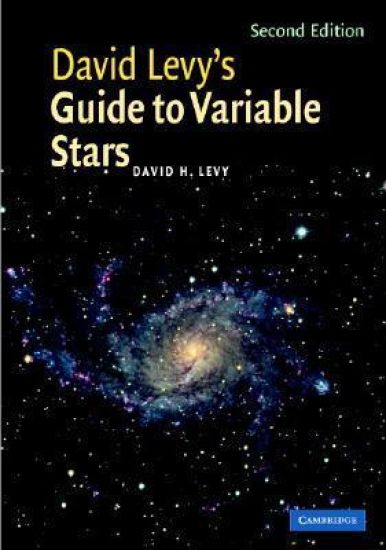
Variable stars are fascinating objects to observe; found all over the sky, they change in brightness over time and can be seen with even the most basic of equipment. Variable star astronomy is one field in which amateur astronomers can still make significant contributions to science and in this highly accessible book David Levy teaches the reader how variable stars work, and how to observe them. Using simple, non-technical terms he explains how to get started with electronic (or CCD) observing, as well as how to observe variable stars through a small telescope or binoculars. Including a section on Southern hemisphere stars, the book covers various types of object that can be observed by amateur astronomers, including more exotic phenomena like gamma ray bursts, blazars, and polars. This book will serve to motivate anyone with even a basic interest in astronomy to begin observing these fascinating objects.
A bouquet of thoughts that enables the reader to reach out to higher things. The main goal is to create a new and better self by adding value to the old one with means of manifestation and achievement.
Dave Longaberger was one of the most remarkable entrepreneurs of his generation. Overcoming seemingly insurmountable odds and employing a unique management philosophy, he created and grew his company into the largest maker of handcrafted baskets in the United States, employing thousands of people, revitalizing his community, and inspiring everyone with a commitment to quality and craftsmanship.
Fast. Motivated. Hard-hitting.That's what every business wants to be. And that's why the U.S. Marines excel in every mission American throws at them, no matter how tough the odds. In Corps Business, journalist David H. Freeman identifies the Marine's simple but devastatingly effective principles for managing people and resources -- and ultimately winning. Freedman discusses such techniques as "the rule of three," "managing by end state," and the "70% solution," to show how they can be applied to business solutions.
Create physically realistic 3D Graphics environments with this introduction to the ideas and techniques behind the process. Author David H. Eberly includes simulations to introduce the key problems involved and then gradually reveals the mathematical and physical concepts needed to solve them. He then describes all the algorithmic foundations and uses code examples and working source code to show how they are implemented, culminating in a large collection of physical simulations. The book tackles the complex, challenging issues that other books avoid, including Lagrangian dynamics, rigid body dynamics, impulse methods, resting contact, linear complementarity problems, deformable bodies, mass-spring systems, friction, numerical solution of differential equations, numerical stability and its relationship to physical stability, and Verlet integration methods. This book even describes when real physics isn't necessary - and hacked physics will do.
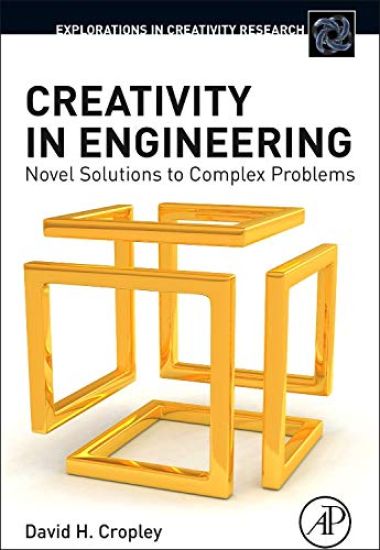
Creativity is like an iceberg - the resulting new idea, or novel solution is only 10% of the effort. The other 90% is the complex interplay of thinking skills and strategies, personal and motivational properties that activate these skills and strategies, and the social and organizational factors of the environment that influence the creative process. Creativity in Engineering focuses on the Process, Person, Product, and Place to understand when and why creativity happens in the engineering environment and how it can be further encouraged. Special Features: Applies findings in creativity research to the engineering arena Defines engineering creativity and differentiates it from innovation Discusses personality and motivational factors that impact creativity Clarifies the role of creativity in the design process Details the impact of thinking skills and strategies in creativity Identifies the role the organization and environment plays in encouraging creativity
Patient-Centered Medicine: A Human Experience emphasizes the health professional's role in caring for patients as unique individuals by focusing on the patients' psychological and social realities as well as their biological needs. The book concerns itself with caring for the whole patient, and outlines the basic principles involved in developing a biopsychosocial approach to medical practice. This is a volume of guidelines that will help medical students and clinicians develop and master basic attitudes and skills essential to providing empathic and comprehensive medical care. As Norman Cousins writes in the foreword, 'The authors understand and repeatedly demonstrate in this book, that the patient-physician relationship is a powerful, sometimes mysterious, frequently healing interaction between human beings. It is the person of the doctor and the presence of the doctor-just as much and frequently more than-what the doctor does that creates an environment for healing. The physician represents restoration. The physician holds the lifeline.' Since the book's original publication by University Park Press in 1984, greater awareness and acceptance of the biopsychosocial model has occurred, and medical schools are now working to fully integrate psychosocial education into the clinical curriculum.
David H. Barlow; Todd J. Farchione; Shannon Sauer-Zavala; Heather Murray Latin; Kristen K. Ellard; Jacqueline R. Bullis; Kate H. Bentley; Hannah T. Boettcher; Clair Cassiello-Robbins
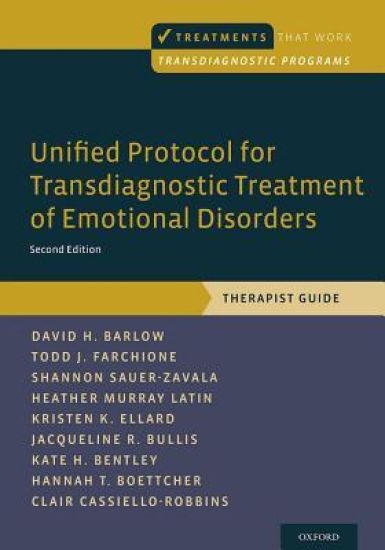
Contemporary research on major emotional disorders emphasizes their commonalities rather than their differences. This research continues to lend support for a unified transdiagnostic approach to treatment of these disorders that considers their commonalities and is applicable to a range of emotional problems. Unified Protocol for Transdiagnostic Treatment of Emotional Disorders provides an alternative to disorder-specific treatments of various emotional disorders, designed to be applicable to the wide range of anxiety and other disorders with strong emotional components. The Therapist Guide and accompanying client Workbook present an eight-module therapy program that puts substantial emphasis on emotion-focused approaches, helping clients confront and experience challenging emotions while teaching them how to regulate those emotions. Expanded considerably in this second edition, the volume provides guidance on using the Unified Protocol (UP) to address problems not only with anxiety, but also with depression, eating disorders, non-suicidal self-injury, substance use, and anger. Treatment procedures have been further elucidated and more guidance is provided to practitioners on how to present key treatment concepts. Chapters brand new to this updated edition introduce functional assessment and describe how to provide the UP in a group format, while patient materials have been revised, streamlined, and made more user-friendly.
David H. Barlow; Todd J. Farchione; Shannon Sauer-Zavala; Heather Murray Latin; Kristen K. Ellard; Jacqueline R. Bullis; Kate H. Bentley; Hannah T. Boettcher; Clair Cassiello-Robbins
Leading therapists and researchers have come to understand that many psychological disorders share common features and respond to common therapeutic treatments. This deepened understanding of the nature of psychological disorders, their causes, and their symptoms has led to the development of new, comprehensive treatment programs that are effective for whole classes of disorders. Unified Protocol for Transdiagnostic Treatment of Emotional Disorders is one such program. Designed for individuals suffering from emotional disorders, including panic disorder, social anxiety disorder, generalized anxiety disorder, posttraumatic stress disorder, obsessive compulsive disorder, and depression, this program focuses on helping you to better understand your emotions and identify what you're doing in your responses to them that may be making things worse. Throughout the course of treatment you will learn different strategies and techniques for managing your emotional experiences and the symptoms of your disorder. You will learn how to monitor your feelings, thoughts, and behaviors; confront uncomfortable emotions; and learn more effective ways of coping with your experiences. By proactively practicing the skills presented in this book-and completing the exercises, homework assignments and self-assessment quizzes provided in each chapter, you will address your problems in a comprehensive and effective way so you can regulate your emotional experiences and return to living a happy and functional life.