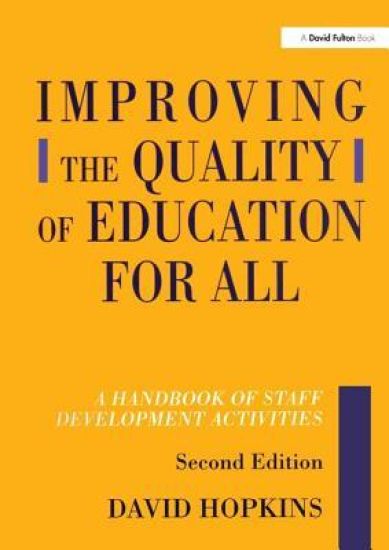
The "Improving the Quality of Education for All" (IQEA) school improvement project has, over the last ten years, reduced and evaluated a model of development that strengthens the school's ability to provide high quality education for all its pupils by building on existing good practice. The schools within the IQEA network have also provided the setting for a long-term investigation into the processes of school change and the enhancement of student achievement. This book provides many practical staff development activities and gives examples of specific changes which have taken place in IQEA schools, relating both to the progress of students and the professional development of their teachers. These training activities and examples demonstrate that improving the quality of education has many facets, not all of which can be measured and translated into league tables.
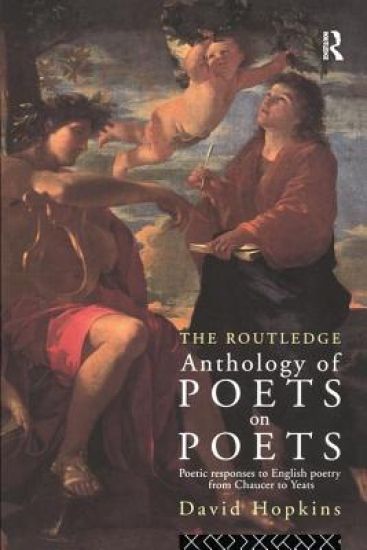
The Routledge Anthology of Poets on Poets collects together writings by all the major poetic figures from Chaucer to Yeats demonstrating their vivid responses to each other, ranging from elegiac eulogy to burlesque and satire. The anthology is arranged in two sections. Part One contains poets' writings on the nature, qualities and purpose of poetry Part Two is a chronological collection of poets' writings on their peers, with an individual entry for each poet. Each extract is presented in modernized spelling and punctuation, and is carefully annotated to provide full explanations of unfamiliar phrases and references. The index has been fully revised for this paperback edition.The Routledge Anthology of Poets on Poets will be stimulating and enjoyable for anyone interested in the history of English poetry, but will also be an invaluable collection of primary source material for students and their teachers.
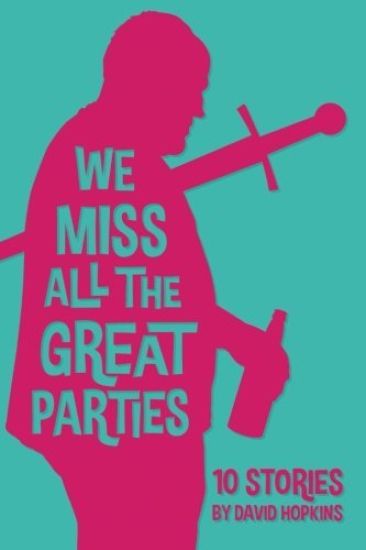
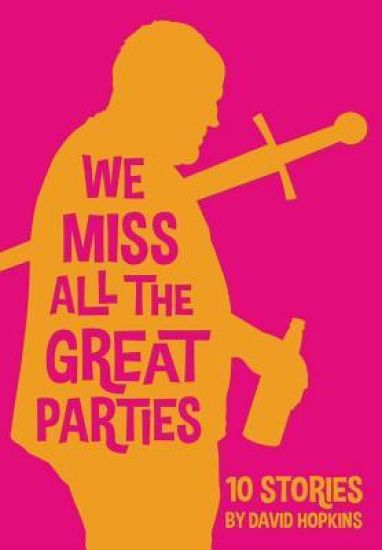
10 stories about odd encounters and personal exploration: A young man in search of meaning connects with his dead girlfriend's son. A group of men in Wisconsin start a poetry group while waiting for their favorite bar to be rebuilt. A woman discovers her husband has been hiding a secret. He also wants to rob a bank. A basketball player continually relives the last six seconds of his worst game. An amateur chess player encounters greatness. A girl attempts to leave a small town. But before she goes, she learns the story of one who stayed.
10 stories about odd encounters and personal exploration: A young man in search of meaning connects with his dead girlfriend's son. A group of men in Wisconsin start a poetry group while waiting for their favorite bar to be rebuilt. A woman discovers her husband has been hiding a secret. He also wants to rob a bank. A basketball player continually relives the last six seconds of his worst game. An amateur chess player encounters greatness. A girl attempts to leave a small town. But before she goes, she learns the story of one who stayed. These stories span a variety of genres, technical approaches, and perspectives-one story is a parody, another is written entirely as a series of conversations, one story is a family melodrama, another is a contemplation of pro sports and time travel. ""This 10-month project, which turned into a two-year project, represents what I love most about short stories: the opportunity to experiment and play, to expand a condensed world.""
There is a paradox at the heart of contemporary school improvement and system change in education. Why is it that despite the phenomenal increase in our recent knowledge about what works in schooling, standards still lag behind expectations and school level performance is far too variable? Unleashing Greatness addresses this paradox and concludes that, unless we focus unrelentingly on the quality of teaching in both our small and large-scale reform efforts, current practice will never meet society's expectations.Unleashing Greatness is a compilation of David Hopkins' writing into one concise manual to provide an eight-step strategy for unleashing greatness. Introducing a rational and conceptual framework for pedagogic improvement that has the potential for generating an increasingly specific language for teaching and learning, this book significantly aids consistency and precision in the quest for both excellence and equity for all students.Written for 'school improvement activists', particularly those who work in laboratory schools or who wish to emulate that ethos and way of working, the author himself has located his professional practice for over forty years, as well as this book, in the middle of that triangle bounded by the vertices of practice, research and policy.
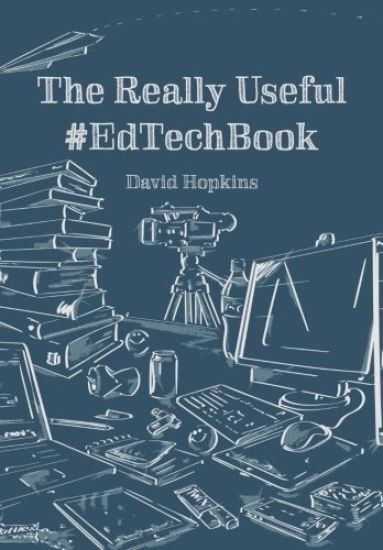
Technology has invaded our working and recreational lives to an extent that few envisaged 20 or 30 years ago. We'd be fools to avoid the developments in personal, mobile, and wearable technology. Even if we tried we'd still have to deal with other developments and distractions in classroom and learning technology like smart boards, blogs, video, games, students-led learning, virtual learning environments, social media, etc. More than this, however, is how the advances in technology, the economic and physical miniaturisation of computing devices, have impacted education: the students, the teachers, the classrooms, the spaces, the connections, the aspirations, etc.'The Really Useful #EdTechBook' is about experiences, reflections, hopes, passions, expectations, and professionalism of those working with, in, and for the use of technology in education. Not only is it an insight into how, or why, we work with these technologies, it's about how we as learning professionals got to where we are and how we go forward with our own development.In this book respected individuals from different education sectors write about many aspects of learning technology; from Higher Education (Sue Beckingham, Peter Reed, Dr David Walker, Sheila MacNeil, Terese Bird, Wayne Barry, Inge de Waard, and Sharon Flynn), Further Education (Rachel Challen), to Museums (Zak Mensah), workplace learning (Julian Stodd, Julie Wedgwood, and Lesley Price) and primary schools / early years education (Mike McSharry). With a foreword written by Catherine Cronin, from the National University Ireland, Galway, the breadth and depth of the experiences here are second to none.The knowledge these leading learning practitioners, researchers, and professionals, share, under the same cover, is a unique opportunity for you to read about the variety of approaches to learning technology, the different perspectives on the same technology, and how technology is impacting our culture and learning infrastructure, from early-age classrooms to leading research Universities and from museums and workplace learning providers. It is about our passion for our work and our desire to make our work better through our own learning and development.Contributory authors: Catherine Cronin: ForewordDavid Hopkins: IntroductionWayne Barry: "...and what do you do?" Can we explain the unexplainable?Zak Mensah: "Why do we do what we do?"Peter Reed: "The structure and roles of Learning Technologists within Higher Education Institutions"Rachel Challen: "Learning Technologists as agents of change? Blending policy and creativity"Julie Wedgwood: "Developing the skills and knowledge of a Learning Technologist"Dr David Walker and Sheila MacNeill: "Learning Technologist as Digital Pedagogue"Lesley Price: "Times they are a changing ...or not?"Sue Beckingham: "The Blended Professional: Jack-of-all-Trades and Master of Some?"Julian Stodd: "How gadgets help us learn"Terese Bird: "Students Leading the Way in Mobile Learning Innovation"Inge de Waard: "Tech Dandy, or the Art of Leisure Learning"Sharon Flynn: "Learning Technologists: changing the culture or preaching to the converted?"Mike McSharry: "This is your five-minute warning "
FINALIST SELF HELP Next Generation Indie Book Award 2016 FINALIST SELF HELP USA News Award 2015 We all have a built in weapon system that we rarely use, it's called anxiety. We are taught that anxiety is something to avoid. That emotional experiences such as fear, trepidation, or stress, are contrary to living a happy life. We are also told that in threatening situations, anxiety should be quelled. This is not true. Realize that a key to success in a threatening situation is to use your anxiety to increase your sensory input with information vital to your survival. Understand how to manipulate the anxiety of your aggressor, denying him critical information he will need for success. Whether you are a college student, a martial artist, a parent, or a citizen, you will learn three constants that will help you stay safer and reduce your overall risk of being victimized by aggression. *How your instincts are the key to making the right decisions for the toughest challenges.*Why your anxiety is the link between decision-making and instinct.* How to be completely in the moment, so your will can coordinate your anxieties and your instincts into a highly effective decision-making process. David Hopkins brings together a unique mix of expertise from professions in psychology and psychotherapy, martial arts, security and anti-terror. He will provide a practical, proven and effective system for enhancing any martial arts or self-defense system. Whether facing potential or active threats, either real time or online, you will learn to protect yourself and your family more effectively. You will be given practical exercises for developing these skills and examples from my own experiences in close protection/security, anti-terror, and undercover work using this same system. When you finish with this book, you will be more effective and more successful at facing a physical or mental enemy, no matter how large or small that may be.
In his latest educational exposé, internationally acclaimed author and scholar, Professor David Hopkins, places established and emerging ideas about effective school and system improvement under scrutiny. Exploding the Myths of School Reform confronts real-world challenges and perspectives from research, policy and practice, and draws on international benchmarking studies to support its objectives and claims. With each of ten chapters addressing a perceptible fallacy--such as the myths that poverty determines performance, that achievement cannot be achieved at scale, that innovation and networking always add value and that it is curriculum rather than learning that counts--this ground-breaking manifesto is set to provoke and persuade.
The "Improving the Quality of Education for All" (IQEA) school improvement project has, over the last ten years, reduced and evaluated a model of development that strengthens the school's ability to provide high quality education for all its pupils by building on existing good practice. The schools within the IQEA network have also provided the setting for a long-term investigation into the processes of school change and the enhancement of student achievement. This book provides many practical staff development activities and gives examples of specific changes which have taken place in IQEA schools, relating both to the progress of students and the professional development of their teachers. These training activities and examples demonstrate that improving the quality of education has many facets, not all of which can be measured and translated into league tables.
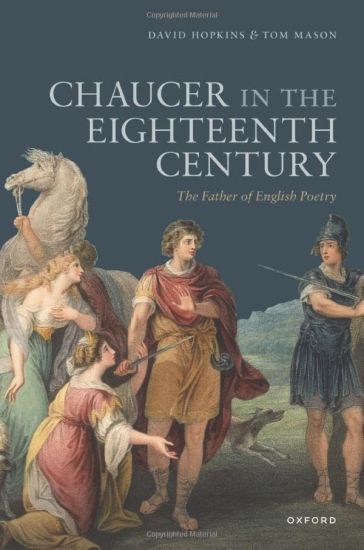
This volume is a study of how the poetry of Chaucer continued to give pleasure in the eighteenth century despite the immense linguistic, literary, and cultural shifts that had occurred in the intervening centuries. It explores translations and imitations of Chaucer's work by Dryden, Pope, and other poets (including Samuel Cobb, John Dart, Christopher Smart, Jane Brereton, William Wordsworth, and Leigh Hunt) from the early eighteenth to the early nineteenth centuries, as well as investigating the beginnings of modern Chaucer editing and biography. It pays particular attention to critical responses to Chaucer by Dryden and the brothers Warton, and includes a chapter on the oblique presence of Chaucer in Samuel Johnson's Dictionary. It explores the ways in which Chaucer's poetry (including several works now known not to be by him) was described, refashioned, reimagined, and understood several centuries after its initial appearance. It also documents the way that views of Chaucer's own character were inferred from his work. The book combines detailed discussion of particular critical and poetic texts, many of them unfamiliar to modern readers, with larger suggestions about the ways in which poetry of the past is received in the future.
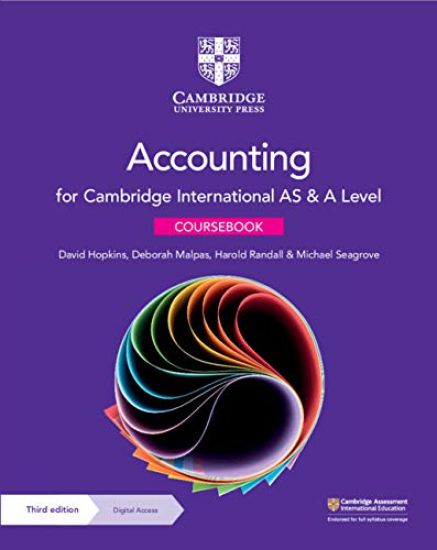
This series supports teachers and students of Cambridge International AS & A Level Accounting (9706) for examination from 2023. Empower your students to become confident learners and achieve success with our third edition of our Cambridge International AS & A Level Accounting series. Closely mapped to the new syllabus, our coursebook with digital access, workbook and digital teacher's resource are the perfect addition to any classroom and come filled with real-world connections and exam support.
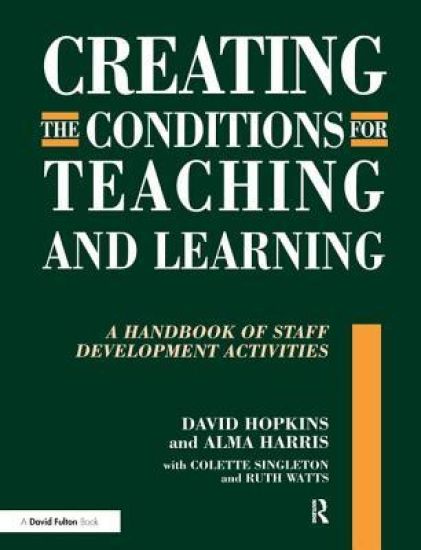
First Published in 2001. This handbook, arising out of IQEA project (Improving the Quality of Education for All), focuses on a basic repertoire of teaching and learning strategies and a series of activities designed to help teachers extend and deepen their range of teaching skills. The authors set out for CPD tutors ways of bringing research evidence and critical self-reflection to bear on practice, in the pursuit of confident teaching and effective learning. The goal is to locate and unleash the full potential of individual teachers through evidence, selection and variety, rather than to impose pre-determined notions or models of teaching and learning, regardless of the relevance to particular groups of students and their teachers.
First Published in 1994. Hopkins and Putnam hold a questioning and healthily sceptical attitude towards the theory and practice of adventure education, something they claim has received insufficient reflection by practitioners on the nature of the process of adventure education. This title outlines their claims that a clear and simple exposition of principles and, consequently, practice has not been well enough informed. Written to stimulate debate, the critical stance that prompted the authors' way of thinking, and so ultimately the book, has a great deal to do with the pervading attitudes at the Outward Bound schools.
First Published in 1994. Hopkins and Putnam hold a questioning and healthily sceptical attitude towards the theory and practice of adventure education, something they claim has received insufficient reflection by practitioners on the nature of the process of adventure education. This title outlines their claims that a clear and simple exposition of principles and, consequently, practice has not been well enough informed. Written to stimulate debate, the critical stance that prompted the authors' way of thinking, and so ultimately the book, has a great deal to do with the pervading attitudes at the Outward Bound schools.