Kirjahaku
Etsi kirjoja tekijän nimen, kirjan nimen tai ISBN:n perusteella.
1000 tulosta hakusanalla David K Merrill
The Affordable Care Act (ACA) contained a threat that any state refusing to set up a health insurance exchange would lose control to the federal government. Republicans had supported the concept before it became part of Obamacare, and so virtually every state was expected to cooperate and implement this core part of the law through which millions would receive financial assistance to buy health insurance. However, 34 states refused to participate, using their flexibility as an opportunity to try to bring down the entire law. This is a stunning miscalculation by the Obama administration. This book tells the story of what happened in the final two states to choose state control (Idaho and New Mexico) and the two that came the closest but did not (Michigan and Mississippi). Contrary to how it is typically described in the media, the most intense split was not between Republicans and Democrats, but within the Republican Party. Governors were the most important people in the fight over exchanges, but did not always get their way. The Tea Party was amazingly successful at defeating the most powerful interest groups. State-level and national conservative think tanks were important allies to the Tea Party. The relative power of these groups was shaped by differences in institutional design and procedures, such as whether a state has term limits and the length of legislative sessions. Opposition was more easily overcome in states whose conditions facilitated the development of legislative "pockets of expertise." This is a dramatic example of opponents using federalism to block national reform and serves as a warning of the challenge of inducing state cooperation in other policy domains such as the environment and education.

The majority of patients in need of organ transplants do not survive long enough for a suitable human organ to become available. Xenotransplantation, the transplant of animal organs into humans, has attracted substantial media attention. If, as appears likely, it proves possible to "humanize" animal organs and evade the problems of rejection, in the coming few years there will be a tremendous increase in this procedure, mostly using organs from animals specifically for their harvestable organs. This book will lay out the potential and promise of the technique, the history of organ transplantation, the technical problems and breakthroughs in overcoming immune rejection, and typing and humanizing donor organs for transplantation. The ethical question of growing animals specifically for organ harvest, and the substantial public health concern from the certainty that animal viruses will pass into humans with the donated organs, will be fully discussed. The authors are among the leaders in the field of Xenotransplantation.
Refugee Solutions in the Age of Global Crisis
David K. Androff
OXFORD UNIVERSITY PRESS INC
2023
sidottu
One in every ninety-five people on the planet has been forcibly displaced from their home and our collective response is woefully inadequate. Through comparative case study, Refugee Solutions in the Age of Global Crisis provides the first policy analysis in 70 years of the three durable solutions -- voluntary repatriation, local integration, and third country resettlement -- and offers implications for their reform. Reforming yesterday's solutions requires understanding how they have been used, how they have failed, and how they can be improved. Using comparative case studies of the Somali Voluntary Repatriation Program, the Kalobeyei Integrated Settlement, and the Arizona Refugee Empowerment Project this book provides a comprehensive, global, and timely policy analysis grounded in social work, human rights, and sustainable development. The case studies focus on refugee policies and populations from Africa, Asia, the Middle East, and North America, as well as contemporary voluntary repatriation, local integration, and third country resettlement programs. This book offers implications for improving refugee solutions to promote human rights, integration, and sustainable development. This is vital to counter the rising tide of restrictionist, anti-refugee sentiment and policies.
The Epistemological Spectrum
David K. Henderson; Terence Horgan
Oxford University Press
2011
sidottu
David Henderson and Terence Horgan set out a broad new approach to epistemology, which they see as a mixed discipline, having both a priori and empirical elements. They defend the roles of a priori reflection and conceptual analysis in philosophy, but their revisionary account of these philosophical methods allows them a subtle but essential empirical dimension. They espouse a dual-perspective position which they call iceberg epistemology, respecting the important differences between epistemic processes that are consciously accessible and those that are not. Reflecting on epistemic justification, they introduce the notion of transglobal reliability as the mark of the cognitive processes that are suitable for humans. Which cognitive processes these are depends on contingent facts about human cognitive capacities, and these cannot be known a priori.
The Epistemological Spectrum
David K. Henderson; Terence Horgan
Oxford University Press
2013
nidottu
David Henderson and Terence Horgan set out a broad new approach to epistemology, which they see as a mixed discipline, having both a priori and empirical elements. They defend the roles of a priori reflection and conceptual analysis in philosophy, but their revisionary account of these philosophical methods allows them a subtle but essential empirical dimension. They espouse a dual-perspective position which they call iceberg epistemology, respecting the important differences between epistemic processes that are consciously accessible and those that are not. Reflecting on epistemic justification, they introduce the notion of transglobal reliability as the mark of the cognitive processes that are suitable for humans. Which cognitive processes these are depends on contingent facts about human cognitive capacities, and these cannot be known a priori.
Improvement by Design
David K. Cohen; Donald J. Peurach; Joshua L. Glazer; Karen E. Gates; Simona Goldin
University of Chicago Press
2013
sidottu
One of the great challenges now facing education reformers in the United States is how to devise a consistent and intelligent framework for instruction that will work across the nation's notoriously fragmented and politically conflicted school systems. Various programs have tried to do that, but only a few have succeeded. Improvement by Design looks at three different programs, seeking to understand why two of them - America's Choice and Success for All - worked, and why the third - Accelerated Schools Project - did not. The authors identify four critical puzzles that the successful programs were able to solve: design, implementation, improvement, and sustainability. Pinpointing the specific solutions that clearly improved instruction, they identify the key elements that all successful reform programs share. Offering urgently needed guidance for state and local school systems as they attempt to respond to future reform proposals, Improvement by Design gets America one step closer to truly successful education systems.
Improvement by Design
David K. Cohen; Donald J. Peurach; Joshua L. Glazer; Karen E. Gates; Simona Goldin
University of Chicago Press
2013
nidottu
One of the great challenges now facing education reformers in the United States is how to devise a consistent and intelligent framework for instruction that will work across the nation's notoriously fragmented and politically conflicted school systems. Various programs have tried to do that, but only a few have succeeded. Improvement by Design looks at three different programs, seeking to understand why two of them - America's Choice and Success for All - worked, and why the third-Accelerated Schools Project - did not. The authors identify four critical puzzles that the successful programs were able to solve: design, implementation, improvement, and sustainability. Pinpointing the specific solutions that clearly improved instruction, they identify the key elements that all successful reform programs share. Offering urgently needed guidance for state and local school systems as they attempt to respond to future reform proposals, Improvement by Design gets America one step closer to truly successful education systems.
A new edition of a classic work of history, revealing the anti-homosexual purges of midcentury Washington. In The Lavender Scare, David K. Johnson tells the frightening story of how, during the Cold War, homosexuals were considered as dangerous a threat to national security as Communists. Charges that the Roosevelt and Truman administrations were havens for homosexuals proved a potent political weapon, sparking a “Lavender Scare” more vehement and long-lasting than Joseph McCarthy’s Red Scare. Drawing on declassified documents, years of research in the records of the National Archives and the FBI, and interviews with former civil servants, Johnson recreates the vibrant gay subculture that flourished in midcentury Washington and takes us inside the security interrogation rooms where anti-homosexual purges ruined the lives and careers of thousands of Americans. This enlarged edition of Johnson’s classic work of history—the winner of numerous awards and the basis for an acclaimed documentary broadcast on PBS—features a new epilogue, bringing the still-relevant story into the twenty-first century.
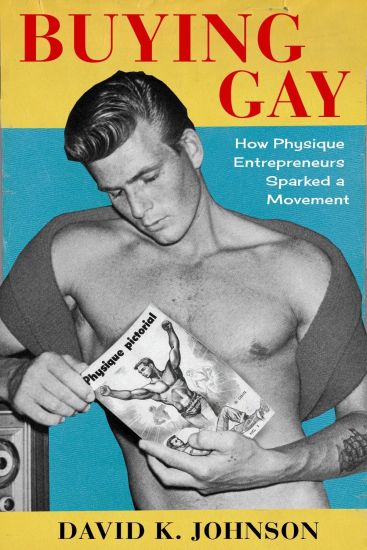
In 1951, a new type of publication appeared on newsstands—the physique magazine produced by and for gay men. For many men growing up in the 1950s and 1960s, these magazines and their images and illustrations of nearly naked men, as well as articles, letters from readers, and advertisements, served as an initiation into gay culture. The publishers behind them were part of a wider world of “physique entrepreneurs”: men as well as women who ran photography studios, mail-order catalogs, pen-pal services, book clubs, and niche advertising for gay audiences. Such businesses have often been seen as peripheral to the gay political movement. In this book, David K. Johnson shows how gay commerce was not a byproduct but rather an important catalyst for the gay rights movement.Offering a vivid look into the lives of physique entrepreneurs and their customers, and presenting a wealth of illustrations, Buying Gay explores the connections—and tensions—between the market and the movement. With circulation rates many times higher than the openly political “homophile” magazines, physique magazines were the largest gay media outlets of their time. This network of producers and consumers helped foster a gay community and upend censorship laws, paving the way for open expression. Physique entrepreneurs were at the center of legal struggles, especially against the U.S. Post Office, including the court victory that allowed full-frontal male nudity and open homoeroticism. Buying Gay reconceives the history of the gay rights movement and shows how consumer culture helped create community and a site for resistance.
The place occupied by Japanese Americans within the annals of United States history often begins and ends with their cameo appearance as victims of incarceration after the bombing of Pearl Harbor. In this provocative work, David K. Yoo broadens the scope of Japanese American history to examine how the second generation—the Nisei—shaped its identity and negotiated its place within American society. Tracing the emergence of a dynamic Nisei subculture, Yoo shows how the foundations laid during the 1920s and 1930s helped many Nisei adjust to the upheaval of the concentration camps. Schools, racial-ethnic churches, and the immigrant press served not merely as waystations to assimilation but as tools by which Nisei affirmed their identity in connection with both Japanese and American culture. The Nisei who came of age during World War II formed identities while negotiating complexities of race, gender, class, generation, economics, politics, and international relations. A thoughtful consideration of the gray area between accommodation and resistance, Growing Up Nisei reveals the struggles and humanity of a forgotten generation of Japanese Americans.
The Unlevel Playing Field
David K. Wiggins; Patrick B. Miller
University of Illinois Press
2005
nidottu
The Unlevel Playing Field offers a rich compendium of more than 100 primary sources that chart the intertwining history of African Americans and sport. Introductions and head-notes provided by David K. Wiggins and Patrick B. Miller place each document in context, shaping an unrivaled narrative. Readers will find dozens of accounts by Frederick Douglass, W. E. B. DuBois, Booker T. Washington, Marcus Garvey, James Weldon Johnson, Richard Wright, A. S. “Doc” Young, Eldredge Cleaver, Nikki Giovanni, John Edgar Wideman, bell hooks, James Baldwin, Roy Wilkins, Henry Louis Gates, Gerald Early, and many others. The documents range from discussions of the color line in organized baseball during the Jim Crow era and portraits of turn-of-the-century figures like the champion sprint cyclist Marshall “Major” Taylor and boxer Jack Johnson. Writers also look at modern-day issues like the participation of black athletes in the 1968 Olympics, the place of African American women in sport, and examine pioneering figures like Jackie Robinson, Muhammad Ali, Althea Gibson, Michael Jordan, Tiger Woods, and Venus and Serena Williams.
"It does not belong on a shelf but in the hands of community activists, politicians, reporters and campaign workers who want to get a better understanding of ward politics in Chicago." —Lawndale News-West Side Times " . . . enough lively tidbits in a breezily written way to keep any Chicago City Council political junkie awake." —Pioneer Press " . . . in Chicago Politics Ward by Ward, the system reveals the bizarre adaptations usually associated with life on a coral reef. If you can't believe these guys really exist, look again." —Chicago Magazine "All told, a most useful and entertaining book." —Crain's Chicago Business,p> " . . . a good, handy reference for those who need to know a bit about any particular city ward—and good fodder for Chicago's legions of political junkies." —Chicago Enterprise "Important demographic information and fascinating histories make it an interesting and often hilarious tour." —Near North News " . . . an energetic and ambitious book." —Illinois Issues Crammed with information but written in a style as lively as the city it describes, this book is the most comprehensive guide ever written about Chicago politics and the unique characters who have given special flavor to each ward.
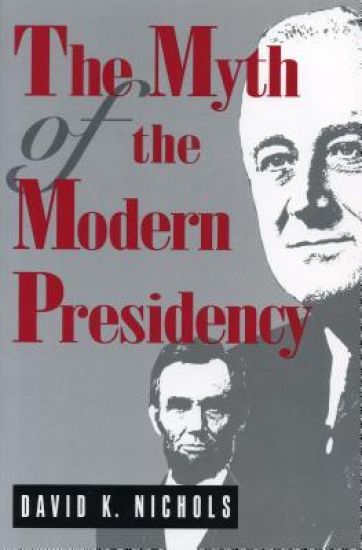
The idea that a radical transformation of the Presidency took place during the FDR administration has become one of the most widely accepted tenets of contemporary scholarship. According to this view, the Constitutional Presidency was a product of the Founders' fear of arbitrary power. Only with the development of a popular extra-Constitutional Presidency did the powerful "modern Presidency" emerge.David K. Nichols argues to the contrary that the "modern Presidency" was not created by FDR. What happened during FDR's administration was a transformation in the size and scope of the national government, rather than a transformation of the Presidency in its relations to the Constitution or the other branches of government. Nichols demonstrates that the essential elements of the modern Presidency have been found throughout our history, although often less obvious in an era where the functions of the national government as a whole were restricted.Claiming that we have failed to fully appreciate the character of the Constitutional Presidency, Nichols shows that the potential for the modern Presidency was created in the Constitution itself. He analyzes three essential aspects of the modern Presidency—the President's role in the budgetary process, the President's role as chief executive, and the War Powers Act—that are logical outgrowths of the decisions made at the Constitutional Convention. Nichols concludes that it is the authors of the American Constitution, not the English or European philosophers, who provide the most satisfactory reconciliation of executive power and limited popular government. It is the authors of the Constitution who created the modern Presidency.
This highly acclaimed book, the standard history of Thailand for almost twenty years, has now been completely revised by the author. David K. Wyatt has also added new sections examining the social and economic changes that have transformed the country in the past two decades. Praise for the previous edition:“Wyatt knows his subject well enough and has enough enthusiasm for it to make his book . . . entertaining as well as eminently educational.”—David McElveen, Asiaweek“A very readable account. . . .We come away from reading it with a clearer understanding of where Thailand stands in relation to its neighbors, who the Thai people are, how the Thai government evolved into its present form.”—James Stent, Asian Wall Street Journal“Concise, thorough, and readable.”—John Gabree, New York Newsday
Education reformers and policymakers argue that improved students’ learning requires stronger academic standards, stiffer state tests, and accountability for students’ scores. Yet these efforts seem not to be succeeding in many states. The authors of this important book argue that effective state reform depends on conditions which most reforms ignore: coherence in practice as well as policy and opportunities for professional learning.The book draws on a decade’s detailed study of California’s ambitious and controversial program to improve mathematics teaching and learning. Researchers David Cohen and Heather Hill report that state policy influenced teaching and learning when there was consistency among the tests and other policy instruments; when there was consistency among the curricula and other instruments of classroom practice; and when teachers had substantial opportunities to learn the practices proposed by the policy.These conditions were met for a minority of elementary school teachers in California. When the conditions were met for teachers, students had higher scores on state math tests. The book also shows that, for most teachers, the reform ended with consistency in state policy. They did not have access to consistent instruments of classroom practice, nor did they have opportunities to learn the new practices which state policymakers proposed. In these cases, neither teachers nor their students benefited from the state reform. This book offers insights into the ways policy and practice can be linked in successful educational reform and shows why such linkage has been difficult to achieve. It offers useful advice for practitioners and policymakers seeking to improve education, and to analysts seeking to understand it.
Physics of Submicron Devices
David K. Ferry; R.O. Grondin
Kluwer Academic / Plenum Publishers
1991
sidottu
A compendium of otherwise scattered information on the physics involved in the construction and operation of semiconductor devices at the submicron level. Addressed to people who make such devices, and assumes a solid understanding of solid state physics and electronics, and at least a familiarity w
An enlightening, intensely researched examination of violations of the constitutional principles that preserve individual rights and civil liberties from courtrooms to classrooms. With telling anecdote and detail, Pulitzer Prize-winner David K. Shipler explores the territory where the Constitution meets everyday America, where legal compromises--before and since 9/11--have undermined the criminal justice system's fairness, enhanced the executive branch's power over citizens and immigrants, and impaired some of the freewheeling debate and protest essential in a constitutional democracy. Shipler demonstrates how the violations tamper with America's safety in unexpected ways. While a free society takes risks to observe rights, denying rights creates other risks. A suspect's right to silence may deprive police of a confession, but a forced confession is often false. Honoring the right to a jury trial may be cumbersome, but empowering prosecutors to coerce a guilty plea means evidence goes untested, the charge unproved. An investigation undisciplined by the Bill of Rights may jail the innocent and leave the guilty at large and dangerous. Weakened constitutional rules allow the police to waste precious resources on useless intelligence gathering and frivolous arrests. The criminal courts act less as impartial adjudicators than as conveyor belts from street to prison in a system that some disillusioned participants have nicknamed "McJustice." There is, always, a human cost. Shipler shows us victims of torture and abuse--not only suspected terrorists at the hands of the CIA but also murder suspects interrogated by the Chicago police. We see a poverty-stricken woman forced to share an attorney with her drug dealer boyfriend and sentenced to six years in prison when the conflict of interest turns her lawyer against her. We meet high school students suspended for expressing unwelcome political opinions. And we see a pregnant immigrant deported, after years of living legally in the country, for allegedly stealing a lottery ticket. Often shocking, yet ultimately idealistic, Rights at Risk shows us the shadows of America where the civil liberties we rightly take for granted have been eroded--and summons us to reclaim them.
A provocative, timely assessment of the state of free speech in America With his best seller The Working Poor, Pulitzer Prize winner and former New York Times veteran David K. Shipler cemented his place among our most trenchant social commentators. Now he turns his incisive reporting to a critical American ideal: freedom of speech. Anchored in personal stories--sometimes shocking, sometimes absurd, sometimes dishearteningly familiar--Shipler's investigations of the cultural limits on both expression and the willingness to listen build to expose troubling instabilities in the very foundations of our democracy. Focusing on recent free speech controversies across the nation, Shipler maps a rapidly shifting topography of political and cultural norms: parents in Michigan rallying to teachers vilified for their reading lists; conservative ministers risking their churches' tax-exempt status to preach politics from the pulpit; national security reporters using techniques more common in dictatorships to avoid leak prosecution; a Washington, D.C., Jewish theater's struggle for creative control in the face of protests targeting productions critical of Israel; history teachers in Texas quietly bypassing a reactionary curriculum to give students access to unapproved perspectives; the mixed blessings of the Internet as a forum for dialogue about race. These and other stories coalesce to reveal the systemic patterns of both suppression and opportunity that are making today a transitional moment for the future of one of our founding principles. Measured yet sweeping, Freedom of Speech brilliantly reveals the triumphs and challenges of defining and protecting the boundaries of free expression in modern America.