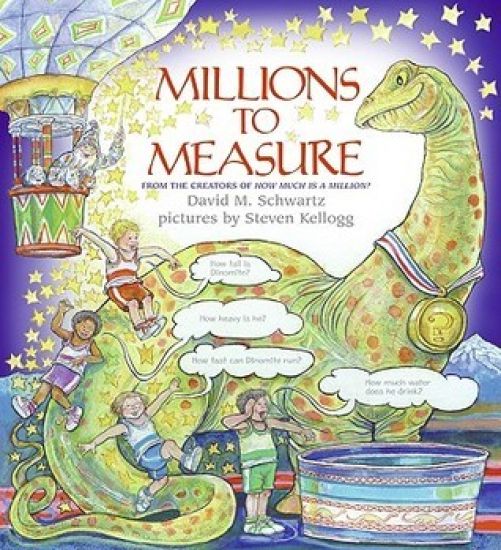
There are millions of things to measure . . . and almost as many ways to measure them Marvelosissimo the Mathematical Magician is back -- and ready to explore the invention of length, weight, and volume measurements. After that, with another wave of his wand, the wizard introduces the world of metrics and makes it easy to understand the basic pattern of meters, liters, and grams. With Steven Kellogg's playful and delightfully detailed illustrations, measuring has never been such a blast
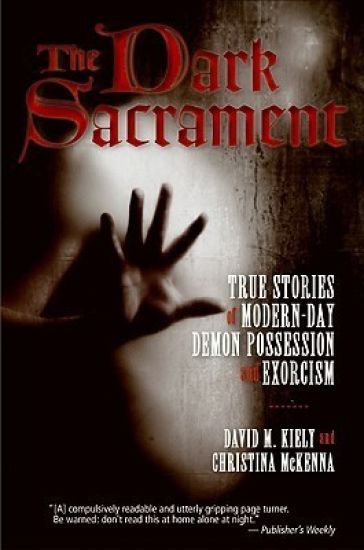
The Devil Is Alive and WellIn The Dark Sacrament, coauthors David M. Kiely and Christina McKenna faithfully recount ten contemporary cases of demon possession, haunted houses, and exorcisms, and profile the work of two living, active exorcists. The authors serve as trustworthy guides on this suspense-filled journey into the bizarre, offering concrete advice on how to avoid falling prey to the dark side.
Combining the brevity of a streamlined Introduction to Education text with the support package of a much more expensive book, the brief edition of Teachers, Schools, and Society encourages experienced instructors to explore their own creativity while ensuring that newer faculty can teach the course with confidence. David Sadker’s and Karen Zittleman’s lively writing style captures the joys and challenges of teaching. The text stresses the importance of fairness and justice in school and society, focuses on the most crucial topic areas, and integrates the most current issues in education. In addition, the wealth of activities included--from online video observations to portfolio-building exercises--offers a broad range of ways to introduce students to the teaching profession.Instructors and students can now access their course content through the Connect digital learning platform by purchasing either standalone Connect access or a bundle of print and Connect access. McGraw-Hill Connect® is a subscription-based learning service accessible online through your personal computer or tablet. Choose this option if your instructor will require Connect to be used in the course. Your subscription to Connect includes the following:• SmartBook® - an adaptive digital version of the course textbook that personalizes your reading experience based on how well you are learning the content.• Access to your instructor’s homework assignments, quizzes, syllabus, notes, reminders, and other important files for the course.• Progress dashboards that quickly show how you are performing on your assignments and tips for improvement.• The option to purchase (for a small fee) a print version of the book. This binder-ready, loose-leaf version includes free shipping.Complete system requirements to use Connect can be found here: http://www.mheducation.com/highered/platforms/connect/training-support-students.html
As business modeling becomes mainstream, every year more and more companies and government agencies are creating models of their businesses. But creating good business models is not a simple endeavor. Business modeling requires new skills. Written by two business modeling experts, this book shows you how to make your business modeling efforts successful. It provides in-depth coverage of each of the four distinct business modeling disciplines, helping you master them all and understand how to effectively combine them. It also details best practices for working with subject matter experts. And it shows how to develop models, and then analyze, simulate, and deploy them. This is essential, authoritative information that will put you miles ahead of everyone who continues to approach business modeling haphazardly.
Water at the Surface of the Earth: An Introduction to Ecosystem Hydrodynamics provides an introduction to the ways in which biological, physical, cultural, and urban systems at the surface of the earth operate, with a particular focus on the hydrodynamics of ecosystems, i.e., water and its association with other forms of matter, including pollutants, and with several forms of energy. The chapter sequence in this book follows the downward progress of water from the lower atmosphere, through ecosystems at the earth's surface, through the soil and mantle rock, to the ""waters under the earth."" In other words, the book begins with input of water to ecosystems, then describes how it is processed in these systems, and ends with the liquid water yield from them. The book first discusses storms in the atmosphere. These are systems that convert inflows of water vapor into outflows of raindrops and snowflakes that are precipitated to the underlying surface. This is followed by separate chapters on how water is delivered from the atmosphere to surface ecosystems; water budgets at the surface and in the soil; evaporation from these systems back to the atmosphere; water in the local air and rocks; and horizontal movement of water transformed by ecosystems where the preceding storages and fluxes were located.
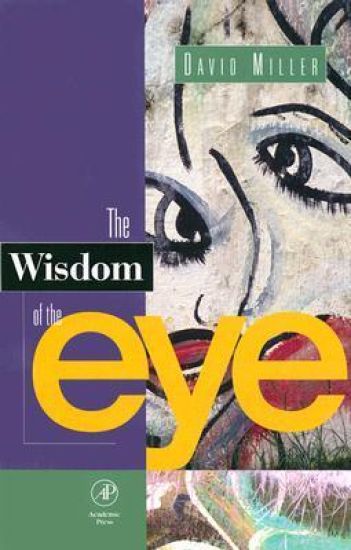
The Wisdom of the Eye is a survey of the major concepts underlying many of the basic sciences related to the human eye and visual brain in one volume, using anecdotes and a minimum of highly technical language to emphasize the important points. This book presents an up-to-date treatment on how the eye and visual system work to help us see, interpret what we see, and communicate what we feel. It also examines how this description of the visual system teaches us more about ourselves.
Providing an explanation of each step in the trading process, this updated edition covers the technological changes and developments which have increased the speed and ease of data dissemination and their consequent effect on the globalization of the industry.
Inside the Object Model serves two key functions: it teaches object-oriented analysis and design from first principles and clearly explains C++ mechanisms that implement object-oriented concepts. Drawing on nearly ten years of programming and teaching experience, Papurt thoroughly describes the relationship between the basic principles and concerns of object modeling and the C++ programming language. Each chapter uses independent examples to illustrate key concepts described in the text and features helpful icons that clearly identify important ideas and dangerous pitfalls. With over 100 figures, hundreds of working code examples, and comparisons of coding techniques, this book rewards the reader with a complete understanding of both C++ and the object model. Professional software analysts, designers, programmers, and advanced computer science students will benefit from reading this book.
The only book on the market that provides a simple nonmathematical presentation of the statistics needed by Six Sigma Green Belts. Every concept is explained in plain English with a minimum of mathematical symbols. Includes real-world examples, step by step instructions and sample output for Minitab and JMP software as well as downloadble, ready to use data sets and templates. Includes applications to service industries to help managers understand the role of Six Sigma in nonmanufacturing industries. Acknowledgments xvii About the Author xix Preface xxi Chapter 1: Fundamentals of Six Sigma 1 Chapter 2: Introduction to Statistics 7 Chapter 3: Presenting Data in Charts and Tables 23 Chapter 4: Descriptive Statistics 39 Chapter 5: Probability and Probability Distributions 59 Chapter 6: Sampling Distributions and Confidence Intervals 95 Chapter 7: Hypothesis Testing 113 Chapter 8: Design of Experiments 157 Chapter 9: Simple Linear Regression 211 Chapter 10: Multiple Regression 241 Chapter 11: Control Charts for Six Sigma Management 279 Appendix A: Review of Arithmetic and Algebra 321 Appendix B: Summation Notation 329 Appendix C: Statistical Tables 333 Appendix D: Documentation of Data Files 347 Glossary 349 Index 359
A controversial analysis of the psyche of murderers draws on the author's investigations into their underlying motives and circumstances, theorizing that the human psyche has evolved special adaptations that enable murder to become a logical option, and identifying at which point people are most vulnerable to being killed or becoming killers. Reprint. 25,000 first printing.
There is general agreement in the field of Biblical studies that study of the formation of the Pentateuch is in disarray. David M. Carr turns to the Genesis Primeval History, Genesis 1-11, to offer models for the formation of Pentateuchal texts that may have traction within this fractious context. Building on two centuries of historical study of Genesis 1-11, this book provides new support for the older theory that the bulk of Genesis 1-11 was created out of a combination of two originally separate source strata: a Priestly source and an earlier non-Priestly source that was used to supplement the Priestly framework. Though this overall approach contradicts some recent attempts to replace such source models with theories of post-Priestly scribal expansion, Carr does find evidence of multiple layers of scribal revision in the non-P and P sources, from the expansion of an early independent non-Priestly primeval history with a flood narrative and related materials to a limited set of identifiable layers of Priestly material that culminate in the P-like redaction of the whole. This book synthesizes prior scholarship to show how both the P and non-Priestly strata of Genesis also emerged out of a complex interaction by Judean scribes with non-biblical literary traditions, particularly with Mesopotamian textual traditions about primeval origins. The Formation of Genesis 1-11 makes a significant contribution to scholarship on one of the most important texts in the Hebrew Bible and will influence models for the formation of the Hebrew Bible as a whole.
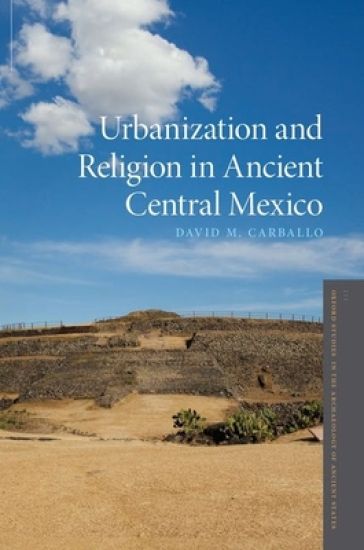
Urbanization and Religion in Ancient Central Mexico examines the ways in which urbanization and religion intersected in pre-Columbian central Mexico, with a primary focus on the later Formative period and the transition to the Classic period. The major societal transformations of this interval occurred approximately two-thousand years ago and over a millennium before Mexico's best known early civilization, the Aztecs. David M. Carballo presents a synthesis of data from regional archaeological projects and key sites such as Teotihuacan and Cuicuilco, while relying on the author's own excavations at the site of La Laguna as the central case study. A principal argument is that cities and states developed hand in hand with elements of a religious tradition of remarkable endurance and that these processes were fundamentally entangled. Prevalent religious beliefs and ritual practices created a cultural logic for urbanism, and as populations urbanized they became socially integrated and differentiated following this logic. Nevertheless, religion was used differently over time and by groups and individuals across the spectra of urbanity and social status. This book calls for a materially informed history of religion, with the temporal depth that archaeology can provide, and an archaeology of cities that considers religion seriously as a generative force in societal change.
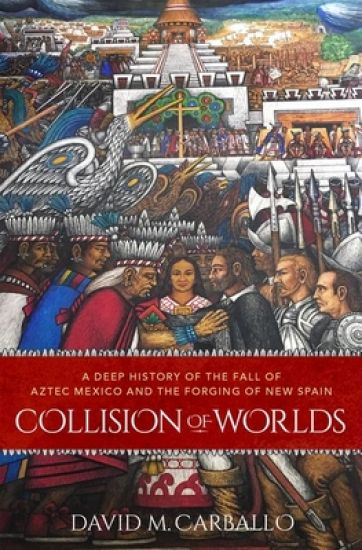
Mexico of five centuries ago was witness to one of the most momentous encounters between human societies, when a group of Spaniards led by Hernando Cortés joined forces with tens of thousands of Mesoamerican allies to topple the mighty Aztec Empire. It served as a template for the forging of much of Latin America and initiated the globalized world we inhabit today. The violent clash that culminated in the Aztec-Spanish war of 1519-21 and the new colonial order it created were millennia in the making, entwining the previously independent cultural developments of both sides of the Atlantic. Collision of Worlds provides a deep history of this encounter, one that considers temporal depth in the richly layered cultures of Mexico and Spain, from their prehistories to the urban and imperial societies they built in the fourteenth and fifteenth centuries. Leading Mesoamerican archaeologist David Carballo offers a unique perspective on these fabled events with a focus on the physical world of places and things, their similarities and differences in trans-Atlantic perspective, and their interweaving in an encounter characterized by conquest and colonialism, but also resilience on the part of Native peoples. An engrossing and sweeping account, Collision of Worlds debunks long-held myths and contextualizes the deep roots and enduring consequences of the Aztec-Spanish conflict as never before.
Forensic mental health assessment (FMHA) has grown into a specialization informed by research and professional guidelines. This series presents up-to-date information on the most important and frequently conducted forms of FMHA. The 20 topical volumes address best approaches to practice for particular types of evaluation in the criminal, civil and juvenile/family areas. Each volume contains a thorough discussion of the relevant legal and psychological concepts, followed by a step-by-step description of the assessment process from preparing for the evaluation to writing the report and testifying in court. Volumes include the following helpful features: - Boxes that zero in on important information for use in evaluations - Tips for best practice and cautions against common pitfalls - Highlighting of relevant case law and statutes - Separate list of assessment tools for easy reference - Helpful glossary of key terms for the particular topic In making recommendations for best practice, authors consider empirical support, legal relevance, and consistency with ethical and professional standards. These volumes offer invaluable guidance for anyone involved in conducting or using forensic evaluations. A majority of police departments across the country conduct psychological evaluations of their police applicants and many also conduct periodic evaluations of incumbent police officers. With a small percentage of psychologists conducting these evaluations, and an even smaller number who have passed through board certification in forensic psychology or police and public safety psychology, there is a pressing need for education and training resources for practitioners seeking to develop competency in this area of practice. Evaluations of Police Suitability and Fitness for Duty, fills a gap in the literature, and explains the legal, procedural, ethical, and clinical foundations for these types of evaluations untethered to any single assessment instrument. Throughout the text, authors David M. Corey and Mark Zelig distinguish between enforceable, standards-based requirements and aspirational best practices. The book starts with a review of the most prominent federal laws and regulations, professional practice guidelines, and ethical standards pertinent to these evaluations. From there, applied chapters provide detailed procedural guidance, including advice for obtaining informed consent, providing disclosure to the involved parties, conducting clinical and collateral interviews, selecting written assessment instruments, integrating assessment findings to reach determinations of suitability and fitness, and preparing written reports and testimony for various audiences and uses.
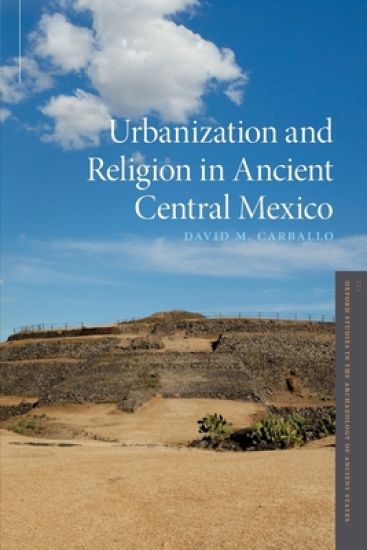
Urbanization and Religion in Ancient Central Mexico examines the ways in which urbanization and religion intersected in pre-Columbian central Mexico, with a primary focus on the later Formative period and the transition to the Classic period. The major societal transformations of this interval occurred approximately two-thousand years ago and over a millennium before Mexico's best known early civilization, the Aztecs. David M. Carballo presents a synthesis of data from regional archaeological projects and key sites such as Teotihuacan and Cuicuilco, while relying on his own excavations at the site of La Laguna as the central case study. A principal argument is that cities and states developed hand in hand with elements of a religious tradition of remarkable endurance and that these processes were fundamentally entangled. Prevalent religious beliefs and ritual practices created a cultural logic for urbanism, and as populations urbanized they became socially integrated and differentiated following this logic. Nevertheless, religion was used differently over time and by groups and individuals across the spectra of urbanity and social status. The book provides a materially informed history of religion, with the temporal depth that archaeology can provide, and an archaeology of cities that considers religion seriously as a generative force in societal change.
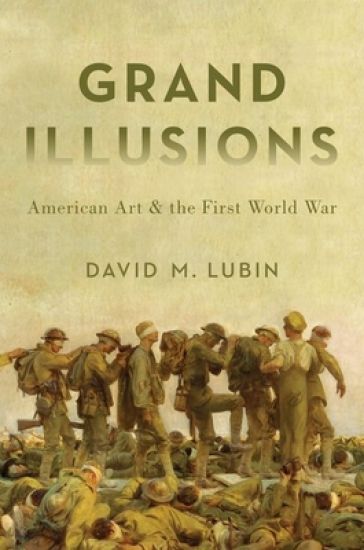
A vivid, engaging account of the artists and artworks that sought to make sense of America's first total war, Grand Illusions takes readers on a compelling journey through the major historical events leading up to and beyond US involvement in WWI to discover the vast and pervasive influence of the conflict on American visual culture. David M. Lubin presents a highly original examination of the era's fine arts and entertainment to show how they ranged from patriotic idealism to profound disillusionment. In stylishly written chapters, Lubin assesses the war's impact on two dozen painters, designers, photographers, and filmmakers from 1914 to 1933. He considers well-known figures such as Marcel Duchamp, John Singer Sargent, D. W. Griffith, and the African American outsider artist Horace Pippin while resurrecting forgotten artists such as the mask-maker Anna Coleman Ladd, the sculptor Gertrude Vanderbilt Whitney, and the combat artist Claggett Wilson. The book is liberally furnished with illustrations from epoch-defining posters, paintings, photographs, and films. Armed with rich cultural-historical details and an interdisciplinary narrative approach, David Lubin creatively upends traditional understandings of the Great War's effects on the visual arts in America.
Notes for Violists: A Guide to the Repertoire offers historical and analytical information about thirty-five of the best-known pieces for the instrument, making it an essential resource for professional, amateur, and student violists alike. With engaging prose supported by fact-filled analytical charts, the book offers rich biographical information and insightful analyses that help violists gain a more complete understanding of pieces like Béla Bartók's Concerto for Viola and Orchestra, Rebecca Clarke's Sonata for Viola and Piano, Robert Schumann's Märchenbilder for Viola and Piano, op. 113, Carl Stamitz's Concerto for Viola and Orchestra in D Major, Igor Stravinsky's Élégie for Viola or Violin Unaccompanied, and thirty other masterpieces. This comprehensive guide to key pieces from the viola repertoire from the eighteenth through the twentieth century covers concertos, chamber pieces, and works for solo viola by a wide range of composers, including Bach, Telemann, Mozart, Hoffmeister, Walton, and Hindemith. Author David M. Bynog not only offers clear structural analyses of these compositions but also situates them in their historical contexts as he highlights crucial biographical information on composers and explores the circumstances of the development and performance of each work. By connecting performance studies with scholarship, this indispensable handbook for students and professionals allows readers to gain a more complete picture of each work and encourages them to approach other compositions in a similarly analytical manner.