

Kirjahaku
Etsi kirjoja tekijän nimen, kirjan nimen tai ISBN:n perusteella.
1000 tulosta hakusanalla David Malcolm
'It is not so much great faith that we need, but faith in a great God.' At the age of 21, Hudson Taylor ventured on a dangerous sea voyage to take the Gospel of Jesus Christ to the people of China, demonstrating this faith he talked of. Why would a young man give up a promising future to venture into an alien country, let alone one torn apart by war? Would the Chinese accept him and would God bless his vision? In the mid-nineteenth century there were few Christian missionaries in China, and not many more Chinese Christians. Hudson Taylor was so moved by the spiritual needs of the Chinese people that he obeyed God's call and dedicated his life to taking the Gospel to the Chinese, founding the China Inland Mission. His story comes alive in this dramatised biography that relays the humanity, humour, and heart of the man widely regarded as one of the most significant and influential missionaries in the history of the Christian Church. Hudson Taylor lived a life that boldly demonstrated faith in a great God, and his life still inspires and challenges many today.

London: The Dog Who Made The Team is a heartwarming and inspiring book written by David Malcolmson. The book tells the story of a stray dog named London who is taken in by a high school football team in rural Virginia. Despite being initially hesitant about having a dog on the team, the players quickly grow to love London and realize the positive impact he has on their lives both on and off the field.As London becomes an integral part of the team, he helps them overcome their struggles and become a stronger and more united group. The book is a testament to the power of animals to bring people together and the importance of friendship, loyalty, and teamwork.Filled with heartwarming anecdotes and touching moments, London: The Dog Who Made The Team is a must-read for anyone who loves dogs, sports, or simply a good underdog story.This scarce antiquarian book is a facsimile reprint of the old original and may contain some imperfections such as library marks and notations. Because we believe this work is culturally important, we have made it available as part of our commitment for protecting, preserving, and promoting the world's literature in affordable, high quality, modern editions, that are true to their original work.


This work has been selected by scholars as being culturally important and is part of the knowledge base of civilization as we know it.This work is in the public domain in the United States of America, and possibly other nations. Within the United States, you may freely copy and distribute this work, as no entity (individual or corporate) has a copyright on the body of the work.Scholars believe, and we concur, that this work is important enough to be preserved, reproduced, and made generally available to the public. To ensure a quality reading experience, this work has been proofread and republished using a format that seamlessly blends the original graphical elements with text in an easy-to-read typeface.We appreciate your support of the preservation process, and thank you for being an important part of keeping this knowledge alive and relevant.

This work has been selected by scholars as being culturally important and is part of the knowledge base of civilization as we know it.This work is in the public domain in the United States of America, and possibly other nations. Within the United States, you may freely copy and distribute this work, as no entity (individual or corporate) has a copyright on the body of the work.Scholars believe, and we concur, that this work is important enough to be preserved, reproduced, and made generally available to the public. To ensure a quality reading experience, this work has been proofread and republished using a format that seamlessly blends the original graphical elements with text in an easy-to-read typeface.We appreciate your support of the preservation process, and thank you for being an important part of keeping this knowledge alive and relevant.

Bhaviveka and His Buddhist Opponents
Malcolm David Eckel
The Department of Sanskrit and Indian Studies
2009
sidottu
Bhaviveka (ca. 500-560 CE) lived at a time of unusual creativity and ferment in the history of Indian Buddhist philosophy. The Mahayana movement was emerging as a vigorous and self-conscious intellectual force, while the earlier traditions of the eighteen 'schools' (nikaya) resisted the authority of the Mahayana and continued to elaborate the fundamental concepts of Buddhist thought. Bhaviveka's "Verses on the Heart of the Middle Way" ("Madhyamakahrdayakarika") with their commentary, known as "The Flame of Reason" ("Tarkajvala"), give a unique and authoritative account of the intellectual differences that stirred the Buddhist community in this creative period. "Bhaviveka and His Buddhist Opponents" gives a clear and accessible translation of Chapters 4 and 5 of this text: the chapters on the Sravakas, or eighteen schools, and the Yogacaras, Bhaviveka's most important Mahayana opponents. The translation is introduced by an essay that situates Bhaviveka in the intellectual context of sixth-century India, and it is accompanied by copious notes, commenting on Bhaviveka's sources and explaining his controversial method. The book also contains a critical edition of the Sanskrit text of Bhaviveka's verses and the Tibetan translation of the verses and commentary.
Malcolm David Eckel takes us on a contemporary quest to discover the essential meaning behind the Buddha's many representations. Eckel's bold thesis proposes that the proper understanding of Buddhist philosophy must be thoroughly religious--an understanding revealed in Eckel's new translation of the philospher Bhavaviveka's major work, The Flame of Reason. Eckel shows that the dimensions of early Indian Buddhism--popular art, conventional piety, and critical philosophy--all work together to express the same religious yearning for the fullness of emptiness that Buddha conveys.
She was the wife of an Emperor. She was the daughter of an Emperor. She had wealth and power beyond compare. Everything should have been easy for her. But she lived during the tumultuous final years of the Roman Empire when violence and upheaval threatened at every turn. The Shadows of Nemesis tells the epic tale of Licinia Eudocia. Based on the real-life, historic figure and actual events, it relates the story of her heroic struggle against tyrants, traitors, barbarians, and kings. A na ve girl of sixteen when she wed Emperor Valentinian III, Licinia found herself part of a dangerous family whose sinister motives endangered her husband and threatened his power. In her effort to save him, she became the target of a vengeful sister-in-law, a scheming mother-in-law, and the vilest servant the world has ever seen. Over the course of her seventeen years on the throne, she prevailed against a barbarian onslaught, stood up to a merciless usurper, and went toe-to-toe with Atilla the Hun. Hers is a remarkable story of trial and commitment, aided at every turn by a mysterious amulet whose power and meaning lie just beyond her reach. The Shadows of Nemesis is a saga of romance...violence...intrigue...betrayal...and the limitless possibilities of redemption.


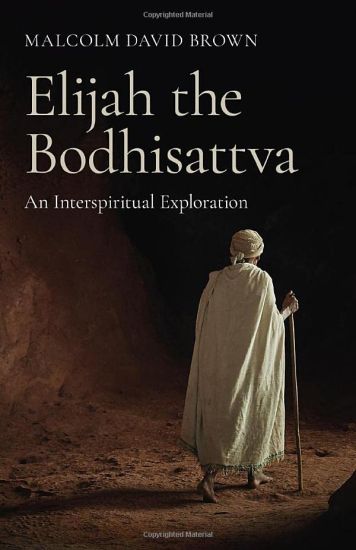
This is an interspiritual commentary -- largely though not exclusively Buddhist-inspired -- on the life of Elijah as recounted in the Bible. It treats the externals of his life as metaphors for internal mind-states, his story as a labyrinth-like journey toward enlightenment, an unfolding realization of the non-duality of himself and God. Elijah begins with a henotheistic conception of God as a national deity connected to the land of Israel and progresses to a realization of God as the ground of being, being-itself, the God of those who struggle with God, which is the deeper meaning of the name Israel. While the inner dimension is emphasized, there is also a focus on the political dimension of the story, which liberation theologians call God’s preferential option for the poor, and here it is called the politics of anatta -- the core Buddhist principle of not-self.

In conversation with artists and people on the street, Cuba captures the joy and fierce independence of a people who love their country.

The Dialogic Novels of Malcolm Bradbury and David Lodge
R.A. Morace
Southern Illinois University Press
1989
nidottu
Morace analyzes the novels of Malcolm Bradbury and David Lodge together because they provide a dialogue of conflicting views, styles, and forms of the contemporary novel. This dialogue parallels the views of these two British novelists as critics.Beginning as realists, as novelists of manners, as writers of campus novels, Bradbury and Lodge explore the possibilities and the limitations of realistic writing. Bradbury and Lodge, however, are not only heirs of English literary tradition. Both are also literary critics with a keen interest in recent critical theories. Morace shows us how the debate between Bradbury and Lodge over the nature and purpose of fiction and criticism has found its way into their novels. The realistic conflicts between civilian and military, English and American, pre- and post-Vatican II values gradually give way to an exploration of the semiotics behind such conflicts.Morace finds Bradbury's and Lodge's works far more open-ended than the doggedly indeterminate fictions of many contemporary writers. Using Mikhail Bakhtin's theory of dialogism, he identifies the ways in which language and values simultaneously compete with and support one another in their novels.This first book-length study of Bradbury or Lodge deals with all of their novels, including Changing Places, How Far Can You Go?, and Small World by Lodge, as well as Bradbury's The History of Man and Rates of Exchange.
Annals of Scotland, from the accession of Malcolm III. to the accession of the House of Stewart. To which are added, several valuable tracts ... By the late Sir David Dalrymple, ... A new edition. In three volumes. .. Volume 3 of 3
David Dalrymple
Gale Ecco, Print Editions
2010
pokkari
Annals of Scotland, From the Accession of Malcolm III. to the Accession of the House of Stewart. To Which are Added, Several Valuable Tracts ... By the Late Sir David Dalrymple, ... A new Edition. In Three Volumes. .. of 3; Volume 3
David Dalrymple
Gale Ecco, Print Editions
2018
sidottu
The 18th century was a wealth of knowledge, exploration and rapidly growing technology and expanding record-keeping made possible by advances in the printing press. In its determination to preserve the century of revolution, Gale initiated a revolution of its own: digitization of epic proportions to preserve these invaluable works in the largest archive of its kind. Now for the first time these high-quality digital copies of original 18th century manuscripts are available in print, making them highly accessible to libraries, undergraduate students, and independent scholars.Rich in titles on English life and social history, this collection spans the world as it was known to eighteenth-century historians and explorers. Titles include a wealth of travel accounts and diaries, histories of nations from throughout the world, and maps and charts of a world that was still being discovered. Students of the War of American Independence will find fascinating accounts from the British side of conflict. ++++The below data was compiled from various identification fields in the bibliographic record of this title. This data is provided as an additional tool in helping to insure edition identification: ++++British LibraryT067790Edinburgh: printed for William Creech, and T. Cadell and W. Davies, London, 1797. 3v., plate; 8
An Examination of Some of the Arguments for the High Antiquity of Regiam Majestatem; And an Inquiry Into the Authenticity of Leges Malcolmi. by Sir David Dalrymple.
David Dalrymple
Gale Ecco, Print Editions
2010
pokkari
An Examination of Some of the Arguments for the High Antiquity of Regiam Majestatem; and an Inquiry Into the Authenticity of Leges Malcolmi. By Sir David Dalrymple
David Dalrymple
Gale Ecco, Print Editions
2018
sidottu
The 18th century was a wealth of knowledge, exploration and rapidly growing technology and expanding record-keeping made possible by advances in the printing press. In its determination to preserve the century of revolution, Gale initiated a revolution of its own: digitization of epic proportions to preserve these invaluable works in the largest archive of its kind. Now for the first time these high-quality digital copies of original 18th century manuscripts are available in print, making them highly accessible to libraries, undergraduate students, and independent scholars.This collection reveals the history of English common law and Empire law in a vastly changing world of British expansion. Dominating the legal field is the Commentaries of the Law of England by Sir William Blackstone, which first appeared in 1765. Reference works such as almanacs and catalogues continue to educate us by revealing the day-to-day workings of society.++++The below data was compiled from various identification fields in the bibliographic record of this title. This data is provided as an additional tool in helping to insure edition identification: ++++British LibraryT081030Also issued as part of "Tracts relative to the history and antiquities of Scotland" by Sir David Dalrymple.Edinburgh: printed by A. Murray and J. Cochran. Sold by J. Balfour, and other booksellers, 1769. 52p.; 4
In a squalid attic flat in the the freezing darkness of a Huddersfield winter, Malcolm Scrawdyke and his fellow Northern art students smoke and rehearse their revolutionary assault upon authority. According to Malcolm, the choice is simple: 'Freedom or serfdom'. The manifesto established, the 'Party of Dynamic Erection' begins its surreal offensive upon the eunuchs (dunces) who stand in the way of inevitable triumph. David Halliwell's classic play is set in the Sixties, an age given over to youth and rebellion.