
Kirjahaku
Etsi kirjoja tekijän nimen, kirjan nimen tai ISBN:n perusteella.
1000 tulosta hakusanalla David Moody
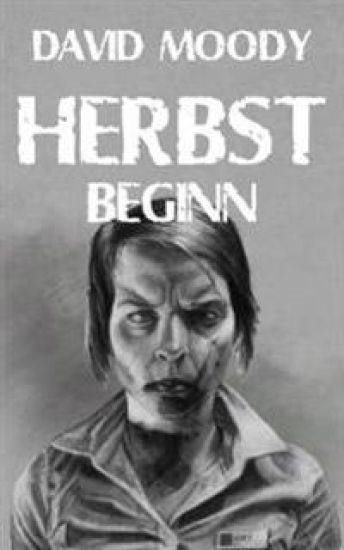
Binnen vierundzwanzig Stunden l scht ein rasend um sich greifender Virus beinah die gesamte Menschheit aus. Milliarden sterben. Es gibt weder Symptome noch eine Vorwarnung. Sekunden nach der Ansteckung sterben die Opfer einen qualvollen Tod. Nur eine Hand voll berlebender bleiben brig, die sich am Ende des ersten Tages w nschen, selbst tot zu sein. Die Verzweifelten suchen Zuflucht im Gemeinschaftshaus am Rand einer Gro stadt. Da sie sich zu sehr f rchten, um sich in die verseuchte Welt hinauszuwagen, verwandelt ihre Zuflucht sich bald in ein Gef ngnis. Unter dem emotionalen und physischen Druck der unerkl rlichen Lage beginnt die v llig ver ngstigte Gruppe auseinander zu brechen. Ohne Strom, Wasser und Lebensmittel in ihrer vermeintlichen Zuflucht gefangen, vegetieren die berlebenden nur noch von Stunde zu Stunde dahin. Dann schl gt der Virus erneut zu ... und die H lle auf Erden h lt Einzug. Herbst: Beginn bereitet die B hne f r einen epischen Endzeitzyklus, der Kultstatus genie t und unter Insidern als absoluter Meilenstein des Genres gilt. Dabei gelingt David Moody das seltene Kunstst ck, absolute Hochspannung kunstfertig mit Tiefgang zu vereinen, indem er die packende Handlung um tiefe Einblicke in die Seelenwelt der mit einer Extremsituation ungeahnten Ausma es konfrontierten berlebenden anreichert.
Die hei erwartete Fortsetzung der Kultreihe aus Gro britannien mittlerweile bereits verfilmt Die wenigen berlebenden der verheerenden Katastrophe, die fast die gesamte Menschheit ausgerottet hat, m ssen sich t glich tausender und abertausender feindseliger Untoter erwehren, um ihre zerbrechliche Existenz zu sichern. Dann taucht unverhofft eine Gruppe Soldaten auf. Gemischte Gef hle beschleichen die berlebenden Zivilisten: Verhei t das Milit r Hoffnung und Antworten? Oder nur noch mehr Angst, Zw nge und Bedr ngnis, als man ohnehin durch die Horden der wandelnden Toten ausgesetzt ist? Meinungen zur HERBST-Serie: "Wie er bereits mit seinen anderen Romane unter Beweis gestellt hat, sollte Moody zum K nig der Zombie-Horror-Romane gekr nt werden." - Booklist "Der beste Survival-Horror seit Richard Matheson's I am Legend." - Wayne Simmons, Autor von Flu und Plastic Jesus "Wenn ihr dieses Jahr nur ein Buch lest, dann lest HERBST." - Suspense Magazine "Am Ende angelangt, werdet ihr ungeduldig auf die n chste Fortsetzung warten." - Dread Central
Herbst: L uterung treibt die Saga konsequent und atemberaubend weiter, bleibt der beklemmenden Atmosph re der Vorg ngerromane treu und lenkt die epische Odyssee der berlebenden ihrem berraschenden Ende entgegen.Die Schar der berlebenden schrumpft. Nur noch Wenige fristen ein freudloses Dasein in der zweifelhaften Sicherheit eines Milit rbunkers. Als das Milit r zum Schlag gegen die Untoten ausholt, entbrennt ein erbitterter Krieg, der die zivilen berlebenden zwingt, die Flucht anzutreten - hinaus in eine tote Welt voller Gefahren. Alle Hoffnung scheint geschwunden, doch in den verwesenden Schatten der Vergangenheit sto en sie unverhofft auf den Schl ssel zu den berresten ihrer Zukunft... Meinungen zur HERBST-Serie: "Wie er bereits mit seinen anderen Romane unter Beweis gestellt hat, sollte Moody zum K nig der Zombie-Horror-Romane gekr nt werden." - Booklist "Der beste Survival-Horror seit Richard Matheson's I am Legend." - Wayne Simmons, Autor von Flu und Plastic Jesus "Wenn ihr dieses Jahr nur ein Buch lest, dann lest HERBST." - Suspense Magazine "Am Ende angelangt, werdet ihr ungeduldig auf die n chste Fortsetzung warten." - Dread Central
Die Folgen der verheerenden Seuche haben das Land nach wie vor fest im Griff. Wiederauferstandene streifen in Massen umher und werden immer aggressiver. Zwei Gruppen von Menschen haben berlebt, jede auf ihre Weise. W hrend die eine auf Verstohlenheit setzt, um von den wandelnden Toten nicht bemerkt zu werden, schl gt sich die andere mit roher Gewalt durch. Die Umst nde f hren die gegens tzlichen berlebenden zusammen, und die ohnehin prek re Lage spitzt sich bedrohlich zu. Meinungen zur HERBST-Serie: "Wie er bereits mit seinen anderen Romane unter Beweis gestellt hat, sollte Moody zum K nig der Zombie-Horror-Romane gekr nt werden." - Booklist "Der beste Survival-Horror seit Richard Matheson's I am Legend." - Wayne Simmons, Autor von Flu und Plastic Jesus "Wenn ihr dieses Jahr nur ein Buch lest, dann lest HERBST." - Suspense Magazine "Am Ende angelangt, werdet ihr ungeduldig auf die n chste Fortsetzung warten." - Dread Central
Fast 100 Tage sind vergangen, seit eine verheerende Seuche 99 % der Bev lkerung ausgel scht hat. Drei Monate seit der Wiederauferstehung der Toten. Eine Gruppe berlebender hat sich in einer mittelalterlichen Burg verschanzt, belagert von den wandelnden Leichen. Das unerwartete Auftauchen anderer berlebender stellt die Bewohner der Burg vor eine folgenschwere Entscheidung und droht, die br chige Gemeinschaft zu zerrei en. Schon bald stellt sich die Frage, ob die Toten oder die berlebenden selbst die gr te Gefahr f r den Fortbestand der Menschheit sind... Meinungen zur HERBST-Serie: "Wie er bereits mit seinen anderen Romane unter Beweis gestellt hat, sollte Moody zum K nig der Zombie-Horror-Romane gekr nt werden." - Booklist "Der beste Survival-Horror seit Richard Matheson's I am Legend." - Wayne Simmons, Autor von Flu und Plastic Jesus "Wenn ihr dieses Jahr nur ein Buch lest, dann lest HERBST." - Suspense Magazine "Am Ende angelangt, werdet ihr ungeduldig auf die n chste Fortsetzung warten." - Dread Central
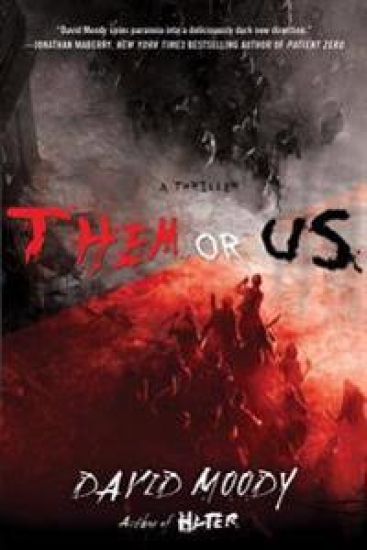
The pulse-pounding conclusion to the HATER trilogy The war that has torn the human race apart is finally nearing its end. With most towns and cities now uninhabitable, and with the country in the grip of a savage nuclear winter, both Hater and Unchanged alike struggle to survive. Hundreds of Hater fighters have settled on the East Coast in the abandoned remains of a relatively undamaged town under the command of Hinchcliffe---who'll stop at nothing to eradicate the last few Unchanged and consolidate his position at the top of this new world order. This fledgling society is harsh and unforgiving---your place in the ranks is decided by how long and how hard you're prepared to fight. Danny McCoyne is the exception to the rule. His ability to hold the Hate and to use it to hunt out the remaining Unchanged has given him a unique position in Hinchcliffe's army of fighters. As the enemy's numbers reduce, so the pressure on McCoyne increases, until he finds himself at the very center of a pivotal confrontation, the outcome of which will have repercussions on the future of everyone who is left alive.

Set in the world of David Moody's Hater trilogy, All Roads End Here is the sequel to the 'top drawer horror' (Booklist, starred review) One of Us Will Be Dead by Morning. It’s taken Matthew Dunne almost three months to get home. Never more than a few meters from the Haters at any time, every single step has been fraught with danger. But he’s made it. In his absence, his home city has become a sprawling, walled-off refugee camp. But the camp and the entire world beyond its borders is balanced on a knife edge. During his time in the wilderness, Matt developed a skill which is in high demand: the ability to anticipate and predict Hater behaviour. It’s these skills that will thrust him into a web of subterfuge and danger. As the pressure mounts inside the camp, he finds himself under scrutiny from all sides. He’s always done his best to avoid trouble, but sometimes it can’t be helped. The shit’s about to hit the fan, and this time Matt’s right at the epicenter. All Roads End Here is a fast-paced, and wonderfully dark story about humanity’s fight for survival in the face of the impending apocalypse.
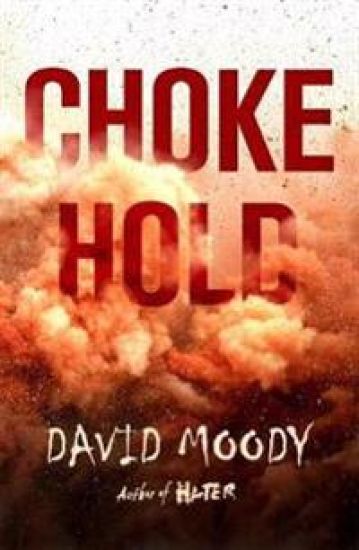
Set in the world of David Moody's Hater trilogy, Chokehold is the third book in David Moody’s new 'top drawer horror' (Booklist, starred review) Final War series. A series of nuclear strikes has left huge swathes of the country uninhabitable. It’s a level playing field now: both Hater and Unchanged alike have to fight to stay alive. Both have retreated to their camps to regroup, less than twenty miles away from each other. It’s here that the last major battle of the final war will inevitably be fought, but neither side has any idea what’s waiting for them just around the corner. Both armies are ready to fight to the death, each of their leaders hell-bent on victory. Their tactics are uniformly simple: strike first, get the enemy in a chokehold, then strangle the life out of them. Chokehold is a fast-paced and wonderfully dark story about the fight for survival in the face of the impending apocalypse.

A disturbing psychological thriller from the author of the Autumn and Hater novels (optioned for film by Guillermo del Toro).Heading home late after a night out, Adam and Lucy Logan are involved in a horrific road rage incident. Their car is forced off a bridge and ends up at the bottom of a swollen, fast-flowing river. Adam survives but Lucy drowns, trapped inside the sinking wreck.When he's released from hospital, Adam vows to hunt down the driver responsible for his wife's death and take revenge. But according to the police the roads around the bridge were empty. There was no other car.His world is turned upside down again when Lucy returns from the grave: an impossible shadow of her former self.Adam's feelings for Lucy overtake his fear, and together they realise their only option is to find out what really happened on the bridge that tragic night. Until then, Lucy remains trapped on the fringes of reality between life and death. She's shadowlocked.But the deeper Adam digs, the more he begins to realise there was much of Lucy's life - and subsequently her death - that he knew nothing about.PRAISE FOR DAVID MOODY: "Moody is as imaginative as Barker, as compulsory as King, and as addictive as Palahniuk." -Scream the Horror Magazine"British horror at its absolute best." -Starburst
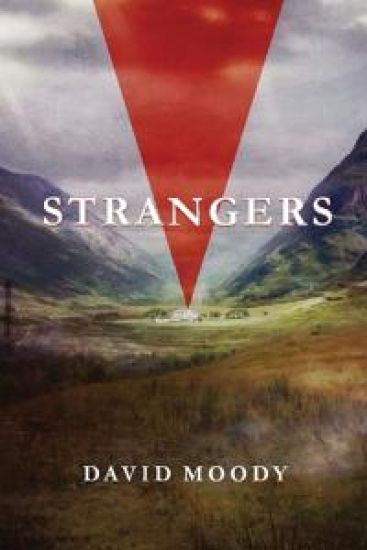
A spate of brutal murders rocks a small Scottish town. The bodies of the dead are savagely mutilated and unspeakably defiled. There are no apparent motives and no obvious connections between the victims.Thussock is a close-knit community - a quiet, inward looking place where crimes like these never happen. People here treat outsiders with suspicion, and the killings only started when the Griffiths family arrived in town.THERE'S EITHER A SERIAL KILLER PREYING ON THE PEOPLE OF THUSSOCK, OR SOMETHING FAR WORSE.

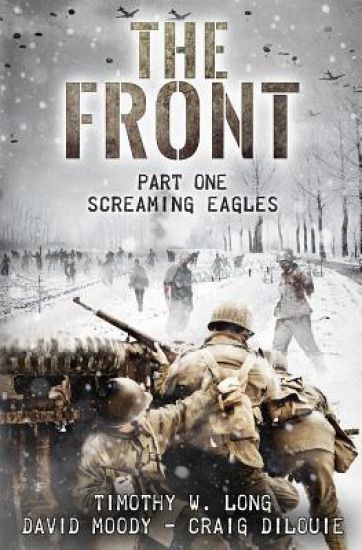
The Front: Screaming Eagles
David Moody; Craig Dilouie; Timothy W. Long
Createspace Independent Publishing Platform
2016
nidottu
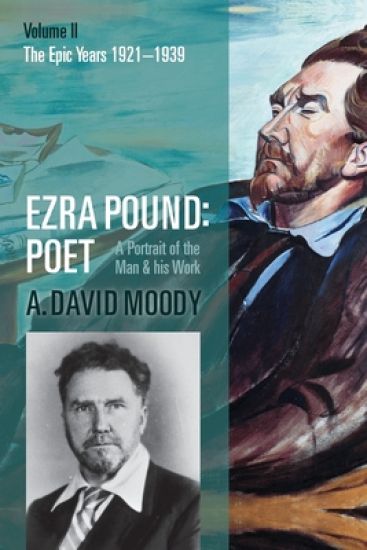
The long-awaited second volume of A. David Moody's critically acclaimed three-part biography of Ezra Pound weaves together the illuminating story of his life, his achievements as a poet and a composer, and his one-man crusade for economic justice. The years 1921-1939 were the most productive of Pound's career. In 1920s Paris, he was among the leading figures of the avant-garde and, in that ambience, he composed an opera, made original contributions to the theory of harmony, and wrote the first thirty cantos of his great epic. Moody explores this creativity in fascinating detail, examining the environment that allowed for some of Pound's greatest work. This period also brought Pound's politics firmly into view and Moody is able to shed new light on his sympathy for Mussolini's Fascism, his invoking Confucian China as a model of responsible government, and his abiding commitment to the democratic values of the American Constitution. Pound is revealed as a great poet and a flawed idealist caught up in the turmoil of his darkening time and struggling, sometimes blindly and in error and self-contradiction, to be a force for enlightenment.

This third and final volume of A. David Moody's critical life of Ezra Pound presents Pound's personal tragedy in a tragic time. In this volume, we experience the 1939-1945 World War, and Pound's hubristic involvement in Fascist Italy's part in it; we encounter the grave moral and intellectual error of Pound holding the Jewish race responsible for the war; and his consequent downfall, being charged with treason, condemned as an anti-Semite, and shut up for twelve years in an institution for the insane. Further, we see Pound stripped for life, by his own counsel and wife, of his civil and human rights. Pound endured what was inflicted upon him, justly and unjustly, without complaint; and continued his lifetime's effort to promote, in and through his Cantos and his translations, a consciousness of a possible humane and just social order. The contradictions run deep and compel, as tragedy does, a steady and unprejudiced contemplation and an answering depth of comprehension.
This second volume of A. David Moody's full-scale portrait, covering Ezra Pound's middle years, weaves together into a single highly readable and challenging narrative, in a way that has not been done before, the illuminating story of his life, his achievement as a poet and a composer, and his one-man crusade for economic justice. There is new insight into his complicated personal relationships. There are detailed accounts of the composition of his two operas and of his original contribution to the theory of harmony. A canto by canto and decad by decad elucidation of the form and meaning of the first seventy-one cantos of his epic reveals their hitherto unperceived musical structures and their overall design. The thinking behind his support for Mussolini's economic programme during the Great Depression of the 1930s is brought to light, and shown to be not "fascist" but essentially true to the principles of the American Revolution, and, behind that, to Confucian ideas of responsible government. At the same time it is made clear that he saw only what he wanted to see in Mussolini's Fascism, and later in Hitler's Nazism, and was blind to their darker policies. And it is clear that he went most seriously wrong in deploying, as a weapon in his war on the injustice of the capitalist financial system, the anti-Semitism endemic in Europe and America and at that time turning murderous in Nazi Germany. Pound is revealed as a great poet and a flawed idealist caught up in the turmoil of his darkening time and struggling, sometimes blindly and in error and self-contradiction, to be a force for enlightenment. A third volume will carry on the narrative of his life and works from 1939 to his death in 1972.