Kirjojen hintavertailu. Mukana 11 244 527 kirjaa ja 12 kauppaa.

Kirjahaku

Etsi kirjoja tekijän nimen, kirjan nimen tai ISBN:n perusteella.

1000 tulosta hakusanalla David N. Edwards

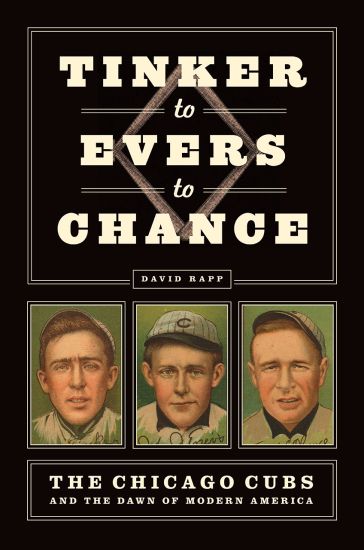
Tinker to Evers to Chance

Tinker to Evers to Chance

David N. Rapp

University of Chicago Press
2018
sidottu
Their names were chanted, crowed, and cursed. Alone they were a shortstop, a second baseman, and a first baseman. But together they were an unstoppable force. Joe Tinker, Johnny Evers, and Frank Chance came together in rough-and-tumble early twentieth-century Chicago and soon formed the defensive core of the most formidable team in big league baseball, leading the Chicago Cubs to four National League pennants and two World Series championships from 1906 to 1910. At the same time, baseball was transforming from smalltime diversion into a nationwide sensation. Americans from all walks of life became infected with "baseball fever," a phenomenon of unprecedented enthusiasm and social impact. The national pastime was coming of age.Tinker to Evers to Chance examines this pivotal moment in American history, when baseball became the game we know today. Each man came from a different corner of the country and brought a distinctive local culture with him: Evers from the IrishAmerican hothouse of Troy, New York; Tinker from the urban parklands of Kansas City, Missouri; Chance from the verdant fields of California's Central Valley. The stories of these early baseball stars shed unexpected light not only on the evolution of baseball and on the enthusiasm of its players and fans all across America, but also on the broader convulsions transforming the US into a confident new industrial society. With them emerged a truly national culture. This iconic trio helped baseball reinvent itself, but their legend has largely been relegated to myths and barroom trivia. David Rapp's engaging history resets the story and brings these men to life again, enabling us to marvel anew at their feats on the diamond. It's a rare look at one of baseball's first dynasties in action.

Putting Science in Its Place – Geographies of Scientific Knowledge

Putting Science in Its Place – Geographies of Scientific Knowledge

David N Livingstone

University of Chicago Press
2003
sidottu
We are accustomed to thinking of science and its findings as universal. After all, one atom of carbon plus two of oxygen yields carbon dioxide in Amazonia as well as in Alaska; a scientist in Bombay can use the same materials and techniques to challenge the work of a scientist in New York; and of course the laws of gravity apply worldwide. Why, then, should the spaces where science is done matter at all? David N. Livingstone here puts that question to the test with his fascinating study of how science bears the marks of its place of production. Putting Science in Its Place establishes the fundamental importance of geography in both the generation and the consumption of scientific knowledge, using historical examples of the many places where science has been practiced. Livingstone first turns his attention to some of the specific sites where science has been made—the laboratory, museum, and botanical garden, to name some of the more conventional locales, but also places like the coffeehouse and cathedral, ship's deck and asylum, even the human body itself. In each case, he reveals just how the space of inquiry has conditioned the investigations carried out there. He then describes how, on a regional scale, provincial cultures have shaped scientific endeavor and how, in turn, scientific practices have been instrumental in forming local identities. Widening his inquiry, Livingstone points gently to the fundamental instability of scientific meaning, based on case studies of how scientific theories have been received in different locales. Putting Science in Its Place powerfully concludes by examining the remarkable mobility of science and the seemingly effortless way it moves around the globe.From the reception of Darwin in the land of the Maori to the giraffe that walked from Marseilles to Paris, Livingstone shows that place does matter, even in the world of science.
An Image of the Soul in Speech

An Image of the Soul in Speech

David N. McNeill

Pennsylvania State University Press
2010
sidottu
In this book, David McNeill illuminates Plato’s distinctive approach to philosophy by examining how his literary portrayal of Socrates manifests an essential interdependence between philosophic and ethical inquiry. In particular, McNeill demonstrates how Socrates’s confrontation with profound ethical questions about his public philosophic activity is the key to understanding the distinctively mimetic, dialogic, and reflexive character of Socratic philosophy. Taking a cue from Nietzsche’s account of “the problem of Socrates,” McNeill shows how the questions Nietzsche raises are questions that, in Plato's depiction, Socrates was aware of and responded to. McNeill also shows how the Republic provides a view of Socratic moral psychology that resembles Nietzsche’s account of human psychology: it deals with the internalized ethical narratives and justificatory schemes through which human beings orient themselves to their world. McNeill argues that this moral psychology not only determines Socrates’s explicit account of different character types and political regimes but also crucially informs his dialectical engagements with his various interlocutors in the dialogues.In addition to contributing a unique perspective to current debates about Socrates’s philosophic methods and the significance of the literary character of Plato’s dialogues, the book offers a far-reaching interpretation of Plato’s presentation of the theoretical and practical activities of the fifth-century Sophists. And in showing how Plato responds to “modern” theoretical challenges, McNeill provides new evidence to question standard views of the differences between ancient and modern conceptions of the self, society, and nature.
An Image of the Soul in Speech

An Image of the Soul in Speech

David N. McNeill

Pennsylvania State University Press
2014
pokkari
In this book, David McNeill illuminates Plato’s distinctive approach to philosophy by examining how his literary portrayal of Socrates manifests an essential interdependence between philosophic and ethical inquiry. In particular, McNeill demonstrates how Socrates’s confrontation with profound ethical questions about his public philosophic activity is the key to understanding the distinctively mimetic, dialogic, and reflexive character of Socratic philosophy. Taking a cue from Nietzsche’s account of “the problem of Socrates,” McNeill shows how the questions Nietzsche raises are questions that, in Plato's depiction, Socrates was aware of and responded to. McNeill also shows how the Republic provides a view of Socratic moral psychology that resembles Nietzsche’s account of human psychology: it deals with the internalized ethical narratives and justificatory schemes through which human beings orient themselves to their world. McNeill argues that this moral psychology not only determines Socrates’s explicit account of different character types and political regimes but also crucially informs his dialectical engagements with his various interlocutors in the dialogues.In addition to contributing a unique perspective to current debates about Socrates’s philosophic methods and the significance of the literary character of Plato’s dialogues, the book offers a far-reaching interpretation of Plato’s presentation of the theoretical and practical activities of the fifth-century Sophists. And in showing how Plato responds to “modern” theoretical challenges, McNeill provides new evidence to question standard views of the differences between ancient and modern conceptions of the self, society, and nature.
The Stakes of History

The Stakes of History

David N. Myers

Yale University Press
2018
sidottu
A leading scholar of Jewish history’s bracing and challenging case for the role of the historian today Why do we study history? What is the role of the historian in the contemporary world? These questions prompted David N. Myers’s illuminating and poignant call for the relevance of historical research and writing. His inquiry identifies a number of key themes around which modern Jewish historians have wrapped their labors: liberation, consolation, and witnessing. Through these portraits, Myers revisits the chasm between history and memory, revealing the middle space occupied by modern Jewish historians as they work between the poles of empathic storytelling and the critical sifting of sources. History, properly applied, can both destroy ideologically rooted myths that breed group hatred and create new memories that are sustaining of life. Alive in these investigations is Myers’s belief that the historian today can and should attend to questions of political and moral urgency. Historical knowledge is not a luxury to society but an essential requirement for informed civic engagement, as well as a vital tool in policy making, conflict resolution, and restorative justice.
Where Queen Elizabeth Slept and What the Butler Saw: A Treasury of Historical Terms from the Sixteenth Century to the Present
Who was a tweenie? How did an ice house work and where would you find a crinkum-crankum wall? What was a chesterfield for, or a Claude glass, and how did a clock jack improve your dinner? The answers to these and many other questions appear in this dictionary, which is a feast of information and trivia for history buffs everywhere wanting to know more than just dates and dry facts. They want to know how people lived: what they ate, how they spoke, how they dressed, what games they played, what their homes looked like. This unique dictionary reveals the fascinating details of life, allowing the reader to travel back in time and experience a typical day in any century from the sixteenth to our own. A book to give hours of pleasure whether browsed through or used for reference-it contains a wealth of unexpected information.
Total Burn Care

Total Burn Care

David N. Herndon

Elsevier - Health Sciences Division
2017
sidottu
Recent advances in research have resulted in tremendous changes in burn management. Stay fully up to date with the new edition of Total Burn Care, by leading authority Dr. David N. Herndon. Detailed procedural guidelines and video clips walk you through every step of the process, from resuscitation through reconstruction and rehabilitation. Everyone on the burn care team, including general and plastic surgeons, intensivists, anesthestists, and nurses, will benefit from this integrated, multidisciplinary guide to safe and effective burn management. Discusses infection control, early burn coverage, occupational physical exercise, respiratory therapy, and ventilator management. Summarizes key points at the beginning of each chapter for quick reference. Uses an integrated, team approach to help you meet the clinical, physical, psychological, and social needs of every patient. Offers expert guidance on early reconstructive surgery and rehabilitation, with new content on improved surgical techniques. Provides access to 15+ procedural operative videos and PowerPoint presentations on topics ranging from alopecia and anesthesia to radiation and treatment of infection - ideal for teaching and presenting. Covers special populations such as elderly and pediatric patients, and includes a new chapter on burns in pregnancy. Expert ConsultT eBook version included with purchase. This enhanced eBook experience allows you to search all of the text, figures, and references from the book on a variety of devices.
Chinese Investment in Africa

Chinese Investment in Africa

David N. Abdulai

Routledge
2020
nidottu
China leads the world when it comes to investment and influence on the African continent. The extent of Chinese investment in Africa is well known and much has been written about China’s foray into Africa. However, most of the available material has approached this issue by looking at China as the ’New Colonialist’ – more interested in Africa’s vast natural resources than working in partnership for sustained development. Whilst China’s interest in Africa’s resources is evident, it is just half of the story. China’s foray into Africa goes beyond its appetite for natural resources and into the realm of geo-politics and international political economics. For example, China is all too aware of how it can cultivate Africa’s support on global issues at the United Nations and at other international fora. Breaking free from the binary arguments and analysis which characterize this topic, Professor Abdulai presents a refreshing perspective that China’s foray into Africa can produce win–win outcomes for China and Africa – if Africans really know what they want from China. Hitherto, each African country has tended to engage China with an individual bucket list; acting in isolation and not as part of a wider continent (indeed Africa and the African Union does not yet have a coordinated policy towards China). For Africa to be able to do that it needs to know where China is coming from, the factors that contributed to its awakening and success, and the benefits and possible pitfalls of this foray, in order to better position itself for a win–win engagement with China. This book will be a valuable read for policy makers, think-tanks and students of Africa-China studies programmes alike.
Tools for Decision Making

Tools for Decision Making

David N. Ammons; Dale J. Roenigk

Routledge
2021
nidottu
This book guides readers to the mastery of a wide array of practical analytic techniques useful to local governments. Written in an easy-to-read style with an emphasis on providing practical assistance to students, local government practitioners, and others interested in local government performance, this updated third edition features analytic methods selected for their relevance to everyday problems encountered in city and county governments.The authors outline a variety of practical techniques including the simplest that the fields of management, public administration, policy analysis, and industrial engineering have to offer. Each analytic technique is introduced in the context of a fictitious case presented over a few pages at the beginning of that technique’s chapter. Contents include demand analysis, work distribution analysis, process flow-charting, inflation adjustments, annualizing capital costs, staffing analysis, identifying full costs of a program or service, present value analysis, life-cycle costing, lease/buy analysis, cost-effectiveness analysis, benchmarking analysis, and more.This updated third edition features a dramatic expansion of Excel-based applications, plus templates and exercises accompanying many of the chapters and available online. New chapters prepare readers to:• use statistical tests to identify significant differences in performance averages;• construct Pareto charts;• develop cause-and-effect diagrams;• prepare control charts;• detect possible discrimination in hiring and appointment practices; and• present analytic evidence more effectively.This book is an essential resource for students and instructors of public administration courses on analysis, methods, evaluation, productivity improvement, and service delivery.Online resources for this book, including Excel templates, are available athttps://toolsfordecisionmaking.sog.unc.edu
Tools for Decision Making

Tools for Decision Making

David N. Ammons; Dale J. Roenigk

Routledge
2021
sidottu
This book guides readers to the mastery of a wide array of practical analytic techniques useful to local governments. Written in an easy-to-read style with an emphasis on providing practical assistance to students, local government practitioners, and others interested in local government performance, this updated third edition features analytic methods selected for their relevance to everyday problems encountered in city and county governments.The authors outline a variety of practical techniques including the simplest that the fields of management, public administration, policy analysis, and industrial engineering have to offer. Each analytic technique is introduced in the context of a fictitious case presented over a few pages at the beginning of that technique’s chapter. Contents include demand analysis, work distribution analysis, process flow-charting, inflation adjustments, annualizing capital costs, staffing analysis, identifying full costs of a program or service, present value analysis, life-cycle costing, lease/buy analysis, cost-effectiveness analysis, benchmarking analysis, and more.This updated third edition features a dramatic expansion of Excel-based applications, plus templates and exercises accompanying many of the chapters and available online. New chapters prepare readers to:• use statistical tests to identify significant differences in performance averages;• construct Pareto charts;• develop cause-and-effect diagrams;• prepare control charts;• detect possible discrimination in hiring and appointment practices; and• present analytic evidence more effectively.This book is an essential resource for students and instructors of public administration courses on analysis, methods, evaluation, productivity improvement, and service delivery.Online resources for this book, including Excel templates, are available athttps://toolsfordecisionmaking.sog.unc.edu
The Russian Discovery of Japan, 1670–1800
During the period of the Tokugawa shogunate’s seclusion policy from about 1630 onwards there was very little European interaction with the Japanese except through the restricted Dutch presence at Nagasaki. During this period, however, Russians exploring Siberia and the Russian Far East came into contact with Japan, and further exploration and information collecting was encouraged by the Russian government, culminating in the first official Russian Embassy to Japan in 1792. This book examines the Russian discourse on Japan in the period, tracing the gradual accumulation of knowledge, and the development of Russian views, sometimes distorted, about Japan. The book includes key historical documents, some translated into English for the first time. The book is a prequel to the author’s previous book, Russian Views of Japan, 1792–1913: An Anthology of Early Travel Writing.
Nonlinear Optical Crystals: A Complete Survey

Nonlinear Optical Crystals: A Complete Survey

David N. Nikogosyan

Springer-Verlag New York Inc.
2005
sidottu
Nonlinear optical techniques are now recognized as the most efficient means available to generate laser radiation at wavelengths that are presently inaccessible via conventional sources. This technology uses nonlinear optical crystals for the frequency conversion of laser light. The book contains the most complete and up to date reference material on properties of nonlinear optical crystals, describes their applications, both traditional and specific, and provides the main mathematical formulas necessary for the calculation of the frequency conversion process. It is a vital source of information for scientists and engineers dealing with modern applications of nonlinear optical crystals in quantum electronics, optoelectronics and laser physics.
Russian Views of Japan, 1792-1913

Russian Views of Japan, 1792-1913

David N. Wells

Routledge
2004
sidottu
Before Japan was 'opened up' in the 1850s, contact with Russia as well as other western maritime nations was extremely limited. Yet from the early eighteenth century onwards, as a result of their expanding commercial interests in East Asia and the North Pacific, Russians had begun to encounter Japanese and were increasingly eager to establish diplomatic and trading relations with Japan. This book presents rare narratives written by Russians, including official envoys, scholars and, later, tourists, who visited Japan between 1792 and 1913. The introduction and notes set these narratives in the context of the history of Russo-Japanese relations and the genre of European travel writing, showing how the Russian writers combined ethnographic interests with the assertion of Russian and European values, simultaneously inscribing power relations and negotiating cultural difference.
Tibetan and Zen Buddhism in Britain
This book analyses the transplantation, development and adaptation of the two largest Tibetan and Zen Buddhist organizations currently active on the British religious landscape: the New Kadampa Tradition (NKT) and the Order of Buddhist Contemplatives (OBC). The key contributions of recent scholarship are evaluated and organised thematically to provide a framework for analysis, and the history and current landscape of contemporary Tibetan and Zen Buddhist practice in Britain are also mapped out. A number of patterns and processes identified elsewhere are exemplified, although certain assumptions made about the nature of 'British Buddhism' are subjected to critical scrutiny and challenged.
Russian Views of Japan, 1792-1913

Russian Views of Japan, 1792-1913

David N. Wells

Routledge
2009
nidottu
Before Japan was 'opened up' in the 1850s, contact with Russia as well as other western maritime nations was extremely limited. Yet from the early eighteenth century onwards, as a result of their expanding commercial interests in East Asia and the North Pacific, Russians had begun to encounter Japanese and were increasingly eager to establish diplomatic and trading relations with Japan. This book presents rare narratives written by Russians, including official envoys, scholars and, later, tourists, who visited Japan between 1792 and 1913. The introduction and notes set these narratives in the context of the history of Russo-Japanese relations and the genre of European travel writing, showing how the Russian writers combined ethnographic interests with the assertion of Russian and European values, simultaneously inscribing power relations and negotiating cultural difference.
Tibetan and Zen Buddhism in Britain
This book analyses the transplantation, development and adaptation of the two largest Tibetan and Zen Buddhist organizations currently active on the British religious landscape: the New Kadampa Tradition (NKT) and the Order of Buddhist Contemplatives (OBC). The key contributions of recent scholarship are evaluated and organised thematically to provide a framework for analysis, and the history and current landscape of contemporary Tibetan and Zen Buddhist practice in Britain are also mapped out. A number of patterns and processes identified elsewhere are exemplified, although certain assumptions made about the nature of 'British Buddhism' are subjected to critical scrutiny and challenged.
The Russian Discovery of Japan, 1670–1800
During the period of the Tokugawa shogunate’s seclusion policy from about 1630 onwards there was very little European interaction with the Japanese except through the restricted Dutch presence at Nagasaki. During this period, however, Russians exploring Siberia and the Russian Far East came into contact with Japan, and further exploration and information collecting was encouraged by the Russian government, culminating in the first official Russian Embassy to Japan in 1792. This book examines the Russian discourse on Japan in the period, tracing the gradual accumulation of knowledge, and the development of Russian views, sometimes distorted, about Japan. The book includes key historical documents, some translated into English for the first time. The book is a prequel to the author’s previous book, Russian Views of Japan, 1792–1913: An Anthology of Early Travel Writing.
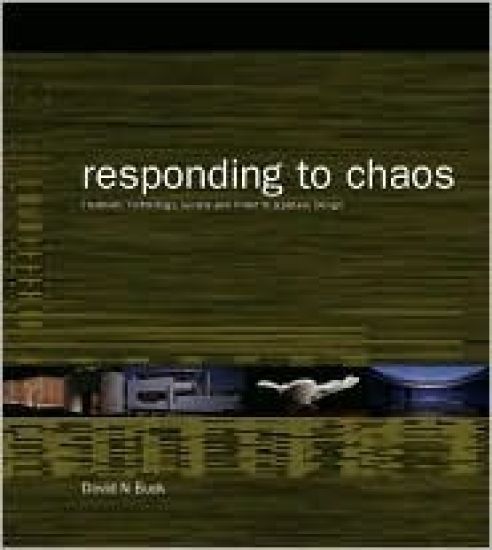
Responding to Chaos

Responding to Chaos

David N Buck

Spon Press
2000
nidottu
A celebration of a unique culture and its experience of design, this sensitive text is a timely examination of Japanese design at the start of a new century. The country's economic boom in the 1980s produced a surge of interest in land and building, and consequently in design in all its forms. From restaurant interiors to products, from private housing to recreational spaces, design received an unprecedented degree of attention. However the bursting in the early 1990s of this so-called 'bubble' economy has prompted a re-examination of design and its role in urban society.
The Last Man Who Knew Everything

The Last Man Who Knew Everything

David N. Schwartz

Basic Books
2017
sidottu
In 1942, a team at the University of Chicago achieved what no one had before: a nuclear chain reaction. At the forefront of this breakthrough stood Enrico Fermi. Straddling the ages of classical physics and quantum mechanics, equally at ease with theory and experiment, Fermi truly was the last man who knew everything-at least about physics. But he was also a complex figure who was a part of both the Italian Fascist Party and the Manhattan Project, and a less-than-ideal father and husband who nevertheless remained one of history's greatest mentors. Based on new archival material and exclusive interviews, The Last Man Who Knew Everything lays bare the enigmatic life of a colossus of twentieth century physics.