Kirjojen hintavertailu. Mukana 11 627 220 kirjaa ja 12 kauppaa.

Kirjahaku

Etsi kirjoja tekijän nimen, kirjan nimen tai ISBN:n perusteella.

1000 tulosta hakusanalla David N. Rapp

Total Burn Care

Total Burn Care

David N. Herndon

Elsevier - Health Sciences Division
2017
sidottu
Recent advances in research have resulted in tremendous changes in burn management. Stay fully up to date with the new edition of Total Burn Care, by leading authority Dr. David N. Herndon. Detailed procedural guidelines and video clips walk you through every step of the process, from resuscitation through reconstruction and rehabilitation. Everyone on the burn care team, including general and plastic surgeons, intensivists, anesthestists, and nurses, will benefit from this integrated, multidisciplinary guide to safe and effective burn management. Discusses infection control, early burn coverage, occupational physical exercise, respiratory therapy, and ventilator management. Summarizes key points at the beginning of each chapter for quick reference. Uses an integrated, team approach to help you meet the clinical, physical, psychological, and social needs of every patient. Offers expert guidance on early reconstructive surgery and rehabilitation, with new content on improved surgical techniques. Provides access to 15+ procedural operative videos and PowerPoint presentations on topics ranging from alopecia and anesthesia to radiation and treatment of infection - ideal for teaching and presenting. Covers special populations such as elderly and pediatric patients, and includes a new chapter on burns in pregnancy. Expert ConsultT eBook version included with purchase. This enhanced eBook experience allows you to search all of the text, figures, and references from the book on a variety of devices.
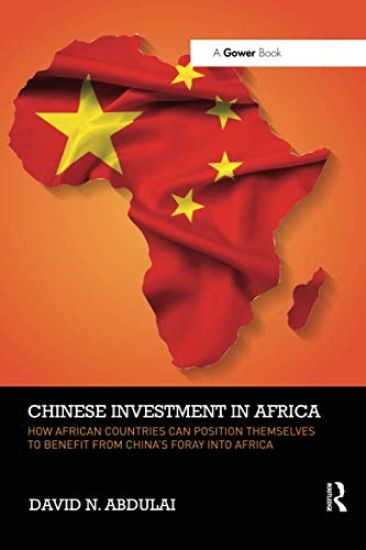
Chinese Investment in Africa

Chinese Investment in Africa

David N. Abdulai

Routledge
2020
nidottu
China leads the world when it comes to investment and influence on the African continent. The extent of Chinese investment in Africa is well known and much has been written about China’s foray into Africa. However, most of the available material has approached this issue by looking at China as the ’New Colonialist’ – more interested in Africa’s vast natural resources than working in partnership for sustained development. Whilst China’s interest in Africa’s resources is evident, it is just half of the story. China’s foray into Africa goes beyond its appetite for natural resources and into the realm of geo-politics and international political economics. For example, China is all too aware of how it can cultivate Africa’s support on global issues at the United Nations and at other international fora. Breaking free from the binary arguments and analysis which characterize this topic, Professor Abdulai presents a refreshing perspective that China’s foray into Africa can produce win–win outcomes for China and Africa – if Africans really know what they want from China. Hitherto, each African country has tended to engage China with an individual bucket list; acting in isolation and not as part of a wider continent (indeed Africa and the African Union does not yet have a coordinated policy towards China). For Africa to be able to do that it needs to know where China is coming from, the factors that contributed to its awakening and success, and the benefits and possible pitfalls of this foray, in order to better position itself for a win–win engagement with China. This book will be a valuable read for policy makers, think-tanks and students of Africa-China studies programmes alike.
Tools for Decision Making

Tools for Decision Making

David N. Ammons; Dale J. Roenigk

Routledge
2021
nidottu
This book guides readers to the mastery of a wide array of practical analytic techniques useful to local governments. Written in an easy-to-read style with an emphasis on providing practical assistance to students, local government practitioners, and others interested in local government performance, this updated third edition features analytic methods selected for their relevance to everyday problems encountered in city and county governments.The authors outline a variety of practical techniques including the simplest that the fields of management, public administration, policy analysis, and industrial engineering have to offer. Each analytic technique is introduced in the context of a fictitious case presented over a few pages at the beginning of that technique’s chapter. Contents include demand analysis, work distribution analysis, process flow-charting, inflation adjustments, annualizing capital costs, staffing analysis, identifying full costs of a program or service, present value analysis, life-cycle costing, lease/buy analysis, cost-effectiveness analysis, benchmarking analysis, and more.This updated third edition features a dramatic expansion of Excel-based applications, plus templates and exercises accompanying many of the chapters and available online. New chapters prepare readers to:• use statistical tests to identify significant differences in performance averages;• construct Pareto charts;• develop cause-and-effect diagrams;• prepare control charts;• detect possible discrimination in hiring and appointment practices; and• present analytic evidence more effectively.This book is an essential resource for students and instructors of public administration courses on analysis, methods, evaluation, productivity improvement, and service delivery.Online resources for this book, including Excel templates, are available athttps://toolsfordecisionmaking.sog.unc.edu
Tools for Decision Making

Tools for Decision Making

David N. Ammons; Dale J. Roenigk

Routledge
2021
sidottu
This book guides readers to the mastery of a wide array of practical analytic techniques useful to local governments. Written in an easy-to-read style with an emphasis on providing practical assistance to students, local government practitioners, and others interested in local government performance, this updated third edition features analytic methods selected for their relevance to everyday problems encountered in city and county governments.The authors outline a variety of practical techniques including the simplest that the fields of management, public administration, policy analysis, and industrial engineering have to offer. Each analytic technique is introduced in the context of a fictitious case presented over a few pages at the beginning of that technique’s chapter. Contents include demand analysis, work distribution analysis, process flow-charting, inflation adjustments, annualizing capital costs, staffing analysis, identifying full costs of a program or service, present value analysis, life-cycle costing, lease/buy analysis, cost-effectiveness analysis, benchmarking analysis, and more.This updated third edition features a dramatic expansion of Excel-based applications, plus templates and exercises accompanying many of the chapters and available online. New chapters prepare readers to:• use statistical tests to identify significant differences in performance averages;• construct Pareto charts;• develop cause-and-effect diagrams;• prepare control charts;• detect possible discrimination in hiring and appointment practices; and• present analytic evidence more effectively.This book is an essential resource for students and instructors of public administration courses on analysis, methods, evaluation, productivity improvement, and service delivery.Online resources for this book, including Excel templates, are available athttps://toolsfordecisionmaking.sog.unc.edu
The Russian Discovery of Japan, 1670–1800
During the period of the Tokugawa shogunate’s seclusion policy from about 1630 onwards there was very little European interaction with the Japanese except through the restricted Dutch presence at Nagasaki. During this period, however, Russians exploring Siberia and the Russian Far East came into contact with Japan, and further exploration and information collecting was encouraged by the Russian government, culminating in the first official Russian Embassy to Japan in 1792. This book examines the Russian discourse on Japan in the period, tracing the gradual accumulation of knowledge, and the development of Russian views, sometimes distorted, about Japan. The book includes key historical documents, some translated into English for the first time. The book is a prequel to the author’s previous book, Russian Views of Japan, 1792–1913: An Anthology of Early Travel Writing.
Nonlinear Optical Crystals: A Complete Survey

Nonlinear Optical Crystals: A Complete Survey

David N. Nikogosyan

Springer-Verlag New York Inc.
2005
sidottu
Nonlinear optical techniques are now recognized as the most efficient means available to generate laser radiation at wavelengths that are presently inaccessible via conventional sources. This technology uses nonlinear optical crystals for the frequency conversion of laser light. The book contains the most complete and up to date reference material on properties of nonlinear optical crystals, describes their applications, both traditional and specific, and provides the main mathematical formulas necessary for the calculation of the frequency conversion process. It is a vital source of information for scientists and engineers dealing with modern applications of nonlinear optical crystals in quantum electronics, optoelectronics and laser physics.
Russian Views of Japan, 1792-1913

Russian Views of Japan, 1792-1913

David N. Wells

Routledge
2004
sidottu
Before Japan was 'opened up' in the 1850s, contact with Russia as well as other western maritime nations was extremely limited. Yet from the early eighteenth century onwards, as a result of their expanding commercial interests in East Asia and the North Pacific, Russians had begun to encounter Japanese and were increasingly eager to establish diplomatic and trading relations with Japan. This book presents rare narratives written by Russians, including official envoys, scholars and, later, tourists, who visited Japan between 1792 and 1913. The introduction and notes set these narratives in the context of the history of Russo-Japanese relations and the genre of European travel writing, showing how the Russian writers combined ethnographic interests with the assertion of Russian and European values, simultaneously inscribing power relations and negotiating cultural difference.
Tibetan and Zen Buddhism in Britain
This book analyses the transplantation, development and adaptation of the two largest Tibetan and Zen Buddhist organizations currently active on the British religious landscape: the New Kadampa Tradition (NKT) and the Order of Buddhist Contemplatives (OBC). The key contributions of recent scholarship are evaluated and organised thematically to provide a framework for analysis, and the history and current landscape of contemporary Tibetan and Zen Buddhist practice in Britain are also mapped out. A number of patterns and processes identified elsewhere are exemplified, although certain assumptions made about the nature of 'British Buddhism' are subjected to critical scrutiny and challenged.
The Nubian Past

The Nubian Past

David N. Edwards

Routledge
2004
sidottu
This cutting-edge synthesis of the archaeology of Nubia and Sudan from prehistory to the nineteenth century AD is the first major work on this area for over three decades. Drawing on results of the latest research and developing new interpretive frameworks, the area which has produced the most spectacular archaeology in sub-Saharan Africa is examined here by an author with extensive experience in this field.The geographical range of the book extends through the Nubian north, the Middle Nile Basin, and includes what has become the modern Sudan. Using period-based chapters, the region's long-term history is traced and a potential for a more broadly framed and inclusive 'historical archaeology' of Sudan's more recent past is explored.This text breaks new ground in its move beyond the Egyptocentric and more traditional culture-histories of Nubia, often isolated in Africanist research, and it relocates the early civilizations and their archaeology within their Sudanic Africa context. This is a captivating study of the area's history, and will inform and enthral all students and researchers of Archaeology and Egyptology.
The Nubian Past

The Nubian Past

David N. Edwards

Routledge
2004
nidottu
This cutting-edge synthesis of the archaeology of Nubia and Sudan from prehistory to the nineteenth century AD is the first major work on this area for over three decades. Drawing on results of the latest research and developing new interpretive frameworks, the area which has produced the most spectacular archaeology in sub-Saharan Africa is examined here by an author with extensive experience in this field.The geographical range of the book extends through the Nubian north, the Middle Nile Basin, and includes what has become the modern Sudan. Using period-based chapters, the region's long-term history is traced and a potential for a more broadly framed and inclusive 'historical archaeology' of Sudan's more recent past is explored.This text breaks new ground in its move beyond the Egyptocentric and more traditional culture-histories of Nubia, often isolated in Africanist research, and it relocates the early civilizations and their archaeology within their Sudanic Africa context. This is a captivating study of the area's history, and will inform and enthral all students and researchers of Archaeology and Egyptology.
Russian Views of Japan, 1792-1913

Russian Views of Japan, 1792-1913

David N. Wells

Routledge
2009
nidottu
Before Japan was 'opened up' in the 1850s, contact with Russia as well as other western maritime nations was extremely limited. Yet from the early eighteenth century onwards, as a result of their expanding commercial interests in East Asia and the North Pacific, Russians had begun to encounter Japanese and were increasingly eager to establish diplomatic and trading relations with Japan. This book presents rare narratives written by Russians, including official envoys, scholars and, later, tourists, who visited Japan between 1792 and 1913. The introduction and notes set these narratives in the context of the history of Russo-Japanese relations and the genre of European travel writing, showing how the Russian writers combined ethnographic interests with the assertion of Russian and European values, simultaneously inscribing power relations and negotiating cultural difference.
Tibetan and Zen Buddhism in Britain
This book analyses the transplantation, development and adaptation of the two largest Tibetan and Zen Buddhist organizations currently active on the British religious landscape: the New Kadampa Tradition (NKT) and the Order of Buddhist Contemplatives (OBC). The key contributions of recent scholarship are evaluated and organised thematically to provide a framework for analysis, and the history and current landscape of contemporary Tibetan and Zen Buddhist practice in Britain are also mapped out. A number of patterns and processes identified elsewhere are exemplified, although certain assumptions made about the nature of 'British Buddhism' are subjected to critical scrutiny and challenged.
The Russian Discovery of Japan, 1670–1800
During the period of the Tokugawa shogunate’s seclusion policy from about 1630 onwards there was very little European interaction with the Japanese except through the restricted Dutch presence at Nagasaki. During this period, however, Russians exploring Siberia and the Russian Far East came into contact with Japan, and further exploration and information collecting was encouraged by the Russian government, culminating in the first official Russian Embassy to Japan in 1792. This book examines the Russian discourse on Japan in the period, tracing the gradual accumulation of knowledge, and the development of Russian views, sometimes distorted, about Japan. The book includes key historical documents, some translated into English for the first time. The book is a prequel to the author’s previous book, Russian Views of Japan, 1792–1913: An Anthology of Early Travel Writing.
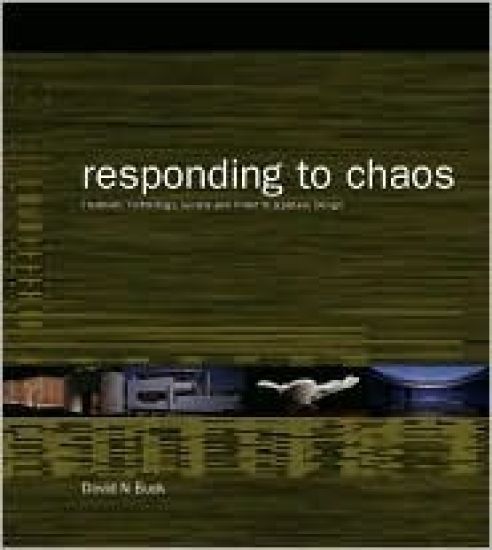
Responding to Chaos

Responding to Chaos

David N Buck

Spon Press
2000
nidottu
A celebration of a unique culture and its experience of design, this sensitive text is a timely examination of Japanese design at the start of a new century. The country's economic boom in the 1980s produced a surge of interest in land and building, and consequently in design in all its forms. From restaurant interiors to products, from private housing to recreational spaces, design received an unprecedented degree of attention. However the bursting in the early 1990s of this so-called 'bubble' economy has prompted a re-examination of design and its role in urban society.
The Last Man Who Knew Everything

The Last Man Who Knew Everything

David N. Schwartz

Basic Books
2017
sidottu
In 1942, a team at the University of Chicago achieved what no one had before: a nuclear chain reaction. At the forefront of this breakthrough stood Enrico Fermi. Straddling the ages of classical physics and quantum mechanics, equally at ease with theory and experiment, Fermi truly was the last man who knew everything-at least about physics. But he was also a complex figure who was a part of both the Italian Fascist Party and the Manhattan Project, and a less-than-ideal father and husband who nevertheless remained one of history's greatest mentors. Based on new archival material and exclusive interviews, The Last Man Who Knew Everything lays bare the enigmatic life of a colossus of twentieth century physics.
The Human Microbiota

The Human Microbiota

David N. Fredricks

John Wiley Sons Inc
2013
sidottu
The Human Microbiota offers a comprehensive review of all human-associated microbial niches in a single volume, focusing on what modern tools in molecular microbiology are revealing about human microbiota, and how specific microbial communities can be associated with either beneficial effects or diseases. An excellent resource for microbiologists, physicians, infectious disease specialists, and others in the field, the book describes the latest research findings and evaluates the most innovative research approaches and technologies. Perspectives from pioneers in human microbial ecology are provided throughout.
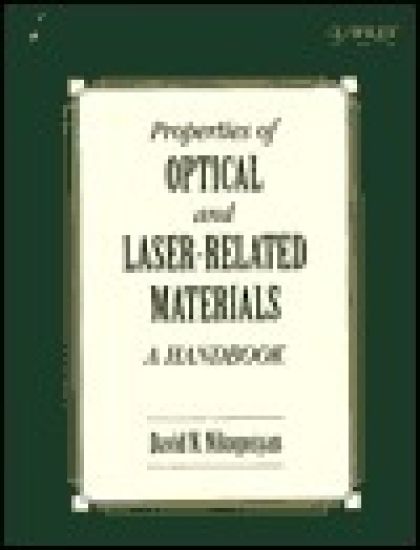
Properties of Optical and Laser-Related Materials

Properties of Optical and Laser-Related Materials

David N. Nikogosyan

JOHN WILEY SONS INC
1997
sidottu
Properties of Optical and Laser-Related Materials—A Handbook offers the reader a self-contained, concise and up-to-date collection of the key properties of 125 of the most common and important optical materials used in modern optics, laser physics and technology, spectroscopy and laser spectroscopy, nonlinear optics, quantum electronics and laser applications. This comprehensive volume presents not only the classical properties but also those that have appeared in the three decades since the invention of the laser. The presentation of the material is given in a clear tabular form with more than 1000 references. A wide variety of readers, ranging from workers in both industry and academia, to lecturers and students at postgraduate and undergraduate levels, will find Properties of Optical and Laser-Related Materials—A Handbook an invaluable resource.
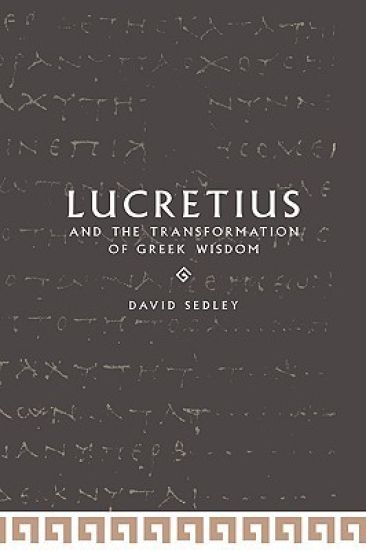
Lucretius and the Transformation of Greek Wisdom

Lucretius and the Transformation of Greek Wisdom

David N. Sedley

Cambridge University Press
2003
pokkari
This book is designed to appeal both to those interested in Roman poetry and to specialists in ancient philosophy. In it David Sedley explores Lucretius' complex relationship with Greek culture, in particular with Empedocles, whose poetry was the model for his own, with Epicurus, the source of his philosophical inspiration, and with the Greek language itself. He includes a detailed reconstruction of Epicurus' great treatise On Nature, and seeks to show how Lucretius worked with this as his sole philosophical source, but gradually emancipated himself from its structure, transforming its raw contents into something radically new. By pursuing these themes, the book uncovers many unrecognised aspects of Lucretius' methods and achievements as a poetic craftsman.
Lucretius and the Transformation of Greek Wisdom

Lucretius and the Transformation of Greek Wisdom

David N. Sedley

Cambridge University Press
1998
sidottu
This book is designed to appeal both to those interested in Roman poetry and to specialists in ancient philosophy. In it David Sedley explores Lucretius’ complex relationship with Greek culture, in particular with Empedocles, whose poetry was the model for his own, with Epicurus, the source of his philosophical inspiration, and with the Greek language itself. He includes a detailed reconstruction of Epicurus’ great treatise On Nature, and seeks to show how Lucretius worked with this as his sole philosophical source, but gradually emancipated himself from its structure, transforming its raw contents into something radically new. By pursuing these themes, the book uncovers many unrecognised aspects of Lucretius’ methods and achievements as a poetic craftsman.