Kirjojen hintavertailu. Mukana 12 360 142 kirjaa ja 12 kauppaa.

Kirjahaku

Etsi kirjoja tekijän nimen, kirjan nimen tai ISBN:n perusteella.

1000 tulosta hakusanalla David Nichols

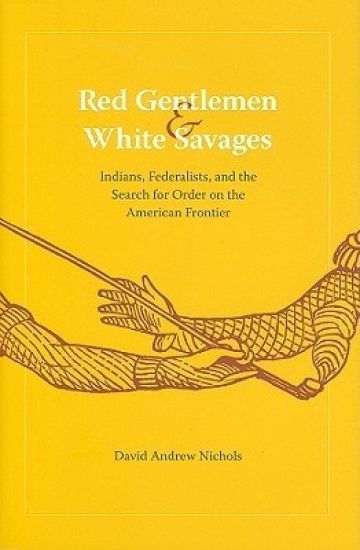
Red Gentlemen and White Savages

Red Gentlemen and White Savages

David Andrew Nichols

University of Virginia Press
2008
sidottu
Red Gentlemen and White Savages argues that after the devastation of the American Revolutionary War, the main concern of Federalist and Indian leaders was not the transfer of land, but the restoration of social order on the frontier. Nichols focuses on the 'middle ground' of Indian treaty conferences, where, in a series of encounters framed by the rituals of Native American diplomacy and the rules of Anglo-American gentility, U.S. officials and Woodland Indian civil chiefs built an uneasy alliance. The two groups of leaders learned that they shared common goals: both sought to control their 'unruly young men' - disaffected white frontiersmen and Native American warriors - and both favored diplomacy, commerce, and established boundaries over military confrontation.Their alliance proved unstable. In their pursuit of peace and order along the frontier, both sets of leaders irreparably alienated their own followers. The Federalists lost power in 1800 to the agrarian expansionists of the Democratic-Republican Party, while civil chiefs lost influence to the leaders of new pan-Indian resistance movements. This shift in political power contributed to the outbreak of war between the United States, Britain, and Britain's Indian allies in 1812, and prepared the way for Indian Removal.

Peoples of the Inland Sea

Peoples of the Inland Sea

David Andrew Nichols

Ohio University Press
2018
sidottu
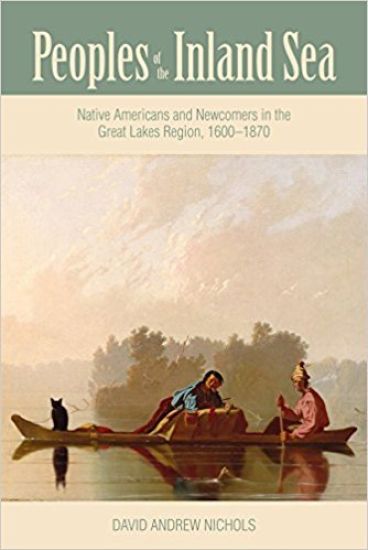
Diverse in their languages and customs, the Native American peoples of the Great Lakes region—the Miamis, Ho-Chunks, Potawatomis, Ojibwas, and many others—shared a tumultuous history. In the colonial era their rich homeland became a target of imperial ambition and an invasion zone for European diseases, technologies, beliefs, and colonists. Yet in the face of these challenges, their nations’ strong bonds of trade, intermarriage, and association grew and extended throughout their watery domain, and strategic relationships and choices allowed them to survive in an era of war, epidemic, and invasion. In Peoples of the Inland Sea, David Andrew Nichols offers a fresh and boundary-crossing history of the Lakes peoples over nearly three centuries of rapid change, from pre-Columbian times through the era of Andrew Jackson’s Removal program. As the people themselves persisted, so did their customs, religions, and control over their destinies, even in the Removal era. In Nichols’s hands, Native, French, American, and English sources combine to tell this important story in a way as imaginative as it is bold. Accessible and creative, Peoples of the Inland Sea is destined to become a classroom staple and a classic in Native American history.
Peoples of the Inland Sea

Peoples of the Inland Sea

David Andrew Nichols

Ohio University Press
2018
pokkari
Diverse in their languages and customs, the Native American peoples of the Great Lakes region—the Miamis, Ho-Chunks, Potawatomis, Ojibwas, and many others—shared a tumultuous history. In the colonial era their rich homeland became a target of imperial ambition and an invasion zone for European diseases, technologies, beliefs, and colonists. Yet in the face of these challenges, their nations' strong bonds of trade, intermarriage, and association grew and extended throughout their watery domain, and strategic relationships and choices allowed them to survive in an era of war, epidemic, and invasion. In Peoples of the Inland Sea, David Andrew Nichols offers a fresh and boundary-crossing history of the Lakes peoples over nearly three centuries of rapid change, from pre-Columbian times through the era of Andrew Jackson's Removal program. As the people themselves persisted, so did their customs, religions, and control over their destinies, even in the Removal era. In Nichols's hands, Native, French, American, and English sources combine to tell this important story in a way as imaginative as it is bold. Accessible and creative, Peoples of the Inland Sea is destined to become a classroom staple and a classic in Native American history.
Red Cars In The Parking Lot

Red Cars In The Parking Lot

David Ray Nichols

Independently Published
2019
pokkari
The second book by David Ray Nichols bridges some of the tales from his first round of stories. He is able to tie stories together, making the meanings of various aspects of his narratives change. His short stories are fun reads that are simple, but complex. They will entertain the reader, if the reader is ready to escape his life for a few minutes, exploring the mental creativeness of David Ray Nichols.
Broad Street

Broad Street

David Ray Nichols

Createspace Independent Publishing Platform
2019
pokkari
Ten short stories that are quick, easy reads that will allow the reader to escape his surroundings for a moment in time. As music can take the listener away from his troubles, so can Broad Street: A Short Story & Nine Other Short Stories Of Life. Give the book some time, and it will give back with humor and excitement, as it leaves the reader waiting for the next round of stories by David Ray Nichols.
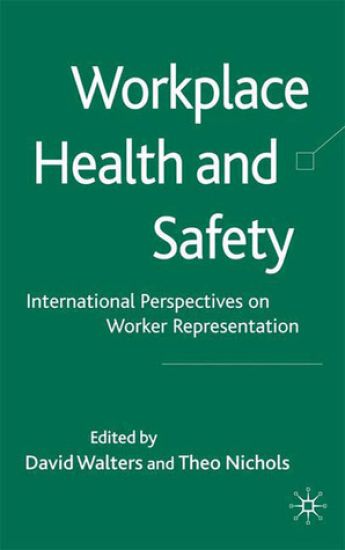
Workplace Health and Safety

Workplace Health and Safety

David Walters; Theo Nichols

Palgrave Macmillan
2009
sidottu
A cutting edge look at the experience of worker representation in the employment relations of workplace health and safety. Examining the extent to which existing arrangements deliver results, this book reflects on whether the effectiveness of worker representation is eroded or enhanced by current regulatory and organizational constructs.
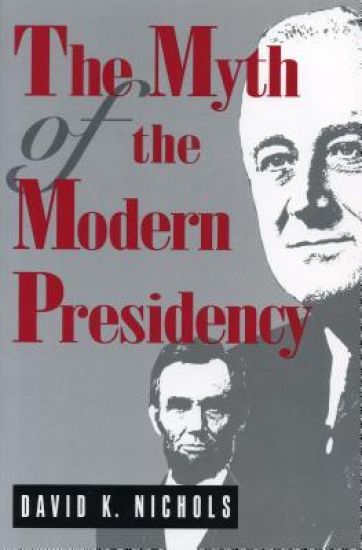
The Myth of the Modern Presidency

The Myth of the Modern Presidency

David K. Nichols

Pennsylvania State University Press
1994
sidottu
The idea that a radical transformation of the Presidency took place during the FDR administration has become one of the most widely accepted tenets of contemporary scholarship. According to this view, the Constitutional Presidency was a product of the Founders' fear of arbitrary power. Only with the development of a popular extra-Constitutional Presidency did the powerful "modern Presidency" emerge.David K. Nichols argues to the contrary that the "modern Presidency" was not created by FDR. What happened during FDR's administration was a transformation in the size and scope of the national government, rather than a transformation of the Presidency in its relations to the Constitution or the other branches of government. Nichols demonstrates that the essential elements of the modern Presidency have been found throughout our history, although often less obvious in an era where the functions of the national government as a whole were restricted.Claiming that we have failed to fully appreciate the character of the Constitutional Presidency, Nichols shows that the potential for the modern Presidency was created in the Constitution itself. He analyzes three essential aspects of the modern Presidency—the President's role in the budgetary process, the President's role as chief executive, and the War Powers Act—that are logical outgrowths of the decisions made at the Constitutional Convention. Nichols concludes that it is the authors of the American Constitution, not the English or European philosophers, who provide the most satisfactory reconciliation of executive power and limited popular government. It is the authors of the Constitution who created the modern Presidency.
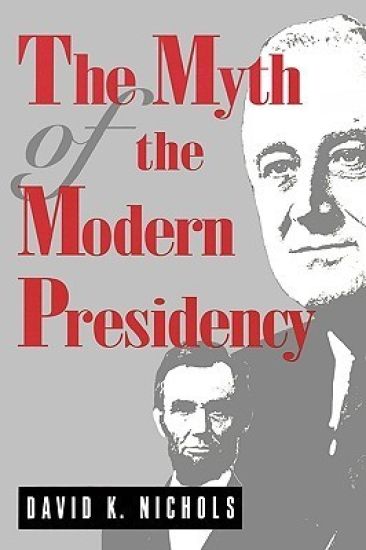
The Myth of the Modern Presidency

The Myth of the Modern Presidency

David K. Nichols

Pennsylvania State University Press
1994
pokkari
The idea that a radical transformation of the Presidency took place during the FDR administration has become one of the most widely accepted tenets of contemporary scholarship. According to this view, the Constitutional Presidency was a product of the Founders' fear of arbitrary power. Only with the development of a popular extra-Constitutional Presidency did the powerful "modern Presidency" emerge.David K. Nichols argues to the contrary that the "modern Presidency" was not created by FDR. What happened during FDR's administration was a transformation in the size and scope of the national government, rather than a transformation of the Presidency in its relations to the Constitution or the other branches of government. Nichols demonstrates that the essential elements of the modern Presidency have been found throughout our history, although often less obvious in an era where the functions of the national government as a whole were restricted.Claiming that we have failed to fully appreciate the character of the Constitutional Presidency, Nichols shows that the potential for the modern Presidency was created in the Constitution itself. He analyzes three essential aspects of the modern Presidency—the President's role in the budgetary process, the President's role as chief executive, and the War Powers Act—that are logical outgrowths of the decisions made at the Constitutional Convention. Nichols concludes that it is the authors of the American Constitution, not the English or European philosophers, who provide the most satisfactory reconciliation of executive power and limited popular government. It is the authors of the Constitution who created the modern Presidency.
Golden Hour

Golden Hour

David G. Nichols; Myron Yaster; Charles Schleien; Charles N. Paidas

Mosby
2011
nidottu
"Highly Commended," Paediatrics Category, British Medical Association 2012 Medical Book Competition Find what you need quickly when performing emergency techniques such as cardioversion/defibrillation with a step-by-step, outline format that includes numerous algorithms, tables, and figures. Prepare for a broad range of emergency situations with new chapters on General Surgical Emergencies; Asthma; Acute Renal Failure; Diabetic Ketoacidosis; Gastrointestinal Emergencies; Liver Failure; Hematologic and Oncologic Emergencies; Hypo/Hyperthermia; and Terrorism and Mass Casualty. Solve more clinical challenges with new and expanded material, including spinal cord trauma, and additional focus on the hot topic of pain and sedation. Get expert visual guidance with additional illustrations to supplement the comprehensive coverage.
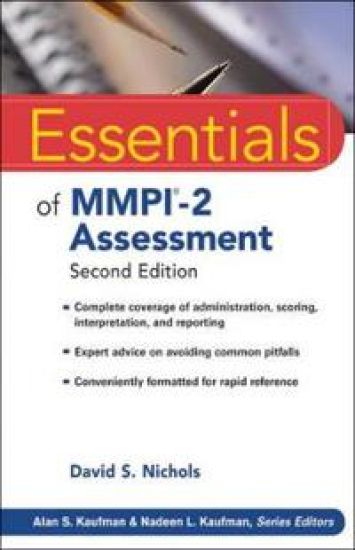
Essentials of MMPI-2 Assessment

Essentials of MMPI-2 Assessment

David S. Nichols

John Wiley Sons Inc
2011
nidottu
The Minnesota Multiphasic Personality Inventory, Second Edition is used by a broad range of clinicians to assist with the diagnosis of mental disorders and the selection of appropriate treatment methods. To use it properly, professionals need an authoritative source for use of this test. This thoroughly updated and revised second edition of Essentials of MMPI-2 Assessment provides that resource. In addition to comprehensive updates to the research and literature throughout, the new edition will include information on other versions of the test, including the MMPI-2 RC and the MMPI-2-RF. Clinical and school psychologists are provided with information on administering, interpreting, and scoring this most widely used test for assessing personality.
Safety or Profit?

Safety or Profit?

Theo Nichols; David Walters

Baywood Publishing Company Inc
2014
sidottu
As the title Safety or Profit? suggests, health and safety at work needs to be understood in the context of the wider political economy. This book brings together contributions informed by this view from internationally recognized scholars. It reviews the governance of health and safety at work, with special reference to Australia, Canada, Sweden, and the United Kingdom. Three main aspects are discussed. The restructuring of the labor market: this is considered with respect to precarious work and to gender issues and their implications for the health and safety of workers. The neoliberal agenda: this is examined with respect to the diminished power of organized labor, decriminalization, and new governance theory, including an examination of how well the health-and-safety-at-work regimes put in place in many industrial societies about forty years ago have fared and how distinctive the recent emphasis on self-regulation in several countries really is. The role of evidence: there is a dearth of evidence-based policy. The book examines how policy on health and safety at work is formulated at both company and state levels. Cases considered include the scant regard paid to evidence by an official inquiry into future strategy in Canada; the lack of evidence-based policy and the reluctance to observe the precautionary principle with respect to work-related cancer in the United Kingdom; and the failure to learn from past mistakes in the Deepwater Horizon disaster in the Gulf of Mexico.
Safety or Profit?

Safety or Profit?

Theo Nichols; David Walters

Baywood Publishing Company Inc
2014
nidottu
As the title Safety or Profit? suggests, health and safety at work needs to be understood in the context of the wider political economy. This book brings together contributions informed by this view from internationally recognized scholars. It reviews the governance of health and safety at work, with special reference to Australia, Canada, Sweden, and the United Kingdom. Three main aspects are discussed. The restructuring of the labor market: this is considered with respect to precarious work and to gender issues and their implications for the health and safety of workers. The neoliberal agenda: this is examined with respect to the diminished power of organized labor, decriminalization, and new governance theory, including an examination of how well the health-and-safety-at-work regimes put in place in many industrial societies about forty years ago have fared and how distinctive the recent emphasis on self-regulation in several countries really is. The role of evidence: there is a dearth of evidence-based policy. The book examines how policy on health and safety at work is formulated at both company and state levels. Cases considered include the scant regard paid to evidence by an official inquiry into future strategy in Canada; the lack of evidence-based policy and the reluctance to observe the precautionary principle with respect to work-related cancer in the United Kingdom; and the failure to learn from past mistakes in the Deepwater Horizon disaster in the Gulf of Mexico.