Kirjojen hintavertailu. Mukana 11 699 587 kirjaa ja 12 kauppaa.

Kirjahaku

Etsi kirjoja tekijän nimen, kirjan nimen tai ISBN:n perusteella.

1000 tulosta hakusanalla David Nicolle

Constantinople 1453

Constantinople 1453

David Nicolle

Osprey Publishing
2000
nidottu
A detailed account of the epic four-month siege of the city of Constantinople, last vestige of the once mighty Roman and Byzantine Empires.Mehmet 'The Conqueror' led an army of 80,000 men with a massive siege train against the city. Defending were a mere 10,000 men under the Emperor Constantine XI. The Turkish artillery battered the ancient city walls mercilessly, levelling a large section. A gallant defence held off the massive Turkish assault for several hours. Refusing appeals to flee, Constantine returned to the breaches and fought until overwhelmed and killed. Thus died the last Emperor of the Byzantines, and with him his once glorious empire.
The Crusades

The Crusades

David Nicolle

Osprey Publishing
2001
nidottu
Born amid immense suffering and bloodshed, the Kingdom of Jerusalem remained a battlefield for almost 200 years.The Crusades gave rise to the Military Orders of the Templars and Hospitallers, and were a backdrop to the careers of some of history's most famous leaders including Richard 'The Lionheart' and Saladin. On occasion the savagery of the Crusaders left their opponents reeling, creating frictions that survived for more than 700 years.This book describes and illustrates the events of the Crusades, and how art, architecture and learning all benefited from new knowledge the Crusaders brought back from the East.
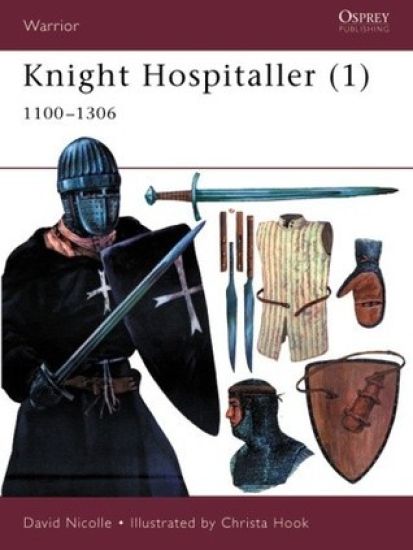
Knight Hospitaller (1)

Knight Hospitaller (1)

David Nicolle

Osprey Publishing
2001
nidottu
The Hospitallers were the first of the Secular Crusading Orders to be created, though they were only 'militarized' after the establishment of the Templers. The Hospitallers played a major role in the military struggle between Christendom and the Islamic World throughout the medieval and early modern periods. The Hospitallers recruited from a wide section of society, but their structure and attitudes reflected the aristocratic based society of their day. They primarily campaigned on land during the first phase of their existence, and primarily at sea during their second phase. This book offers a full exploration of the significant role played by the Hospitallers in the cultural, political and economic development of the Christian Empire.
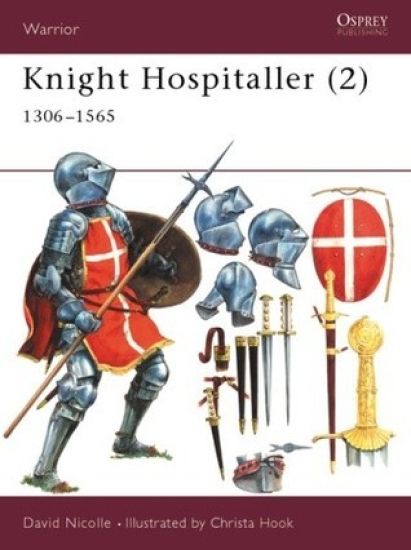
Knight Hospitaller (2)

Knight Hospitaller (2)

David Nicolle

Osprey Publishing
2001
nidottu
The Hospitallers were the first of the Secular Crusading Orders to be created, though they were only "militarized" after the establishment of the Templers. The Hospitallers played a major role in the military struggle between Christendom and the Islamic World throughout the mediaeval and early modern periods. They recruited from a wide section of society, but their structure and attitudes reflected the aristocratic-based society of their day. They primarily campaigned on land during the first phase of their existence, and primarily at sea during their second phase. This work reveals how, like other Military Orders, the Hospitallers played a significant cultural, political and economic role within the Christian Empire itself.
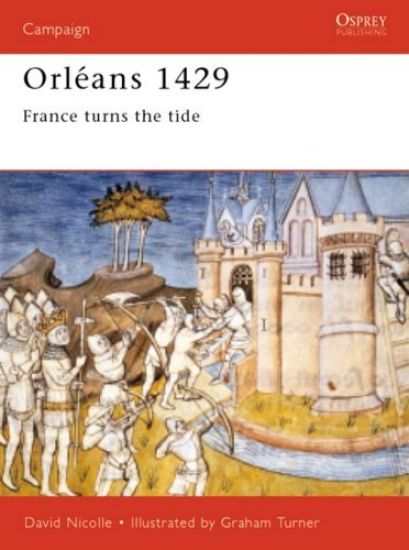
Orléans 1429

Orléans 1429

David Nicolle

Osprey Publishing
2001
nidottu
By 1429, with French fortunes in the Hundred Years War at their lowest ebb, an English victory seemed inevitable. Northern France including Paris was firmly under English control and the city of Orleans was besieged by an English army. At the darkest hour, a deeply religious peasant girl from Champagne came to the Dauphin, convinced that she had a divine mission to help him defeat the English. Her name was Joan of Arc. In less than four months Joan's inspired leadership helped to break the siege of Orleans. This volume tells the story of a legendary episode in France's history.
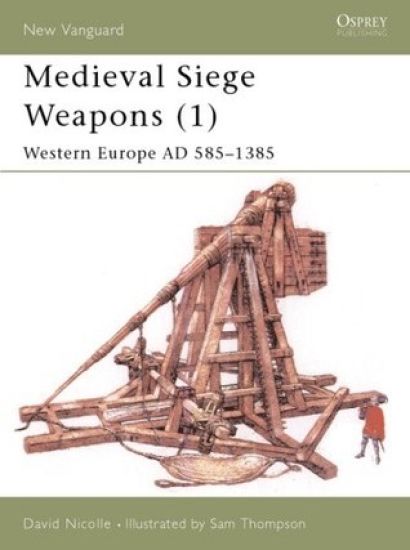
Medieval Siege Weapons (1)

Medieval Siege Weapons (1)

David Nicolle

Osprey Publishing
2002
nidottu
The Medieval era was a period of huge variety and invention in the field of siege warfare. Before the use of cannon and other gun-powder artillery, siege engines relied on assorted sources of power from torsion 'energy storage' systems to man-power, counter-balances and others. This book reveals how the combining of technological traditions from the Graeco-Roman world, Persia, India and above all China made a massive contribution to the development of siege techniques. Medieval military engineering was equally inventive in terms of mining, counter-mining, the breaking of walls, the use of noxious and chemical fumes and the use of fire-weapons.
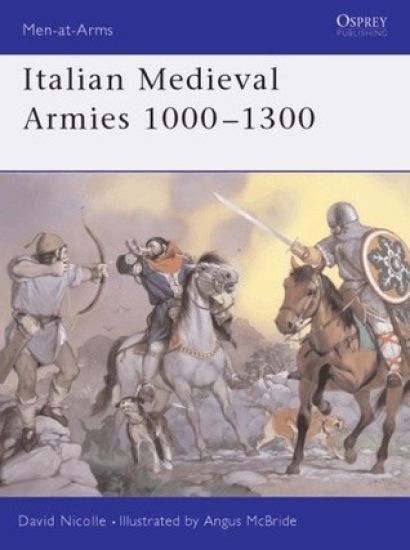
Italian Medieval Armies 1000–1300

Italian Medieval Armies 1000–1300

David Nicolle

Osprey Publishing
2002
nidottu
Although it was one of the main centres of armour production for export, early medieval Italy's costumes and armour reflected a vigorous but fragmented military system, influenced by Byzantine and Islamic styles as much as by northern Europe. This book shows how the rise of independent city armies and those of the Papacy, the spread of naval power and the founding of Norman states in the south all contributed to a dazzling kaleidoscope of military styles. The fascinating text is accompanied by numerous illustrations including eight full colour plates by the renowned military artist, Angus McBride.
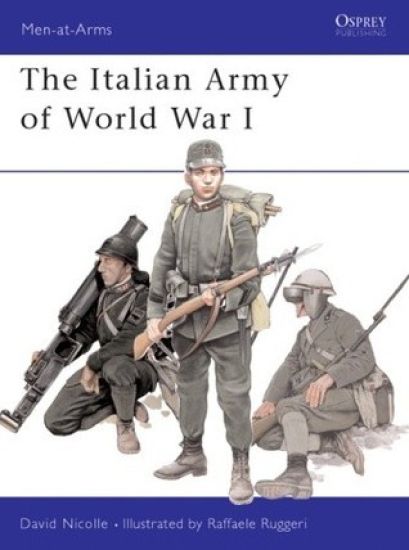
The Italian Army of World War I

The Italian Army of World War I

David Nicolle

Osprey Publishing
2003
nidottu
Due to her refusal to support Austria-Hungary at the beginning of the war, Italy was left in a position of neutrality. Both sides wanted Italy involved in the war and she was able to hold out for the best possible deal - this time on the allied side. This work shows that the majority of Italy's battles took place on the frozen slopes of the Alps, including the numerous battles of the Isonzo, the disaster at Caporetto and, in its aftermath the holding of the Piave line. Also covered are the eventual victory at Vittoria Veneto, and the conquest of Trieste following the Austrian collapse. The Italian army was also involved in fighting in Albania and the Middle East, as well as suppressing a pro-Ottoman uprising in Libya.
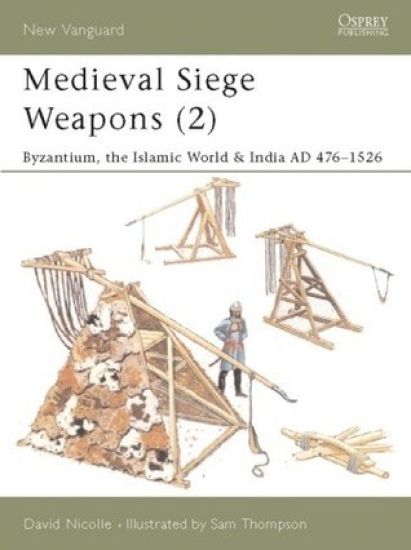
Medieval Siege Weapons (2)

Medieval Siege Weapons (2)

David Nicolle

Osprey Publishing
2003
nidottu
The medieval period was probably the most varied in military history when it came to the development of non-gunpowder military machines. One reason for this was the bringing together of several pre-existing military-technological traditions from the ancient Graeco-Roman World, Persia, India and China. Three civilizations were primarily responsible for the ease with which such technologies were brought together and combined: the Late-Roman or Byzantine Empire; the Islamic World; and the Mongol "World Empire". This work looks at the stone throwing machines that used assorted sources of power from torsion "energy storage" systems, to manpowered sling devices, counterbalance sling devices and rockets.
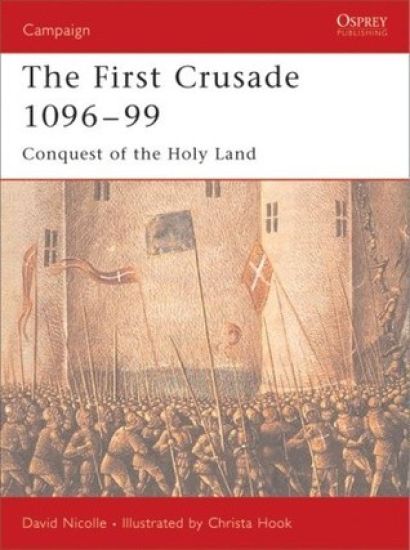
The First Crusade 1096–99

The First Crusade 1096–99

David Nicolle

Osprey Publishing
2003
nidottu
To many people the Crusades were the First Crusade. This first 'armed pilgrimage' to the Holy Land was, of course, the only Crusade that really succeeded. It resulted in the establishment of four so-called Crusader States in the Middle East and its repercussions can still be felt today. But in addition to its historical significance, this book explores how the First Crusade saw several armies march right across Europe at a time when such a thing was virtually unheard of. It also struck the Islamic World at a moment when the latter was chronically divided and thus won a series of miraculous military victories, which would have been impossible a generation earlier and were never repeated afterwards.
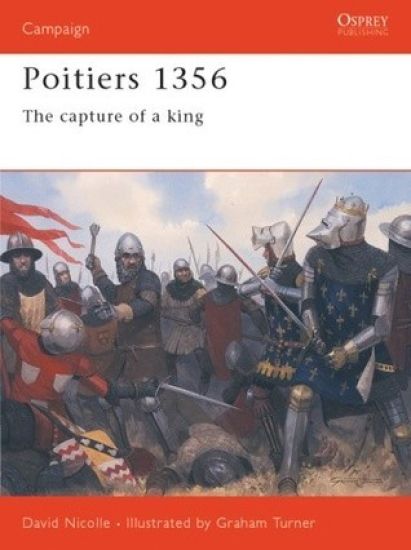
Poitiers 1356

Poitiers 1356

David Nicolle

Osprey Publishing
2004
nidottu
The battle of Poitiers was one of the most important battles of the first part of the Hundred Years' War between England and France. With an Anglo-Gascon army, the Black Prince carried out a large raid into the heart of France in the summer of 1356, causing King John of France to bring his superior forces south of the Loire. This book details their meeting at Poitiers, where after a hard fight the French were defeated. Large numbers of French were captured, including King John and his son the Dauphin. Poitiers confirmed the Black Prince's military reputation, as well as that of the English.
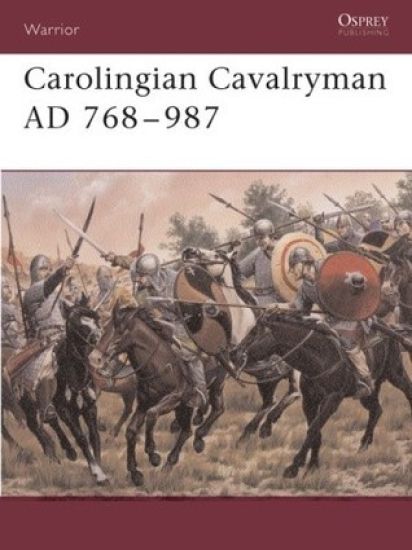
Carolingian Cavalryman AD 768–987

Carolingian Cavalryman AD 768–987

David Nicolle

Osprey Publishing
2005
nidottu
Charlemagne's army enabled him to create what he and his contemporaries regarded as a 'reborn' Western Roman Empire. Charlemagne revolutionised the organisation, logistics, indoctrination and training of his army. His troops seemed able to fight on indefinitely, even when they were thousands of miles away from Frankish territory. This title explores the role of the cavalry, the essential striking force of Charlemagne's army. In many respects the cavalrymen were the fore-runners of medieval Western European knights, yet the author shows how their recruitment, organisation, armament and tactics were still rooted in the medieval past. This book shows how the Carolingian armoured horseman played an important role in the development of European warfare.
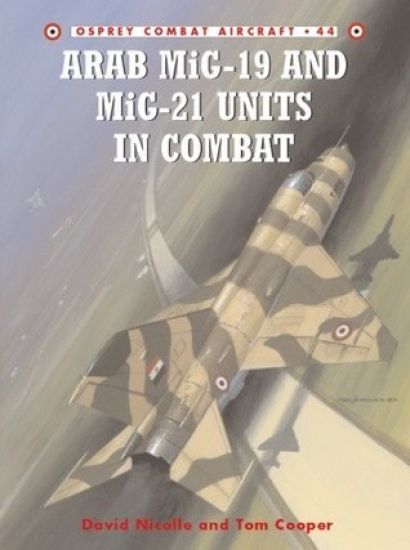
Arab MiG-19 & MiG-21 Units in Combat

Arab MiG-19 & MiG-21 Units in Combat

David Nicolle

Osprey Publishing
2004
nidottu
The MiG-21 provided the backbone of frontline Arab air combat strength for many years and remained the Arabs only real hope of challenging Israeli air supremacy. This book tells, in great detail, the story of the MiG-21 in Egyptian, Syrian and Iraqi service. It includes numerous photographs, most of which have not been seen outside the Arab world and a large proportion of which have never previously been published anywhere. The material is drawn from official sources and from the private collections and recollections of men who flew, or met, these aircraft in combat.
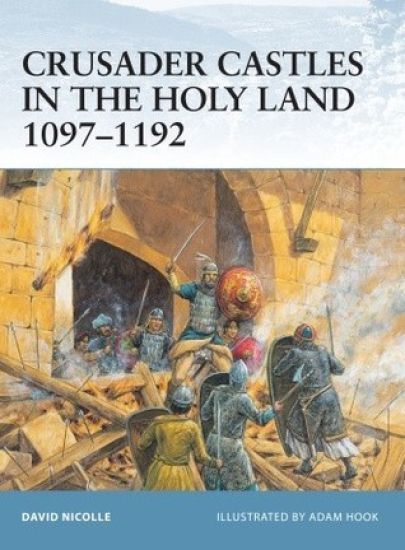
Crusader Castles in the Holy Land 1097–1192

Crusader Castles in the Holy Land 1097–1192

David Nicolle

Osprey Publishing
2004
nidottu
Of all the castles constructed by Western Europeans during the Middle Ages, none have caught the public imagination so much as Crusader castles. These structures, ranging from the very simple to the huge and elaborate, also encompass almost all aspects of Western European military architecture during the golden age of castle building from the 12th to the 13th centuries. This first volume in a series of three will focus on 12th century castles in the regions now known as Israel, Palestine, Jordan, Lebanon, Syria and south-eastern Turkey. Later volumes will focus on 13th century castles in Greece, Cyprus and the Aegean.
Crusader Castles in the Holy Land 1192–1302

Crusader Castles in the Holy Land 1192–1302

David Nicolle

Osprey Publishing
2005
nidottu
After the Second Crusade in 1148 the Crusader States embarked on a period of caution and consolidation and, in an increasingly hostile environment, began strengthening existing fortifications and building new castles. Following on from Fortress 21 in the series, which looked at Crusader castles in the Holy Land from 1097 to 1192, this book takes the history of these military structures through to the early 14th century. David Nicolle examines the design and development of castles, the defensive strategies and construction methods used, the influence of Arabic and Islamic traditions in military architecture, as well as siege weaponry and everyday social and religious life. All this is placed within a historical context. Plans, maps, a timeline, photograhs and reconstruction drawings (by Adam Hook) are presented throughout. A tour of five examples (Margat, Crac des Chevaliers, Atlit, Caesarea Maritima and Arsuf), is also included.
Acre 1291

Acre 1291

David Nicolle

Osprey Publishing
2005
nidottu
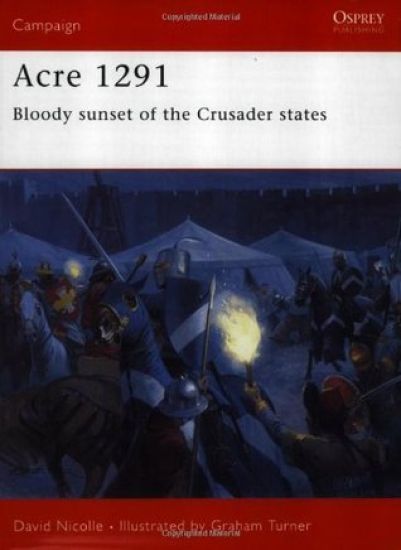
In April 1291, a Mamluk army laid siege to Acre, the last great Crusader fortress in the Holy Land.For six weeks, the siege dragged on until the Mamluks took the outer wall, which had been breached in several places. The Military Orders drove back the Mamluks temporarily, but three days later the inner wall was breached. King Henry escaped, but the bulk of the defenders and most of the citizens perished in the fighting or were sold into slavery. The surviving knights fell back to their fortress, resisting for ten days, until the Mamluks broke through.This book depicts the dramatic collapse of this great fortress, whose demise marked the end of the Crusades in the Holy Land.
The Third Crusade 1191

The Third Crusade 1191

David Nicolle

Osprey Publishing
2005
nidottu
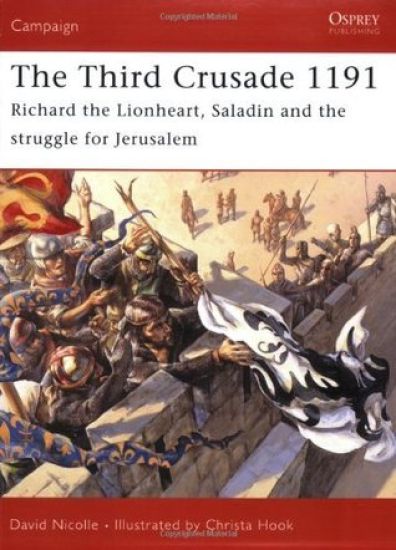
The clash between King Richard I 'The Lionheat' of England and Saladin has become legendary, and the strategy and tactics of a resolute, heavily armed Anglo-Saxon army versus their more lightly armed opponents have continued to fascinate military enthusiasts down the ages. The religious and geopolitical significance of the third crusade are immense and are still being played out to this day. Here was a Crusader army marching towards the greatest goal in Christendom, the Kingdom of Jerusalem, harried by a Muslim force that was equally determined to stop it. Although the battle was eventually won by the Crusaders, the prize itself remained elusive.
Crusader Castles in Cyprus, Greece and the Aegean 1191–1571
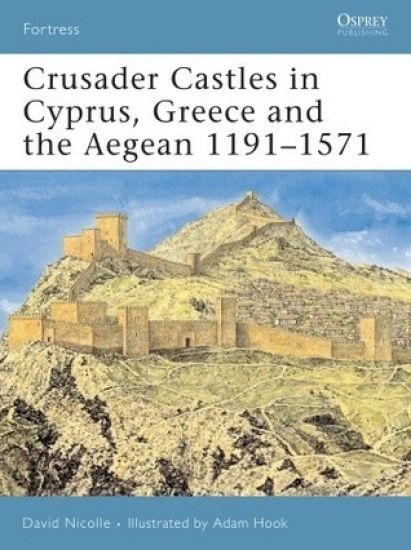
Crusader castles and other fortifications in Cyprus, the south-western coast of Turkey and Greece are amongst the best examples of late medieval military architecture to be seen in Europe. These important fortifications, erected by the Hospitallers during the 15th century to face the growing Ottoman Turkish threat, vary considerably from those in the Middle East. Despite there being many visible remains of fortifications in Cyprus, Greece and the Aegean, few studies exist of these areas compared to the fortifications of the Holy Land. Providing numerous architectural plans, maps and colour illustrations, this book seeks to redress this imbalance and complement the previous bestselling treatments of Crusader fortifications in the "Fortress" series.
Teutonic Knight

Teutonic Knight

David Nicolle

Osprey Publishing
2007
nidottu
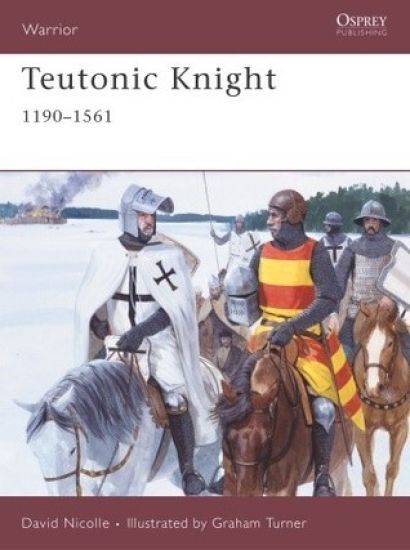
The Military Order of Teutonic Knights was one of the three most famous Crusading Orders, on a par with the Templars and the Hospitallers. Originally focusing on the preservation of the Crusader States in the Middle East, after the loss of their Middle Eastern enclaves in the 13th century, the Knights turned their attention to the Baltic. Over the next two centuries Northern Crusades were conducted against pagan Prussians and Lithuanians and, to a lesser extent, against Orthodox Russia. This title uses detailed illustrations and photographs to bring to life the appearance, beliefs and battle experience of the Teutonic Knights.