Kirjojen hintavertailu. Mukana 11 392 138 kirjaa ja 12 kauppaa.

Kirjahaku

Etsi kirjoja tekijän nimen, kirjan nimen tai ISBN:n perusteella.

1000 tulosta hakusanalla David O'Doherty

Building a Global Zion: The Life and Vision of David O. McKay
Called as an apostle in 1906, David O. McKay devoted the remaining sixty-four years of his life to serving in the Church of Jesus Christ of Latter-day Saints, including nineteen as church president. That lengthy tenure, combined with his warmth, extensive personal ministry, broadmindedness, deep spirituality, and unprecedented global travel made him one of the church's most beloved and influential leaders of all time. When he died in 1970, roughly 60 percent of the church's membership had known no other church president. Memories of McKay's teachings and ministry remain a taproot for the spiritual convictions and values of many Latter-day Saints. Brian Q. Cannon's biography offers a fresh perspective on important features of McKay's life, showing how his mission to Scotland, round-the-world tour as an apostle, and service as president of the European Mission president shaped his global vision and priorities. Building a Global Zion illuminates previously underappreciated facets of McKay's reach, including his crusades against alcohol consumption and political corruption, his long-term administration of missionary work, his spiritual impressions, his personnel decisions, and his mediation of interpersonal impasses in administrative settings. Cannon carefully reconstructs facets of McKay's vast ministry to individuals, highlights distinctive themes of his teachings, and explores challenges that confronted McKay's associates as his health and acuity waned.
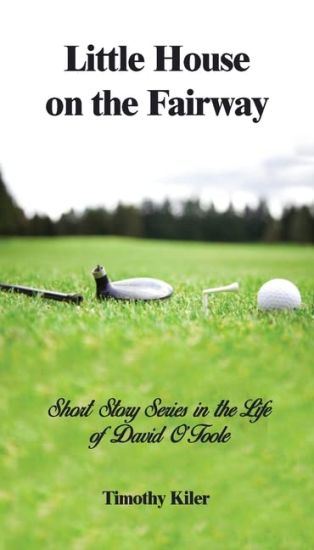
Little House on the Fairway: Short Story Series in the Life Of David O'Toole Volume 1: Who is the winner?
Little House On The Fairway: Short Story Series in the Life Of David O'TooleVolume 1: Who is the winner?By: Timothy KilerThe first book of the Life of David O'Toole series, Little House on the Fairway tells about the challenges of a struggling, family run country club in 1984 Ireland. As David O'Toole attempts to keep their beloved club afloat, he must deal with the swanky, rival club next door, the ornery farmer O'Grady, and all the other challenges and misadventures that come with running a golf course.About the AuthorTimothy Kiler was born in Wilmington, Delaware. Before retiring, Kiler had an extensive career in the automotive industry as well as working at various golf courses. He and his wife reside in West Palm Beach, Florida, where Kiler spends his time golfing, writing, and running 5Ks.
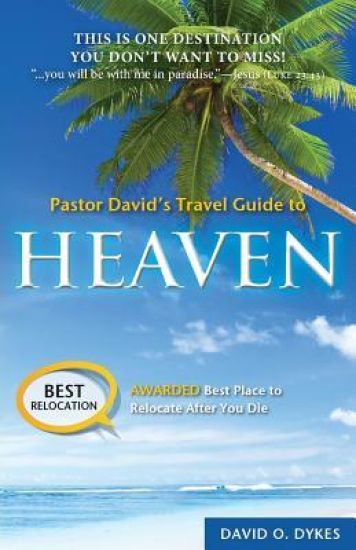
Pastor David's Travel Guide to Heaven

Pastor David's Travel Guide to Heaven

David O. Dykes

N-Courage Resources
2017
nidottu
Discover what you need to know about Heaven from its architect and most well-known resident: Jesus. You'll learn from God's Word-the number one travel guide to Heaven-about what Heaven is like and how to get there, as well as the inside scoop on what the locals do. Don't miss this trip of a lifetime to what could become your eternal home
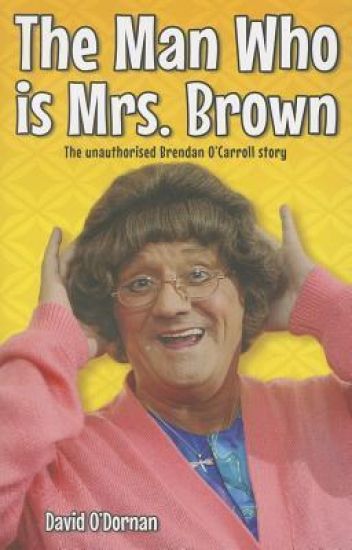
The Man Who is Mrs Brown - The Biography of Brendan O'Carroll
When Brendan O'Carroll, creator and star of Mrs Brown's Boys, stood on stage to collect his first BAFTA for the phenomenally successful comedy series in 2012, it marked a new milestone in his incredible career. Finally, he was being acknowledged as a worldwide sensation in his roe as the irrepressible 'Mammy' Agnes Brown. Over the last few years, Brendan has spread his wings to taste success as an author, a playwright, a comedian, an actor, a television star and more, picking up major awards along the way. But it hasn't always been a bed of roses for the Dubliner, who started off life working as a waiter before evolving into the hardest working man in showbiz. Born in 1955 as the youngest of 11 children, he grew up in a two-bedroom corporation house in the rough-and-tumble working class area of Finglas in north Dublin. After his father Gerard died, when Brendan was just seven years old, his formidable mother Maureen - who influenced Brendan's future career - raised him on her own. Life truly didn't begin until 40 for Brendan, who left school aged just 12 and tried his hand at anything to earn a living, including jobs as a milkman, DJ, bar manager and painter and decorator. But after being persuaded to have a go on the comedy circuit it was the beginning of a new dawn in Brendan's life that would see him become the man with the Midas touch. In the years since, his work rate has been phenomenal as his earthy comedy has become a global hit, he found love again and with his second wife and co-star Jennifer Gibney and he has become rich beyond his wildest dreams thanks to his foul-mouthed matriarch Mrs Brown.
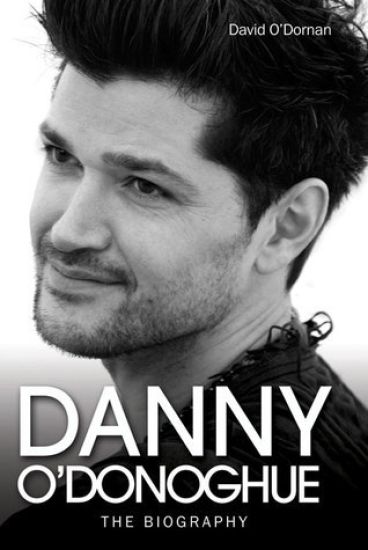
Danny O'Donoghue

Danny O'Donoghue

David O'Dornan

John Blake Publishing Ltd
2014
nidottu
Danny O'Donoghue is loved by millions around the world as the frontman of The Script. A cheeky Irish charmer, he is blessed with rugged good looks and a voice that pours every drop of emotion into heartfelt lyrics. But success did not come quickly for the Dubliner - it took years of hard grafting to hit the big time. Youngest of a musical family, Danny was born to be a rock star. With no interest in education, his long path to stardom began after a chance meeting with would-be guitar hero Mark Sheehan. Little did the two youngsters know that they would ultimately find fame together as one of Ireland's most successful bands. But Danny would spend a decade in musical purgatory in the US, stealing bags of ice just to fill his bath and making tea in the recording studios for the likes of Justin Timberlake and Britney Spears, before the two triumphantly struck out on their own. With years of learning from the best, they knew the recipe for success. the Script exploded onto the scene in style, with hit singles turning them into worldwide stars. With Paul McCartney, Take That and U2 all clamouring for their support, they were soon headlining arenas themselves. And in 2012, Danny's career reached new heights as a judge on hit show The Voice. His journey from tea boy to TV star, music hero and household name was complete.
Remember David

Remember David

David O'Brien

Clay Bridges Press
2021
pokkari
Remember David is a simple story that reminds us that God is bigger than any problem we may face in our life.Especially now, facing the pandemic and taking all the precautions can be a little scary to young children, but God is bigger than COVID-19. Just as God helped David face the lions and the bears, God also prepared him to face Goliath. If we put our faith and trust in God, He will help us defeat this pandemic and prepare us for whatever "giant" may come our way.
Remember David

Remember David

David O'Brien

Clay Bridges Press
2021
sidottu
Remember David is a simple story that reminds us that God is bigger than any problem we may face in our life.Especially now, facing the pandemic and taking all the precautions can be a little scary to young children, but God is bigger than COVID-19. Just as God helped David face the lions and the bears, God also prepared him to face Goliath. If we put our faith and trust in God, He will help us defeat this pandemic and prepare us for whatever "giant" may come our way.
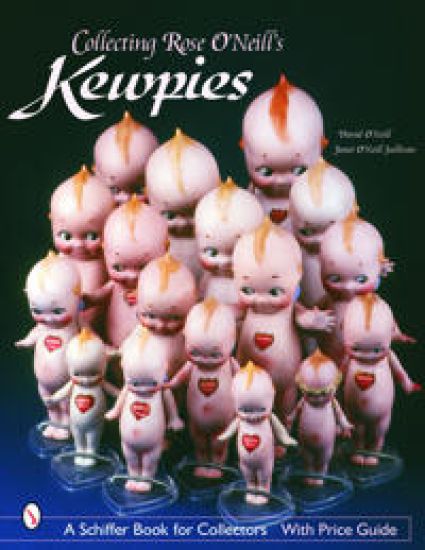
Collecting Rose O'Neill's Kewpies

Collecting Rose O'Neill's Kewpies

David O'Neill

Schiffer Publishing Ltd
2003
nidottu
Celebrated artist and writer Rose O'Neill created the Kewpie in 1909, fashioning a roly-poly elf with a fat child's body, small wings, and a turnip-top head. Beloved by children and adults alike since then, the charming Kewpie image quickly spread to dolls, tableware, lamps, candlesticks, inkwells, clocks, jewelry and trinket boxes, hatpins, salt and pepper shakers, picture frames, and many other items all highly collectible today. With over 540 color photos, this extensive price guide features a wonderful assortment of early Kewpies in bisque, chinaware, and metal, Kewpidoodle (the Kewpies' dog), Scootles (the Baby Tourist who visited Kewpieville), and many other Rose O'Neill related items. Measurements and values for all pieces are included in the captions. An invaluable reference for collectors, dealers, and all who treasure Rose O'Neill's delightful Kewpies.
Vertebrate Endocrinology

Vertebrate Endocrinology

David O. Norris; James A. Carr

Academic Press Inc
2021
sidottu
Vertebrate Endocrinology, Sixth Edition, provides a comprehensive, up-to-date treatment of the endocrine system for college and university students as well as researchers. This book is logically arranged, easily comprehended, and well-illustrated. It covers traditional hormone-based systems and introduces all forms of chemical communication, their implications for the health of humans, domesticated, and wild vertebrates. Written by two experts who have completed extensive research in comparative vertebrate endocrinology with an emphasis on natural and anthropogenic environmental factors influencing endocrine systems. Collectively, the authors have taught courses in endocrinology at the undergraduate and graduate level for more than 60 years. After first publishing in 1985, Vertebrate Endocrinology, Sixth Edition, continues to serve as an important resource for graduate students and advanced undergraduates in the biological sciences, animal sciences, and veterinary sciences. Endocrine researchers will also benefit from the book’s relevance in the areas of comparative, veterinary, and mammalian endocrinology.
Law in Our Lives

Law in Our Lives

David O. Friedrichs

Oxford University Press Inc
2005
nidottu
Law in Our Lives is a law and society text that provides an interdisciplinary "mapping" of the nature of law as a social institution. The book is student-oriented and highly readable. Themes addressed include: * The meaning of law and legal reasoning. * Law in relation to justice, morality, and religion. * Explaining law and society: schools of jurisprudence and sociolegal theories. * Major legal traditions and systems of law. * Perspectives on comparative law. * A life in the legal profession. * An overview of legal institutions and processes. * Legal culture and beliefs about law and legal behavior. * Legal ethics. * Legal socialization. * How law has been reformed. * Emerging attributes of law in the 21st century.
Mill's Progressive Principles

Mill's Progressive Principles

David O. Brink

Oxford University Press
2015
nidottu
In Mill's Progressive Principles David Brink provides a systematic reconstruction and assessment of John Stuart Mill's contributions to the utilitarian and liberal traditions, examining his first principles and their application to issues of representative democracy and sexual equality. Brink defends novel interpretations of key elements in Mill's moral and political philosophy, including his concepts of motivation, happiness, duty, proof, harm and the harm principle, freedom of expression, anti-paternalism, representative democracy and weighted voting, and sexual equality. However, the most distinctive aspect of this account of Mill's commitments is the case it makes for a perfectionist reading of his conception of happiness and the significance this has for other aspects of his moral and political philosophy. On this perfectionist conception, the chief ingredients of happiness involve the exercise of a person's capacities for practical deliberation and decision that mark us as progressive beings. Once this perfectionist theme is made explicit, it can be shown to be central to Mill's views about utilitarianism, liberalism, rights, democratic government, and sexual equality.
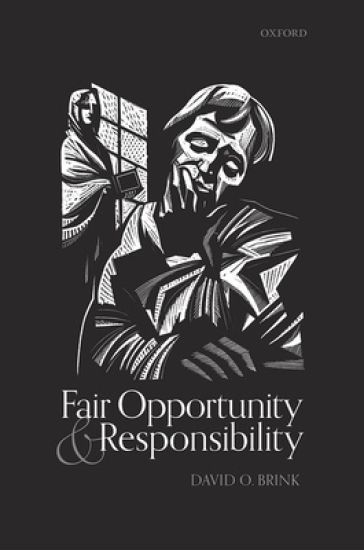
Fair Opportunity and Responsibility

Fair Opportunity and Responsibility

David O. Brink

Clarendon Press
2021
sidottu
Fair Opportunity and Responsibility lies at the intersection of moral psychology and criminal jurisprudence and analyzes responsibility and its relations to desert, culpability, excuse, blame, and punishment. It links responsibility with the reactive attitudes but makes the justification of the reactive attitudes depend on a prior and independent conception of responsibility. Responsibility and excuse are inversely related; an agent is responsible for misconduct if and only if it is not excused. As a result, we can study responsibility by understanding excuses. We excuse misconduct when an agent's capacities or opportunities are significantly impaired, because these capacities and opportunities are essential if agents are to have a fair opportunity to avoid wrongdoing. This conception of excuse tells us that responsibility itself consists in agents having suitable cognitive and volitional capacities - normative competence - and a fair opportunity to exercise these capacities free from undue interference - situational control. Because our reactive attitudes and practices presuppose the fair opportunity conception of responsibility, this supports a predominantly retributive conception of blame and punishment that treats culpable wrongdoing as the desert basis of blame and punishment. We can then apply the fair opportunity framework to assessing responsibility and excuse in circumstances of structural injustice, situational influences in ordinary circumstances and in wartime, insanity and psychopathy, immaturity, addiction, and crimes of passion. Though fair opportunity has important implications for each issue, treating them together allows us to explore common themes and appreciate the need to take partial responsibility and excuse seriously in our practices of blame and punishment.
Fair Opportunity and Responsibility

Fair Opportunity and Responsibility

David O. Brink

Oxford University Press
2025
nidottu
Fair Opportunity and Responsibility lies at the intersection of moral psychology and criminal jurisprudence and analyzes responsibility and its relations to desert, culpability, excuse, blame, and punishment. It links responsibility with the reactive attitudes but makes the justification of the reactive attitudes depend on a prior and independent conception of responsibility. Responsibility and excuse are inversely related; an agent is responsible for misconduct if and only if it is not excused. As a result, we can study responsibility by understanding excuses. We excuse misconduct when an agent's capacities or opportunities are significantly impaired, because these capacities and opportunities are essential if agents are to have a fair opportunity to avoid wrongdoing. This conception of excuse tells us that responsibility itself consists in agents having suitable cognitive and volitional capacities - normative competence - and a fair opportunity to exercise these capacities free from undue interference - situational control. Because our reactive attitudes and practices presuppose the fair opportunity conception of responsibility, this supports a predominantly retributive conception of blame and punishment that treats culpable wrongdoing as the desert basis of blame and punishment. We can then apply the fair opportunity framework to assessing responsibility and excuse in circumstances of structural injustice, situational influences in ordinary circumstances and in wartime, insanity and psychopathy, immaturity, addiction, and crimes of passion. Though fair opportunity has important implications for each issue, treating them together allows us to explore common themes and appreciate the need to take partial responsibility and excuse seriously in our practices of blame and punishment.
Perfectionism and the Common Good

Perfectionism and the Common Good

David O. Brink

Clarendon Press
2007
nidottu
David Brink presents a study of T. H. Green's classic Prolegomena to Ethics (1883) and its role in his philosophical thought. Green is one of the two most important figures in the British idealist tradition, and his political writings and activities had a profound influence on the development of Liberal politics in Britain. The Prolegomena is his major philosophical work. It begins with his idealist attack on empiricist metaphysics and epistemology and develops a perfectionist ethical theory that aims to bring together the best elements in the ancient and modern traditions, and that provides the moral foundations for Green's own distinctive brand of liberalism. Brink aims to restore the Prolegomena to its rightful place in the history of philosophy by providing a prolegomenon to the Prolegomena - one that situates the work in its intellectual context, sympathetically but critically engages its main themes, and explains Green's enduring significance for the history of ethics and contemporary ethical theory. Brink examines Green's life and work, his idealist attack on empiricism, his conception of agency, his perfectionist ethics of self-realization, the connections he draws between perfectionism and the common good, his conception of the differences between perfectionism and utilitarianism, and the connections between his perfectionism and his defense of a new form of political liberalism. Because Green develops his own views out of an examination of other traditions in the history of ethics, a fair assessment of Green's own contributions must compare his claims with the traditions that he examines and sometimes criticizes. Brink's study examines Green's relation to Aristotle, Locke, Hume, Butler, Mill, Kant, Hegel, Bradley, and Sidgwick, and concludes by examining Green's legacy for ethical theory. Perfectionism and the Common Good will be of substantial interest to students and scholars of the history of ethics, ethical theory, political philosophy, and nineteenth century philosophy.