
Kirjahaku
Etsi kirjoja tekijän nimen, kirjan nimen tai ISBN:n perusteella.
1000 tulosta hakusanalla David Parrish
David Ballingall (1721-1805): Of Wester Ballingall, Kettle Parish and Drummaird, Kennoway Parish, Fife: By His Sixth Great Nephew
Michael T. Tracy
Createspace Independent Publishing Platform
2018
nidottu
He was the second son of Thomas Ballingall (c.1670-1752), a tenant farmer and was the first child to be born at Clatto farm in Kettle Parish. After growing up, David Ballingall became a tenant farmer of Wester Ballingall, known as Balmalcolm, and of Drummaird in Kennoway Parish. David would marry Rachel Durie and settle at Drummaird where they had six children who were all born there. By 1756 the family relocated to Warout in Markinch Parish where their next three children were born. In June of 1757, David Ballingall formally received through a Disposition which had been granted to him by his father to seize the lands of Gourlays Rigg, commonly known as Drummaird. "A curious relic of David Ballingall existed, for it was seen by the Rev. James Ballingall 1846-1926], 'but I fear it has perished.' It was a portrait of him as a very old man, modelled in wax high relief. The portrait showed a pale, lean and worn face, with a touch of red on the cheekbones, nose rather prominent and fleshing, and a high broad forehead. The costume, blue coat, brass buttons, a high stock and ample neckcloth, gave a suggestion of a man of substance; well to do in his status." This then is the narrative of the life and times of David Ballingall.
The History And Antiquities Of The Parish Of Saint David, South-wales
George William Manby
Hutson Street Press
2025
sidottu
The History And Antiquities Of The Parish Of Saint David, South-wales
George William Manby
Hutson Street Press
2025
pokkari
Centennial Address, by David D. Field, D.D. With Historical Sketches of Cromwell, Portland, Chatham, Middle-Haddam, Middletown and Its Parishes.
David D (David Dudley) Field
University of Michigan Library
2006
pokkari
Select Portions of the Psalms of David, for the Use of Parish-Churches
Gale Ecco, Print Editions
2010
pokkari
Select Portions of the Psalms of David, for the use of Parish-churches
Gale Ecco, Print Editions
2018
sidottu
The 18th century was a wealth of knowledge, exploration and rapidly growing technology and expanding record-keeping made possible by advances in the printing press. In its determination to preserve the century of revolution, Gale initiated a revolution of its own: digitization of epic proportions to preserve these invaluable works in the largest archive of its kind. Now for the first time these high-quality digital copies of original 18th century manuscripts are available in print, making them highly accessible to libraries, undergraduate students, and independent scholars.The Age of Enlightenment profoundly enriched religious and philosophical understanding and continues to influence present-day thinking. Works collected here include masterpieces by David Hume, Immanuel Kant, and Jean-Jacques Rousseau, as well as religious sermons and moral debates on the issues of the day, such as the slave trade. The Age of Reason saw conflict between Protestantism and Catholicism transformed into one between faith and logic -- a debate that continues in the twenty-first century.++++The below data was compiled from various identification fields in the bibliographic record of this title. This data is provided as an additional tool in helping to insure edition identification: ++++British LibraryT167340The "old version" is that of Sternhold and Hopkins and the "new version" is that of Tate and Brady. The first part up to p. 42 is in letterpress; the second part, with a separate titlepage: 'A supplement to Select portions of the Psalms of David.' is engLondon: printed for H. Gardner, 1786. 4], ii, 1],42, 3],47, 1]p.: engr.music; obl.4
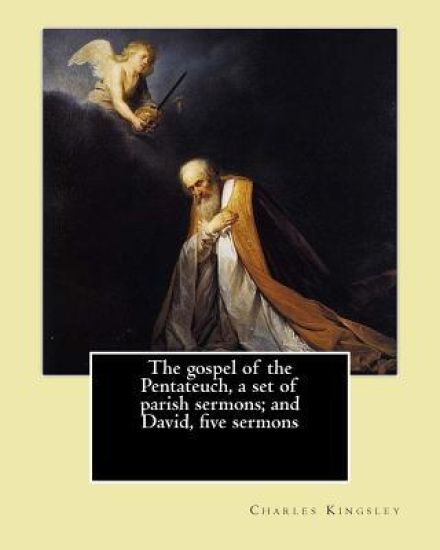
The gospel of the Pentateuch, a set of parish sermons; and David, five sermons By: Charles Kingsley: Charles Kingsley (12 June 1819 - 23 January 1875)
Charles Kingsley
Createspace Independent Publishing Platform
2017
nidottu
Charles Kingsley (12 June 1819 - 23 January 1875) was a broad church priest of the Church of England, a university professor, social reformer, historian and novelist. He is particularly associated with Christian socialism, the working men's college, and forming labour cooperatives that failed but led to the working reforms of the progressive era. He was a friend and correspondent with Charles Darwin. Life: Kingsley was born in Holne, Devon, the elder of two sons of the Reverend Charles Kingsley and his wife Mary Lucas Kingsley. His brother, Henry Kingsley, also became a novelist. He spent his childhood in Clovelly, Devon, where his father was Curate 1826-1832 and Rector 1832-1836, and at Barnack, Northamptonshire and was educated at Bristol Grammar School and Helston Grammar School before studying at King's College London, and the University of Cambridge. Charles entered Magdalene College, Cambridge, in 1838, and graduated in 1842. He chose to pursue a ministry in the church. From 1844, he was rector of Eversley in Hampshire. In 1859 he was appointed chaplain to Queen Victoria. In 1860, he was appointed Regius Professor of Modern History at the University of Cambridge. In 1861 he became a private tutor to the Prince of Wales. In 1869 Kingsley resigned his Cambridge professorship and, from 1870 to 1873, was a canon of Chester Cathedral. While in Chester he founded the Chester Society for Natural Science, Literature and Art, which played an important part in the establishment of the Grosvenor Museum. In 1872 he accepted the Presidency of the Birmingham and Midland Institute and became its 19th President. In 1873 he was made a canon of Westminster Abbey. Kingsley died in 1875 and was buried in St Mary's Churchyard in Eversley. Kingsley sat on the 1866 Edward Eyre Defence Committee along with Thomas Carlyle, John Ruskin, Charles Dickens and Alfred Lord Tennyson, where he supported Jamaican Governor Edward Eyre's brutal suppression of the Morant Bay Rebellion against the Jamaica Committee. One of his daughters, Mary St Leger Kingsley, became known as a novelist under the pseudonym "Lucas Malet". Kingsley's life was written by his widow in 1877, entitled Charles Kingsley, his Letters and Memories of his Life. Kingsley also received letters from Thomas Huxley in 1860 and later in 1863, discussing Huxley's early ideas on agnosticism.

First Settlers in Georgia, Volume 8, Abstracts of English Crown Grants in St. David's, St. Mary's, St. Patrick's, and St. Thomas's Parishes, 1755-1775
Marion Hemperley
Heritage Books
2025
pokkari
From 1732 until the Georgia charter was resigned to the English Crown in 1752, all leases of land made to settlers could not be mortgaged, sold, or otherwise disposed of. After Georgia became a Royal Province, fee simple grants giving a clear title to the recipient were required to be made. This publication offers the eighth volume of these royal grants abstracted, covering the counties of Brantley, Camden, Charlton, Glynn and Wayne."There are recorded in the Georgia Surveyor General Department a total of 21 grants for 13,650 acres made by South Carolina in May and June, 1763, in the area south of the Altamaha River. ... Georgia, after gaining control of the region south of the Altamaha River and creating parishes to cover the area, recognized the South Carolina grants and declared them legal in Georgia ... After careful study of the Carolina grants, it was ascertained whenever possible just what parish they later fell into and it has been so noted in this study."
The calling to parish ministry involves a journey leading through lowland thickets and high plateau vistas. It's a vocation not for weak spirits. The parish presents general challenges rather than specialist endeavors. So, wearing one hat after another, the pastor may speak from the pulpit, join a team processing a current social concern, visit the intensive care hospital unit, and offer counsel at birth, marriage, or death--maybe all in one day. Clergy and non-ordained alike will find that Parish, the Thought provides a closeup insight into this ministry, telling the truth about the defeats and victories experienced over the course of forty years in the parish. This memoir spends little time in navel gazing. Rather, the author explores the humor, conflicts, ventures, and achievements that rise in his memory. The reader will detect a commitment to priestly and prophetic ministry, one that seeks to comfort the distressed and to nudge the comfortable out of apathy, encompassing the personal and public dimensions of the faith. All this as an adventure following the Pioneer, Jesus, the Christ. ""The selections from this forthcoming book are elegantly written and spiritually profound in a way that effectively synthesizes a convincing true-to-life immediate concreteness of real persons in real situations of spiritual significance, on the one hand, with the essential Christian realities of guilt, confession, forgiveness, redemption, humility, humor, joy, hope, and a continuous sense of God's living presence in the heart, on the other."" --Russell Pannier, Professor, William Mitchell College of Law, St. Paul, Minnesota ""David Bowman's pastoral recollections in Parish, the Thought is a Socratic exercise in an examined life. It is a collection of stories that stand on their own, but within which lie deeper truths that David has had both the wit and wisdom to mine. Insightful, sensitive, but most of all searching . . . an excellent example of a well-lived life I recommend it highly "" --Thomas E. Smith, Pastor, Presbyterian Chapel of the Lakes, Adjunct Instructor, Trine University ""Bowman's approach to ministry was to look directly at current moral and ethical issues, and using scripture and his own wisdom, to deal publicly and personally with the issues, encouraging community of dialogue. . . . Dave's voice then showed wisdom, insight, and patience, and those qualities persist in this engaging new book. I commend it to thoughtful readers."" --W. James Halfaker, Former Conference Minister for the United Church of Christ in Washington and North Idaho ""David Bowman's sketches and recollections each summon up a unique moment and place with crystal clarity; yet the characters, moods, and feelings are universal. His life in active ministry glosses on social protest, race, ecumenicism, and Alexander Calder's sculpture, and at the same time the delicateness of person-to-person pastoral relationships shine through with the same humanity and emotion as the largest historical trends. This memoir is a joy to read and an inspiration of lived faith."" --Joe Kanofsky, Rabbi, Toronto, Canada The Rev. David B. Bowman, PhD, lives in semi-retirement in Saratoga, California. He is the author of a previous book, Saints Along the Way: Women and Men Who Have Influenced My Life. His parish ministry, following doctoral studies at Glasgow University (Scotland), has spanned the continent from New York to California, including Michigan, Washington State, Iowa, Indiana, and Ohio. Such a journey led a friend to call him ""a wanderer in the earth.""
The calling to parish ministry involves a journey leading through lowland thickets and high plateau vistas. It's a vocation not for weak spirits. The parish presents general challenges rather than specialist endeavors. So, wearing one hat after another, the pastor may speak from the pulpit, join a team processing a current social concern, visit the intensive care hospital unit, and offer counsel at birth, marriage, or death--maybe all in one day. Clergy and non-ordained alike will find that Parish, the Thought provides a closeup insight into this ministry, telling the truth about the defeats and victories experienced over the course of forty years in the parish. This memoir spends little time in navel gazing. Rather, the author explores the humor, conflicts, ventures, and achievements that rise in his memory. The reader will detect a commitment to priestly and prophetic ministry, one that seeks to comfort the distressed and to nudge the comfortable out of apathy, encompassing the personal and public dimensions of the faith. All this as an adventure following the Pioneer, Jesus, the Christ. ""The selections from this forthcoming book are elegantly written and spiritually profound in a way that effectively synthesizes a convincing true-to-life immediate concreteness of real persons in real situations of spiritual significance, on the one hand, with the essential Christian realities of guilt, confession, forgiveness, redemption, humility, humor, joy, hope, and a continuous sense of God's living presence in the heart, on the other."" --Russell Pannier, Professor, William Mitchell College of Law, St. Paul, Minnesota ""David Bowman's pastoral recollections in Parish, the Thought is a Socratic exercise in an examined life. It is a collection of stories that stand on their own, but within which lie deeper truths that David has had both the wit and wisdom to mine. Insightful, sensitive, but most of all searching . . . an excellent example of a well-lived life I recommend it highly "" --Thomas E. Smith, Pastor, Presbyterian Chapel of the Lakes, Adjunct Instructor, Trine University ""Bowman's approach to ministry was to look directly at current moral and ethical issues, and using scripture and his own wisdom, to deal publicly and personally with the issues, encouraging community of dialogue. . . . Dave's voice then showed wisdom, insight, and patience, and those qualities persist in this engaging new book. I commend it to thoughtful readers."" --W. James Halfaker, Former Conference Minister for the United Church of Christ in Washington and North Idaho ""David Bowman's sketches and recollections each summon up a unique moment and place with crystal clarity; yet the characters, moods, and feelings are universal. His life in active ministry glosses on social protest, race, ecumenicism, and Alexander Calder's sculpture, and at the same time the delicateness of person-to-person pastoral relationships shine through with the same humanity and emotion as the largest historical trends. This memoir is a joy to read and an inspiration of lived faith."" --Joe Kanofsky, Rabbi, Toronto, Canada The Rev. David B. Bowman, PhD, lives in semi-retirement in Saratoga, California. He is the author of a previous book, Saints Along the Way: Women and Men Who Have Influenced My Life. His parish ministry, following doctoral studies at Glasgow University (Scotland), has spanned the continent from New York to California, including Michigan, Washington State, Iowa, Indiana, and Ohio. Such a journey led a friend to call him ""a wanderer in the earth.""
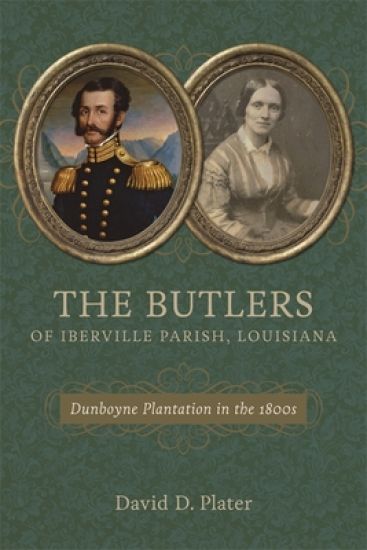
The Butlers of Iberville Parish, Louisiana
David D. Plater
Louisiana State University Press
2015
sidottu
In 1833, Edward G. W. and Frances Parke Butler moved to their newly constructed plantation house, Dunboyne, on the banks of the Mississippi River near the village of Bayou Goula. Their experiences at Dunboyne over the next forty years demonstrated the transformations that many land-owning southerners faced in the nineteenth century, from the evolution of agricultural practices and commerce, to the destruction wrought by the Civil War and the transition from slave to free labor, and finally to the social, political, and economic upheavals of Reconstruction. In this comprehensive biography of the Butlers, David D. Plater explores the remarkable lives of a Louisiana family during one of the most tumultuous periods in American history.Born in Tennessee to a celebrated veteran of the American Revolution, Edward Butler pursued a military career under the mentorship of his guardian, Andrew Jackson, and, during a posting in Washington, D.C., met and married a grand-niece of George Washington, Frances Parke Lewis. In 1831, he resigned his commission and relocated Frances and their young son to Iberville Parish, where the couple began a sugar cane plantation. As their land holdings grew, they amassed more enslaved laborers and improved their social prominence in Louisiana's antebellum society. A staunch opponent of abolition, Butler voted in favor of Louisiana's withdrawal from the Union at the state's Secession Convention. But his actions proved costly when the war cut off agricultural markets and all but destroyed the state's plantation economy, leaving the Butlers in financial ruin. In 1870, with their plantation and finances in disarray, the Butlers sold Dunboyne and resettled in Pass Christian, Mississippi, where they resided in a rental cottage with the financial support of Edward J. Gay, a wealthy Iberville planter and their daughter-in-law's father. After Frances died in 1875, Edward Butler moved in with his son's family in St. Louis, where he remained until his death in 1888. Based on voluminous primary source material, The Butlers of Iberville Parish, Louisiana offers an intimate picture of a wealthy nineteenth-century family and the turmoil they faced as a system based on the enslavement of others unraveled.
This book has been considered by academicians and scholars of great significance and value to literature. This forms a part of the knowledge base for future generations. So that the book is never forgotten we have represented this book in a print format as the same form as it was originally first published. Hence any marks or annotations seen are left intentionally to preserve its true nature.
A description of the growth and development of Londonderry, New Hampshire, from it's beginning as the west parish through the subsequent separation from Derry to it's present form. Particular attention is paid to the formation of the third west parish church and it's minister. Commercial activity in the town during the 19th century and schooling during the 19th and early 20th centuries is examined.
Transitions in the Development of a Downtown Parish: A Study of Adaptations to Ecological Change in St. Patrick's Parish, Washington, D.C.
David Harold Fosselman
Literary Licensing, LLC
2013
nidottu
A Discourse Delivered at the Third Parish in Newbury, on the First of May, 1783, Occasioned by the Ratification of a Treaty of Peace, Between Great-Britain, and the United States of America
David Tappan
Gale Ecco, Print Editions
2018
sidottu
The 18th century was a wealth of knowledge, exploration and rapidly growing technology and expanding record-keeping made possible by advances in the printing press. In its determination to preserve the century of revolution, Gale initiated a revolution of its own: digitization of epic proportions to preserve these invaluable works in the largest archive of its kind. Now for the first time these high-quality digital copies of original 18th century manuscripts are available in print, making them highly accessible to libraries, undergraduate students, and independent scholars.Delve into what it was like to live during the eighteenth century by reading the first-hand accounts of everyday people, including city dwellers and farmers, businessmen and bankers, artisans and merchants, artists and their patrons, politicians and their constituents. Original texts make the American, French, and Industrial revolutions vividly contemporary.++++The below data was compiled from various identification fields in the bibliographic record of this title. This data is provided as an additional tool in helping to insure edition identification: ++++Library of CongressW038011"A hymn, composed for, and sung on the occasion--and now published by desire--entitled, A song of praise to God from United America."--p. 19.Salem Mass.]: Printed by Samuel Hall, near the Court-House, MDCCLXXXIII. 1783]. 19, 1]p.; 4
The Subordinate Magistracy And Parish System Considered
Charles David Brereton
KESSINGER PUBLISHING, LLC
2010
pokkari
Historical Sketch Of The Free Church Of Scotland In The Parish Of Dalziel
David Ogilvy
KESSINGER PUBLISHING, LLC
2009
pokkari
Historical Sketch of the Free Church of Scotland in the Parish of Dalziel
David Ogilvy
Kessinger Pub
2009
sidottu