Kirjojen hintavertailu. Mukana 11 244 527 kirjaa ja 12 kauppaa.

Kirjahaku

Etsi kirjoja tekijän nimen, kirjan nimen tai ISBN:n perusteella.

1000 tulosta hakusanalla David Potter

Prophets and Emperors

Prophets and Emperors

David Potter

Harvard University Press
1994
sidottu
To the practical modern mind, the idea of divine prophecy is more ludicrous than sublime. Yet to our cultural forebears in ancient Greece and Rome, prophecy was anything but marginal; it was in fact the basic medium for recalling significant past events and expressing hopes for the future, and it offered assurance that divinities truly cared about mere mortals. Prophecy also served political ends, and it was often invoked to support or condemn an emperor's actions. In "Prophets and Emperors," David Potter shows us how prophecy worked, how it could empower, and how the diverse inhabitants of the Roman Empire used it to make sense of their world. This is a fascinating account of prophecy as a social, religious, and political phenomenon. The various systems of prophecy--including sacred books, oracles, astrological readings, interpretation of dreams, the sayings of holy men and women--come into sharp relief. Potter explores the use of prophecy as a nieans of historical analysis and political communication, and he describes it in the context of the ancient city. Finally, he traces the reformation of the prophetic tradition under the influence of Christianity in the fourth century. Drawing on diverse evidence--from inscriptions and ancient prophetic books to Greek and Roman historians and the Bible--Potter has produced a study that will engage anyone interested in the religions of the ancient Mediterranean and in the history and politics of the Roman Empire.

Cicero On Oratory And Orators

Cicero On Oratory And Orators

David Potter

Southern Illinois University Press
1986
nidottu
Contains Cicero’ s De Oratore and Brutus, influential sources over the centuries for ideas on rhetoric and train­ing for public leadership. The De Oratore, written in 55 B.C., argues that rhetoric is socially significant because states are established and main­tained through the leadership of eloquent men. The three books of dialogues in this volume feature discussions between well-known figures in Roman history, in­cluding Lucius Crassus, Marcus An­tonius, Quintus Lutatius Catulus, Quin­tus Marcius Scaevola, Caius Aurelius Cotta, Julius Caesar Strabo Vopicus, and Publius Sulpicus Rufus. The Brutus continues the theme of the dialogues, giving a history of eminent orators whose performances exemplify the Ciceronian theory that rhetoric final­ly adds up to leadership.
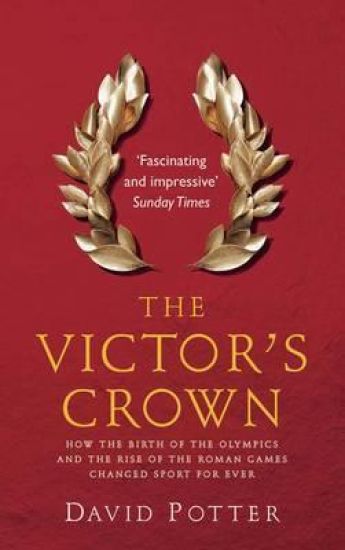
The Victor's Crown

The Victor's Crown

David Potter

Quercus Publishing
2012
pokkari
Incorporating the latest research, The Victor's Crown offers an analysis of how competitive sport emerged in Greece during the eighth century BC, and then how the great festival cycle of Classical Greece came into being during the sixth century BC. Special attention is paid to violent sports of boxing, wrestling and pancration. We meet the great athletes of the past and discover what it was that made them so great. It shows how the rise of the Roman Empire transformed the sporting world by popularizing new forms of entertainment (chiefly chariot racing, gladiatorial combat and beast hunts). David Potter vividly brings to life the experiences of being fan and competitor, and extrapolates skilfully to the modern day, creating not just a history of ancient sport, but also an examination of the social and cultural roles sport has played throughout history.
Neuro-Linguistic Programming for Change Leaders
We know a lot about change leadership. We understand how to design change programmes, and we know how to prescribe best practice change methods. Yet, despite all this knowledge, it is reported that up to 70% of change leadership projects fail to realize many of their objectives. The fault lines are cited as occurring at the micro level of social interaction. What we don’t adequately explain and demonstrate within the change leadership literature is how change leaders may consciously generate in themselves and in others resourceful mindsets, emotions, attitudes, and behaviours to enable positive change leadership dynamics. Neuro-Linguistic Programming for Change Leaders: The Butterfly Effect fills this gap by connecting the practices of personal development with those of corporate change leadership.This book has the vision of advancing NLP as a serious technology in the change leader’s tool box. The book introduces to operations managers, HR practitioners, OD specialists, and students of management new ideas and practices, which can transform their effectiveness as change leaders.It focuses on the benefits of applied NLP to change leaders as a generative change toolkit. Secondly, the book provides a model that shows change leaders how to build a climate of psychological safety to establish rapport with stakeholders. Thirdly, the book provides a strategy for enabling broader cultural change and stakeholder engagement throughout the organization.
Neuro-Linguistic Programming for Change Leaders
We know a lot about change leadership. We understand how to design change programmes, and we know how to prescribe best practice change methods. Yet, despite all this knowledge, it is reported that up to 70% of change leadership projects fail to realize many of their objectives. The fault lines are cited as occurring at the micro level of social interaction. What we don’t adequately explain and demonstrate within the change leadership literature is how change leaders may consciously generate in themselves and in others resourceful mindsets, emotions, attitudes, and behaviours to enable positive change leadership dynamics. Neuro-Linguistic Programming for Change Leaders: The Butterfly Effect fills this gap by connecting the practices of personal development with those of corporate change leadership.This book has the vision of advancing NLP as a serious technology in the change leader’s tool box. The book introduces to operations managers, HR practitioners, OD specialists, and students of management new ideas and practices, which can transform their effectiveness as change leaders.It focuses on the benefits of applied NLP to change leaders as a generative change toolkit. Secondly, the book provides a model that shows change leaders how to build a climate of psychological safety to establish rapport with stakeholders. Thirdly, the book provides a strategy for enabling broader cultural change and stakeholder engagement throughout the organization.
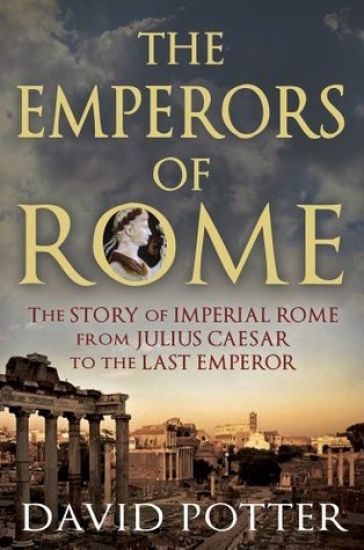
Emperors of Rome

Emperors of Rome

David Potter

Quercus Publishing
2013
pokkari
The Emperors of Rome charts the rise and fall of the Roman Empire through profiles of the greatest and most notorious of the emperors, from the autocratic Augustus to the feeble Claudius, the vicious Nero to the beneficent Marcus Aurelius, through to the maniac Commodus and beyond. Interwoven with these are vivid descriptions of sports and art, political intrigues and historic events. In this entertaining and erudite work, acclaimed classical scholar David Potter brings Imperial Rome, and the lives of the men who ruled it, to vivid life.
Jimmy McMenemy

Jimmy McMenemy

David Potter

DB Publishing
2012
nidottu
Jimmy McMenemy played for Celtic for almost twenty years at a time when Celtic were at the top of Scottish and world football. He remains without doubt one of the great characters of early 20th century Scottish football, and his story deserves to be told. Jimmy McMenemy was one of Celtic and Scotland's truly great players.