

Kirjahaku
Etsi kirjoja tekijän nimen, kirjan nimen tai ISBN:n perusteella.
1000 tulosta hakusanalla David T. Robison

Du Sort de la Pulpe Dans Les Opérations de Greffe Dentaire. 2e Édition
David-T
Hachette Livre - BNF
2018
pokkari

High-Quality Transesophageal Echocardiography presents a step-by-step approach aimed to help readers understand how to perform a high-quality transesophageal echocardiogram. The book explains the steps, tips, tricks, and troubleshooting tactics for performing a transesophageal echocardiogram effectively and with highest diagnostic utility, while ensuring patient safety and comfort. High-Quality Transesophageal Echocardiography is suitable for a wide audience from early learners of the technique who want to accelerate their progress and boost their confidence to those already qualified in the procedure who want to pick up tips to increase the quality and effectiveness of their practice.

With a groundbreaking approach, Ecology: Evolution, Application, Integration, Second Edition, teaches students to place ecological problems in an evolutionary context. The text also helps students develop scientific reasoning skills by modeling the process of science that researchers use to address fundamental ecological questions.

In the Japanese criminal justice system, the prosecutor has more control over life, liberty, and reputation than any other figure. Prosecutors make critical decisions about "who gets what" in Japan, chiefly by monopolizing decisions as to who will be charged with crimes, and for what. Based on extensive fieldwork inside a large prosecutors office in Japan and on numerous surveys and interviews, Johnson presents the first in-depth study in any language to describe and explain the role of Japan's 2000 prosecutors, the contexts in which they work, and the formidable powers they individually and collectively exercise.

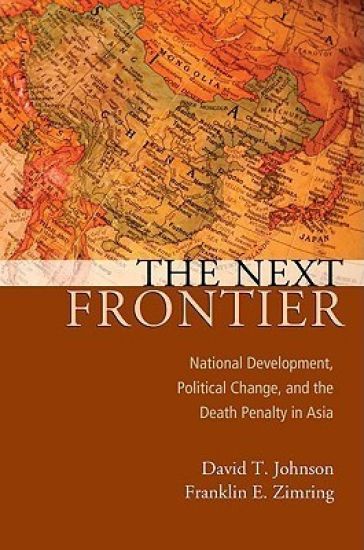
Today, two-thirds of the world's nations have abolished the death penalty, either officially or in practice, due mainly to the campaign to end state executions led by Western European nations. Will this success spread to Asia, where over 95 percent of executions now occur? Do Asian values and traditions support capital punishment, or will development and democratization end executions in the world's most rapidly developing region? David T. Johnson, an expert on law and society in Asia, and Franklin E. Zimring, a senior authority on capital punishment, combine detailed case studies of the death penalty in Asian nations with cross-national comparisons to identify the critical factors for the future of Asian death penalty policy. The clear trend is away from reliance on state execution and many nations with death penalties in their criminal codes rarely use it. Only the hard-line authoritarian regimes of China, Vietnam, Singapore, and North Korea execute with any frequency, and when authoritarian states experience democratic reforms, the rate of executions drops sharply, as in Taiwan and South Korea. Debunking the myth of "Asian values," Johnson and Zimring demonstrate that politics, rather than culture or tradition, is the major obstacle to the end of executions. Carefully researched and full of valuable lessons, The Next Frontier is the authoritative resource on the death penalty in Asia for scholars, policymakers, and advocates around the world.
Today, two-thirds of the world's nations have abolished the death penalty, either officially or in practice, due mainly to the campaign to end state executions led by Western European nations. Will this success spread to Asia, where over 95 percent of executions now occur? Do Asian values and traditions support capital punishment, or will development and democratization end executions in the world's most rapidly developing region? David T. Johnson, an expert on law and society in Asia, and Franklin E. Zimring, a senior authority on capital punishment, combine detailed case studies of the death penalty in Asian nations with cross-national comparisons to identify the critical factors for the future of Asian death penalty policy. The clear trend is away from reliance on state execution and many nations with death penalties in their criminal codes rarely use it. Only the hard-line authoritarian regimes of China, Vietnam, Singapore, and North Korea execute with any frequency, and when authoritarian states experience democratic reforms, the rate of executions drops sharply, as in Taiwan and South Korea. Debunking the myth of "Asian values," Johnson and Zimring demonstrate that politics, rather than culture or tradition, is the major obstacle to the end of executions. Carefully researched and full of valuable lessons, The Next Frontier is the authoritative resource on the death penalty in Asia for scholars, policymakers, and advocates around the world.

Intellectual Property Rights in EU Law Volume I
David T. Keeling
Oxford University Press
2004
sidottu
This volume provides an in-depth analysis of the relationship between intellectual property rights (including patents, trade marks, copyright, and designs) and the law of the European Union. It examines the conflict between intellectual property rights (exclusive rights limited normally to the territory of a single Member State) and the principle of free movement of goods and services in the internal market. The various tests and theories propounded by the European Court of Justice in attempting to resolve that conflict are explained from a critical standpoint. The ramifications of the exhaustion-of-rights principle are explored and chapters of this volume are devoted to trade marks, patents, and copyright. Finally, the volume examines the limitations on the exercise of intellectual property rights as a result of EC competition law. Volume 2 will cover EU legislation which has harmonized intellectual property law and created unitary intellectual property rights such a the Community trade mark.

Heterocyclic compounds are of prime importance to organic chemists working in the chemical industry, and heterocyclic chemistry is therefore a fundamental topic in undergraduate chemistry courses. The emphasis of this short text is on synthetic aspects rather than properties, and it covers the essential details and basic principles with reference to all the important classes of heterocyclic compounds. Instructional problems are included as an aid to comprehension, and references to more detailed texts are provided.

Statistical Mechanics and Stochastic Thermodynamics
David T. Limmer
Oxford University Press
2024
sidottu
The theory of statistical mechanics is the best link we have between the imperceptible world of atoms and molecules and our common macroscopic experience. This textbook provides the fundamental rules and relationships of statistical mechanics. Through it, students will learn how to deduce the properties of materials from an underlying understanding of the behaviour of its constituent building blocks. The textbook covers the basics of systems at rest, as well as those directly manipulated. The former, also known as equilibrium statistical mechanics, is reviewed in the context of recent results in probability theory, with emphasis on solvation phenomena and phase transitions. The latter, nonequilibrium statistical mechanics, has seen tremendous advancement in the last few years, and is integrated into a textbook for the first time. These latter chapters emphasize rates of rare events like chemical reactions as well as single molecule experiments. Throughout the book, distinctions between heat and work, as well as notions of trajectory ensembles reflect the incorporation of stochastic thermodynamics into the modern language of statistical mechanics. Ideas of scaling, the concentration of measures, and generalized theories of ensemble equivalence represent the important contribution of the mathematics of large deviations.
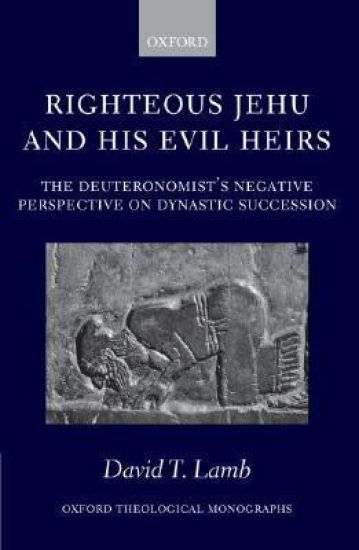
David T. Lamb examines not only the dynasty of Jehu within the narrative of 2 Kings, but also the broader context of the dynasties of Israel and Judah in the books of Kings and Samuel. Lamb discusses religious aspects of kingship (such as anointing, divine election, and prayer) in both the Old Testament and in the literature of the ancient Near East. He concludes that the Deuteronomistic editor, because of a deep concern that leaders be divinely chosen and obedient to Yahweh, sought to subvert the monarchical status quo by shaping the Jehuite narrative to emphasize that dynastic succession disastrously fails to produce righteous leaders.
The U.S. Congress is typically seen as an institution filled with career politicians who have been seasoned by experience in lower levels of political office. In fact, political amateurs have comprised roughly one quarter of the House of Representatives since 1930. The effect of amateurs' inexperience on their political careers, roles in Congress, and impact on the political system has never been analyzed in detail. Written in a lucid style accessible to the nonspecialist, David T. Canon's Actors, Athletes, and Astronauts is a definitive study of political amateurs in elections and in Congress. Canon examines the political conditions that prompt amateurs to run for office, why they win or lose, and whether elected amateurs behave differently from their experienced counterparts. Challenging previous work which presumed stable career structures and progressively ambitious candidates, his study reveals that amateurs are disproportionately elected in periods of high political opportunity, such as the 1930s for Democrats and 1980s for Republicans. Canon's detailed findings call for significant revision of our prevailing understanding of ambition theory and disarm monolithic interpretations of political amateurs. His unique typology of amateurism differentiates among policy-oriented, "hopeless," or ambitious amateurs. The latter resemble their professional counterparts; "hopeless" amateurs are swept into office by strong partisan motivations and decision-making styles of each type vary, affecting their degree of success, but each type of amateur provides a necessary electoral balance by defeating entrenched incumbents rarely challenged by more experienced politicians.
The U.S. Congress is typically seen as an institution filled with career politicians who have been seasoned by experience in lower levels of political office. In fact, political amateurs have comprised roughly one quarter of the House of Representatives since 1930. The effect of amateurs' inexperience on their political careers, roles in Congress, and impact on the political system has never been analyzed in detail. Written in a lucid style accessible to the nonspecialist, David T. Canon's Actors, Athletes, and Astronauts is a definitive study of political amateurs in elections and in Congress. Canon examines the political conditions that prompt amateurs to run for office, why they win or lose, and whether elected amateurs behave differently from their experienced counterparts. Challenging previous work which presumed stable career structures and progressively ambitious candidates, his study reveals that amateurs are disproportionately elected in periods of high political opportunity, such as the 1930s for Democrats and 1980s for Republicans. Canon's detailed findings call for significant revision of our prevailing understanding of ambition theory and disarm monolithic interpretations of political amateurs. His unique typology of amateurism differentiates among policy-oriented, "hopeless," or ambitious amateurs. The latter resemble their professional counterparts; "hopeless" amateurs are swept into office by strong partisan motivations and decision-making styles of each type vary, affecting their degree of success, but each type of amateur provides a necessary electoral balance by defeating entrenched incumbents rarely challenged by more experienced politicians.
Since the creation of minority-dominated congressional districts in 1991, the Supreme Court has condemned the move as akin to "political apartheid", while many African-American leaders argue that such districts are required for authentic representation. In this treatment of the subject, David Canon shows that the unintended consequences of black majority districts actually contradict the common wisdom that whites will not be adequately represented in these areas. Not only do black candidates need white votes to win, but this crucial "swing" vote often decides the race. And, once elected, even the black members who appeal primarily to black voters usually do a better job than white members of walking the racial tightrope, balancing the needs of their diverse constituents. Ultimately, Canon contends, minority districting is good for the country as a whole. These districts not only give African Americans a greater voice in the political process, they promote a politics of commonality - a biracial politics - rather than a politics of difference.
Since the creation of minority-dominated congressional districts in 1991, the Supreme Court has condemned the move as akin to "political apartheid", while many African-American leaders argue that such districts are required for authentic representation. In this treatment of the subject, David Canon shows that the unintended consequences of black majority districts actually contradict the common wisdom that whites will not be adequately represented in these areas. Not only do black candidates need white votes to win, but this crucial "swing" vote often decides the race. And, once elected, even the black members who appeal primarily to black voters usually do a better job than white members of walking the racial tightrope, balancing the needs of their diverse constituents. Ultimately, Canon contends, minority districting is good for the country as a whole. These districts not only give African Americans a greater voice in the political process, they promote a politics of commonality - a biracial politics - rather than a politics of difference.

Richard Linklater's filmmaking choices seem to defy basic patterns of authorship. From his debut with the inventive independent narrative Slacker, the Austin-based director's divergent films have included the sci-fi noir A Scanner Darkly, the socially conscious Fast Food Nation, the kid-friendly The School of Rock, the teen ensemble Dazed and Confused, and the twin romances Before Sunrise and Before Sunset. Yet throughout his varied career spanning two decades, Linklater has maintained a sense of integrity while working within a broad range of budgets, genres, and subject matters. Identifying a critical commonality among so much variation, David T. Johnson analyzes Linklater's preoccupation with the concept of time in many of his films, focusing on its many forms and aspects: the subjective experience of time and the often explicit, self-aware ways that characters discuss that experience; time and memory, and the ways that characters negotiate memory in the present; the moments of adolescence and early adulthood as crucial moments in time; the relationship between time and narrative in film; and how cinema, itself, may be becoming antiquated. While Linklater's focus on temporality often involves a celebration of the present that is not divorced from the past and future, Johnson argues that this attendance to the present also includes an ongoing critique of modern American culture. Crucially filling a gap in critical studies of this American director, the volume concludes with an interview with Linklater discussing his career.

Richard Linklater's filmmaking choices seem to defy basic patterns of authorship. From his debut with the inventive independent narrative Slacker, the Austin-based director's divergent films have included the sci-fi noir A Scanner Darkly, the socially conscious Fast Food Nation, the kid-friendly The School of Rock, the teen ensemble Dazed and Confused, and the twin romances Before Sunrise and Before Sunset. Yet throughout his varied career spanning two decades, Linklater has maintained a sense of integrity while working within a broad range of budgets, genres, and subject matters. Identifying a critical commonality among so much variation, David T. Johnson analyzes Linklater's preoccupation with the concept of time in many of his films, focusing on its many forms and aspects: the subjective experience of time and the often explicit, self-aware ways that characters discuss that experience; time and memory, and the ways that characters negotiate memory in the present; the moments of adolescence and early adulthood as crucial moments in time; the relationship between time and narrative in film; and how cinema, itself, may be becoming antiquated. While Linklater's focus on temporality often involves a celebration of the present that is not divorced from the past and future, Johnson argues that this attendance to the present also includes an ongoing critique of modern American culture. Crucially filling a gap in critical studies of this American director, the volume concludes with an interview with Linklater discussing his career.

Known as the War to End all Wars and the Great War, World War I introduced new forms of mass destruction and modern technological warfare. When the Bolsheviks pulled Russia out of the war in late 1917, the Germans turned their offensive efforts to the Western Front in an attempt to win the war in 1918. But as fresh American troops entered Europe, the strategic scales tipped against Germany.Much of how World War I played out turned on the plans and decisions of the senior-most German and Allied commanders. The Generals' War explores the military strategies of those generals during the last year of the Great War. These six very different men included Germany's Field Marshal Paul von Hindenburg and General Erich Ludendorff; France's Marshals Ferdinand Foch and Philippe Pétain; Great Britain's Field Marshal Sir Douglas Haig; and the United States' General John Pershing. Although history remembers none of them as great captains, these six officers determined for better or worse how World War I was fought on the battlefields of the Western Front between November 1917 and November 1918.The Generals' War is a landmark exploration of the generalship that shaped the very framework of modern warfare as we know it today and provides a comprehensive and detailed analysis on the senior commanders of the Great War.
When Latinos in the United States was first published in 1986, it was hailed as a "triumph" by the National Catholic Reporter, "inspiring" by the journal American Studies, and was named an Outstanding Academic Book of the Year by Choice. The book was widely adopted in Latino and ethnic studies classes at colleges and universities throughout the country. Now, in the second edition, David Abalos updates his pioneering application of the transformation theory to key aspects of Latino politics, history, and culture. He draws on examples from everyday human encounters to address specific concerns of both Latino individuals and groups. Among the issues addressed are: the need to maintain Latino family heritage while allowing each member to develop the autonomy necessary to interact both within the family and within American society; the importance of avoiding assimilation; the necessity for Latinos to develop the skills and competence that allow them to enter into America's business world without losing their commitment to the community; rediscovery of Latino religious symbols of transformation that renew the life of the sacred; and the need to preserve Latino heritage through a strategy of being both American and Latino. The second edition contains extensive new material. Abalos includes a new section on archetypal analysis. He has added discussions of the relationship between the sacred and the political in American politics, and of assimilation and its effects on the immigrant. He addresses the new wave of migration and what it means to the future of the United States and la comunidad Latina. Abalos has also added a new chapter on the politics of education, which is, he argues, the most important civil rights issue facing the Latino community. The notes and bibliography reflect recent scholarship, especially that of Latina writers and Chicana feminists.

When Latinos in the United States was first published in 1986, it was hailed as a "triumph" by the National Catholic Reporter, "inspiring" by the journal American Studies, and was named an Outstanding Academic Book of the Year by Choice. The book was widely adopted in Latino and ethnic studies classes at colleges and universities throughout the country. Now, in the second edition, David Abalos updates his pioneering application of the transformation theory to key aspects of Latino politics, history, and culture. He draws on examples from everyday human encounters to address specific concerns of both Latino individuals and groups. Among the issues addressed are: the need to maintain Latino family heritage while allowing each member to develop the autonomy necessary to interact both within the family and within American society; the importance of avoiding assimilation; the necessity for Latinos to develop the skills and competence that allow them to enter into America's business world without losing their commitment to the community; rediscovery of Latino religious symbols of transformation that renew the life of the sacred; and the need to preserve Latino heritage through a strategy of being both American and Latino. The second edition contains extensive new material. Abalos includes a new section on archetypal analysis. He has added discussions of the relationship between the sacred and the political in American politics, and of assimilation and its effects on the immigrant. He addresses the new wave of migration and what it means to the future of the United States and la comunidad Latina. Abalos has also added a new chapter on the politics of education, which is, he argues, the most important civil rights issue facing the Latino community. The notes and bibliography reflect recent scholarship, especially that of Latina writers and Chicana feminists.