Kirjojen hintavertailu. Mukana 11 244 527 kirjaa ja 12 kauppaa.

Kirjahaku

Etsi kirjoja tekijän nimen, kirjan nimen tai ISBN:n perusteella.

1000 tulosta hakusanalla David Timothy

Book II

Book II

Timothy David Jakubiec

Createspace Independent Publishing Platform
2018
nidottu
The hallucinogenic induced first story in this tale was just the beginning The real world can be a very dark and stagnant place. The act of making bonds with people, and seeing the good in others can make a gloomy day bright again though.
Timothy and Titus

Timothy and Titus

David Murray

Crossway Books
2024
pokkari
A Daily Devotional through the Books of 1 & 2 Timothy and Titus from the StoryChanger Devotional Series If you want to change your story, you need to know God’s story. This devotional, part of the StoryChanger Devotional series, is a friendly, practical guide to understanding the books of 1 & 2 Timothy and Titus and how they shape your story. Timothy and Titus: Stories of Fear and Courage includes 50 devotionals written by David Murray, author of The StoryChanger. This series features daily readings designed to help you learn, love, and live the whole Bible. Murray walks through the books of 1 & 2 Timothy and Titus, offering thoughtful expositional comments on the book’s message, reflection questions, and a personal daily prayer. This devotional can help reorient your mind and transform your life with God’s better story. 50 Daily God-Centered Devotionals: Each day includes an explanation of that day’s reading, reflection questions, and a personal prayer Great for Families, Individuals, or Small Groups: Accessible for non-Christians and new Christians, this devotional helps readers learn how to effectively share God’s story Part of the StoryChanger Devotional Series: Inspired by Murray’s book The StoryChanger; other volumes include Proverbs: Stories of Wisdom and Folly; Exodus: Stories of Redemption and Relationship; and Philippians and Colossians: Stories of Joy and Identity
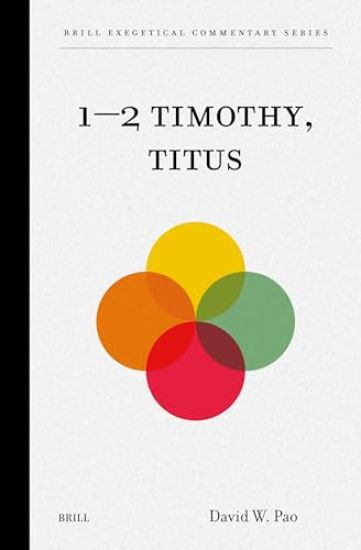
1-2 Timothy, Titus

1-2 Timothy, Titus

David W. Pao

BRILL
2023
sidottu
As the inaugural volume of the Brill Exegetical Commentary Series, this commentary provides a fresh reading of the Pastoral Epistles while interacting with recent developments in biblical studies and the auxiliary disciplines. A fresh translation of the Greek text is followed by text-critical, grammatical, historical, and theological analyses of the text. Instead of a commentary on the commentaries, this work grounds the reading of the Pastoral Epistles within their proper linguistic and socio-cultural contexts, thus allowing their distinct theological voices to emerge.
1 and 2 Timothy and Titus

1 and 2 Timothy and Titus

David Jeremiah

HarperChristian Resources
2020
nidottu
Living by and for the Gospel...Follow Dr. Jeremiah through the letters of 1 and 2 Timothy and Titus in a chapter-by-chapter study that will help you understand what it meant to the people at the time it was written, and what it means to Christians today. The apostle Paul founded many churches in the Roman Empire, but it is clear he did not do this work alone. Rather, he relied on trusted companions such as Timothy and Titus to support the ongoing work in these communities.As Paul neared the end of his life, he wrote personal letters to these men to encourage them in their ministry and provide final guidelines for how live and lead for Christ. In particular, we find him urging these men to maintain purity in the church, faithfully endure for the gospel, preach sound doctrine, pursue godliness, and maintain order as they built up other leaders. Paul's words compel believers today to also pursue their calling in the church . . . even when that means dealing with hardheaded and unruly fellow believers!Each of this study's twelve lessons is clearly organized to include:Getting Started: An opening question to introduce you to the lesson.Setting the Stage: A short reflection to explain the context of the study.Exploring the Text: The Scripture reading for the lesson with related study questions.Reviewing the Story: Questions to help you identify key points in the reading.Applying the Message: Questions to help you apply the key ideas to their lives.Reflecting on the Meaning: A closing reflection on the key teachings in the lesson.—ABOUT THE SERIES—The Jeremiah Bible Study Series captures Dr. David Jeremiah's forty-plus years of commitment in teaching the Word of God. In each study, you'll gain insights into the text, identify key stories and themes, and be challenged to apply the truths you uncover to your life. By the end of each study, you'll come away with a clear and memorable understanding of that Bible book.Each study also contains a Leader's Guide.
Exalting Jesus in 1 & 2 Timothy and Titus

Exalting Jesus in 1 & 2 Timothy and Titus

David Platt; Dr. Daniel L. Akin; Tony Merida

Broadman Holman Publishers
2013
nidottu
Edited by David Platt, Daniel L. Akin, and Tony Merida, this new commentary series, projected to be 48 volumes, takes a Christ- centered approach to expositing each book of the Bible. Rather than a verse-by-verse approach, the authors have crafted chapters that explain and apply key passages in their assigned Bible books. Readers will learn to see Christ in all aspects of Scripture, and they will be encouraged by the devotional nature of each exposition. Projected contributors to the series include notable authors such as Russell D. Moore, Al Mohler, Matt Chandler, Francis Chan, Mark Dever, and others.
Godly Leadership & Power: I & II Timothy

Godly Leadership & Power: I & II Timothy

David Bergsland

Createspace Independent Publishing Platform
2011
nidottu
The "Easily Understanding Scripture" series: #3In-line Verse By Verse Bible StudyThis is a verse by verse bible study you can read The scriptures are there followed immediately by the commentary. It is designed for enjoyable reading and easy study. Only the reading and study of the Bible can provide you with the solid foundation you need as a believer in Jesus. Godly Leadership & Power is the third completed book in a series of intensive, cutting edge, Bible study workbooks for individual youth, adults, and mature believers looking for serious discipleship, or groups of any age looking to get serious about the Lord.Powerful discipleship for individuals or groupsThe study assumes that scripture is inspired by God and that it can teach us how to live a powerful, victorious life in Jesus. We know that this level of Bible study can set you free and transform your life. In addition to deeply covering the meaning of the words written in I & II Timothy, this book asks you the questions you need to answer for yourself as you discover what Jesus is looking for in His people.References are quoted, words are defined, attitudes of Paul and the early church are explained, and the core meaning of the scriptures is revealed.You will have a wonderful time exploring the Timothy and getting to know the power and leadership made available by Jesus and the Holy Spirit. You'll have a new liberty to love and serve the Lord.
Being David Archer

Being David Archer

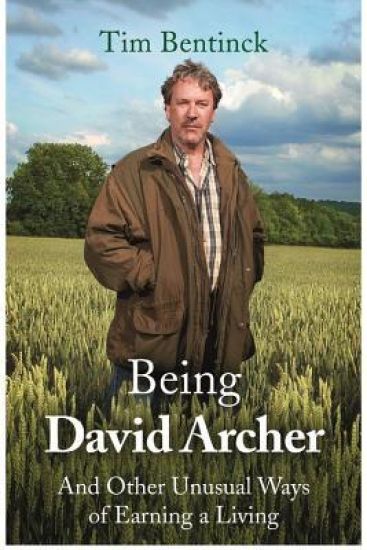
Timothy Bentinck

Constable
2018
pokkari
'Hilarious' Mail on Sunday'Stylish, very funny memoir' Daily MailTimothy Bentinck has played the part of David Archer in BBC Radio 4's The Archers since 1982. He is also the Earl of Portland and the voice of 'Mind The Gap' on the Piccadilly Line. Aimed primarily at the five million regular Archers listeners, Timothy takes the reader behind the scenes of the longest running drama series in the world, a British institution with a theme tune that Billy Connolly wants to be the National Anthem. But that's not all. With wry, self-deprecating humour, Timothy recounts his enormously varied life - a successful actor in TV, film and theatre, a voice specialist working in every vocal medium. He's also been an HGV truck driver, a US tour guide, a computer programmer and website designer, an inventor with UK and US patents, farm worker, house renovator and he sat as a crossbencher in the House of Lords for three years.Unlike many acting memoirs, this isn't a succession of thespian tales of freezing digs, forgotten lines and name dropping. This is an articulate, funny and thoughtful account of how to survive an insecure life.
Being David Archer

Being David Archer

Timothy Bentinck

Constable
2017
sidottu
Timothy Bentinck has played the part of David Archer in BBC Radio 4's The Archers since 1982. He is also the Earl of Portland and the voice of 'Mind The Gap' on the Piccadilly Line. Aimed primarily at the five million regular Archers listeners, Timothy takes the reader behind the scenes of the longest running drama series in the world, a British institution with a theme tune that Billy Connolly wants to be the National Anthem. But that's not all. With wry, self-deprecating humour, Timothy recounts his enormously varied life - a successful actor in TV, film and theatre, a voice specialist working in every vocal medium. He's also been an HGV truck driver, a US tour guide, a computer programmer and website designer, an inventor with UK and US patents, farm worker, house renovator and he sat as a crossbencher in the House of Lords for three years.Unlike many acting memoirs, this isn't a succession of thespian tales of freezing digs, forgotten lines and name dropping. This is an articulate, funny and thoughtful account of how to survive an insecure life.
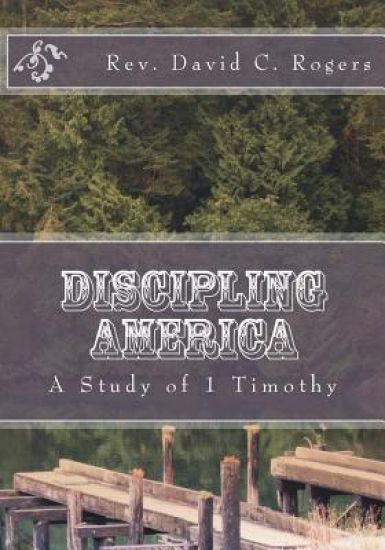
Discipling America: A Study of I Timothy

Discipling America: A Study of I Timothy

David C. Rogers

Createspace Independent Publishing Platform
2018
nidottu
There is a desperate need for disciples in today's modern world. 1 Timothy provides a guide book to follow for every person who calls Jesus Christ, Lord. While many see 1 Timothy as the pastoral book, the teachings found within it illustrate the character that a disciple of Jesus should have. Therefore, the encouragement and instruction found in 1 Timothy is for all who strive to be true disciples. We all are called to a ministry, and we all have a mission.
Aesthetics and Morals in the Philosophy of David Hume
The book has two aims. First, to examine the extent and significance of the connection between Hume's aesthetics and his moral philosophy; and, second, to consider how, in light of the connection, his moral philosophy answers central questions in ethics.The first aim is realized in chapters 1-4. Chapter 1 examines Hume's essay "Of the Standard of Taste" to understand his search for a "standard" and how this affects the scope of his aesthetics. Chapter 2 establishes that he treats beauty in nature and art and moral beauty as similar in kind, and applies the conclusions about his aesthetics to his moral thought. Chapter 3 solves a puzzle to which this gives rise, namely, how individuals both accept general standards that they also contravene in the course of aesthetic and moral activity. Chapter 4 takes up the normative aspect of Hume's approach by understanding moral character through his view of moral beauty.The second aim of the book is realized in chapters 5-7 by entertaining three objections against Hume's moral philosophy. First, if morality is an immediate reaction to the beauty of vice and the deformity of virtue, why is perfect virtue not the general condition of every human individual? Second, if morality consists of sentiments that arise in the subject, how can moral judgments be objective and claim universal validity? And third, if one can talk of "general standards" governing conduct, how does one account for the diversity of moral systems and their change over time? The first is answered by showing that like good taste in aesthetics, 'right taste' in morals requires that the sentiments are educated; the second, by arguing against the view that Hume is a subjectivist and a relativist, and the third (chapter 6), by showing that his approach contains a view of progress left untouched by any personal prejudices Hume himself might harbor. The book concludes in chapter 7 by showing how Hume's view of philosophy affects the scope of any normative ethics.
Aesthetics and Morals in the Philosophy of David Hume
The book has two aims. First, to examine the extent and significance of the connection between Hume's aesthetics and his moral philosophy; and, second, to consider how, in light of the connection, his moral philosophy answers central questions in ethics.The first aim is realized in chapters 1-4. Chapter 1 examines Hume's essay "Of the Standard of Taste" to understand his search for a "standard" and how this affects the scope of his aesthetics. Chapter 2 establishes that he treats beauty in nature and art and moral beauty as similar in kind, and applies the conclusions about his aesthetics to his moral thought. Chapter 3 solves a puzzle to which this gives rise, namely, how individuals both accept general standards that they also contravene in the course of aesthetic and moral activity. Chapter 4 takes up the normative aspect of Hume's approach by understanding moral character through his view of moral beauty.The second aim of the book is realized in chapters 5-7 by entertaining three objections against Hume's moral philosophy. First, if morality is an immediate reaction to the beauty of vice and the deformity of virtue, why is perfect virtue not the general condition of every human individual? Second, if morality consists of sentiments that arise in the subject, how can moral judgments be objective and claim universal validity? And third, if one can talk of "general standards" governing conduct, how does one account for the diversity of moral systems and their change over time? The first is answered by showing that like good taste in aesthetics, 'right taste' in morals requires that the sentiments are educated; the second, by arguing against the view that Hume is a subjectivist and a relativist, and the third (chapter 6), by showing that his approach contains a view of progress left untouched by any personal prejudices Hume himself might harbor. The book concludes in chapter 7 by showing how Hume's view of philosophy affects the scope of any normative ethics.
Nbbc, 1 & 2 Timothy/Titus

Nbbc, 1 & 2 Timothy/Titus

David A Ackerman

Beacon Hill Press of Kansas City
2016
pokkari
Scholars have long debated over the authorship and significance of the Pastoral Epistles-1 and 2 Timothy and Titus. From authorship by Paul himself to authorship by persons unknown writing in the spirit of Paul, the range of scholarly opinion is wide and varied. David Ackerman sifts through these differences and emerges with a well-informed perspective of his own. He expertly takes the reader beyond the debate to the timeless and transgenerational message of these canonical treasures.As with all New Beacon Bible Commentaries, this volume includes not only the helpful critical resources intrinsic to every commentary but also the skilled insights of an expert biblical interpreter.Engaging, perceptive, and academically thorough, the New Beacon Bible Commentary will expand your understanding and deepen your appreciation of the meaning and message of each book of the Bible.Written from the Wesleyan theological perspective, this indispensable commentary provides pastors, professional scholars, teachers, and Bible students with a critical, relevant, and inspiring interpretation of the Word of God in the 21st century.