Kirjojen hintavertailu. Mukana 11 342 296 kirjaa ja 12 kauppaa.

Kirjahaku

Etsi kirjoja tekijän nimen, kirjan nimen tai ISBN:n perusteella.

1000 tulosta hakusanalla David W Erickson

Life and Writings of Frank Forester. Edited by D. W. Judd. Illustrated.

Life and Writings of Frank Forester. Edited by D. W. Judd. Illustrated.

Henry William Herbert; David W Judd

British Library, Historical Print Editions
2011
pokkari
Title: Life and Writings of Frank Forester (H. W. H.). Edited by D. W. Judd ... Illustrated.Publisher: British Library, Historical Print EditionsThe British Library is the national library of the United Kingdom. It is one of the world's largest research libraries holding over 150 million items in all known languages and formats: books, journals, newspapers, sound recordings, patents, maps, stamps, prints and much more. Its collections include around 14 million books, along with substantial additional collections of manuscripts and historical items dating back as far as 300 BC.The NOVELS OF THE 18th & 19th CENTURIES collection includes books from the British Library digitised by Microsoft. The collection includes major and minor works from a period which saw the development and triumph of the English novel. These classics were written for a range of audiences and will engage any reading enthusiast. ++++The below data was compiled from various identification fields in the bibliographic record of this title. This data is provided as an additional tool in helping to insure edition identification: ++++ British Library Herbert, Henry William.; Judd, David W.; 1882. 2 vol.; 8 . 12274.c.6.
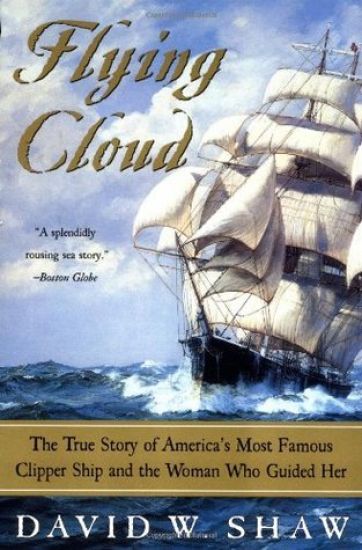
Flying Cloud: The True Story of America's Most Famous Clipper Ship and the Woman Who Guided Her
In 1851, Elanor Creesy, in a position almost unheard of for a woman in the mid-nineteenth century, served as the navigator on the maiden voyage of the clipper ship Flying Cloud -- traveling from New York to San Francisco in only eighty-nine days. This swift passage set a world record that went unbroken for more than a century. Upon arrival in San Francisco, Flying Cloud became an enduring symbol of a young nation's frontier spirit. Illustrated with original maps and charts as well as historical photographs, David Shaw's compelling narrative captures the drama of this maritime adventure.
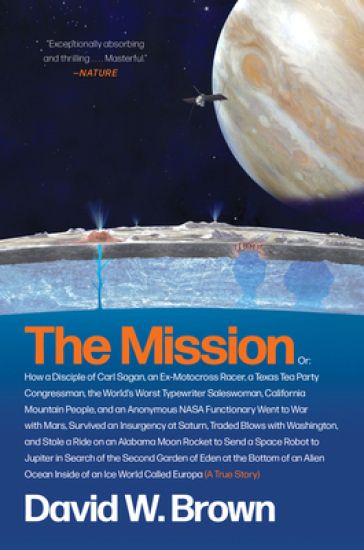
The Mission

The Mission

David W Brown

HARPERCOLLINS PUBLISHERS INC
2022
nidottu
“Exceptionally absorbing and thrilling. ... Masterful.” —NatureA "magnificent" (Scientific American), genre-defying narrative of the most ambitious science project ever conceived: NASA’s deep space mission to Europa, the Jovian moon where might swim the first known alien life in our solar systemIn the spirit of Tom Wolfe and John McPhee, The Mission is an exuberant master class of creative nonfiction that reveals how a motley, determined few expanded the horizon of human achievement. When scientists discovered the first ocean beyond Earth, they had two big questions: “Is it habitable?” and “How do we get there?” To answer the first, they had to solve the second, and so began a vivacious team’s twenty-year odyssey to mount a mission to Europa, the ocean moon of Jupiter.Standing in their way: NASA, fanatically consumed with landing robots on Mars; the White House, which never saw a science budget it couldn’t cut; Congress, fixated on going to the moon or Mars—anywhere, really, to give astronauts something to do; rivals in academia, who wanted instead to go to Saturn; and even Jupiter itself, which guards Europa in a pulsing, rippling radi­ation belt—a halo of death whose conditions are like those that follow a detonated thermonuclear bomb. The Mission is the Homeric, never-before-told story of modern space exploration, and a magnificent portrait of the inner lives of scientists who study the solar system’s mysterious outer planets. David W. Brown chronicles the remarkable saga of how Europa was won, and what it takes to get things done—both down here, and up there.
PIC Projects and Applications using C

PIC Projects and Applications using C

David W Smith

Newnes (an imprint of Butterworth-Heinemann Ltd )
2013
nidottu
PIC Projects and Applications Using C details how to program the PIC microcontroller in the C language. The book takes a learn-by-doing approach, with applications covering topics such as inputs, outputs, keypads, alphanumeric displays, analogue-to-digital conversion, radio transmitters and receivers, data EEPROM, interrupts and timing. To aid debugging, the book provides a section detailing the use of the simulator and in-circuit debugger. With this book you will learn: How to program the PIC microcontroller in C Techniques for using the simulator and debuggers to find faults on your code The ins and outs of interfacing circuits, such as radio modules and liquid crystal displays How to use the PIC on-board functions, such as interrupts and timing modules, and make analogue measurements
Bones, Stones and Molecules

Bones, Stones and Molecules

David W. Cameron; Colin P. Groves

Academic Press Inc
2004
nidottu
Bones, Stones and Molecules provides some of the best evidence for resolving the debate between the two hypotheses of human origins. The debate between the 'Out of Africa' model and the 'Multiregional' hypothesis is examined through the functional and developmental processes associated with the evolution of the human skull and face and focuses on the significance of the Australian record. The book analyzes important new discoveries that have occurred recently and examines evidence that is not available elsewhere. Cameron and Groves argue that the existing evidence supports a recent origin for modern humans from Africa. They also specifically relate these two theories to interpretations of the origins of the first Australians. The book provides an up-to-date interpretation of the fossil, archaeological and the molecular evidence, specifically as it relates to Asia, and Australia in particular.
Friends and Partners

Friends and Partners

David W. Rose

Academic Press Inc
2024
nidottu
Friends and Partners: The Legacy of Franklin D. Roosevelt and Basil O’Connor in the History of Polio presents the story of two men, one the President of the United States, the other an ambitious attorney, who became the "architects of the fight against polio." With unfettered access to the March of Dimes Archives, this book explores the friendship and partnership that ensured the end of polio in the US, with exclusive pictures and documentation. The book describes the founding and history of Franklin D. Roosevelt’s (FDR) polio colony in Warm Springs, Georgia, and the early years of the March of Dimes as established by FDR in 1938 as the National Foundation for Infantile Paralysis. Other little-known aspects of the partnership are also included, such as O’Connor’s participation in FDR’s "Brain Trust," the President’s birthday ball fundraisers during the Great Depression, the March of Dimes during World War II, and O’Connor’s simultaneous leadership of the American Red Cross. Finally, the book explores, in detail, how O’Connor used the legacy of FDR after his death in 1945 to promote the philosophy of "freedom from disease" to achieve the goal of ending polio through the March of Dimes. Friends and Partners: The Legacy of Franklin D. Roosevelt and Basil O’Connor in the History of Polio will appeal to researchers, students, and policy makers in public health and medicine as well as all those interested in learning more about this pivotal period in history.
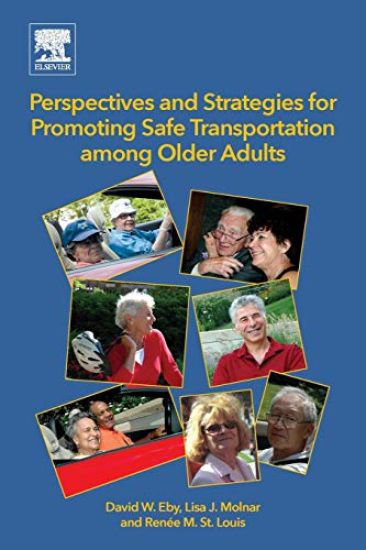
Perspectives and Strategies for Promoting Safe Transportation Among Older Adults

Perspectives and Strategies for Promoting Safe Transportation Among Older Adults

David W. Eby; Lisa J. Molnar; Renée M. St. Louis

Elsevier Science Publishing Co Inc
2018
nidottu
Promoting Safe Transportation among Older Adults: Perspectives and Strategies provides a concise, comprehensive, and up-to-date resource on safe mobility for an aging population. The book offers an interdisciplinary perspective for understanding and influencing the behavior of older adults with regard to their safe transportation. It is organized around the professions and disciplines that have a stake in the safe transportation of older adults and the role they play at each stage of their mobility needs. The book also addresses the various strategies that have been used to help keep older adults safe and mobile. Readers will find great insights on key issues related to aging and mobility, giving them an overarching framework for how to maintain safe mobility into older adulthood. The book enables readers to understand the perspectives of the critical groups of people involved in keeping older people safe and explores existing strategies by which an aging individual can maintain safe mobility.
A Slave No More

A Slave No More

David W Blight

CENGAGE LEARNING, INC
2009
pokkari
Slave narratives, some of the most powerful records of our past, are extremely rare, with only fifty-five post-Civil War narratives surviving. A mere handful are first-person accounts by slaves who ran away and freed themselves. Now two newly uncovered narratives, and the biographies of the men who wrote them, join that exclusive group with the publication of A Slave No More, a major new addition to the canon of American history. Handed down through family and friends, these narratives tell gripping stories of escape: Through a combination of intelligence, daring, and sheer luck, the men reached the protection of the occupying Union troops. David W. Blight magnifies the drama and significance by prefacing the narratives with each man's life history. Using a wealth of genealogical information, Blight has reconstructed their childhoods as sons of white slaveholders, their service as cooks and camp hands during the Civil War, and their climb to black working-class stability in the north, where they reunited their families.In the stories of Turnage and Washington, we find history at its most intimate, portals that offer a rich new answer to the question of how four million people moved from slavery to freedom. In A Slave No More, the untold stories of two ordinary men take their place at the heart of the American experience.
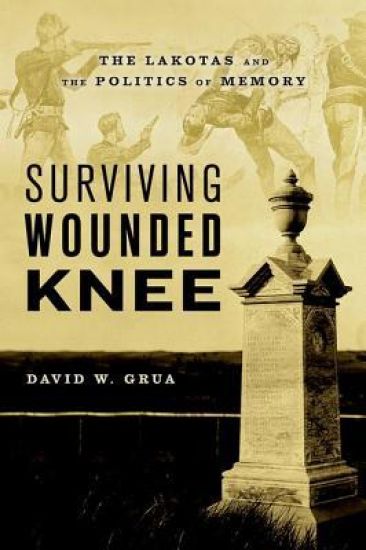
Surviving Wounded Knee

Surviving Wounded Knee

David W. Grua

Oxford University Press Inc
2019
nidottu
On December 29, 1890, the U.S. Seventh Cavalry killed more than two hundred Lakota Ghost Dancers- including men, women, and children-at Wounded Knee Creek, South Dakota. After the work of death ceased at Wounded Knee, the work of memory commenced. For the US Army and some whites, Wounded Knee was the site where a heroic victory was achieved against the fanatical Chief Big Foot and his treacherous Ghost Dancers and where the struggle between civilization and savagery for North America came to an end. For other whites, it was a stain on the national conscience, a leading example of America's dishonorable dealings with Native peoples. For Lakota survivors it was the site of a horrific massacre of a peacemaking chief and his people, and where the United States violated its treaty promises and slaughtered innocents. Historian David Grua argues that Wounded Knee serves as a window into larger debates over how the United States' conquest of the indigenous peoples should be remembered. During the five decades after Wounded Knee, the survivors pursued historical justice in the form of compensation, in accordance with traditional Lakota conflict resolution practices and treaty provisions that required compensation for past wrongs. The survivors engaged in the politics of memory by preparing compensation claims, erecting a monument "in memory of the Chief Big Foot massacre" at the mass grave on the Pine Ridge Reservation, by dictating accounts to sympathetic whites, and by testifying before the U.S. Congress in the 1930s in support of a bill intended to "liquidate the liability" of the United States for Wounded Knee. Despite the bill's failure, the survivors' prolonged pursuit of justice laid the foundation for later activists who would draw upon the memorial significance of Wounded Knee to promote indigenous sovereignty. Published on the 125th anniversary of this controversial event, Surviving Wounded Knee examines the Lakota survivors' half-century pursuit of justice and points to lingering questions about the United States' willingness to address the liabilities of Indian conquest.
Origin of Life

Origin of Life

David W. Deamer

Oxford University Press Inc
2020
sidottu
Our knowledge of our solar system has passed the point of no return. Increasingly, it seems possible that scientists will soon discover how life is created on habitable planets like Earth and Mars. Scientists have responded to a renewed public interest in the origin of life with research, but many questions still remain unanswered in the broader conversation. Other questions can be answered by the laws of chemistry and physics, but questions surrounding the origin of life are best answered by reasonable extrapolations of what scientists know from observing the Earth and its solar system. Origin of Life: What Everyone Needs to Know® is a comprehensive scientific guide on the origin of life. David W. Deamer sets out to answer the top forty questions about the origin of life, including: Where do the atoms of life come from? How old is Earth? What was the Earth like before life originated? Where does water come from? How did evolution begin? After he provides the informational answer for each question, there is a follow-up: How do we know? This question expands the horizon of the whole book, and provides scientific reasoning and explanations for hypotheses surrounding the origin of life. How scientists come to their conclusions and why we can trust these answers is an important question, and Deamer provides answers to each big question surrounding the origin of life, from what it is to why we should be curious.
Origin of Life

Origin of Life

David W. Deamer

Oxford University Press Inc
2020
nidottu
Our knowledge of our solar system has passed the point of no return. Increasingly, it seems possible that scientists will soon discover how life is created on habitable planets like Earth and Mars. Scientists have responded to a renewed public interest in the origin of life with research, but many questions still remain unanswered in the broader conversation. Other questions can be answered by the laws of chemistry and physics, but questions surrounding the origin of life are best answered by reasonable extrapolations of what scientists know from observing the Earth and its solar system. Origin of Life: What Everyone Needs to Know® is a comprehensive scientific guide on the origin of life. David W. Deamer sets out to answer the top forty questions about the origin of life, including: Where do the atoms of life come from? How old is Earth? What was the Earth like before life originated? Where does water come from? How did evolution begin? After he provides the informational answer for each question, there is a follow-up: How do we know? This question expands the horizon of the whole book, and provides scientific reasoning and explanations for hypotheses surrounding the origin of life. How scientists come to their conclusions and why we can trust these answers is an important question, and Deamer provides answers to each big question surrounding the origin of life, from what it is to why we should be curious.
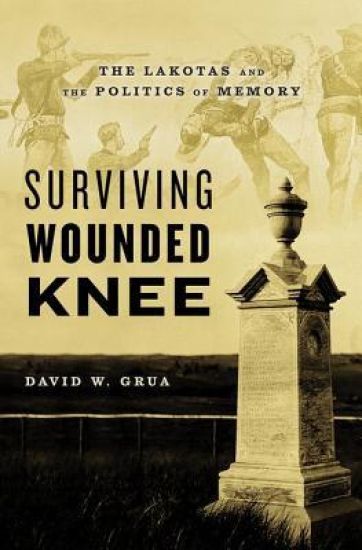
Surviving Wounded Knee

Surviving Wounded Knee

David W. Grua

Oxford University Press Inc
2016
sidottu
On December 29, 1890, the US Seventh Cavalry killed more than two hundred Lakota Ghost Dancers -- including men, women, and children -- at Wounded Knee Creek, South Dakota. After the work of death ceased at Wounded Knee Creek, the work of memory commenced. For the US Army and some whites, Wounded Knee represented the site where the struggle between civilization and savagery for North America came to an end. For other whites, it was a stain on the national conscience, a leading example of America's dishonorable dealings with Native peoples. For Lakota people it was the site of the "biggest murders," where the United States violated its treaty promises and slaughtered innocents. Historian David Grua argues that Wounded Knee serves as a window into larger debates over how the US's conquest of the indigenous peoples should be remembered. Opposing efforts to memorialize the event ultimately proved a contest over language and assumptions rooted in the concept of "race war" or the struggle between "civilization" and "savagery." Was Wounded Knee a heroic "battle" -- the final victory of the American empire in the trans-Mississippi West? Or was it a "massacre" that epitomized the nation's failure to deal honorably with Native peoples? Even today, over a century later, the transmission of memory to survivors' descendants remains potent, and December 29, 2015, the 125th anniversary of Wounded Knee, will be marked by commemorations and lingering questions about the United States' willingness to address the liabilities of Indian conquest.
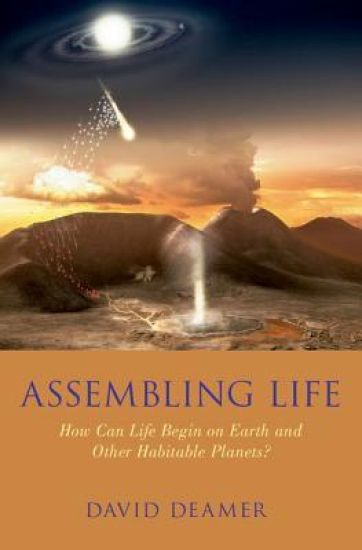
Assembling Life

Assembling Life

David W. Deamer

Oxford University Press Inc
2019
sidottu
In Assembling Life, David Deamer addresses questions that are the cutting edge of research on the origin of life. For instance, how did non-living organic compounds assemble into the first forms of primitive cellular life? What was the source of those compounds and the energy that produced the first nucleic acids? Did life begin in the ocean or in fresh water on terrestrial land masses? Could life have begun on Mars? The book provides an overview of conditions on the early Earth four billion years ago and explains why fresh water hot springs are a plausible alternative to salty seawater as a site where life can begin. Deamer describes his studies of organic compounds that were likely to be available in the prebiotic environment and the volcanic conditions that can drive chemical evolution toward the origin of life. The book is not exclusively Earth-centric, but instead considers whether life could begin elsewhere in our solar system. Deamer does not propose how life did begin, because we can never know that with certainty. Instead, his goal is to understand how life can begin on any habitable planet, with Earth so far being the only known example.
The Arab-Israeli Conflict

The Arab-Israeli Conflict

David W. Lesch

Oxford University Press Inc
2019
nidottu
Whether filtered through the media or through the classroom, the Arab-Israeli conflict has become a pervasive—and often misunderstood—subject of our contemporary cultural landscape. In this compelling new Second Edition of The Arab-Israeli Conflict, widely respected scholar David W. Lesch presents the most balanced and accessible account of the conflict. Combining narrative history, primary sources, and informative analyses, The Arab-Israeli Conflict enables students to form their own educated opinions about complex and controversial issues.
Alternative Paths

Alternative Paths

David W. McFadden

Oxford University Press Inc
1993
sidottu
Between 1917-1920 - from the Bolshevik Revolution to the definitive statement of American opposition to Bolshevik Russia - Soviets and Americans searched for ways to effect meaningful interaction between the nations in the absence of formal diplomatic relations. During these years wide-ranging discussions occurred on a variety of serious issues, from military collaboration and economic relations to the comprehensive settlement of political and military disputes. At the same time extensive debates took place in both countries about the nature of the relations between them. As McFadden shows in this pathbreaking book, based on research in Soviet archives, as well as previously unused private collections and government archives in the United States and Great Britain, a surprising number of concrete agreements were reached between the two countries, including continued operation of the American Red Cross in Russia, the transfer of war materials from the Russian army to the Americans, the sale of strategic supplies of platinum from the Bolsheviks to the United States, the exemption of a number of American corporations from Soviety nationalization, and the numerous trade contracts betwen the Soviet government and American firms. Numerous imkportant diplomats and politicians were involved in these negotiations. Most of the details, characters and nature of these discussions and their efforts have previously been overlooked or downplayed by historians. In the post-Cold War era, such a re-evaluation should have special relevance. re-evaluation of this critical period, McFadden shows how a surprising number of concrete agreements were reached between the two nations, and the relevance of this in light of current events such as glasnost.
Here Be Dragons

Here Be Dragons

David W. Koerner; Simon LeVay

Oxford University Press Inc
2000
sidottu
It is only recently that advances in chemistry, physics, and biology and in their application to space and the space sciences, have provided scientists with the tools to make accurate and well-informed predictions about the possibility of life on other planets. In this book, the authors summarize and present the scientific search for life in the universe, and the current level of scientific understanding of how life begins, grows, and becomes intelligent in our Solar System and beyond. This engaging book promises to appeal not only to the general reader but to scientists as well, many of whom strive to acquire an informed perspective on the search for extraterrestrial life in fields not their own.