Kirjahaku
Etsi kirjoja tekijän nimen, kirjan nimen tai ISBN:n perusteella.
1000 tulosta hakusanalla Dawn Kinzer


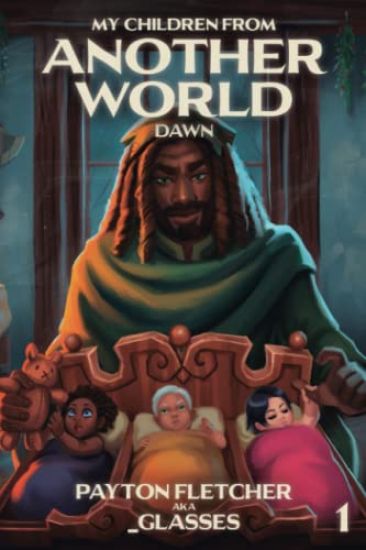
Dawn, like most teenagers, had many a plan for her life. The heartless murder of her family meant sudden changes. No longer the daughter of the ambassador, roaming the skies and distant colonies, she must settle herself into a far more simplistic life as she moves in with her uncle and his family. Adding to her apprehension, her fur coat is both unique and... boring. Black and plain, plain and black; not a spot or stripe to be seen. All her sisters had wonderful coats with spots or rosettes, a fact they used to take some pride in pointing out to her. But boring fur coats are only the beginning of her concerns: what will people say when they find out she has wings?

Title: Dawn.Publisher: British Library, Historical Print EditionsThe British Library is the national library of the United Kingdom. It is one of the world's largest research libraries holding over 150 million items in all known languages and formats: books, journals, newspapers, sound recordings, patents, maps, stamps, prints and much more. Its collections include around 14 million books, along with substantial additional collections of manuscripts and historical items dating back as far as 300 BC.The GENERAL HISTORICAL collection includes books from the British Library digitised by Microsoft. This varied collection includes material that gives readers a 19th century view of the world. Topics include health, education, economics, agriculture, environment, technology, culture, politics, labour and industry, mining, penal policy, and social order. ++++The below data was compiled from various identification fields in the bibliographic record of this title. This data is provided as an additional tool in helping to insure edition identification: ++++ British Library Haggard, H. Rider; 1884. 3 vol.; 8 . 12636.n.5.


Title: Dawn.Publisher: British Library, Historical Print EditionsThe British Library is the national library of the United Kingdom. It is one of the world's largest research libraries holding over 150 million items in all known languages and formats: books, journals, newspapers, sound recordings, patents, maps, stamps, prints and much more. Its collections include around 14 million books, along with substantial additional collections of manuscripts and historical items dating back as far as 300 BC.The GENERAL HISTORICAL collection includes books from the British Library digitised by Microsoft. This varied collection includes material that gives readers a 19th century view of the world. Topics include health, education, economics, agriculture, environment, technology, culture, politics, labour and industry, mining, penal policy, and social order. ++++The below data was compiled from various identification fields in the bibliographic record of this title. This data is provided as an additional tool in helping to insure edition identification: ++++ British Library Haggard, H. Rider; 1884. 3 vol.; 8 . 12636.n.5.


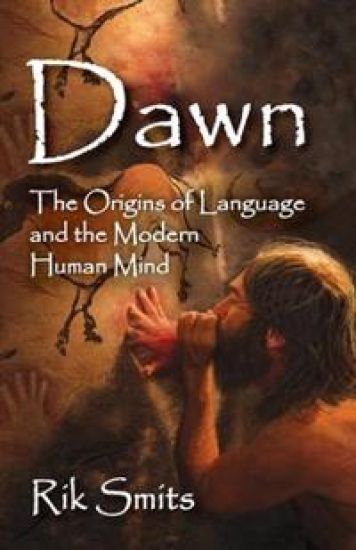
In this work, originally published in Dutch, Rik Smits theorizes that language could not have developed originally as a system of communication. It is, instead, the result of combining separate abilities, each of which developed independently to aid the survival of early humans. Lacking strength and speed, man relies on wisdom for survival. Smits theorizes that human skills in calculation and estimation continued to develop until they were sufficient to accommodate a system as complex as grammar.Only after our linguistic ability emerged could humans think logically and share our reasoning with others, at which point almost everything we now call culture began to flourish. Smits concludes that language cannot have long predated the invention of agriculture in the Middle East, some 14,000 years ago. The huge advance in civilization represented by language made abstract powers of reasoning indispensable for the first time, along with highly developed concepts of identity, past, present, and future, all of which rely upon language.This explanation of the origins of language throws new light on cave paintings by Cro-Magnon man, whose masterpieces date from about 40,000 to 15,000 years ago. Anatomically Cro-Magnons were modern humans, but they had no language in the modern sense. Their absence of language gave them no true sense of individual identity.This translation was made possible by a grant from the Dutch Foundation for Literature.
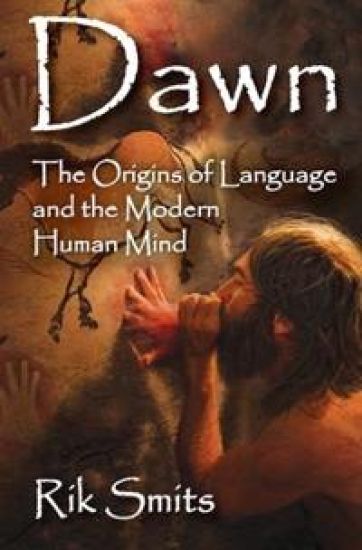
In this work, originally published in Dutch, Rik Smits theorizes that language could not have developed originally as a system of communication. It is, instead, the result of combining separate abilities, each of which developed independently to aid the survival of early humans. Lacking strength and speed, man relies on wisdom for survival. Smits theorizes that human skills in calculation and estimation continued to develop until they were sufficient to accommodate a system as complex as grammar.Only after our linguistic ability emerged could humans think logically and share our reasoning with others, at which point almost everything we now call culture began to flourish. Smits concludes that language cannot have long predated the invention of agriculture in the Middle East, some 14,000 years ago. The huge advance in civilization represented by language made abstract powers of reasoning indispensable for the first time, along with highly developed concepts of identity, past, present, and future, all of which rely upon language.This explanation of the origins of language throws new light on cave paintings by Cro-Magnon man, whose masterpieces date from about 40,000 to 15,000 years ago. Anatomically Cro-Magnons were modern humans, but they had no language in the modern sense. Their absence of language gave them no true sense of individual identity.This translation was made possible by a grant from the Dutch Foundation for Literature.



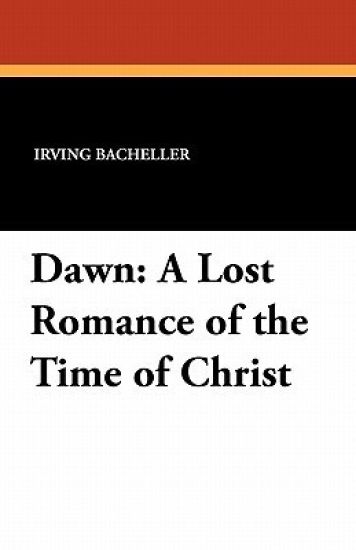
Before turning to novel-writing himself, Irving Bacheller (1859-1950) syndicated the writings of Joseph Conrad, Arthur Conan Doyle and Rudyard Kipling for American readers and introduced Stephen Crane's Red Badge of Courage to the public. Compared to Ben Hur at the time of its release, Dawn imagines the story of the woman to whom Jesus said, "Go and sin no more."