Kirjojen hintavertailu. Mukana 11 342 296 kirjaa ja 12 kauppaa.

Kirjahaku

Etsi kirjoja tekijän nimen, kirjan nimen tai ISBN:n perusteella.

1000 tulosta hakusanalla Deborah J. Cohan

Americanism in the Twenty-First Century

Americanism in the Twenty-First Century

Deborah J. Schildkraut

Cambridge University Press
2010
pokkari
This book explores public opinion about being and becoming American, and its implications for contemporary immigration debates. It focuses on the causes and consequences of two aspects of American identity: how people define being American and whether people think of themselves primarily as American rather than as members of a panethnic or national origin group. Importantly, the book evaluates the claim – made by scholars and pundits alike – that all Americans should prioritize their American identity instead of an ethnic or national origin identity. It finds that national identity within American democracy can be a blessing or a curse. It can enhance participation, trust, and obligation. But it can be a curse when perceptions of deviation lead to threat and resentment. It can also be a curse for minorities who are attached to their American identity but also perceive discrimination.
Americanism in the Twenty-First Century

Americanism in the Twenty-First Century

Deborah J. Schildkraut

Cambridge University Press
2010
sidottu
This book explores public opinion about being and becoming American, and its implications for contemporary immigration debates. It focuses on the causes and consequences of two aspects of American identity: how people define being American and whether people think of themselves primarily as American rather than as members of a panethnic or national origin group. Importantly, the book evaluates the claim – made by scholars and pundits alike – that all Americans should prioritize their American identity instead of an ethnic or national origin identity. It finds that national identity within American democracy can be a blessing or a curse. It can enhance participation, trust, and obligation. But it can be a curse when perceptions of deviation lead to threat and resentment. It can also be a curse for minorities who are attached to their American identity but also perceive discrimination.
Bakhtin and the Visual Arts

Bakhtin and the Visual Arts

Deborah J. Haynes

Cambridge University Press
1995
sidottu
Bakhtin and the Visual Arts is the first book to assess the relevance of Mikhail Bakhtin’s ideas as they relate to painting and sculpture. First published in the 1960s, Bakhtin’s writings introduced the concepts of carnival and dialogue or dialogism, which have had significant impact in such diverse fields as literature and literary theory, philosophy, theology, biology, and psychology. In his four early aesthetic essays, written between 1919 and 1926, and before he began to focus on linguistic and literary categories, Bakhtin worked on a larger philosophy of creativity, which was never completed. Deborah Haynes’s in-depth study of his aesthetics, especially his theory of creativity, analyses its applicability to contemporary art theory and criticism. The author argues that Bakhtin, with such categories as answerability, outsideness and unfinalisability, offers a conceptual basis for interpreting the moral dimensions of creative activity.
Contesting Citizenship in Latin America

Contesting Citizenship in Latin America

Deborah J. Yashar

Cambridge University Press
2005
pokkari
Indigenous people in Latin America have mobilized in unprecedented ways - demanding recognition, equal protection, and subnational autonomy. These are remarkable developments in a region where ethnic cleavages were once universally described as weak. Recently, however, indigenous activists and elected officials have increasingly shaped national political deliberations. Deborah Yashar explains the contemporary and uneven emergence of Latin American indigenous movements - addressing both why indigenous identities have become politically salient in the contemporary period and why they have translated into significant political organizations in some places and not others. She argues that ethnic politics can best be explained through a comparative historical approach that analyzes three factors: changing citizenship regimes, social networks, and political associational space. Her argument provides insight into the fragility and unevenness of Latin America's third wave democracies and has broader implications for the ways in which we theorize the relationship between citizenship, states, identity, and social action.
The Vocation of the Artist

The Vocation of the Artist

Deborah J. Haynes

Cambridge University Press
1997
pokkari
The Vocation of the Artist examines the historical role of the artist and presents a particular perspective, grounded in the author's experience as a practising artist and scholar, on the contemporary function of the artist as prophetic critic and visionary. Using specific interpretations of the words 'vocation', 'prophetic', and 'visionary', Deborah Haynes draws attention to the need for artists to assess critically the relationship of the past and present to the future. Bringing together a wide range of historical and theoretical sources in cultural history, art history and theory, and religion, this book is addressed to those interested in the complex interdisciplinary dialogue of the visual arts, religion, and ethics.
Contesting Citizenship in Latin America

Contesting Citizenship in Latin America

Deborah J. Yashar

Cambridge University Press
2005
sidottu
Indigenous people in Latin America have mobilized in unprecedented ways - demanding recognition, equal protection, and subnational autonomy. These are remarkable developments in a region where ethnic cleavages were once universally described as weak. Recently, however, indigenous activists and elected officials have increasingly shaped national political deliberations. Deborah Yashar explains the contemporary and uneven emergence of Latin American indigenous movements - addressing both why indigenous identities have become politically salient in the contemporary period and why they have translated into significant political organizations in some places and not others. She argues that ethnic politics can best be explained through a comparative historical approach that analyzes three factors: changing citizenship regimes, social networks, and political associational space. Her argument provides insight into the fragility and unevenness of Latin America's third wave democracies and has broader implications for the ways in which we theorize the relationship between citizenship, states, identity, and social action.
Descartes and the Passionate Mind

Descartes and the Passionate Mind

Deborah J. Brown

Cambridge University Press
2006
sidottu
Descartes is often accused of having fragmented the human being into two independent substances, mind and body, with no clear strategy for explaining the apparent unity of human experience. Deborah Brown argues that, contrary to this view, Descartes did in fact have a conception of a single, integrated human being, and that in his view this conception is crucial to the success of human beings as rational and moral agents and as practitioners of science. The passions are pivotal in this, and in a rich and wide-ranging discussion she examines Descartes' place in the tradition of thought about the passions, the metaphysics of actions and passions, sensory representation, and Descartes' account of self-mastery and virtue. Her study is an important and original reading not only of Descartes' account of mind-body unity but also of his theory of mind.
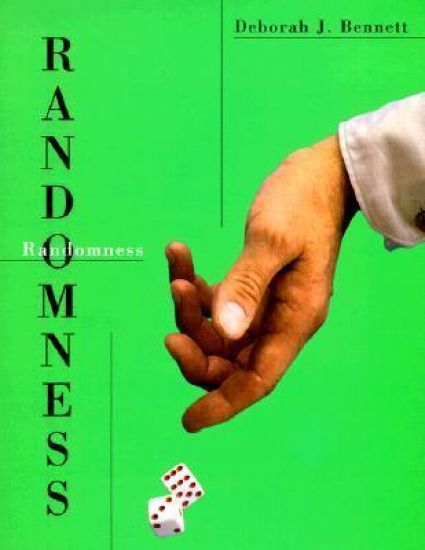
Randomness

Randomness

Deborah J. Bennett

Harvard University Press
1999
nidottu
From the ancients’ first readings of the innards of birds to your neighbor’s last bout with the state lottery, humankind has put itself into the hands of chance. Today life itself may be at stake when probability comes into play—in the chance of a false negative in a medical test, in the reliability of DNA findings as legal evidence, or in the likelihood of passing on a deadly congenital disease—yet as few people as ever understand the odds. This book is aimed at the trouble with trying to learn about probability. A story of the misconceptions and difficulties civilization overcame in progressing toward probabilistic thinking, Randomness is also a skillful account of what makes the science of probability so daunting in our own day.To acquire a (correct) intuition of chance is not easy to begin with, and moving from an intuitive sense to a formal notion of probability presents further problems. Author Deborah Bennett traces the path this process takes in an individual trying to come to grips with concepts of uncertainty and fairness, and also charts the parallel path by which societies have developed ideas about chance. Why, from ancient to modern times, have people resorted to chance in making decisions? Is a decision made by random choice “fair”? What role has gambling played in our understanding of chance? Why do some individuals and societies refuse to accept randomness at all? If understanding randomness is so important to probabilistic thinking, why do the experts disagree about what it really is? And why are our intuitions about chance almost always dead wrong?Anyone who has puzzled over a probability conundrum is struck by the paradoxes and counterintuitive results that occur at a relatively simple level. Why this should be, and how it has been the case through the ages, for bumblers and brilliant mathematicians alike, is the entertaining and enlightening lesson of Randomness.
Press "ONE" for English

Press "ONE" for English

Deborah J. Schildkraut

Princeton University Press
2007
pokkari
Press "ONE" for English examines how Americans form opinions on language policy issues such as declaring English the official language, printing documents in multiple languages, and bilingual education. Deborah Schildkraut shows that people's conceptions of American national identity play an integral role in shaping their views. Using insights from American political thought and intellectual history, she highlights several components of that identity and shows how they are brought to bear on debates about language. Her analysis expands the range of factors typically thought to explain attitudes in such policy areas, emphasizing in particular the role that civic republicanism's call for active and responsible citizenship plays in shaping opinion on language issues. Using focus groups and survey data, Schildkraut develops a model of public conceptions of what it means to be American and demonstrates the complex ways in which people draw on these conceptions when forming and explaining their views. In so doing she illustrates how focus group methodology can help yield vital new insights into opinion formation. With the rise in the use of ballot initiatives to implement language policies, understanding opinion formation in this policy area has become imperative. This book enhances our understanding of this increasingly pressing concern, and points the way toward humane, effective, and broadly popular language policies that address the realities of American demographics in the twenty-first century while staying true to the nation's most revered values.
Handbook of Brand Relationships

Handbook of Brand Relationships

Deborah J. MacInnis; C. Whan Park; Joseph W. Priester

Routledge
2009
sidottu
Brand relationships are critical because they can enhance company profitability by lowering customer acquisition and retention costs. This is the first serious academic book to offer a psychological perspective on the meaning of and basis for brand relationships, as well as their effects. "The Handbook of Brand Relationships" includes chapters by well-known marketing and psychology scholars on topics related to the meaning, significance, and measurement of brand relationships; the critical connections between consumers and the brand; how brand relationships are formed through both thoughtful and non-thoughtful processes; and how they are built, repaired, and leveraged through brand extensions. An integrative framework introduces the book and summarizes the chapters' key ideas. The handbook also identifies several novel metrics for measuring various aspects of brand relationships, and it includes recommendations for further research.
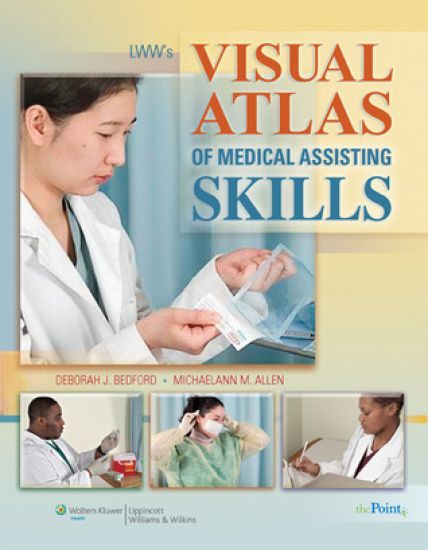
LWW's Visual Atlas of Medical Assisting Skills

LWW's Visual Atlas of Medical Assisting Skills

Deborah J. Bedford; Michaelann M. Allen

Lippincott Williams and Wilkins
2007
pokkari
This unique photographic atlas provides step-by-step instruction on how to perform a wide range of medical assisting skills, with more than 1,200 photos visually depicting the 61 CAAHEP entry-level competencies that students must master to pass the test to become a Certified Medical Assistant. The atlas is an excellent companion to any medical assisting text or study guide, giving you a fresh and dynamic way to review, practice, and master all competencies with ease.
A Dress for Anna

A Dress for Anna

Deborah J Amend

CSS Publishing Company
2009
pokkari
"I laughed and cried as I read A Dress for Anna. As an adoptive mom myself, sometimes I shook my head in frustration as I read and recalled the complicated, costly process of 'becoming family.' Through the entire book I marveled as I watched the miraculous, powerful hand of God move circumstances, governments, and people to accomplish His great purposes. You'll love this book It will make you hunger for more God-adventures in your own life." Terry Meeuwsen Co-host, The 700 Club Director, Orphan's Promise Every little girl loves a pretty new dress, and my daughter Anna was no exception. Trembling with emotion, she ripped open the department store bag that contained her new dress, tights, shoes, and undergarments. Then she pulled out the lavender floral print dress, caressing the silk lining and rubbing her face in the soft fabric. "Platya," she whispered. Dress. The quiet was only momentary, though as the reality of the situation sank in. "Platya," she then cheered. "Halya doma." Halya is going home. Although it was the first time in her life that she had ever owned any piece of clothing, it was not the dress that brought such emotion, but what it represented. The new dress meant that it was finally the day that Halya (whom we would name Anna) would leave the orphanage and travel home to live with her new family. It was a day she had awaited for over three years, and a day that I had worked for nearly as long. A Dress for Anna: The Redemption of the Life of a Ukrainian Orphan tells the fascinating story of how God led Deborah and Rob Amend to adopt a handicapped preschooler from an orphanage in Ukraine, and intricately knit her into their family. Beginning with the circumstances that opened their hearts to adoption, continuing through the entire process, and culminating with the difficult adjustments for Anna as she experiences life in a new culture, this book honestly shares the struggles, grief, and joy the Amend family faced as they followed God down the rocky path of international adoption. This powerful narrative not only provides readers with a clear understanding of the often challenging aspects of adoption, particularly for special needs children, it also offers inspiration by illustrating just how much an average, ordinary family can do when listening to God and following His call. Deborah J. Amend is the mother of five children, three of who were adopted internationally. A cum laude graduate of the University of Cincinnati's College-Conservatory of Music, she is a former inner-city music teacher who retired to stay home and raise her children. She is a freelance writer and speaker, focusing on adoption, child advocacy, and a healthy biblical respect for people with disabilities.
New Policies for New Residents

New Policies for New Residents

Deborah J. Milly

Cornell University Press
2014
sidottu
In recent decades, many countries have experienced both a rapid increase of in-migration of foreign nationals and a large-scale devolution of governance to the local level. The result has been new government policies to promote the social inclusion of recently arrived residents. In New Policies for New Residents, Deborah J. Milly focuses on the intersection of these trends in Japan. Despite the country's history of restrictive immigration policies, some Japanese favor a more accepting approach to immigrants. Policies supportive of foreign residents could help attract immigrants as the country adjusts to labor market conditions and a looming demographic crisis. As well, local citizen engagement is producing more inclusive approaches to community. Milly compares the policy discussions and outcomes in Japan with those in South Korea and in two similarly challenged Mediterranean nations, Italy and Spain. All four are recent countries of immigration, and all undertook major policy innovations for immigrants by the 2000s. In Japan and Spain, local NGO–local government collaboration has influenced national policy through the advocacy of local governments. South Korea and Italy included NGO advocates as policy actors and partners at the national level far earlier as they responded to new immigration, producing policy changes that fueled local networks of governance and advocacy. In all these cases, Milly finds, nongovernmental advocacy groups have the power to shape local governance and affect national policy, though in different ways.
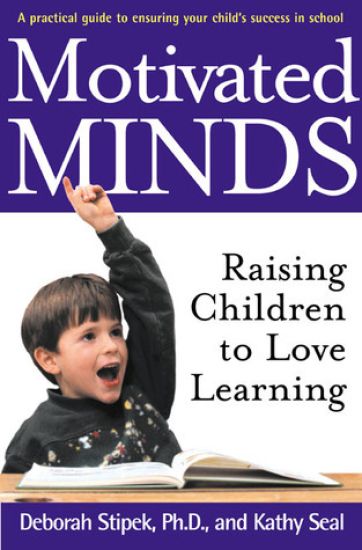
Motivated Minds: Raising Children to Love Learning

Motivated Minds: Raising Children to Love Learning

Deborah J. Stipek

St. Martin's Press
2001
nidottu
A practical guide to ensuring your child's success in school. What makes children succeed in school? For the past twenty years, the focus has been on building children's self-esteem to help them achieve more in the classoom. But positive reinforcement hasn't necessarily resulted in measureable academic improvement. Through extensive research, combined with ongoing classroom implementation of their ideas, Deborah Stipek, Dean of the School of Education at Stanford, and Kathy Seal have created a program that will encourage motivation and a love of learning in children from toddlerhood through elementary school. Stipek and Seal maintain that parents and teachers can build a solid foundation for learning by helping children to develop the key elements of success: competency, autonomy, curiosity, and critical relationships. The authors offer both practical advice on understanding different learning styles and down-to-earth tips about how to manage difficult issues -- competition, grades, praise, bribes, and rewards -- that inevitably arise for parents and teachers. Most important, Stipek and Seal help parents create an enriching environment for their children at home that will mesh with the school experience and become a positive, effective climate for learning.