Kirjojen hintavertailu. Mukana 11 244 527 kirjaa ja 12 kauppaa.

Kirjahaku

Etsi kirjoja tekijän nimen, kirjan nimen tai ISBN:n perusteella.

1000 tulosta hakusanalla Deepak

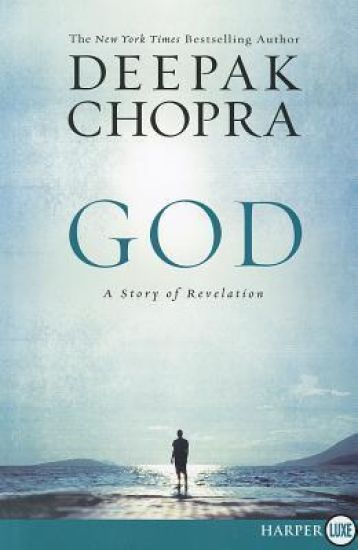
God

God

Deepak Chopra

HarperOne
2012
sidottu
Our experience of God evolves through crisis, both inner and outer. Throughout history every conception of God expanded human awareness, and helped to answer the burning questions at the heart of our daily struggle. Beloved author and teacher Deepak Chopra takes us on an enlightening journey through history as we come to understand God through the lives of our most celebrated saints and sages. From Socrates to Joan of Arc, Rumi to Baal Shem Tov, Thomas the Apostle to Einstein, God emerges in times of conflict and sheds divine light. While God's wisdom was often ignored and very often betrayed, we witness first-hand how. His presence and influence evolved over time and in so doing experience the great inrush of spirit that arrives and turns confusion and conflict into clarity and inspiration. In the end, "God: A Story of Revelation" is about on our very human journey to know and understand the divine.
The Seven Spiritual Laws of Superheroes
"DeepakChopra has developed his own unique form of complementary, mind-body medicine."--U.S. News & World ReportTheworld needs heroes, and, as spiritual authority Deepak Chopra demonstrates inthis gripping and deeply perceptive meditation on our potential to excel, everyone of us possesses the power to help save the planet--and the strength to claimour best possible lives. For readers who draw inspiration from comic books andmovies like Ironman, The Uncanny X-Men, and Superman, forthe Peter Parkers who wonder how to unlock their inner Spider-man, Choprailluminates the path to becoming a spiritual superhero, teaching us how towield the great power of the human heart to work real changes in ourselves andin the world around us.
God

God

Deepak Chopra

HARPERCOLLINS PUBLISHERS INC
2012
nidottu
Deepak Chopra, whose extraordinary Enlightenment series includes the phenomenal New York Times bestsellers Buddha and Jesus, delivers the most powerful installment yet: God. In this beautiful and thought-provoking teaching novel--a Story of Revelation--one of the Western World's acknowledged master teachers of Eastern philosophy and preeminent influencers in the realm of spirituality and religion reveals the evolving nature of God. Here is truth and enlightenment for the next generation of spiritual seekers; a book Deepak Chopra's millions of fans worldwide have been waiting for.
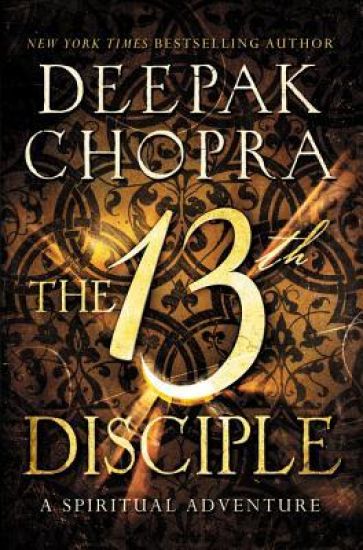
The 13th Disciple

The 13th Disciple

Deepak Chopra

HarperOne
2016
nidottu
The New York Times bestselling author of Buddha and Jesus weaves together historical narrative, mystery, exciting adventure, and intrigue in this masterfully told novel that reveals surprising discoveries about the unknown last disciple of Christ, and a new understanding of who Jesus was in his final days. When a solid gold reliquary missing from a church in Belgium suddenly resurfaces in America, a young newspaperman begins to investigate the story. At first, it seems like just another case of a treasure stolen during World War II that has resurfaced. But it soon becomes apparent that much more is at stake. Hidden within the medieval reliquary is a gold box that holds a sacred relic-a single finger bone-from an anonymous saint. Why would the remains of someone unknown to the Church be considered holy? The search for answers leads to a shocking discovery-a dangerous secret known only to a small band of people. If one touches the reliquary, a sacred vision is received-a vision involving a young girl who had a chance encounter with Jesus just before he was crucified. The few people who have been blessed with these miraculous messages have banded together into a mysterious school, a closed society that preserves this venerated wisdom. But their knowledge of the young girl and Jesus is at once so fascinating yet so highly controversial that it cannot be shared with the world. This young girl, curious about the charismatic man named Jesus, embarks on a quest to find out who he really was. What she finds-the knowledge the society protects-is at times far different from the accepted gospels. Could this unknown girl be the 13th Disciple-the last and truest apostle of Christ?
God: A Story of Revelation

God: A Story of Revelation

Deepak Chopra

HarperAudio
2013
cd
Deepak Chopra, whose extraordinary Enlightenment series includes the phenomenal New York Times bestsellers Buddha and Jesus, delivers the most powerful installment yet: God. In this beautiful and thought-provoking teaching novel--a Story of Revelation--one of the Western World's acknowledged master teachers of Eastern philosophy and preeminent influencers in the realm of spirituality and religion reveals the evolving nature of God. Here is truth and enlightenment for the next generation of spiritual seekers; a book Deepak Chopra's millions of fans worldwide have been waiting for.
Handbook of Analytical Techniques for Forensic Samples

Handbook of Analytical Techniques for Forensic Samples

Deepak Rawtani; Gaurav Pandey; Maithri Tharmavaram; Chaudhery Mustansar Hussain

Elsevier Science Publishing Co Inc
2020
nidottu
Handbook of Analytical Techniques for Forensic Samples: Current and Emerging Developments discusses in detail the current trends and latest analytical techniques and methods commonly employed in forensic analysis in order to ensure the proper facilitation of justice. This book is useful for readers who wish to stay updated on the latest trends in the forensic analysis of samples encountered at crime scenes. Technological advancements, such as biosensors, nanotechnology, and taggant technology have upped the level of analysis in forensic science. These emergent technologies, incorporated with existing analytical techniques, are leading to more precise, accurate, and specific examination of forensic samples. Lab-on-a-chip technology has also eased several kinds of on-site analyses done by investigating teams at different types of crime scenes. This book covers the evolution of forensic sample analysis as well as these emerging trends and new technologies.
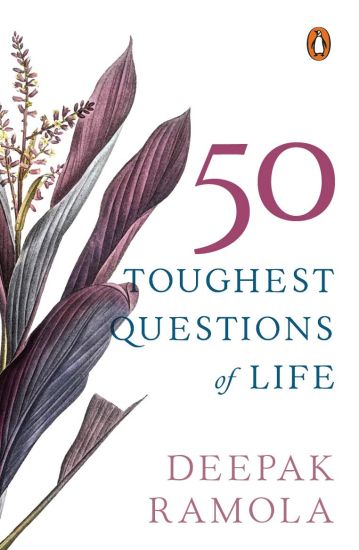
50 Toughest Questions of Life

50 Toughest Questions of Life

Deepak Ramola

Penguin Random House India
2022
pokkari
50 Toughest Questions of Life invites people to have a conversation about themselves with themselves. Deepak Ramola's quest began after he was inspired by the life lesson of a young girl who said, 'Life is not about giving easy answers, but answering tough questions.' Over the years, Ramola has amassed life lessons from inspirational sources across the world: from the women of the Maasai tribe to young girls in Afghanistan and sex workers in Kamathipura; from the lessons of earthquake survivors in Nepal to Syrian refugees in Europe, among many more.
Strategy Huddle

Strategy Huddle

Deepak Dhayanithy

Penguin Random House India
2023
nidottu
Though Sun Tzu's The Art of War was written 2,500 years ago, strategy is seen as a young discipline in business management. Over the last half to three-fourths of a century, strategy has carved its own niche in the larger business management realm. Strategy Huddle: Management Lessons from Sports draws out significant strategic management knowledge from twenty-seven different phenomena in diverse sports including soccer, basketball, marathon, boxing, chess and cricket. The practical applications of these strategies are shown through business case scenarios in this book. For new managers seeking to sharpen their strategic management concepts such as blue ocean, behavioural and network strategies as well as for strategic thinkers interested in understanding the deeper connections between strategy and sports, this book brings to the readers an enriching learning and strategic experience.
Cerebral Cortex

Cerebral Cortex

Deepak Pandya; Benjamin Seltzer; Michael Petrides; Patsy Benny Cipolloni

Oxford University Press Inc
2015
sidottu
Cerebral Cortex is a comprehensive and detailed work covering the dual nature of the organization of the architecture and connections of the cerebral cortex. After establishing the evolutionary approach of the cerebral cortex's origin, the authors have systematically analyzed, in detail, the common principle underlying the structure and connections of sensory and motor systems. This important book describes the frontal, limbic, and multimodal association areas, as well as the long fiber pathways in a similar manner. The anatomical investigations have been complimented with current clinical and experimental observations, as well as neuroimaging studies. This unique approach, exploring the underlying principle of the architecture and connections of the cerebral cortex, has previously never been undertaken. In the concluding chapter of the book, the authors have provided the usefulness of such an approach for future investigations. Cerebral Cortex provides extensive illustrations, along with historical references to each sensory, motor and association systems.
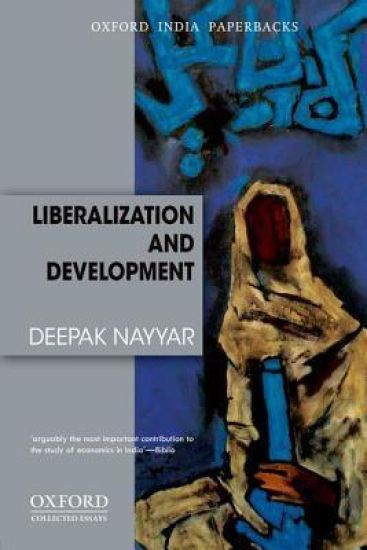
Liberalization and Development

Liberalization and Development

Deepak Nayyar

OUP India
2012
nidottu
This collection of fifteen essays by eminent economist Deepak Nayyar provides an unusual blend of theory and policy, of applied research and empirical work, and of the world economy and India. It explores a wide range of themes-from macroeconomics and industrialization, to development in the changed context shaped by liberalization. This paperback edition includes a new Preface that focuses on developments since 2008 when the book was first published. The essays in the volume are grouped in four thematic clusters. The first part is on economic theory contextualized in developing countries. It relates macroeconomic theory and policy to the institutional setting and explores alternative perspectives for developing countries. The second part is on development, in a world that has been transformed by markets and globalization. It analyses the implications of this transformation in retrospect and prospect. The third part is on industrialization. It begins with the international context to consider the debate on industrialization in India which is relevant for other late-industrializers. The fourth part is on liberalization with a focus on India. It evaluates the Indian experience with stabilization, adjustment, and reform, which is then situated in its wider political and historical context.
The Political Economy of Poverty, Equity and Growth: A Comparative Study
This wide-ranging and innovative book synthesises the findings of a major international study of the political economy of poverty, equity, and growth. It is based primarily on analytical economic histories of 21 developing countries from 1950 to 1985, but also takes account of the wider literature on the subject. The authors take an ambitious interdisciplinary approach to identify patterns in the interplay of initial conditions, instiuttions, interests, and ideas which can help to explain the different growth and poverty alleviation outcomes in the Third World. Three different types of poverty are distinguished, based on their causes, and a more nebulous idea of equityin contrast to egalitarianismis shown to have influenced policy. Since growth is found to be the major means of alleviating mass structural poverty, much of the book is concerned with discovering explanations for policies which are found to be the most important influences on the proximate causes of growth. Lal and Mynt also consider the available evidence on the role of direct transferspublic and privatein alleviating destitution and conjunctural poverty. The Political Economy of Poverty, Equity, and Growth develops a novel framework for the comparative analysis of different growth outcomes. This framework distinguishes between the different relative factor endowments of land, labour, and capital, and between the different organizational structures of pesent versus plantation and mining economies. It also differentiates between the polities of 'autonomous' and 'factional' states in the countries studied, breaking the analysis down into further typological subdivisions and providing important new insights into the differing behaviour of economies that are rich in natural resources and those with abundant labour. These insights constitute a richer explanation for the divergent developmental outcomes in East Asia compared with Latin America and Africa. The evidence collated is used to argue for the continuing relevance of the classical liberal viewpoint on public policies for development, and to show why, even so, nationalist ideologies are likely to be adopted and lead to cycles of interventionism and liberalism. The evidence is also used to provide an explanation for the surprising current worldwide Age of Reform.
Catch Up

Catch Up

Deepak Nayyar

Oxford University Press
2016
nidottu
Catch Up analyzes the evolution of developing countries in the world economy from a long-term historical perspective, from the onset of the second millennium but with a focus on the second half of the twentieth century and the first decade of the twenty-first century. It is perhaps among the first to address this theme on such a wide canvas that spans both time and space. In doing so, it highlights the dominance of what are now developing countries and it traces their decline and fall from 1820 to 1950. The six decades since 1950 have witnessed an increase in the share of developing countries not only in world population and world income, but also in international trade, international investment, industrial production, and manufactured exports which gathered momentum after 1980. This book explores the factors underlying this fall and rise, to discuss the on-going catch up in the world economy driven by industrialization and economic growth. Their impressive performance, disaggregated analysis shows, is characterized by uneven development. There is an exclusion of countries and people from the process. The catch up is concentrated in a few countries. Growth has often not been transformed into meaningful development that improves the wellbeing of people. Yet, the beginnings of a shift in the balance of power in the world economy are discernible. But developing countries can sustain this rise only if they can transform themselves into inclusive societies where economic growth, human development, and social progress move in tandem. Their past could then be a pointer to their future.
Resurgent Asia

Resurgent Asia

Deepak Nayyar

Oxford University Press
2019
sidottu
Gunnar Myrdal published his magnum opus Asian Drama, in 1968, to conclude that Asia's development prospects were gloomy. Since then, contrary to Myrdal's expectations Asia has been transformed beyond recognition, the development of nations and living standards of people revolutionized. These transformations have been uneven across countries and unequal among people. Yet, Asia's economic progress in this short timespan has been remarkable and almost unprecedented in history. Resurgent Asia provides an analytical narrative of Asia's incredible economic development, situated in the wider context of historical, political, and social factors. It also provides an economic analysis of underlying factors that assisted Asia's growth and the critical issues in the process of development. Resurgent Asia studies not only the sub-regions East, Southeast, South, and West Asia, but also the major countries - China, India, South Korea, Indonesia, Turkey, Thailand, Philippines, Malaysia, Singapore, Pakistan, Bangladesh, Vietnam, and Sri Lanka- which account for more than four-fifths of Asia's population and income.
Resurgent Asia

Resurgent Asia

Deepak Nayyar

Oxford University Press
2022
nidottu
Gunnar Myrdal published his magnum opus Asian Drama, in 1968, to conclude that Asia's development prospects were gloomy. Since then, contrary to Myrdal's expectations, Asia has been transformed beyond recognition, the development of nations and living standards of people revolutionized. These transformations have been uneven across countries and unequal among people. Yet, Asia's economic progress in this short timespan has been remarkable and almost unprecedented in history. Resurgent Asia provides an analytical narrative of Asia's incredible economic development, situated in the wider context of historical, political, and social factors. It also provides an economic analysis of underlying factors that assisted Asia's growth and the critical issues in the process of development. Resurgent Asia studies not only the sub-regions East, Southeast, South, and West Asia, but also the major countries - China, India, South Korea, Indonesia, Turkey, Thailand, Philippines, Malaysia, Singapore, Pakistan, Bangladesh, Vietnam, and Sri Lanka - which account for more than four-fifths of Asia's population and income.
The Hindu Equilibrium

The Hindu Equilibrium

Deepak Lal

Oxford University Press
2004
sidottu
India is an emerging giant. This book explains its long economic stagnation and recent rise by examining its social, political and historical evolution in long term perspective. It explains how its distinct social system based on caste arose and why it still is of importance in its political and social arrangements, despite India's recent move from the plan to market.
War or Peace

War or Peace

Deepak Lal

Oxford University Press
2018
sidottu
The Pax Americana---the global order established after the collapse of the Soviet Empire---is increasingly being challenged especially by former imperial behemoths China and Russia. There is a growing chorus questioning the so-called 'Washington Consensus' in favour of a 'Beijing Consensus' in economic policy. As the US ceases to be the sole superpower willing and able to maintain a global PAX, today there is an increasing global 'disorder'. This book is a study of the causes and consequences for this disorder, examining alternative claims for a desirable future economic policy. The book argues that the origin of this increasing disorder lie, in part, in the great economic recession of 2008 in the US, which has tarnished the free market based capitalism of the West. It goes on to debate that there are four major imperial systems which are and will be involved in the new 'Great Game' in Eurasia---the US and its European outpost---the EU, China, Russia and India and, potentially, Japan as it seeks to alter its post-war pacifist constitution to act like Britain did for many centuries, as the offshore balancer in the struggle for the mastery of Asia, either as a partner or independent of the US. Their strategic decisions will determine whether we will see a repeat of the past, with another completely unnecessary world war like the First World War, or if they will succeed in eschewing this atavism.
Catch Up

Catch Up

Deepak Nayyar

Oxford University Press
2013
sidottu
Catch Up analyzes the evolution of developing countries in the world economy from a long-term historical perspective, from the onset of the second millennium but with a focus on the second half of the twentieth century and the first decade of the twenty-first century. It is perhaps among the first to address this theme on such a wide canvas that spans both time and space. In doing so, it highlights the dominance of what are now developing countries and it traces their decline and fall from 1820 to 1950. The six decades since 1950 have witnessed an increase in the share of developing countries not only in world population and world income, but also in international trade, international investment, industrial production, and manufactured exports which gathered momentum after 1980. This book explores the factors underlying this fall and rise, to discuss the on-going catch up in the world economy driven by industrialization and economic growth. Their impressive performance, disaggregated analysis shows, is characterized by uneven development. There is an exclusion of countries and people from the process. The catch up is concentrated in a few countries. Growth has often not been transformed into meaningful development that improves the wellbeing of people. Yet, the beginnings of a shift in the balance of power in the world economy are discernible. But developing countries can sustain this rise only if they can transform themselves into inclusive societies where economic growth, human development, and social progress move in tandem. Their past could then be a pointer to their future.
Classical Indian Philosophy

Classical Indian Philosophy

Deepak Sarma

Columbia University Press
2011
sidottu
Deepak Sarma completes the first outline in more than fifty years of India's key philosophical traditions, inventively sourcing seminal texts and clarifying language, positions, and issues. Organized by tradition, the volume covers six schools of orthodox Hindu philosophy: Mimamsa (the study of the earlier Vedas, later incorporated into Vedanta), Vedanta (the study of the later Vedas, including the Bhagavad Gita and the Upanishads), Sankhya (a form of self-nature dualism), Yoga (a practical outgrowth of Sankhya), and Nyaya and Vaisesika (two forms of realism). It also discusses Jain philosophy and the Mahayana Buddhist schools of Madhyamaka and Yogacara. Sarma maps theories of knowledge, perception, ontology, religion, and salvation, and he details central concepts, such as the pramanas (means of knowledge), pratyaksa (perception), drayvas (types of being), moksa (liberation), and nirvana. Selections and accompanying materials inspire a reassessment of long-held presuppositions and modes of thought, and accessible translations prove the modern relevance of these enduring works.
Classical Indian Philosophy

Classical Indian Philosophy

Deepak Sarma

Columbia University Press
2011
pokkari
Deepak Sarma completes the first outline in more than fifty years of India's key philosophical traditions, inventively sourcing seminal texts and clarifying language, positions, and issues. Organized by tradition, the volume covers six schools of orthodox Hindu philosophy: Mimamsa (the study of the earlier Vedas, later incorporated into Vedanta), Vedanta (the study of the later Vedas, including the Bhagavad Gita and the Upanishads), Sankhya (a form of self-nature dualism), Yoga (a practical outgrowth of Sankhya), and Nyaya and Vaisesika (two forms of realism). It also discusses Jain philosophy and the Mahayana Buddhist schools of Madhyamaka and Yogacara. Sarma maps theories of knowledge, perception, ontology, religion, and salvation, and he details central concepts, such as the pramanas (means of knowledge), pratyaksa (perception), drayvas (types of being), moksa (liberation), and nirvana. Selections and accompanying materials inspire a reassessment of long-held presuppositions and modes of thought, and accessible translations prove the modern relevance of these enduring works.
The Poverty of Development Economics

The Poverty of Development Economics

Deepak Lal

Institute of Economic Affairs
2002
sidottu
This is a classic IEA text, first Published in 1983, but revised and expanded in 1997. Its critique of that type of 'development economics' highly influential in the early 1980s, which the author branded the 'dirigiste dogma', proved extremely controversial in the first few years of the book's life. Professor Lal concluded that the demise of the dogma would be beneficial to the health of 'both economics and the economies of developing countries'. The history of the last twenty years has demonstrated the force of the Lal critique. The dogma in its old form has gone, as Professor Lal shows in a postscript that brings the original text up to date both in terms of statistics and in terms of the history of ideas. Nevertheless, as he warns, dirigiste tendencies have not disappeared, but are emerging in new guises.