Kirjojen hintavertailu. Mukana 11 627 623 kirjaa ja 12 kauppaa.

Kirjahaku

Etsi kirjoja tekijän nimen, kirjan nimen tai ISBN:n perusteella.

1000 tulosta hakusanalla Deirdre Kessler

Deirdre O'Callaghan: Hide That Can
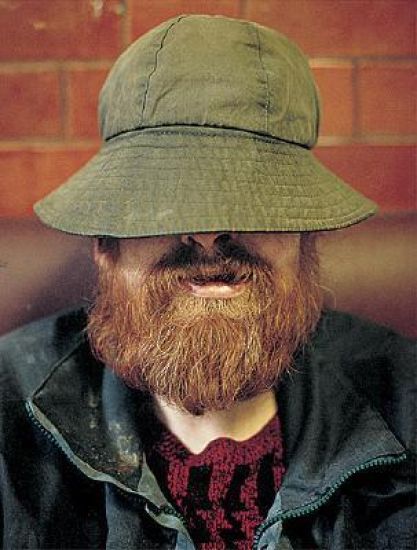
Hide That Can brings together images taken over four years at Arlington House, Camden, a hostel which primarily accommodates male Irish emigrants. Most of them are alcoholic. Often sad, interspersed with lighter touches of humour, the book is a record of lives that function without families, jobs or prospects, yet are still portrayed with a sense of dignity amid the depression.Deirdre O'Callaghan has provided an unsettling but ultimately invigorating record of the inmates at Arlington House, Europe's largest refuge for alcoholics and the displaced. One hundred years ago Lord Rowton took it into his head to build a hostel. Being a peer of the realm the grandiose came easily to him, and in 1905 the massive, even forbidding, red-brick edifice arose in Camden Town in London, filled with 382 beds for impoverished manual labourers. Clean sheets, washing facilities and nourishing food were to be provided for the inmates. In fact the great building, Arlington House, was designed to be, and quickly became, billets for the destitute Irish navvies who crossed the sea to find work in the capital. Today the Irish connection has not gone; almost 70% of the current residents are Irish, and, although they are equally poor, few of them work or labour - most are alcoholics, and largely forgotten by society.A picture of Arlington House in the past can be found in George Orwell's Down and Out in Paris and London. It is not pleasant. Now the photographer Deidre O'Callaghan has brought together four year's work at the refuge, her record of the despair, humour and hope on the faces of the residents, a remarkable gallery of a largely expatriate community at odds with the world outside. But her pictures also record the work of the hostel itself in trying to reintegrate the residents into that world, photographs of clarity and wonder taken during trips to Ireland for the inmates. Some have lived at Arlington House for 30 years; many have not seen their families for as long. Her pictures of these reunions with their kin and their country are remarkable.
Deirdre of the Sorrows

Deirdre of the Sorrows

J M (John Millington) Synge

Anson Street Press
2025
pokkari
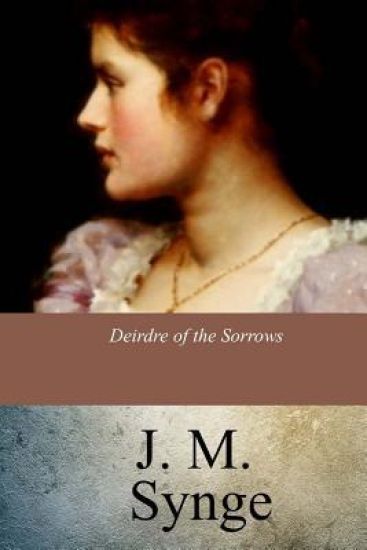
J. M. Synge's "Deirdre of the Sorrows" is a powerful tragic drama rooted in Irish legend and folklore. This early 20th-century play explores themes of fate and destiny within a vibrant Irish setting. Drawing upon ancient stories, Synge crafts a compelling narrative that resonates with timeless human emotions. A cornerstone of Irish literature, "Deirdre of the Sorrows" remains a captivating exploration of love, loss, and the inescapable hand of fate. This meticulously prepared edition ensures the enduring power of Synge's work continues to inspire and move readers. A significant contribution to European drama and literary collections, this play offers a glimpse into the heart of Irish storytelling and the enduring power of tragic drama.This work has been selected by scholars as being culturally important, and is part of the knowledge base of civilization as we know it.This work is in the public domain in the United States of America, and possibly other nations. Within the United States, you may freely copy and distribute this work, as no entity (individual or corporate) has a copyright on the body of the work.Scholars believe, and we concur, that this work is important enough to be preserved, reproduced, and made generally available to the public. We appreciate your support of the preservation process, and thank you for being an important part of keeping this knowledge alive and relevant.
Deirdre Madden

Deirdre Madden

MANCHESTER UNIVERSITY PRESS
2022
sidottu
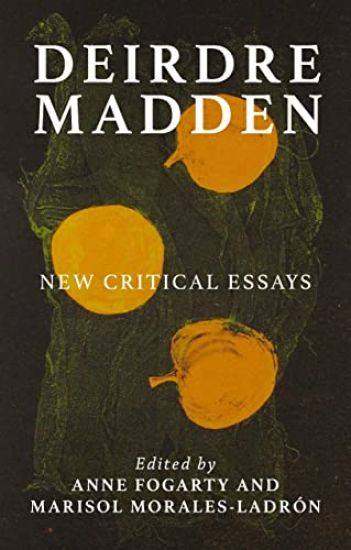
The Irish writer, Deirdre Madden, has written key novels about the Northern Irish Troubles and about contemporary Ireland. In these works, she weighs up the aftermath of violence and the impact of the shift to a more open but materialist society in the country overall. Memory, trauma, and the abiding but elusive links between the past and the present are central concerns of her fiction. This pioneering set of essays by leading experts in Irish Studies explores the many dimensions of her novels from a wide variety of perspectives. Madden’s skill at interweaving novels of ideas with artist novels that draw out the complex inner predicaments of her characters is highlighted. States of dislocation are concentrated on in her texts, but also the quest for a home in the world and a lasting set of values that allows for personal integrity and authenticity. These multifaceted explorations bear out the compelling and enduring aspects of Madden’s highly regarded novels.
Deirdre Madden

Deirdre Madden

MANCHESTER UNIVERSITY PRESS
2024
nidottu
The Irish writer, Deirdre Madden, has written key novels about the Northern Irish Troubles and about contemporary Ireland. In these works, she weighs up the aftermath of violence and the impact of the shift to a more open but materialist society in the country overall. Memory, trauma, and the abiding but elusive links between the past and the present are central concerns of her fiction. This pioneering set of essays by leading experts in Irish Studies explores the many dimensions of her novels from a wide variety of perspectives. Madden’s skill at interweaving novels of ideas with artist novels that draw out the complex inner predicaments of her characters is highlighted. States of dislocation are concentrated on in her texts, but also the quest for a home in the world and a lasting set of values that allows for personal integrity and authenticity. These multifaceted explorations bear out the compelling and enduring aspects of Madden’s highly regarded novels.
Deirdre of the Sorrows

Deirdre of the Sorrows

Cherime I. MacFarlane

Createspace Independent Publishing Platform
2014
nidottu
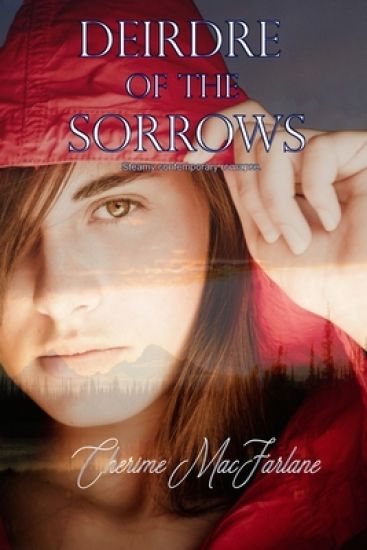
WARNING If you have abuse triggers DO NOT read. Deirdre, deserted by her stepbrother is left with a stepfather who is becoming crazier with each drink, and he drinks a lot. Sylvie, his youngest child is in as much danger as Deirdre. Left with no choice, Deirdre takes matters into her own hands to protect not only Sylvie and herself but her child by the monster.Daniel had to leave after graduation. His alcoholic father couldn't deal with having another grown male in the house. Daniel did the only thing he could do and joined up. Now he is home and finds his father vanished without a trace, Deirdre with a young daughter and a relationship with his half-sister, Sylvie that makes Daniel think going home for Dee was a bad idea.
Deirdre of the sorrows, a play (1910). By: John M. Synge: Edmund John Millington Synge (16 April 1871 - 24 March 1909) was an Irish playwright, poet,
Deirdre of the Sorrows is a three-act play written by Irish playwright John Millington Synge, first performed at the Abbey Theatre by the Irish National Theatre Society in 1910. The play is based on Irish mythology, in particular the myths concerning Deirdre and Conchobar. The work was unfinished at the author's death in 1909, but was completed by William Butler Yeats and Synge's fianc e, Molly Allgood. Plot synopsis edit] Act I: Lavarcham's house on Slieve Fuadh. Conchubor, the aging High King of Ulster, has charged Lavarcham to raise the child Deirdre to be his queen when she comes of age. Lavarcham finds that the now-beautiful Deirdre is a willful young woman, without interest in marrying an old man. Conchubor comes to Slieve Fuadh to bring Deirdre to his palace, Emain Macha, ignoring her pleas to remain in the countryside for another year. After he leaves, Naoise, son of Usna, and his brothers come to the cottage seeking Deirdre, and she tells them of her summons. Deirdre is aware of a prophecy that she will be the doom of the sons of Usna; nonetheless she asks Naoise to take her away from Ulster. He agrees, and Ainnle weds them in an impromptu ceremony. Act II: Alban. Deirdre and the sons of Usna have lived happily on a remote island for seven years. Fergus arrives bearing an offer of peace from Conchubor, and asks Deirdre and Naoise to return with him to Emain Macha. Lavarcham warns Deirdre not to accept, and Owen, a spy in the service of Conchubor, intimidates Deirdre with suggestions that death awaits Naoise in Ulster. Naoise tells Fergus that he plans to live the rest of his life with Deirdre in Alban, but Deirdre convinces him to accept Conchubor's offer, reasoning that it is better to die young, at the peak of their love, than to grow old and live in the shadow of their past happiness. Act III: A tent near Emain. Lavarcham arrives at Conchubor's tent and tries to convince him to give up his pursuit of Deirdre, claiming that she has grown old and lost her beauty. His soldiers arrive and contradict her claims, and he leaves just before Deirdre and Naoise enter. They discuss the possibility of their impending deaths until Conchubor returns. Deirdre nearly convinces him to put aside past grievances and let them live in peace when the sound of a battle between Conchubor's men and Naoise's brothers reaches them. Conchubor and Naoise go to join the fray and Naoise is killed. Fergus and his men arrive, enraged by the king's treachery, and set Emain Macha ablaze. Lavarcham tries to convince Deirdre to flee Ulster, and Conchubor tries to take her to a different castle, but she stays and mourns her dead lover and his brothers. In the end, Deirdre takes Naoise's dagger, stabs herself, and falls into his open grave, leaving Conchubor with nothing.... Edmund John Millington Synge (16 April 1871 - 24 March 1909) was an Irish playwright, poet, prose writer, travel writer and collector of folklore. He was a key figure in the Irish Literary Revival and was one of the co-founders of the Abbey Theatre. He is best known for his play The Playboy of the Western World, which caused riots in Dublin during its opening run at the Abbey Theatre. Although he came from a privileged Anglo-Irish background, Synge's writings are mainly concerned with the world of the Roman Catholic peasants of rural Ireland and with what he saw as the essential paganism of their world view. Synge developed Hodgkin's disease, a metastatic cancer that was then untreatable. He died several weeks short of his 38th birthday as he was trying to complete his last play, Deirdre of the Sorrows.
Deirdre of the Sorrows

Deirdre of the Sorrows

Kenneth Steven

Birlinn Ltd
2017
nidottu
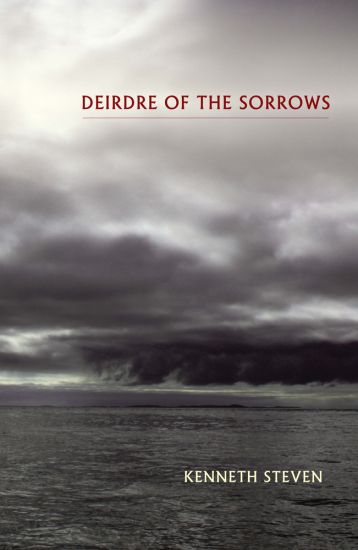
The story of Deirdre of the Sorrows is widely known in Ireland, yet all but forgotten across the water in Scotland. This great tragic love story, which has its roots in the ninth or tenth century, is very much shared by both countries. For Deirdre, according to the legend, fled with her lover Naoise to Argyll. The oldest song in Scotland is believed to be Deirdre's haunting farewell to her adopted land as she returns once more to Ireland. In this new sequence, Deirdre of the Sorrows, Kenneth Steven beautifully reimagines the legend of this love story; he brings back to life Deirdre's journey and attempts to capture its timeless power.