
Kirjahaku
Etsi kirjoja tekijän nimen, kirjan nimen tai ISBN:n perusteella.
1000 tulosta hakusanalla Denys Blell
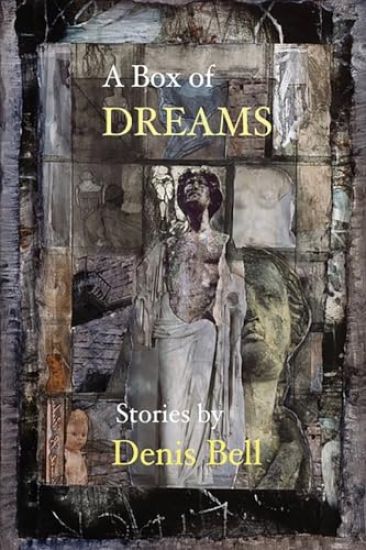
Denis Bell's collection of short fiction A Box of Dreams centers itself in the tradition ofSpoonRiver Anthology (minus the tomb- stones) and Winesburg, Ohio. A Box of Dreams is dark without a trace of cynicism: it invites empathy for even the least attractive of the characters; these protagonists commonly suffer from mangled memories, rightful guilt, and an inability to distinguish between delusion and reality, between past and present. The stories tease and tantalize, truth glimmers between the lines. Louise Freshman Brown's gorgeous images are haunting illuminations. -Miriam N. Kotzin, author, Country Music, Spuyten Duyvil Press "Denis Bell and flash fiction represent a marriage made in Heaven. The two dozen short works in his collection, A Box of Dreams, show him working at the top of his game. In each, the reader's mind is taken for a weird, wonderful walk that's by turns wryly humorous and darkly intriguing. Louise Brown's illustrations lend just the right atmosphere for an absorbing read." -Paul Blaney, Writer in Residence, Rutgers University, author, The Anchoress "Each piece in Denis Bell's A Box of Dreams is a work of magic that moves steadily along, pulling you in, and not letting you go... The stories are by turns haunting, heartbreaking and funny, and they never fail to surprise... Blending the real with the surreal, these stories, more than anything else, get to the heart of our humanity, our vulnerabilities, and they do so in a way that represents the best in flash fiction." -Dennis Pahl, Long Island University, Editor for Confrontation Magazine

Healthcare in America is wildly inconsistent and uncomfortably close to bankruptcy, and the only way it can be rescued is with leaders in all the different areas of healthcare stepping up with the right kind of leadership. The problem is that they don’t realize the importance of their leadership, and even when they do, they don’t know how to lead. Rescuing Healthcare shows them (and the rest of us) why it’s so important that they do step up, and—the critical ingredient—it shows them how to exercise the right kind of leadership—whatever their role or contribution. And for the rest of us as consumers, it shows us what we should be expecting … and demanding. The goal of this book, then, is nothing less than the salvation and transformation of healthcare.

Healthcare in America is wildly inconsistent and uncomfortably close to bankruptcy, and the only way it can be rescued is with leaders in all the different areas of healthcare stepping up with the right kind of leadership. The problem is that they don’t realize the importance of their leadership, and even when they do, they don’t know how to lead. Rescuing Healthcare shows them (and the rest of us) why it’s so important that they do step up, and—the critical ingredient—it shows them how to exercise the right kind of leadership—whatever their role or contribution. And for the rest of us as consumers, it shows us what we should be expecting … and demanding. The goal of this book, then, is nothing less than the salvation and transformation of healthcare.

Rossija v shube. Russkij mekh. Istorija, natsionalnaja identichnost i kulturnyj status
Denis Ljapin; Bella Shapiro
Novoe literaturnoe obozrenie
2023
sidottu
Bolee chem tysjacheletnjaja traditsija upotreblenija mekha - odna iz vazhnejshikh mifologem russkoj materialnoj kultury. Ljubov k mekhovoj odezhde odinakovo chasto upominaetsja kak v zarubezhnykh, tak i v otechestvennykh istochnikakh, osmysljajuschikh spetsifiku natsionalnoj mody. Kniga Belly Shapiro i Denisa Ljapina - odno iz pervykh masshtabnykh issledovanij, prizvannoe prosledit, kak formirovalas i menjalas eta traditsija ot Drevnej Rusi do sovremennosti. Avtory rassmatrivajut mekh kak mnogourovnevyj gipertekst i rasskazyvajut istoriju ne fasonov i siluetov, a idej, soprovozhdajuschikh sudbu russkogo mekha, - politicheskikh, sotsialno-ekonomicheskikh i nauchnykh. Bella Shapiro - doktor kulturologii, kandidat istoricheskikh nauk, professor kafedry kino i sovremennogo iskusstva RGGU, professor kafedry filosofii i sotsialno-gumanitarnykh distsiplin Shkoly-studii MKHAT. Denis Ljapin - doktor istoricheskikh nauk, zavedujuschij kafedroj istorii i istoriko-kulturnogo nasledija EGU im. I.A. Bunina.

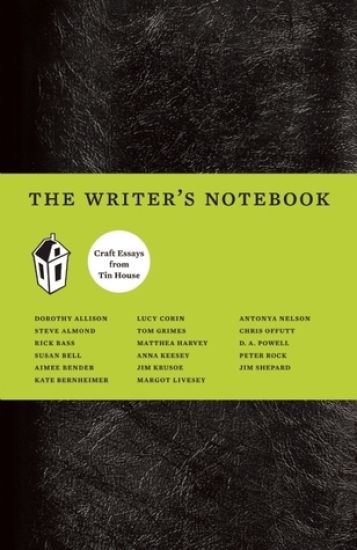
The Writer's Notebook
Dorothy Allison; Anna Keesey; Jim Shepard; Aimee Bender; Kate Bernheimer; Susan Bell; Denis Johnson; Matthea Harvey; Nick Flynn; D. A. Powell; Charles D'Ambrosio; Chris Offutt
Tin House Books
2009
pokkari
The Writer's Notebook compiles the best craft seminars in the history of the Tin House Summer Writers Workshop, along with a variety of craft essays from some of Tin House's favorite writers. The cast of deeply respected poets and prose writers explore topics that vary from writing dialogue to the dos and don'ts of writing about sex. With how-tos, close readings, and personal anecdotes, The Writer's Notebook offers aspiring scribes advice and inspiration to hone their own craft.

Denys Arcand's Le Declin De L'empire Americain and Les Invasions Barbares
André Loiselle
University of Toronto Press
2008
pokkari
The release of Denys Arcand's Le Déclin de l'empire américain (The Decline of the American Empire) in 1986 marked a major turning point in Quebec cinema. It was the first Québécois film that enjoyed huge critical and commercial success at home and abroad. Arcand's tragicomedy about eight intellectuals gathered around a dinner table relating sexy anecdotes became the top-grossing film of all time in Quebec and was the first Canadian feature to be nominated for an Oscar in the foreign-language category. Seventeen years later, Arcand won an Academy Award for the sequel, Les Invasions barbares (The Barbarian Invasions), where the amusing insouciance of the thirty-somethings talking dirty in Le Déclin is replaced by a sense of moral responsibility and serene resignation. In this engrossing study, André Loiselle presents the first in-depth analysis of both films within the context of Quebec culture. Through close readings and concise cultural analysis of two of the most important films in the history of Quebec cinema, Loiselle demonstrates the ways in which Arcand's work represents a snapshot of the evolution of the French Canadian film industry since 1980. The companion films trace the decline of Quebec's national dream and the Québécois' attempts to cling to their identity against the forces of barbaric globalization. The second title in the new Canadian Cinema series, Denys Arcand's "Le Déclin de l'empire américain" and "Les Invasions barbares" is essential reading for cinephiles, film critics, and anyone with an interest in cultural studies and Canadian and Quebec history.

Andrew Louth examines all the traditions on which Denys' work draws: the Fourth Century Greek theologians, pagan philosophy and Syrian Christian thought. The corpus of Denys the Areopagite appeared in the sixth century and have since been deeply influential on Christian thinking both in East and West. Who their author was remains a mystery but in this book Professor Louth documents and comments on his compelling vision of the beauty of God's world and his revelation, together with his profound awareness of the ultimate mystery of the unknowable God who utterly transcends all being.



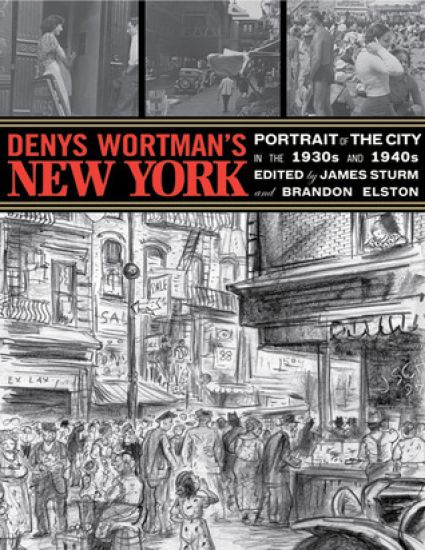
A rescued archive of vintage New York City from a forgotten ash can artistAfter cartoonist, educator, and editor James Sturm discovered the vintage book Mopey Dick and the Duke, he set off to find out more about the author, the deceased and unknown cartoonist Denys Wortman. Sturm immediately took note of the masterful drawings--casual, confident, and brimming with personality--and wondered how this cartoonist escaped his radar. After some online sleuthing, Sturm connected with Wortman's son, who relayed that an archive of more than five thousand illustrations was literally sitting in his shed in dire need of rescuing. For more than thirty-five years, the illustrations had been fighting such elements as hungry rodents, rusty paper clips, and even a blizzard. Wortman's son also had drawers full of his father's correspondence, including letters and holiday cards from William Steig and Walt Disney. Original artwork by artists and personal friends--including Peggy Bacon, Milt Gross, Isabel Bishop, and Reginald Marsh--were also saved. The fact that Wortman's luminary peers held him in the highest regard, coupled with his artistic prowess, makes his absence from both fine art and comics history puzzling. So Sturm and Brandon Elston set out to create a beautiful tribute to the forgotten master. Denys Wortman's New York is not only a tribute to Wortman; it is a tribute to New York, the city that sparked Wortman's voracious creative output. From coal cellars to rooftops, from opera houses to boardinghouses, Wortman recorded the sailors, dishwashers, con artists, entertainers, pushcart peddlers, construction workers, musicians, hoboes, society matrons, young mothers, secretaries, and students who collectively made the city what it was and is today.
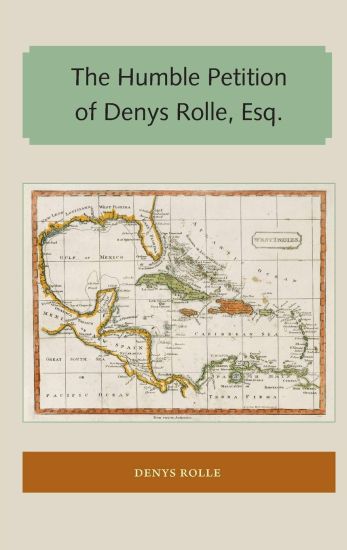
The books in the Florida and the Caribbean Open Books Series demonstrate the University Press of Florida’s long history of publishing Latin American and Caribbean studies titles that connect in and through Florida, highlighting the connections between the Sunshine State and its neighboring islands. Books in this series show how early explorers found and settled Florida and the Caribbean. They tell the tales of early pioneers, both foreign and domestic. They examine topics critical to the area such as travel, migration, economic opportunity, and tourism. They look at the growth of Florida and the Caribbean and the attendant pressures on the environment, culture, urban development, and the movement of peoples, both forced and voluntary. The Florida and the Caribbean Open Books Series gathers the rich data available in these architectural, archaeological, cultural, and historical works, as well as the travelogues and naturalists’ sketches of the area in prior to the twentieth century, making it accessible for scholars and the general public alike. The Florida and the Caribbean Open Books Series is made possible through a grant from the National Endowment for the Humanities and the Andrew W. Mellon Foundation, under the Humanities Open Books program.
Les Auteurs Grecs Expliqués. Denys d'Halicarnasse. Première Lettre À Ammée
Denys d'Halicarnasse
Hachette Livre - BNF
2013
pokkari
Les Auteurs grecs expliques d'apres une methode nouvelle, par deux traductions francaises... Denys d'Halicarnasse. Premiere Lettre a Ammee. Traduit par MM. F. de Parnajon et H. Weil.]Date de l'edition originale: 1879Ce livre est la reproduction fidele d'une oeuvre publiee avant 1920 et fait partie d'une collection de livres reimprimes a la demande editee par Hachette Livre, dans le cadre d'un partenariat avec la Bibliotheque nationale de France, offrant l'opportunite d'acceder a des ouvrages anciens et souvent rares issus des fonds patrimoniaux de la BnF.Les oeuvres faisant partie de cette collection ont ete numerisees par la BnF et sont presentes sur Gallica, sa bibliotheque numerique.En entreprenant de redonner vie a ces ouvrages au travers d'une collection de livres reimprimes a la demande, nous leur donnons la possibilite de rencontrer un public elargi et participons a la transmission de connaissances et de savoirs parfois difficilement accessibles.Nous avons cherche a concilier la reproduction fidele d'un livre ancien a partir de sa version numerisee avec le souci d'un confort de lecture optimal. Nous esperons que les ouvrages de cette nouvelle collection vous apporteront entiere satisfaction.Pour plus d'informations, rendez-vous sur www.hachettebnf.fr

Oeuvres de Saint Denys l'Areopagite / traduites du grec en francais, avec prolegomenes, manchette notes, table analytique et alphabetique, table detaillee des matieres par l'abbe J. DulacDate de l'edition originale: 1865Ce livre est la reproduction fidele d'une oeuvre publiee avant 1920 et fait partie d'une collection de livres reimprimes a la demande editee par Hachette Livre, dans le cadre d'un partenariat avec la Bibliotheque nationale de France, offrant l'opportunite d'acceder a des ouvrages anciens et souvent rares issus des fonds patrimoniaux de la BnF.Les oeuvres faisant partie de cette collection ont ete numerisees par la BnF et sont presentes sur Gallica, sa bibliotheque numerique.En entreprenant de redonner vie a ces ouvrages au travers d'une collection de livres reimprimes a la demande, nous leur donnons la possibilite de rencontrer un public elargi et participons a la transmission de connaissances et de savoirs parfois difficilement accessibles.Nous avons cherche a concilier la reproduction fidele d'un livre ancien a partir de sa version numerisee avec le souci d'un confort de lecture optimal. Nous esperons que les ouvrages de cette nouvelle collection vous apporteront entiere satisfaction.Pour plus d'informations, rendez-vous sur www.hachettebnf.fr

Denys d'Halicarnasse, Opuscules Rhetorique. Tome IV: Thucydide - Seconde Lettre a Ammee B
Denys d'Halicarnasse
Les Belles Lettres
1991
nidottu
Dans cet ouvrage, Denys demontre au stoicien Tuberon, destinataire de l'opuscule, que la matiere, la disposition, le style contreviennent a toutes les regles que preconisent generalement les stoiciens. Dans la seconde partie, Denys repond avec mauvaise humeur, a un ami qui lui demandait d'illustrer ses assertions par des exemples precis. Le Thucydide et la Seconde Lettre a Ammee dressent de l'historien athenien un portrait inhabituel, parfois derangeant.
Denys l'Areopagite: Tradition Et Metamorphoses
Ysabel De Andia
Librarie Philosophique J. Vrin
2019
nidottu
Ce recueil d'etudes sur Denys l'Areopagite et sa posterite veut souligner la tradition de sa pensee et les metamorphoses subies a travers ses relectures. Tradition impressionnante, car nul n'a ose en Orient comme en Occident parler de theologie mystique sans se referer au divin Denys , mais, alors qu'ils citent Denys, c'est leur propre theologie mystique qu'Hugues de Balma et Jean de la Croix exposent. De meme Maxime le Confesseur et Thomas d'Aquin transforment la conception dionysienne sur la theologie affirmative et la theologie negative. Et la reflexion d'Edith Stein sur la theologie symbolique doit davantage a la phenomenologie qu'au neoplatonisme. Les metamorphoses naissent de problematiques differentes. Maxime le Confesseur veut rendre Denys compatible avec le dogme de Chalcedoine. Thomas, apres avoir commente les Noms divins, se trouve ensuite confronte aux theses de Maimonide. Hugues de Balma cherche une mystique affective et non intellectuelle. Et l'experience des nuits de Jean de la Croix s'eloigne de la Tenebre dionysienne.

Denys Rayner
OmniScriptum
2026
pokkari