Kirjojen hintavertailu. Mukana 11 342 296 kirjaa ja 12 kauppaa.

Kirjahaku

Etsi kirjoja tekijän nimen, kirjan nimen tai ISBN:n perusteella.

1000 tulosta hakusanalla Dimitris Margetas

Enterprise Architecture and New Generation Information Systems
Based on an extensive research project done by the author in the United States, Britain, Germany, France, Switzerland, Sweden, and Austria from December 1999 to June 2001, Enterprise Architecture and New Generation Information Systems focuses on four main themes: Next Generation Information Technology The Likely Technologies of this Decade Enterprise Computing The Internet as the 21st Century's Answer to MerchandisingWhile the majority of books presently available on information systems are written from the viewpoint of system analysis, programming, or common applications, this text: Brings to the reader's attention the importance of organization and infrastructure Presents a wealth of case studies to explain the need for reengineering and restructuring Details the latest advances which influence the implementation of advanced technologyWritten in a simple, comprehensive manner without specific prerequisites and data processing jargon, with concepts and case studies properly explained, this book addresses itself to practitioners in computer technology, telecommunications and software development, who are interested in acquiring skills through knowledge of the most advanced applications, tools, and methods, both present and coming. Enterprise Architecture and New Generation Information Systems will prove appealing to every person charged with planning, developing, applying, and delivering advanced information systems, architectural solutions, and programming products.
Greeks in Turkey

Greeks in Turkey

Dimitris Kamouzis

Routledge
2020
sidottu
This book provides a solid and critical historical examination of the endorsement, development and course of Greek nationalism among the lay/clerical leadership of the Greek Orthodox minority of Istanbul during the last phase of the dissolution of the Ottoman Empire and the first years of the newly established Republic of Turkey. The focus is on the political role played by the ethnocentric communal elite, who actively championed the Greek nationalist plan of the Megali Idea (Great Idea). Based on a comparative investigation and synthesis of a wide array of Greek and British archival sources the book engages with the various stages of Constantinopolitan Greek elite nationalism in Turkey and partly in Greece, and examines its manifestations, its level of success and its consequences on the minority during the crucial period of 1918–1930. The main argument is that the internal dynamics, the policies and the responses of this powerful communal elite vis-à-vis other communal factions as well as Greek irredentism and Turkish nation-building conditioned to a significant degree the construction of specific representations and perceptions of the group’s collective identity and determined the status of the Greeks of Istanbul as a national minority in Turkey until nowadays. Providing a thorough analysis of elite politics during and in the aftermath of the Greek-Turkish War and assessing the application of the minority clauses of the Treaty of Lausanne (July 1923), the volume is a key resource for students and academics interested in nationalism and minorities, modern Greek history, Ottoman and Turkish history as well as for policy makers and specialists working in the diplomatic field, the Greek and Turkish public service, international institutions and non-governmental organizations.
Healthcare Biotechnology

Healthcare Biotechnology

Dimitris Dogramatzis

CRC Press
2019
nidottu
Foreseeing and planning for all of the possibilities and pitfalls involved in bringing a biotechnology innovation from inception to widespread therapeutic use takes strong managerial skills and a solid grounding in biopharmaceutical research and development procedures. Unfortunately there has been a dearth of resources for this aspect of the field. Until now. Focusing on the management of healthcare-related biotech, from conception through the product’s regulatory approval and entire life cycle, Healthcare Biotechnology: A Practical Guide provides a practical, applicable resource to assist all health-care related biotech professionals in their day-to-day activities from the lab to the boardroom.Divided into six sections, the book begins with current systems and recent progress and controversy, major players and products, and a comparison with the pharmaceutical industry. It covers intellectual property protection and management, the innovation cycle, patent application, commercialization, and competition.Coverage includes funding, partnering, cash-intensive activities, financing alternatives, and the complexities of alliance implementation and management. It highlights research, development, and biomanufacturing; and examines clinical trial design and regulations; "fast-track" approvals; and patient recruitment as well as production platforms and processes, costs, strategies, and timelines.It investigates marketing including planning, promotion, pricing, supply chain management, and bio-brand lifecycle management. It concludes with tips on running the business, offering diverse biobusiness models and reasonable expectations from inception through maturity and decline.An indispensible guide, this book offers more than 40 figures, 220 tables, and 180 references as well as a list of abbreviations and a business plan outline. Each chapter contains 10 questions to reinforce the material covered and 10 exercises
Power Plant Synthesis

Power Plant Synthesis

Dimitris Al. Katsaprakakis

Routledge
2024
nidottu
Power Plant Synthesis provides an integrated approach to the operation, analysis, simulation, and dimensioning of power plants for electricity and thermal energy production. Fundamental concepts of energy and power, energy conversion, and power plant design are first presented, and integrated approaches for the operation and simulation of conventional electricity production systems are then examined. Hybrid power plants and cogeneration systems are covered, with operating algorithms, optimization, and dimensioning methods explained. The environmental impacts of energy sources are described and compared, with real-life case studies included to show the synthesis of the specific topics covered.
Singing Poets

Singing Poets

Dimitris Papanikolaou

Routledge
2020
nidottu
This book shows how the model of singing poets becomes then an organizing principle for a system of national popular music. It responds to the growing call for the teaching of the textual networks of popular music within the domains of literary and cultural studies.
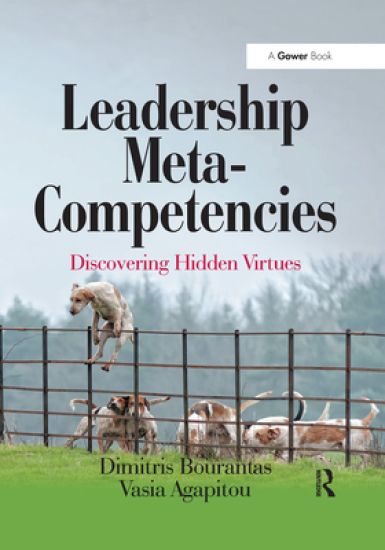
Leadership Meta-Competencies

Leadership Meta-Competencies

Dimitris Bourantas; Vasia Agapitou

Routledge
2020
nidottu
This book doesn't offer overrated success stories which in most cases cannot be imitated. It contains no check lists or recipes for success and it presents no theoretically-based models. The meta-competencies discussed in this refreshing book are timeless virtues of which effective leaders seem to possess, but which are rarely if ever included in lists of competencies in the vast business leadership literature. They include: Existential intelligence - distinct from the much discussed emotional intelligence, is about the ability to pose questions and reflect on fundamental issues in ways that develop a mature ability to interpret the world and better understand other people. Phronesis - is the ability to exercise sound judgement based on skilful application of moral and political rationality. Solitude - is a voluntary state achieved when an individual has the ability to momentarily withdraw and be free of external pressures and demands in order to concentrate on desired mental-cognitive activities. Trust building - is more often discussed in leadership literature. As a leadership competence it is about the ability to be credible, show trust in and respect for other people and inspire trust. For the curious business practitioner, business student, or business educator wishing to consider aspects of leadership competence that have to some extent been hidden or forgotten, this book introduces the notion of meta-competences and deals in detail with them.
Greeks in Turkey

Greeks in Turkey

Dimitris Kamouzis

TAYLOR FRANCIS LTD
2023
nidottu
This book provides a solid and critical historical examination of the endorsement, development and course of Greek nationalism among the lay/clerical leadership of the Greek Orthodox minority of Istanbul during the last phase of the dissolution of the Ottoman Empire and the first years of the newly established Republic of Turkey. The focus is on the political role played by the ethnocentric communal elite, who actively championed the Greek nationalist plan of the Megali Idea (Great Idea). Based on a comparative investigation and synthesis of a wide array of Greek and British archival sources the book engages with the various stages of Constantinopolitan Greek elite nationalism in Turkey and partly in Greece, and examines its manifestations, its level of success and its consequences on the minority during the crucial period of 1918–1930. The main argument is that the internal dynamics, the policies and the responses of this powerful communal elite vis-à-vis other communal factions as well as Greek irredentism and Turkish nation-building conditioned to a significant degree the construction of specific representations and perceptions of the group’s collective identity and determined the status of the Greeks of Istanbul as a national minority in Turkey until nowadays. Providing a thorough analysis of elite politics during and in the aftermath of the Greek-Turkish War and assessing the application of the minority clauses of the Treaty of Lausanne (July 1923), the volume is a key resource for students and academics interested in nationalism and minorities, modern Greek history, Ottoman and Turkish history as well as for policy makers and specialists working in the diplomatic field, the Greek and Turkish public service, international institutions and non-governmental organizations.
Subsampling

Subsampling

Dimitris N. Politis; Joseph P. Romano; Michael Wolf

Springer-Verlag New York Inc.
1999
sidottu
Since Efron's profound paper on the bootstrap, an enormous amount of effort has been spent on the development of bootstrap, jacknife, and other resampling methods. The primary goal of these computer-intensive methods has been to provide statistical tools that work in complex situations without imposing unrealistic or unverifiable assumptions about the data generating mechanism. The primary goal of this book is to lay some of the foundation for subsampling methodology and related methods.
Reliability, Quality and Safety of Software-Intensive Systems
It is, indeed, widely acceptable today that nowhere is it more important to focus on the improvement of software quality than in the case of systems with requirements in the areas of safety and reliability - especially for distributed, real-time and embedded systems. Thus, much research work is under progress in these fields, since software process improvement impinges directly on achieved levels of quality, and many application experiments aim to show quantitative results demonstrating the efficacy of particular approaches. Requirements for safety and reliability - like other so-called non-functional requirements for computer-based systems - are often stated in imprecise and ambiguous terms, or not at all. Specifications focus on functional and technical aspects, with issues like safety covered only implicitly, or not addressed directly because they are felt to be obvious; unfortunately what is obvious to an end user or system user is progressively less so to others, to the extend that a software developer may not even be aware that safety is an issue. Therefore, there is a growing evidence for encouraging greater understanding of safety and reliability requirements issues, right across the spectrum from end user to software developer; not just in traditional safety-critical areas (e.g. nuclear, aerospace) but also acknowledging the need for such things as heart pacemakers and other medical and robotic systems to be highly dependable.
The History and Politics of UN Security Council Reform
This is a penetrating analysis of UN Security Council reform. It presents an overview of the current debates - emphasising the potential for, and modalities of, adjustment in the post-Cold War era - through a systematic investigation of the various reform proposals and the attitudes of member states. This is essential reading for all students and scholars of the United Nations and international relations.
Technological Communities and Networks

Technological Communities and Networks

Dimitris Assimakopoulos

Routledge
2007
sidottu
The first book to analyze how new technologies are emerging against a background of continuing globalization of research and development activities. This unique book explores how technological communities and networks shape a broad range of new computer based technologies in regional, national and international contexts.Offering a critique of existing organizational and business models, Assimakopoulos analyzes the structure of a broad range of existing technological communities and networks looking at a range of areas including:Internet security electronic copyright intellectual property rights protection geographic information systems.This text is a key resource for research and development managers, ICT engineers and policy makers, as well as post graduate researchers in knowledge management, technology policy, sociology and economics of innovation or history of science and technology.
Romania and The European Union

Romania and The European Union

Dimitris Papadimitriou; David Phinnemore

Routledge
2008
sidottu
This book explores the dynamics behind Romania’s relationship with the European Union from the collapse of the Ceaucescu regime in 1989, to its recent accession to the EU in 2007. As a completely up-to-date and detailed study, it identifies key developments in EU-Romania relations, as well as the challenges Romania faced in its efforts move from the margins of the European integration to EU membership. In so doing, the analysis contributes to wider debates about the dynamics underpinning EU enlargement. Moreover, the book reveals the consequences and limits of Europeanization.Romania and the European Union analyses: the impact of integration on the consolidation of democracy in Romania; the country’s economic development, in accordance with the EU’s Copenhagen criterion - the need for acceding states to possess a ‘functioning market economy’; the process of macroeconomic reform; the reform of its public administration; the country’s efforts in implementing the EU’s acquis in the areas of justice and home affairs –a focal point in the accession negotiations given Romania’s geographical location, and its vulnerability as a major transit point for illegal migration and trafficking into the EU – and securing its external borders; the EU’s role in promoting reform as well as the limits of EU influence the obstacles Romania has had to overcome in meeting the demanding pre-requisites of accession to the EU. This book identifies the EU’s role in promoting reform, but equally the limits of EU influence. It reveals the obstacles Romania has had to overcome in meeting the demanding pre-requisites of accession to the EU.
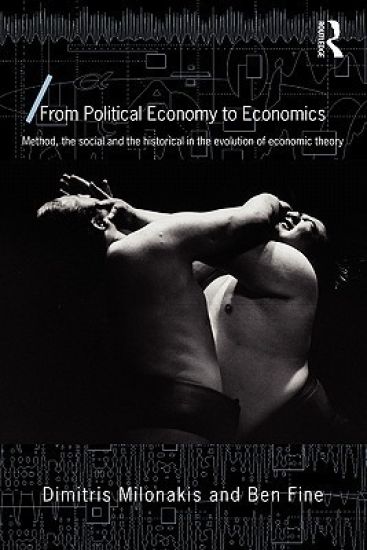
From Political Economy to Economics

From Political Economy to Economics

Dimitris Milonakis; Ben Fine

Routledge
2008
nidottu
Economics has become a monolithic science, variously described as formalistic and autistic with neoclassical orthodoxy reigning supreme. So argue Dimitris Milonakis and Ben Fine in this new major work of critical recollection. The authors show how economics was once rich, diverse, multidimensional and pluralistic, and unravel the processes that lead to orthodoxy’s current predicament. The book details how political economy became economics through the desocialisation and the dehistoricisation of the dismal science, accompanied by the separation of economics from the other social sciences, especially economic history and sociology. It is argued that recent attempts from within economics to address the social and the historical have failed to acknowledge long standing debates amongst economists, historians and other social scientists. This has resulted in an impoverished historical and social content within mainstream economics.The book ranges over the shifting role of the historical and the social in economic theory, the shifting boundaries between the economic and the non-economic, all within a methodological context. Schools of thought and individuals, that have been neglected or marginalised, are treated in full, including classical political economy and Marx, the German and British historical schools, American institutionalism, Weber and Schumpeter and their programme of Socialökonomik, and the Austrian school. At the same time, developments within the mainstream tradition from marginalism through Marshall and Keynes to general equilibrium theory are also scrutinised, and the clashes between the various camps from the famous Methodenstreit to the fierce debates of the 1930s and beyond brought to the fore. The prime rationale underpinning this account drawn from the past is to put the case for political economy back on the agenda. This is done by treating economics as a social science once again, rather than as a positive science, as has been the inclination since the time of Jevons and Walras. It involves transcending the boundaries of the social sciences, but in a particular way that is in exactly the opposite direction now being taken by "economics imperialism". Drawing on the rich traditions of the past, the reintroduction and full incorporation of the social and the historical into the main corpus of political economy will be possible in the future.
From Political Economy to Economics

From Political Economy to Economics

Dimitris Milonakis; Ben Fine

Routledge
2008
sidottu
Economics has become a monolithic science, variously described as formalistic and autistic with neoclassical orthodoxy reigning supreme. So argue Dimitris Milonakis and Ben Fine in this new major work of critical recollection. The authors show how economics was once rich, diverse, multidimensional and pluralistic, and unravel the processes that lead to orthodoxy’s current predicament. The book details how political economy became economics through the desocialisation and the dehistoricisation of the dismal science, accompanied by the separation of economics from the other social sciences, especially economic history and sociology. It is argued that recent attempts from within economics to address the social and the historical have failed to acknowledge long standing debates amongst economists, historians and other social scientists. This has resulted in an impoverished historical and social content within mainstream economics.The book ranges over the shifting role of the historical and the social in economic theory, the shifting boundaries between the economic and the non-economic, all within a methodological context. Schools of thought and individuals, that have been neglected or marginalised, are treated in full, including classical political economy and Marx, the German and British historical schools, American institutionalism, Weber and Schumpeter and their programme of Socialökonomik, and the Austrian school. At the same time, developments within the mainstream tradition from marginalism through Marshall and Keynes to general equilibrium theory are also scrutinised, and the clashes between the various camps from the famous Methodenstreit to the fierce debates of the 1930s and beyond brought to the fore. The prime rationale underpinning this account drawn from the past is to put the case for political economy back on the agenda. This is done by treating economics as a social science once again, rather than as a positive science, as has been the inclination since the time of Jevons and Walras. It involves transcending the boundaries of the social sciences, but in a particular way that is in exactly the opposite direction now being taken by "economics imperialism". Drawing on the rich traditions of the past, the reintroduction and full incorporation of the social and the historical into the main corpus of political economy will be possible in the future.
Theorizing European Integration

Theorizing European Integration

Dimitris N. Chryssochoou

Routledge
2008
sidottu
Fully revised and updated throughout, Theorizing European Integration 2nd edition provides a comprehensive introduction to the theoretical study of European integration. Combining perspectives from international relations, comparative politics and social and political theory, Dimitris N. Chryssochoou offers a complete overview of the many competing approaches that have sought to capture and explain the evolving political nature of the European Union (EU) and its qualitative transition from a union of states to a polity in its own right. Contemporary issues, themes and theories addressed include: the different uses and current state of EU theorizing statecentric accounts of integration and their criticsnew normative challenges to the study of the EUthe political dynamics of European treaty reformnew forms of democracy, citizenship and governancethe limits and possibilities of EU constitutionalisminterdisciplinary understandings of EU polityhood the introduction of a theory of organized synarchy the transformations of state sovereignty in late modern Europe.
Theorizing European Integration

Theorizing European Integration

Dimitris N. Chryssochoou

Routledge
2008
nidottu
Fully revised and updated throughout, Theorizing European Integration 2nd edition provides a comprehensive introduction to the theoretical study of European integration. Combining perspectives from international relations, comparative politics and social and political theory, Dimitris N. Chryssochoou offers a complete overview of the many competing approaches that have sought to capture and explain the evolving political nature of the European Union (EU) and its qualitative transition from a union of states to a polity in its own right. Contemporary issues, themes and theories addressed include: the different uses and current state of EU theorizing statecentric accounts of integration and their criticsnew normative challenges to the study of the EUthe political dynamics of European treaty reformnew forms of democracy, citizenship and governancethe limits and possibilities of EU constitutionalisminterdisciplinary understandings of EU polityhood the introduction of a theory of organized synarchy the transformations of state sovereignty in late modern Europe.
The History and Politics of UN Security Council Reform
This is a penetrating analysis of UN Security Council reform. It presents an overview of the current debates - emphasising the potential for, and modalities of, adjustment in the post-Cold War era - through a systematic investigation of the various reform proposals and the attitudes of member states. This is essential reading for all students and scholars of the United Nations and international relations.
Structural Design in Building Conservation

Structural Design in Building Conservation

Dimitris Theodossopoulos

Routledge
2012
sidottu
No building is properly conserved if it is not structurally sound. Consequently architects, engineers and conservation officers need an adequate grounding in the technology, the materials and the historic origins of the building in order to complete a conservation project successfully.Structural Design in Building Conservation deals with design issues and technical choices, showing how they are integrated with the planning and architectural outcomes in a conservation project. It brings together theory with current conservation technology, discussing the possibilities of structural details and strategies in architectural expression. Case studies are central to this, and these are organised around such themes as the addition of roofs, requalification of space, strengthening and re-use of fabric, repristination, additions, completions, stiffness adjustments, and the correction of past mistakes. The reader is encouraged to examine the technical details of these real projects, and explore the possible solutions.The philosophy of structural interventions is introduced in the context of conservation theories and practices in various European countries. The main types of strengthening, repairs and interventions are explained using different building types, and the structural nature of the main elements to be strengthened (linear structures, frames, plates and shells) is explored in detail.Case studies included cover a very wide range of historic types and conversions, not only monumental masonry structures like neoclassical buildings, major temples, churches, public buildings and museums, but also more utilitarian structures like historic mills, early reinforced concrete structures and vaulting types.This is essential reading for all students of architectural conservation, and practicing architects and engineers who are involved in conservation projects.
Structural Design in Building Conservation

Structural Design in Building Conservation

Dimitris Theodossopoulos

Routledge
2012
nidottu
No building is properly conserved if it is not structurally sound. Consequently architects, engineers and conservation officers need an adequate grounding in the technology, the materials and the historic origins of the building in order to complete a conservation project successfully.Structural Design in Building Conservation deals with design issues and technical choices, showing how they are integrated with the planning and architectural outcomes in a conservation project. It brings together theory with current conservation technology, discussing the possibilities of structural details and strategies in architectural expression. Case studies are central to this, and these are organised around such themes as the addition of roofs, requalification of space, strengthening and re-use of fabric, repristination, additions, completions, stiffness adjustments, and the correction of past mistakes. The reader is encouraged to examine the technical details of these real projects, and explore the possible solutions.The philosophy of structural interventions is introduced in the context of conservation theories and practices in various European countries. The main types of strengthening, repairs and interventions are explained using different building types, and the structural nature of the main elements to be strengthened (linear structures, frames, plates and shells) is explored in detail.Case studies included cover a very wide range of historic types and conversions, not only monumental masonry structures like neoclassical buildings, major temples, churches, public buildings and museums, but also more utilitarian structures like historic mills, early reinforced concrete structures and vaulting types.This is essential reading for all students of architectural conservation, and practicing architects and engineers who are involved in conservation projects.
Romania and The European Union

Romania and The European Union

Dimitris Papadimitriou; David Phinnemore

Routledge
2011
nidottu
This book explores the dynamics behind Romania’s relationship with the European Union from the collapse of the Ceaucescu regime in 1989, to its recent accession to the EU in 2007. As a completely up-to-date and detailed study, it identifies key developments in EU-Romania relations, as well as the challenges Romania faced in its efforts move from the margins of the European integration to EU membership. In so doing, the analysis contributes to wider debates about the dynamics underpinning EU enlargement. Moreover, the book reveals the consequences and limits of Europeanization.Romania and the European Union analyses: the impact of integration on the consolidation of democracy in Romania; the country’s economic development, in accordance with the EU’s Copenhagen criterion - the need for acceding states to possess a ‘functioning market economy’; the process of macroeconomic reform; the reform of its public administration; the country’s efforts in implementing the EU’s acquis in the areas of justice and home affairs –a focal point in the accession negotiations given Romania’s geographical location, and its vulnerability as a major transit point for illegal migration and trafficking into the EU – and securing its external borders; the EU’s role in promoting reform as well as the limits of EU influence the obstacles Romania has had to overcome in meeting the demanding pre-requisites of accession to the EU. This book identifies the EU’s role in promoting reform, but equally the limits of EU influence. It reveals the obstacles Romania has had to overcome in meeting the demanding pre-requisites of accession to the EU.