Earn College Credit with REA's Test Prep for CLEP Introductory Psychology Everything you need to pass the exam and get the college credit you deserve. REA leads the way in helping students pass their College Board CLEP exams and earn college credit while reducing their tuition costs. With 25+ years of experience in test prep for the College-Level Examination Program (CLEP), REA is your trusted source for the most up-to-date test-aligned content. Whether you're an adult returning to finish your degree, a traditional-age college student, a military service member, or a high school or home-schooled student looking to get a head start on college and shorten your path to graduation, CLEP is perfect for you. REA's expert authors know the CLEP tests inside out. And thanks to our partners at Proctortrack (proctortrack.com/clep), you can now take your exam at your convenience, from the comfort of home. Prep for success on the CLEP Introductory Psychology exam with REA's personalized three-step plan: (1) focus your study, (2) review with the book, and (3) measure your test-readiness. Our Book + Online prep gives you all the tools you need to make the most of your study time: Diagnostic exam: Pinpoint what you already know and what you need to study. Targeted subject review: Learn what you'll be tested on. Two full-length practice exams: Zero in on the topics that give you trouble now so you'll be confident and prepared on test day. Glossary of key terms: Round out your prep with must-know vocabulary. This study guide is fully aligned with the DSM-5 classification system on which the exam is based. REA is America's recognized leader in CLEP preparation. Our test prep helps you earn valuable college credit, save on tuition, and accelerate your path to a college degree.
Eight-year-old Terry McQuinn's life changed one snowy Christmas Eve on the coast of Maine when he glimpsed the summer people's world previously unknown to this caretaker's son. Serenity Cottage was a place of beauty and privilege owned by the luminous Halworths -- but in the blink of an eye, tragedy left them in ruins. Determined not to follow in his father's footsteps, Terry grew up to become a high-flying Hollywood film agent -- but he has lost himself along the way. When he is called back to Maine by his father's death, he finds a note that stops him cold: Open Serenity for Christmas. No one has been in the house in thirty years. Although Terry's first instinct is to leave it all behind, he discovers that Katherine Halworth, the girl he remembers from that fateful night, is the new owner. With her arrival imminent, Terry's past comes rushing back and he soon learns that it's never too late to forgive -- and never too late to love.
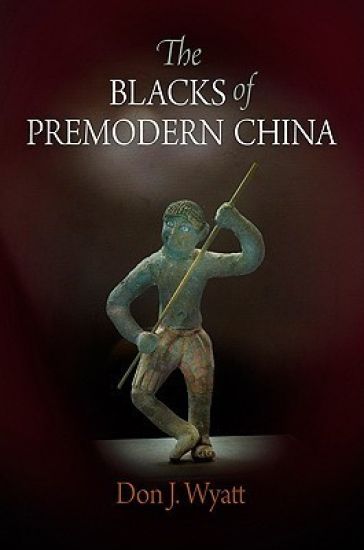
Premodern Chinese described a great variety of the peoples they encountered as "black." The earliest and most frequent of these encounters were with their Southeast Asian neighbors, specifically the Malayans. But by the midimperial times of the seventh through seventeenth centuries C.E., exposure to peoples from Africa, chiefly slaves arriving from the area of modern Somalia, Kenya, and Tanzania, gradually displaced the original Asian "blacks" in Chinese consciousness. In The Blacks of Premodern China, Don J. Wyatt presents the previously unexamined story of the earliest Chinese encounters with this succession of peoples they have historically regarded as black. A series of maritime expeditions along the East African coastline during the early fifteenth century is by far the best known and most documented episode in the story of China's premodern interaction with African blacks. Just as their Western contemporaries had, the Chinese aboard the ships that made landfall in Africa encountered peoples whom they frequently classified as savages. Yet their perceptions of the blacks they met there differed markedly from those of earlier observers at home in that there was little choice but to regard the peoples encountered as free. The premodern saga of dealings between Chinese and blacks concludes with the arrival in China of Portuguese and Spanish traders and Italian clerics with their black slaves in tow. In Chinese writings of the time, the presence of the slaves of the Europeans becomes known only through sketchy mentions of black bondservants. Nevertheless, Wyatt argues that the story of these late premodern blacks, laboring anonymously in China under their European masters, is but a more familiar extension of the previously untold story of their ancestors who toiled in Chinese servitude perhaps in excess of a millennium earlier.
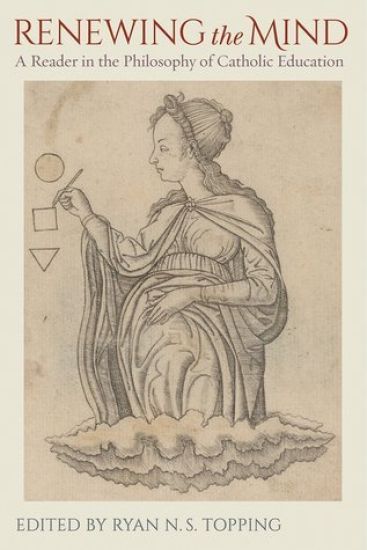
No other living tradition has been thinking about thinking longer than the Catholic Church. With carefully selected readings from classical, patristic, medieval, modern, and contemporary sources, Renewing the Mind proposes the Catholic tradition as the noblest and best hope for a recovery of humane learning in our time. Edited by theologian and philosopher Ryan N.S. Topping, this anthology draws from a range of classical and contemporary philosophers - from Plato and Aristotle, Augustine and Aquinas, Newman to Chesterton to Benedict XVI - to reconstruct and illustrate the enduring vitality of the Catholic tradition of thinking about thinking.Parts One, Two, and Three take up the essential characteristics which define all learning activity: its purpose (or end), its form and content (or curriculum), and its method (or pedagogy). With an eye to meeting the challenge of the present crisis in education, Part Four illustrates the contemporary renewal of Catholic education. Included are selections that speak not only to liberal or general education but to a variety of contexts in which Catholics are called to study or teach: at home, at school, in college, or in the seminary.Renewing the Mind includes an introductory essay on the history and renewal of Catholic education, followed by 38 selections each with an introduction, biography, and study questions; adorning the text throughout are illustrations from the National Gallery of Art. Educators of children and college students will find this an essential guide to the best of what has been said about what it means to be conformed to the mind of Christ.
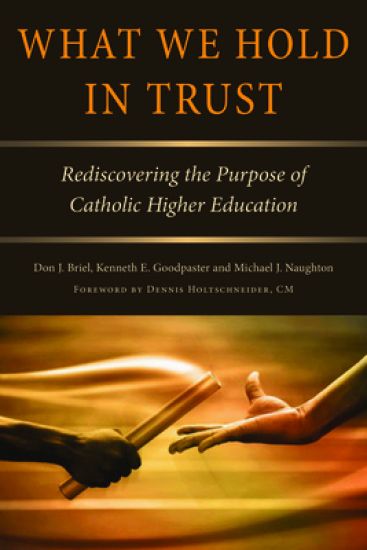
The specific concern in What We Hold in Trust comes to this: the Catholic university that sees its principal purpose in terms of the active life, of career, and of changing the world, undermines the contemplative and more deep-rooted purpose of the university. If a university adopts the language of technical and social change as its main and exclusive purpose, it will weaken the deeper roots of the university’s liberal arts and Catholic mission. The language of the activist, of changing the world through social justice, equality and inclusion, or of the technician through market-oriented incentives, plays an important role in university life. We need to change the world for the better and universities play an important role, but both the activist and technician will be co-opted by our age of hyper-activity and technocratic organizations if there is not first a contemplative outlook on the world that receives reality rather than constructs it.To address this need for roots What We Hold in Trust unfolds in four chapters that will demonstrate how essential it is for the faculty, administrators, and trustees of Catholic universities to think philosophically and theologically (Chapter One), historically (Chapter Two) and institutionally (Chapters Three and Four). What we desperately need today are leaders in Catholic universities who understand the roots of the institutions they serve, who can wisely order the goods of the university, who know what is primary and what is secondary, and who can distinguish fads and slogans from authentic reform. We need leaders who are in touch with their history and have a love for tradition, and in particular for the Catholic tradition. Without this vision, our universities may grow in size, but shrink in purpose. They may be richer but not wiser.
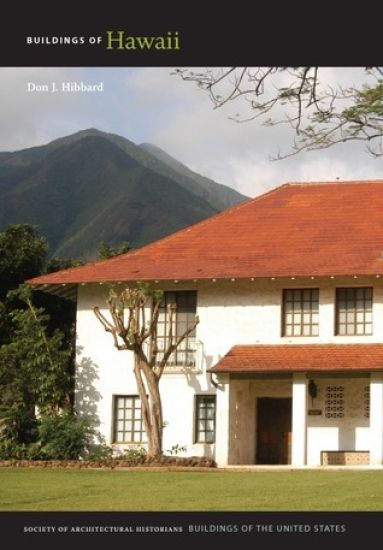
With elegance and authority, Buildings of Hawaii presents the architecture of the six major islands in the Hawaii chain. Don J. Hibbard delves into the development of the state’s distinct blending of the building traditions of the East and West within a subtropical island context. The first in-depth examination of the architecture of the Islands, Buildings of Hawaii covers structures from the early nineteenth century through the first decade of the new millennium. Included are Japanese temples, Chinese society halls, the only royal palaces in the United States, the earliest known reinforced concrete public buildings in the country, and the only nineteenth-century British-made iron bridge in the nation. Not only are masterworks of such mainland architects as Bertram Goodhue, Julia Morgan, Ralph Adams Cram, Skidmore, Owings and Merril LLP, Edward Killingsworth, and I. M. Pei considered, but vernacular single-wall building traditions of the plantation period abound. In addition, Hibbard’s entries examine the various distinct regional designs developed over the course of the twentieth century, and includes brief biographies of Hawaii’s major architects. More than 250 illustrations—including photographs, maps, and drawings—give further detail to the more than 400 entries. A volume in the Buildings of the United States series of the Society of Architectural Historians
This lavishly illustrated book traces the life and work of Hart Wood (1880-1957), from his beginnings in architectural offices in Denver and San Francisco to his arrival in Hawaii in 1919 as a partner of C. W. Dickey and eventual solo career in the Islands. An outspoken leader in the development of a Hawaiian style of architecture, Wood incorporated local building traditions and materials in many of his projects and was the first in Hawaii to blend Eastern and Western architectural forms in a conscious manner. Enchanted by Hawaii's vivid beauty and its benevolent climate, exotic flora, and cosmopolitan culture, Wood sought to capture the aura of the Islands in his architectural designs. Hart Wood's magnificent and graceful buildings remain critical to Hawaii's architectural legacy more than fifty years after his death: the First Church of Christ Science on Punahou Street, the First Chinese Church on King Street, the S & G Gump Building on Kalakaua Avenue, the Honolulu Board of Water Supply Administration Building on Beretania Street, and the Alexander & Baldwin Building on Bishop Street, as well as numerous Wood residences throughout the city.
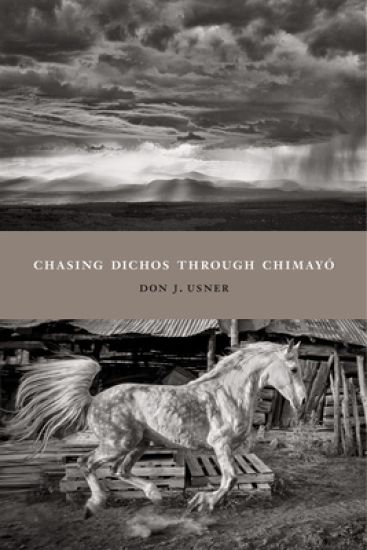
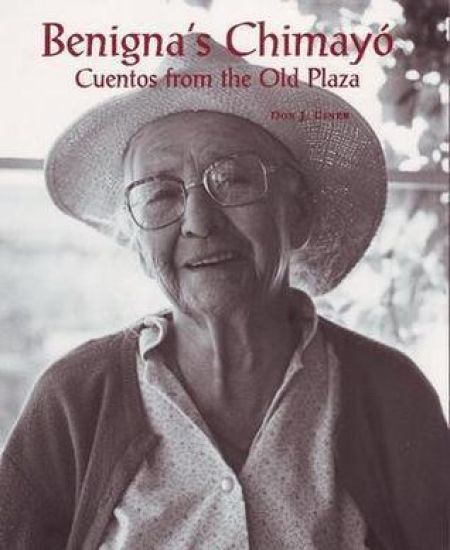
Winner of the 2015 Southwest Book Design and Production Award for Gift Book from the New Mexico Book AssociationSilver Winner of the 2015 PubWest Book Design Award for Historical/Biographical Book2015 Southwest Books of the YearThe poetic proverbs known to nuevomexicanos as dichos are particular to their places of origin. In these reflections on the dichos of the Chimayó Valley in northern New Mexico, native son Don J. Usner has written a memoir that is also a valuable source of information on the rich language and culture of the region. Illustrated with black-and-white photographs that Usner, who is also known for his photographic work, took of the people and places that he writes about, this book is a one-of-a-kind introduction to the real New Mexico.Usner has known Chimayó since he was a boy visiting his grandmother and the other village elders, who taught him genealogies going back to family origins in Spain. The Spanish he learned there was embedded in dichos and cuentos. This book is the result of Usner's research into these memorable sayings, and it preserves a language and a culture on the verge on dissolution. It is a gateway into a uniquely New Mexican way of life.
This is a handy pocket guide for the day hiker with easy-to-follow directions to the high country and peaks surrounding Telluride and beyond. Helpful maps are included at the beginning of each chapter. Many of the seventy-five hikes are illustrated with photos along with listings of elevation, distance, time, and ease of trails to help travelers through their journey.
This handy volume provides a general introduction to the practice, followed by many Victorian novelists, of publishing their works in installments in newspapers and magazines.The bulk of the volume contains charts for 192 novels. Each chart lists the dates of appearance of individual parts and their relation to the chapters of the final book. The authors include Charles Dickens, George Eliot, Elizabeth Gaskell, Thomas Hardy, Rudyard Kipling, Robert Louis Stevenson, William Makepeace Thackeray, Anthony Trollope, and others.
Listen to this authentic voice from the far land of New Mexico's past. Pull up a chair. Throw away your watch. The author will tell you a story. She was born more than a century ago, and her stories were born centuries before that. Now through the graceful agency of her grandson, Don Usner, her stories will live on, told and retold, shared widely, the irrepressible spirit of old New Mexico captured and held between these covers.
It has been a hard year in New York City for princes and for beggars; and twenty-eight year old Charlie Andrews, a Wall Street profiteer, believes he has lost everything that matters in the world when he steps out onto the window ledge of the twenty-second floor of The Waldorf Hotel on a cold evening five days before Christmas. He has no idea that the last call he made on his cell phone has placed his fate in the hands of a young homeless woman who runs through the falling snow and turns his life with a brief exchange of dialogue: Most of us miss the real story, Charlie. What real story? The story we were put in this world to live. Why do we miss it? Because it's someone else's story. We just play a part in it. Thus begins their unforgettable journey into a dreamscape of time and memory on a train traveling through a blizzard to deliver them to the meaning and purpose of their lives.
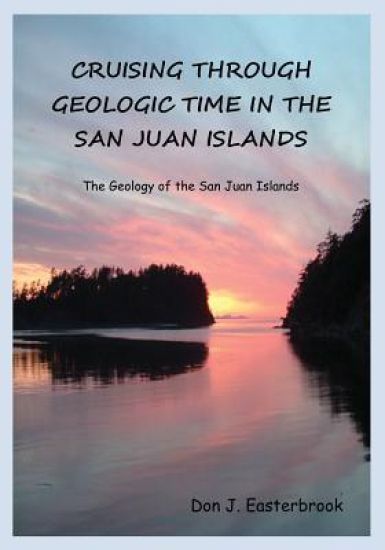
Whatcom County in the Northwest corner of Washington State has a fascinating and elaborate geologic history. A Walk Through Geologic Time is a comprehensive guide to the geologic sculpting of this area's landscape. The book spans the history of the North Cascades and lowland from 1.8 billion years ago to the present and includes information on palm tree fossils, marine fossils, the volcanic and glacial history of Mt. Baker, history of gold and coal mining, and much more.
In premodern China, Korea, Japan, and Vietnam, just as in the far less culturally cohesive countries composing the West of the Middle Ages, enslavement was an assumed condition of servitude warranting little examination, as the power and profits it afforded to the slaver made it a convention pursued unreflectively. Slavery in medieval East Asia shared with the West the commonplace assumption that nearly all humans were potential chattel, that once they had become owned beings, they could then be either sold or inherited. Yet, despite being representative of perhaps the most universalizable human practice of that age, slavery in medieval East Asia was also endowed with its own distinctive traits and traditions. Our awareness of these features of distinction contributes immeasurably to a more nuanced understanding of slavery as the ubiquitous and openly practiced institution that it once was and the now illicit and surreptitious one that it intractably remains.
This work has been selected by scholars as being culturally important and is part of the knowledge base of civilization as we know it.This work is in the public domain in the United States of America, and possibly other nations. Within the United States, you may freely copy and distribute this work, as no entity (individual or corporate) has a copyright on the body of the work.Scholars believe, and we concur, that this work is important enough to be preserved, reproduced, and made generally available to the public. To ensure a quality reading experience, this work has been proofread and republished using a format that seamlessly blends the original graphical elements with text in an easy-to-read typeface.We appreciate your support of the preservation process, and thank you for being an important part of keeping this knowledge alive and relevant.