Kirjojen hintavertailu. Mukana 11 627 469 kirjaa ja 12 kauppaa.

Kirjahaku

Etsi kirjoja tekijän nimen, kirjan nimen tai ISBN:n perusteella.

1000 tulosta hakusanalla Donald E. Beasley

Modern Communications Law

Modern Communications Law

Donald E. Lively

Praeger Publishers Inc
1991
sidottu
Modern Communications Law provides the most comprehensive and contemporary coverage of communications law available, a subject characterized by rapidly expanding and changing horizons. The book is thorough, informative, and accessible. It is divided into three main sections that respectively consider the media's nature and context, structural governance of the communications industry, and content issues. Lively provides an in-depth study of telephone communications--an area which affects virtually the entire citizenry--as well as print, broadcasting, cable, and other new media.The book contains several structural innovations calculated to enhance the teaching and learning process. The selection and editing of cases and other primary materials reflect the author's experience with topics that facilitate animated discussion. Additionally, the text is extensively annotated with pinpoint citations which heighten the book's utility for research and reference purposes. A particularly notable feature is the introduction of case summaries preceding all major court opinions. The synopses are intended to familiarize readers with the basic arguments, issues and reasoning so that they derive more meaning from the cases themselves than ever before. The book is well-suited for law school courses and is appropriate for communications law courses in the graduate and undergraduate curricula. Legal practitioners, media industry professionals and government regulators and policy-makers will find Modern Communications Law an essential resource.
Essential Principles of Communications Law

Essential Principles of Communications Law

Donald E. Lively

Praeger Publishers Inc
1991
sidottu
Rapid changes in communications technology continue to characterize the industry and to necessitate repeated redefinition of the legal structures and issues which must respond to these changes. Donald E. Lively's in-depth study of communications law clarifies its basic concepts and principles. He provides a thorough survey of the press as it was originally perceived by the Constitution and how its profile has changed due to the sophisticated nature of today's media. The book shows how broadcasting, cable, and common carriage disperse a wide range of information--requiring continual monitoring to preserve the balance between responsibility and freedom of the press.This complex issue is first studied from a broad conceptual perspective that reviews the original constitutional and non-constitutional concerns of the first amendment, followed by an analysis of how the structures of the newspaper, broadcasting, cable and common carrier industries have been regulated, and concludes with a history and evaluation of the guidelines which restrict the quantity and quality of content. The identification of trends in the ownership of twentieth century information sources and the effect of the current decentralization of ownership on the public's access to information are fully examined, and the law's continually evolving attention to the changing dynamics within the industry evaluated for the present and projected for the future.
The Constitution and Race

The Constitution and Race

Donald E. Lively

Praeger Publishers Inc
1992
sidottu
Race, as this book demonstrates, has been a factor in the Constitution's framing, ratification, and development. Examined specifically and in detail are: * the accommodation of slavery to create a viable republic; * the Union's experience with and eventual undoing by slavery; * reconstruction of the nation pursuant to seminal principles of racial equality; * persisting efforts to limit or defeat constitutional provisions for equality and opportunity; * the desegregation mandate and its devolution; and * modern problems in accounting for a legacy of racial discrimination and disadvantage. The Constitution is the overarching statement of popular will and consent and thus an especially apt prism through which to discern racial truths and the context and values that influence them. Constitutional law affords a particularly useful departure point for acquiring perspective upon moral reality and legal possibility. This book is rich in its analysis of the Supreme Court's response to society's ambiguities, concerns, and conscience in the matters of race. In examining problems and issues which historically have engendered dispute and division, it suggests a potentially consensual basis of ascertaining the Constitution's still unfinished business.The nation's enduring ambivalence and the price it pays in less than consistent constitutional interpretations on racial questions is both enlightening and disturbing. The questions, of course, are at the heart of a democracy and involve personhood, citizenship, liberty, and equality. The Constitution and Race will be valuable to political scientists, historians, sociologists, lawyers, and students.
The Constitution and Race

The Constitution and Race

Donald E. Lively

Praeger Publishers Inc
1992
nidottu
Race, as this book demonstrates, has been a factor in the Constitution's framing, ratification, and development. Examined specifically and in detail are: * the accommodation of slavery to create a viable republic; * the Union's experience with and eventual undoing by slavery; * reconstruction of the nation pursuant to seminal principles of racial equality; * persisting efforts to limit or defeat constitutional provisions for equality and opportunity; * the desegregation mandate and its devolution; and * modern problems in accounting for a legacy of racial discrimination and disadvantage. The Constitution is the overarching statement of popular will and consent and thus an especially apt prism through which to discern racial truths and the context and values that influence them. Constitutional law affords a particularly useful departure point for acquiring perspective upon moral reality and legal possibility. This book is rich in its analysis of the Supreme Court's response to society's ambiguities, concerns, and conscience in the matters of race. In examining problems and issues which historically have engendered dispute and division, it suggests a potentially consensual basis of ascertaining the Constitution's still unfinished business.The nation's enduring ambivalence and the price it pays in less than consistent constitutional interpretations on racial questions is both enlightening and disturbing. The questions, of course, are at the heart of a democracy and involve personhood, citizenship, liberty, and equality. The Constitution and Race will be valuable to political scientists, historians, sociologists, lawyers, and students.
Foreshadows of the Law

Foreshadows of the Law

Donald E. Lively

Praeger Publishers Inc
1992
sidottu
The Supreme Court has final authority in determining what the Constitution means. The Court's findings have not, however, always been final. Lively focuses on several landmark dissenting opinions--resisted initially--later redefining the meaning of the Constitution. Each opinion arises from a rich historical context and involves constitutional issues of pointed significance. Vivid descriptions of some of the colorful personalities behind the opinions add appeal. Lively conveys the evolutionary and dynamic nature of the law demonstrating the relationship between present and past understanding of the Constitution. He describes the competitive nature of constitutional development and identifies the relevance of factors including subjective preference, values, vying theories, and ideologies.The role of the Court, is addressed as are the federal government's relationship to the states and their citizens; slavery; property rights; substantive due process; freedom of speech; and the right to be left alone. This is a clearly presented and highly instructive consideration of how the Constitution's interpretation has been fashioned over time with important insights relevant to today's Court and contemporary cases.
Foreshadows of the Law

Foreshadows of the Law

Donald E. Lively

Praeger Publishers Inc
1992
nidottu
The Supreme Court has final authority in determining what the Constitution means. The Court's findings have not, however, always been final. Lively focuses on several landmark dissenting opinions--resisted initially--later redefining the meaning of the Constitution. Each opinion arises from a rich historical context and involves constitutional issues of pointed significance. Vivid descriptions of some of the colorful personalities behind the opinions add appeal. Lively conveys the evolutionary and dynamic nature of the law demonstrating the relationship between present and past understanding of the Constitution. He describes the competitive nature of constitutional development and identifies the relevance of factors including subjective preference, values, vying theories, and ideologies.The role of the Court, is addressed as are the federal government's relationship to the states and their citizens; slavery; property rights; substantive due process; freedom of speech; and the right to be left alone. This is a clearly presented and highly instructive consideration of how the Constitution's interpretation has been fashioned over time with important insights relevant to today's Court and contemporary cases.
International Entertainment Law

International Entertainment Law

Donald E. Biederman; Lionel S. Sobel

Praeger Publishers Inc
2003
sidottu
Because entertainment is one of America's most vital and important industries, the legal implications of the international aspects of the business are of vital importance. This is the first casebook to deal with international entertainment law, focusing on cross-border transactions and disputes. It tracks the development of most entertainment projects—from the initial acquisition of necessary legal rights, to the ultimate exhibition, performance, or sale of entertainment. International Entertainment Law is an essential resource for those who represent, or hope to represent, individual entertainers or entertainment companies in international litigation, dealmaking, or multinational public policy.Weaving together a wide variety of materials—including cases, statutes, treaties, government reports, articles, and original pieces prepared just for this volume—Sobel and Biederman provide indispensable legal information on a broad range of issues. Topics covered include intellectual property, labor relations, taxation, finance, international trade, domestic content requirements, and censorship. Information is drawn from worldwide sources including the United States, Australia, the United Kingdom, France, Germany, the European Union, the World Trade Organization, and the World Intellectual Property Organization. Professors, students, and practitioners of entertainment law will benefit from the wealth of information on the international aspects of this exciting field of legal study and practice.
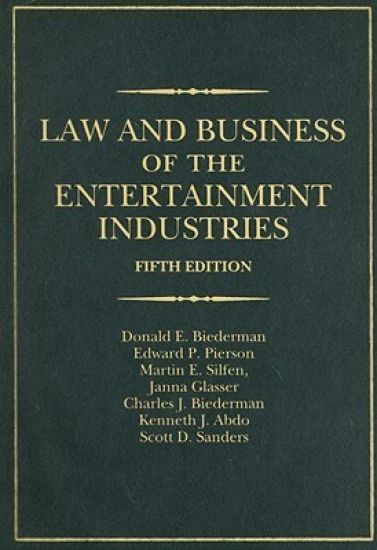
Law and Business of the Entertainment Industries

Law and Business of the Entertainment Industries

Donald E. Biederman; Charles J. Biederman; Janna A. Glasser Esq.; Edward P. Pierson; Scott Sanders; Martin E. Silfen

Praeger Publishers Inc
2006
sidottu
In response to the increasing convergence of technologies in the entertainment industries, this thoroughly updated and revised fifth edition makes the casebook more timeless. Providing contract templates covering book publishing, recording contracts, actor agreements, video game agreements, and internet agreements, among others, this new edition is more useful and illustrative of the business of entertainment for lawyers, students, and industry professionals than its competition. Introductions, notes, and cases are fully updated to take into account recent changes in the industry. This classic casebook is essential to students at law schools throughout the country and to industry professionals trying to keep up with this ever-changing field of law.
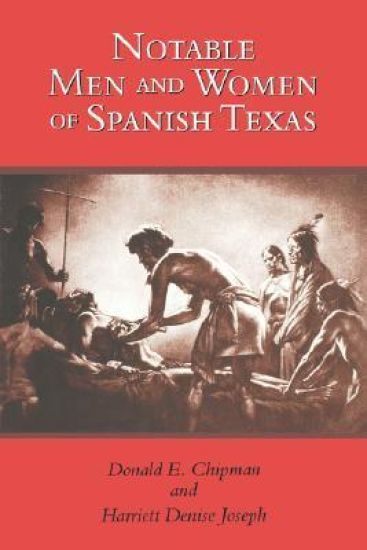
Notable Men and Women of Spanish Texas

Notable Men and Women of Spanish Texas

Donald E. Chipman; Harriett Denise Joseph

University of Texas Press
1999
pokkari
Winner, Presidio La Bahia Award, Sons of the Republic of Texas, 2000 Texas Old Missions and Forts Restoration Association Book Award, the Texas Old Missions and Fort Restoration Association and the Texas Catholic Historical Society, 2001The Spanish colonial era in Texas (1528-1821) continues to emerge from the shadowy past with every new archaeological and historical discovery. In this book, years of archival sleuthing by Donald E. Chipman and Harriett Denise Joseph now reveal the real human beings behind the legendary figures who discovered, explored, and settled Spanish Texas.By combining dramatic, real-life incidents, biographical sketches, and historical background, the authors bring to life these famous (and sometimes infamous) men of Spanish Texas:Alvar Núñez Cabeza de VacaAlonso de LeónFrancisco HidalgoLouis Juchereau de St. DenisAntonio MargilThe Marqués de AguayoPedro de RiveraFelipe de RábagoJosé de EscandónAthanase de MézièresThe Marqués de RubíAntonio Gil IbarvoDomingo CabelloJosé Bernardo Gutiérrez de LaraJoaquín de ArredondoThe authors also devote a chapter to the women of Spanish Texas, drawing on scarce historical clues to tell the stories of both well-known and previously unknown Tejana, Indian, and African women.
Spanish Texas, 1519–1821

Spanish Texas, 1519–1821

Donald E. Chipman; Harriett Denise Joseph

University of Texas Press
2010
pokkari
Winner, Kate Broocks Bates Award, Texas State Historical Association Presidio La Bahía Award, Sons of the Republic of Texas A Choice Magazine Outstanding Academic BookModern Texas, like Mexico, traces its beginning to sixteenth-century encounters between Europeans and Indians who contested control over a vast land. Unlike Mexico, however, Texas eventually received the stamp of Anglo-American culture, so that Spanish contributions to present-day Texas tend to be obscured or even unknown. The first edition of Spanish Texas, 1519–1821 (1992) sought to emphasize the significance of the Spanish period in Texas history. Beginning with information on the land and its inhabitants before the arrival of Europeans, the original volume covered major people and events from early exploration to the end of the colonial era.This new edition of Spanish Texas has been extensively revised and expanded to include a wealth of discoveries about Texas history since 1990. The opening chapter on Texas Indians reveals their high degree of independence from European influence and extended control over their own lives. Other chapters incorporate new information on La Salle's Garcitas Creek colony and French influences in Texas, the destruction of the San Sabá mission and the Spanish punitive expedition to the Red River in the late 1750s, and eighteenth-century Bourbon reforms in the Americas. Drawing on their own and others' research, the authors also provide more inclusive coverage of the role of women of various ethnicities in Spanish Texas and of the legal rights of women on the Texas frontier, demonstrating that whether European or Indian, elite or commoner, slave owner or slave, women enjoyed legal protections not heretofore fully appreciated.
Moctezuma's Children

Moctezuma's Children

Donald E. Chipman

University of Texas Press
2005
pokkari
Though the Aztec Empire fell to Spain in 1521, three principal heirs of the last emperor, Moctezuma II, survived the conquest and were later acknowledged by the Spanish victors as reyes naturales (natural kings or monarchs) who possessed certain inalienable rights as Indian royalty. For their part, the descendants of Moctezuma II used Spanish law and customs to maintain and enhance their status throughout the colonial period, achieving titles of knighthood and nobility in Mexico and Spain. So respected were they that a Moctezuma descendant by marriage became Viceroy of New Spain (colonial Mexico's highest governmental office) in 1696. This authoritative history follows the fortunes of the principal heirs of Moctezuma II across nearly two centuries. Drawing on extensive research in both Mexican and Spanish archives, Donald E. Chipman shows how daughters Isabel and Mariana and son Pedro and their offspring used lawsuits, strategic marriages, and political maneuvers and alliances to gain pensions, rights of entailment, admission to military orders, and titles of nobility from the Spanish government. Chipman also discusses how the Moctezuma family history illuminates several larger issues in colonial Latin American history, including women's status and opportunities and trans-Atlantic relations between Spain and its New World colonies.
Land of the Underground Rain

Land of the Underground Rain

Donald E. Green

University of Texas Press
1973
pokkari
The scarcity of surface water which has so marked the Great Plains is even more characteristic of its subdivision, the Texas High Plains. Settlers on the plateau were forced to use pump technology to tap the vast ground water resources-the underground rain-beneath its flat surface. The evolution from windmills to the modern high-speed irrigation pumps took place over several decades. Three phases characterized the movement toward irrigation. In the period from 1910 to 1920, large-volume pumping plants first appeared in the region, but, due to national and regional circumstances, these premature efforts were largely abortive. The second phase began as a response to the drouth of the Dust Bowl and continued into the 1950s. By 1959, irrigation had become an important aspect of the flourishing High Plains economy. The decade of the 1960s was characterized chiefly by a growing alarm over the declining ground water table caused by massive pumping, and by investigations of other water sources. Land of the Underground Rain is a study in human use and threatened exhaustion of the High Plains' most valuable natural resource. Ground water was so plentiful that settlers believed it flowed inexhaustibly from some faraway place or mysteriously from a giant underground river. Whatever the source, they believed that it was being constantly replenished, and until the 1950s they generally opposed effective conservation of ground water. A growing number of weak and dry wells then made it apparent that Plains residents were "mining" an exhaustible resource. The Texas High Plains region has been far more successful in exploiting its resource than in conserving it. The very success of its pump technology has produced its environmental crisis. The problem brought about by the threatened exhaustion of this resource still awaits a solution. This study is the first comprehensive history of irrigation on the Texas High Plains, and it is the first comprehensive treatment of the development of twentieth-century pump irrigation in any area of the United States.
The Soul of the Wobblies

The Soul of the Wobblies

Donald E. Winters

Praeger Publishers Inc
1985
sidottu
This important work offers a new view of the Wobblies by examining not only their connection to American culture but their relationship to early twentieth-century American religion. Winters firmly believes that there is a strong religious character in the Wobblies. He focuses on figures such as Eugene Debs and Father Hagerty, depicting them as early pioneers of the unique beliefs the I.W.W. would adopt. He demonstrates and analyzes this religious motif in newspaper articles, speeches, autobiographies, songs, propaganda, and poems. Next, he examines the implications of the 1916 Wobbly-led strike on Minnesota's Mesabi Range for the immigrant Finnish population and its religious values. He concludes by assessing the place of the I.W.W. in American labor history and by scrutinizing the relationship between the Wobblies, progressives, and utopian novelists in the period prior to World War I.
Chaos Theory, Asimov's Foundations and Robots, and Herbert's Dune
Isaac Asimov and Frank Herbert remain two of the most popular and influential science fiction writers of the 20th century. Each is a master structuralist whose works succeed in large part through the careful mirroring of concepts at every narrative level. While the fiction of Herbert and Asimov has attracted scholarly attention, science itself is a crucial element that is almost completely ignored in critical assessments of science fiction as literature. Because the works of Asimov and Herbert are grounded in scientific premises, an appreciation of their literary structure depends on an understanding of the scientific concepts informing them. This book examines Herbert's Dune series and Asimov's Foundation trilogy and robot stories from the perspective of chaos theory to elucidate the structure of their works.Chaos theory is the study of orderly patterns in turbulent, dynamic, or erratic systems. The order of these systems stems from the interdependence of numerous interlocking events or components. These may take the form of fractal structures, in which similar but not necessarily identical structures are replicated across the same scale and increasingly smaller scales. This book argues that in drawing upon apparently chaotic natural and scientific systems, Herbert and Asimov created fractal narrative structures in their works.
Atlas of Normal Radiographic Anatomy and Anatomic Variants in the Dog and Cat

Atlas of Normal Radiographic Anatomy and Anatomic Variants in the Dog and Cat

Donald E. Thrall; Ian D. Robertson

Elsevier - Health Sciences Division
2022
sidottu
Make accurate diagnoses and achieve successful treatment outcomes with this highly visual, comprehensive atlas! Featuring a substantial number of new high-contrast images, Atlas of Normal Radiographic Anatomy and Anatomic Variants in the Dog and Cat, 3rd Edition, provides an in-depth look at both normal and non-standard subjects, along with demonstrations of proper technique and image interpretations. Expert authors Donald E. Thrall and Ian D. Robertson describe a wider range of "normal" as compared to other books - not only showing standard dogs and cats, but also non-standard subjects such as overweight and underweight pets and animals with breed-specific variations. Each body part is put into context with a description that helps explain why a structure appears as it does in radiographs, enabling you to appreciate variations of normal based on an understanding of basic radiographic principles. UPDATED! Brief descriptive text and explanatory legends accompany all images to help put concepts into the proper context. High-quality digital images provide excellent contrast resolution and better visibility of normal structures to facilitate making accurate diagnoses. In-depth coverage of patient positioning and radiographic exposure guidelines assists in producing the very best results. NEW! Expanded coverage of the neonatal and juvenile subject includes additional radiographic examples. NEW! Additional material on the normal appearance of some of the more common special procedures performed in private practice includes barium esophagram, barium gastrointestinal study, and positive contrast cystogram. NEW! Coverage of shoulder arthrography illustrates the normal expected location of the joint capsule. NEW and UPDATED! Radiographic images of normal or standard prototypical animals?are supplemented by images of non-standard subjects exhibiting breed-specific differences, physiologic variants, or common congenital malformations. NEW! Enhanced ebook, included with the purchase of a new print copy of the book, provides online access to a fully searchable version of the text and makes its content available on various devices.
Queer Theories

Queer Theories

Donald E. Hall

Red Globe Press
2002
nidottu
This essential introductory guide explores and aggressively expands the provocative new field of sexual identity studies. It explains the history of sexual identity categories, such as 'gay' and 'lesbian', covers the reclamation of 'queer' as a term of radical self-identification, and details recent challenges to sexual identity studies posed by transgender and bisexual theories. Donald E. Hall offers concrete applications of the abstract theories he explores, with imaginative new readings of such works as 'The Yellow Wallpaper', Dr Jekyll and Mr Hyde, Orlando and The Color Purple. Throughout, Hall urges the reader to grapple with the changing nature of sexual identity in the twenty-first century and asks searching questions about how we might identify ourselves differently given new technologies and new possibilities for sexual experimentation. To students, theorists and activists alike, Queer Theories issues a challenge to continue to disrupt narrow, traditional notions of sexual 'normality' and to resist setting up new and confining categories of 'true' sexual identity.
National Interests and Presidential Leadership

National Interests and Presidential Leadership

Donald E. Nuechterlein

Routledge
2019
sidottu
Many scholars have ignored the concept of ‘national interest†simply because no logical, systematic means of dealing with this key aspect of international politics has been available. A new approach to defining national interest forms the basis for this study of presidential decisions on U.S. involvement in foreign wars. Professor Nuechterlein looks at various crisis situations to determine what defense, economic, world order, and ideological interests are at stake; he identifies sixteen cost/risk and value factors that affect the U.S. view of which interest is most vital in a given situation. In any dispute, it is the interest that is considered vital—too important to compromise—that is the key element in crisis decisions. Professor Nuechterlein uses his analytical framework to examine the ways Presidents Wilson, Roosevelt, Truman, Johnson, and Nixon perceived the national interest when making their decisions to begin or extend U.S. war involvement. He assesses the value of National Security Council participation in the decision-making process and presents case-study analyses of three imminent U.S. foreign policy concerns—Quebec’s possible separation from Canada, the Panama Canal Treaty, and the potential for race war in South Africa—with an epilogue on the challenges facing Carter. The author suggests that the most important U.S. national interest in the future will be economic, with energy conservation a top priority.