Kirjahaku
Etsi kirjoja tekijän nimen, kirjan nimen tai ISBN:n perusteella.
1000 tulosta hakusanalla Donald L Perry
Students of twentieth-century Colombia and Venezuela will find in the essays useful information on events taking place there through the mid-1980s. Teachers of Latin American government and politics will be able to use these essays as case studies of consociational democracy in the region. And all Latin Americanists will welcome the advent of scholarly writing informed by the consociational model that provides us an approach to contemporary Latin American politics that is at once enlightening and convincing. Southeastern Latin AmericanistVenezuela and Columbia both have two-sided structures of democracy. They combine the Liberal Democratic/Anglo-American model and the Latin American model. The first includes the procedural norms of free elections, citizen participation, individual rights, and multi-interest groups. The second comprises the substantive norms of economic development and social justice. The contributors address the following questions: Is one or the other model more significant? How much of a blending or overlap, if any, exists between these two models? Is there a third model that is more significant? In answering these questions, the contributors examine such principal components as national structures and societal evolution, political parties, economic development, the state and the military, guerilla movements, international relations and foreign policy, and the drug trade. Editor Donald L. Herman concludes this study by offering a prognosis for the two respective regimes for the rest of the twentieth century.
As medical insurance costs continue to increase, so do the numbers of Americans who carry no health insurance. This situation, exacerbated by federal budgetary pressures, has stepped up the conflict among all those who have a stake in health benefits: the government, employers, insurers, health providers, and citizens who need affordable health care. Westerfield examines the dilemmas behind the conflict over mandated health care, the strategies employed, and the costs--both social and economic--that must ultimately be borne.In Part I, the author looks at the impact of existing health care legislation and the vigorously debated issues surrounding the allocation of benefits to specific groups or for specific needs. Part II focuses on the conflicting goals of those who must pay for health care, those who provide it, and those who receive it. The final part begins by addressing major areas of health care, such as AIDS, chemical dependency, child care, and mental health care. Describing the strategies and counterstrategies in the struggle over benefits and costs, the author stresses that it is those most in need--the underclass and the underemployed--who are in danger of becoming the ultimate losers in the battle. This book clarifies and brings a constructive perspective to bear on an issue of concern to a large professional audience as well as to special interest groups representing health care consumers.
This is an analysis of the issues and strategies associated with national health care. The work examines legislation pending in the U.S. Congress, proposals by academic institutions and business and industry associations, the law and legislation underlying the existing system, and critical factors contributing to the existing health care crisis. Topics include the uninsured and underinsured, impaired risks and risk pooling, pay or play employer mandates, universal health care plans, and the so-called market reforms. The study concludes with a proposal for a national health care plan that provides a package of basic benefits to all Americans, without regard to their work status.
In this timely collection of essays, leading economic and communication scholars examine major policy issues confronting federal and state regulators in the telecommunications industry. The essays describe how past regulatory decisions have contributed to a growing tension between emerging competition and the preservation of specific social objectives like the continuance of universal service, and thus provide a unique perspective on the current public policy debates. Although each author discusses a different policy issue, the common theme in this volume is the compelling argument that past regulatory decisions, which were often motivated by political compromises rather than sound economic analysis, are the primary source of inefficiency that exists in the telecommunications industry today.This insight points to potential harm that legislators may create from ignoring economic forces when deregulating an industry. The Telecommunications Act of 1996 is an example in which deregulation has created more, not less, regulatory barriers affecting competitors. The authors challenge policy makers to consider no regulation to insure that competitive forces determine prices, quantities, and quality of service for the vast array of telecommunication services available in today's marketplace.
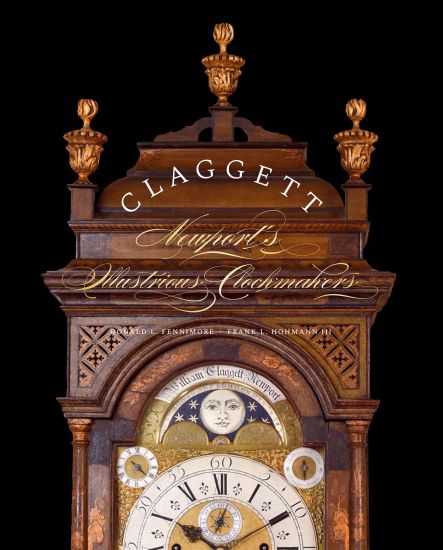
In the 18th century, Newport, Rhode Island, was home to some of the most skillful craftsmen in colonial North America. Among them were the clockmakers William Claggett (1694–1748), James Wady (d. 1759), and Thomas Claggett (1730–1797)—individuals whose surviving works became the best-known records of their lives. Although they flourished in an era widely considered as a golden age of prosperity in Newport, their stories remained elusive, with a few magnificent clocks the only testament to their place in pre-Revolutionary New England. Through a broad search of archival records and a hunt to locate and document not only the work of these artisans—featured here in stunning new photography—but also their interconnected lives, the authors offer a more accurate picture of these three men, their trade, and aspects of life in contemporary Newport. The resulting volume reveals their stories and extraordinary works: an important contribution to the history of masterful craftsmanship in Rhode Island.Distributed for Winterthur Museum, Garden & Library and the Newport Historical SocietyExhibition Schedule:Newport Historical Society (12/08/18–04/21/19)Redwood Library and Athenaeum, Newport (12/08/18–04/21/19)
How a Mvskoke traditionalist leader forged a movement to resist the division of tribal lands and keep his people on the everlasting Medicine Way Chitto Harjo (“Crazy Snake”) had several names—Wilson Jones, Bill Jones, Bill Harjo, Bill Snake—and people called him many things: troublemaker, rebellion leader, uncivilized Indian, martyr, murderer. Many called him crazy for fighting against progress and for his commitment to traditions that they believed were outdated and dying out. Yet in the eyes of many Mvskokes and traditionalists of other nations, he was a hero, a defender of the old ways, a Native patriot, and a leader of the Medicine Way. These traditionalists believed in the Mvskoke worldview, which has inspired the Mvskokes and other Southeastern peoples to carry on their traditions as they have done for hundreds of years. In this engaging account, historian Donald L. Fixico tells the story of the Mvskoke people and their fight for survival and unity amid enduring tensions between white “civilization” and traditional culture. A personal story that begins with Fixico attending a Green Corn Ceremony with his father and young son, this engrossing narrative integrates traditional knowledge with historical method to present an Indigenous perspective on Mvskoke and Native American history.
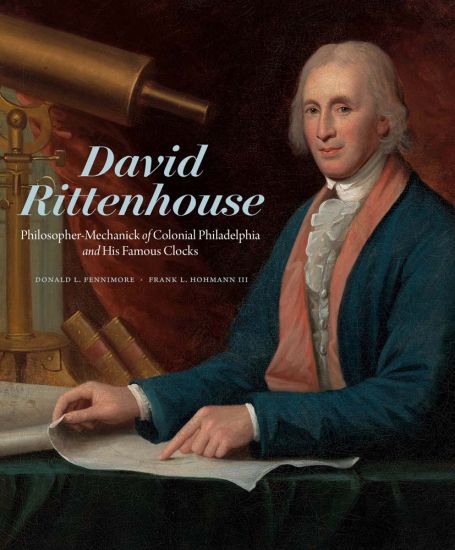
A lush and in-depth celebration of the clocks of David Rittenhouse, one of eighteenth-century America’s greatest scientists and engineers David Rittenhouse: Philosopher-Mechanick of Colonial Philadelphia and His Famous Clocks brings a completely new focus on the life and works of the American astronomer, mathematician, surveyor, and inventor David Rittenhouse (1732–96). A brilliant autodidact who would become the first director of the United States Mint, Rittenhouse was a pivotal figure of the cultural scene in Colonial Philadelphia. This publication expands the body of knowledge surrounding Rittenhouse and his brother Benjamin, as well as the era in which they lived. His masterful clocks are the principal subject matter, but the book also addresses Rittenhouse’s broader works, such as orreries, telescopes, surveying compasses, and other scientific equipment. These objects are all lushly illustrated with new photography, including rarely seen pieces in private collections. Providing a more complete and accurate view of Rittenhouse’s genius, this volume highlights the breadth of his talent and importance to both science and art in early America. Distributed for the Winterthur Museum, Garden, and Library
A systematic examination of Midwestern land tenancy, this book is based on extensive research in manuscript censuses and county records, including those which shed light on tenancy rates before the federal census began providing data in 1880.
Thea Musgrave ranks among the world's foremost living composers, and is widely known for the warmth, humor, and theatrical qualities of her music. Donald L. Hixon has prepared the first and only substantial bibliographical treatment of the composer, and the only complete listing of her works, with the assistance of Musgrave herself. The volume includes a brief biography; a complete list of her works and premieres, together with other notable selected performances, classified by genre and arranged alphabetically by title; a discography of commercially produced recordings; and an annotated bibliography of writings by and about Musgrave and her music. In addition, appendixes provide alphabetical and chronological access to the composer's music. An index of names and titles completes the volume.
Gian Carlo Menotti is a composer known chiefly for his popular operas, including Amahl and the Night Visitors, The Medium, and The Consul. He also wrote a considerable amount of choral, instrumental and chamber music. This addition to the Greenwood Press series Bio-Bibliographies in Music serves as a reference guide to Menotti's career. A brief biographical sketch precedes a chronologically arranged bibliography of general writings by and about Menotti followed by a detailed list of works, alphabetically arranged. A bibliography of writings about specific compositions, complete with selected contemporary critical reviews, includes data on premiers and other significant performances and discographies of recordings. Opera music scholars, along with Menotti fans, will appreciate this detailed guide to available research materials. Intended as a scholarly resource, this volume also includes two appendices, a chronological list of works and a genre list of works. An author index and a separate performer index are provided.
Guides to Archives and Manuscript Collections in the United States
Donald L. DeWitt
Greenwood Press
1994
sidottu
This bibliography is the first to provide systematic coverage of the numerous guides, directories, calendars, inventories, and registers on archives and manuscript collections in the United States. It also covers guides to foreign archives holding materials crucial to an understanding of U.S. history and extends beyond the continential United States to include archives in Puerto Rico, the Virgin Islands, and other Trust Territories. Cutting across disciplines, this bibliography cites more than 2,000 titles from the humanities and the social and physical sciences. It also includes guides to the voluminous holdings of the federal government. The entries are arranged in both topical and geographical headings. Annotations are designed to clarify a guide's title and to help researchers to ascertain the guide's usefulness to them. The index will help researchers to locate quickly guides to the holdings that will be most useful to them. This volume will be a valuable tool for scholars and researchers using unpublished sources as well as for librarians.
Makers of 20th Century Modern Architecture
Donald L. Johnson; Donald Langmead
Greenwood Press
1997
sidottu
The most influential 20th century architects espousing modernism are brought together in critical discussion and independent profiles. This is accomplished through a short but discriminating examination of each architect's design work, an essay outlining the historical course and events that confirms his or her vital position, and a substantial bibliography at the completion of each profile. This sourcebook examines the life and creative activities of such founding architects as Wright, Eisenman, Van der Rohe, and Kahn, as well as their disciples. This volume will be of interest to social and cultural historians, scholars, students of all ages, architects, and the appreciative lay audience.The architects and or firms chosen for the sourcebook were selected as a result of many years of research that required extensive reading of materials by respected experts. From such research, the editors were able to determine the individuals or groups who have been most influential in charting the course of a Westernized modern architecture. From evidence of their productive activities—proof in timber—there is a consensus that each made a unique contribution. The nature and measure of the contribution is discussed within each profile. Those whose reputations are based on paper only, with few buildings to prove their worth, are not included. The editors believe that architecture is an experiential art: all the senses must participate, and that requires the actual built product.
Articles Describing Archives and Manuscript Collections in the United States
Donald L. DeWitt
Greenwood Press
1997
sidottu
The first bibliography to systematically list the numerous articles describing archives and manuscript collections in the United States, this volume includes over 2,200 titles. It goes beyond the continental United States, including articles describing foreign archives that hold records and manuscripts documenting U.S. history and also incorporating articles about archives and manuscript holdings in Alaska, Hawaii, Puerto Rico, and other U.S. Trust Territories. The book is multidisciplinary, containing entries from art, theatre, film and television, business, education, history, librarianship, literature, religion, and other fields. This volume will be useful to researchers using the historical method and to librarians who are frequently asked questions about archival sources.The volume's 2,200 entries are arranged topically and geographically. Annotations clarify the article's title and will help the reader determine which articles to review. The detailed index will help the reader locate articles describing the holdings of specific collections or the papers of specific individuals. This book will be sought after and appreciated by all those doing research in unpublished sources.
This guide to the available literature on sports in American culture during the last two decades of the 20th century is a companion to Jack Higg's Sports: A Reference Guide (Greenwood, 1982). The types of individual or team sports included in this volume include those that are viewed as physical contests engaged in for physical, emotional, spiritual, or psychological fulfillment. With a focus on books alone, chapters review the available literature regarding sports and each concludes with a bibliography. Academic journals likely to contain articles on the topics discussed are listed at the end of each chapter. Twelve chapters discuss sports and American history, business and law, education, ethnicity and race, gender, literature, philosophy and religion, popular culture, psychology, science and technology, sociology and world history.This reference and guide to further research will appeal to scholars of popular culture and sports. An index and two appendixes are included, one listing important dates in American sports from 1980 through 2000 and one listing sports halls of fame, museums, periodicals, and websites.
Soon after 1900 in both North America and Europe the evolution from the tradition of Mediterranean and Gallic architectural styles to modernism began. This phenomenon was due, in part, to American industrial architecture and the work of Frank Lloyd Wright. Wright's building and architectural treatises of 1898-1908, with the additional help of Dutch propaganda on his behalf, significantly influenced European practitioners and theorists. European architecture within and outside of Holland reflects an adaptation of Wright's theories along with the structural determinism of American industrial buildings. With new evidence and fresh analysis culled from Dutch and American archives, personal correspondence, and professional material, this study examines the weight of Wright's works and words and those of the Dutchmen H.P. Berlage, Theo van Doesburg, Jan Wils, J.J.P. Oud, William Dudok, and Hendrik Theodor Wijdeveld. This new insight on the effects of Wright's architectural theories and designs, coupled with an extensive guide for further research, will attract art and architecture scholars and historians on both sides of the Atlantic and will also be of interest to social historians, artists, and architects. Events and new theories, including the assertion that Hendrik Theodor Wijdeveld was the catalytic source behind Wright's Taliesin Fellowship established in 1932, are presented in clear accessible language. Tied to the text are numerous visual presentations of significant designs and buildings.
Guide to Native American Ledger Drawings and Pictographs in United States Museums, Libraries, and Archives
Donald L. DeWitt; John Lovett
Greenwood Press
1998
sidottu
Whether painted by artist-warriors depicting their feats in battle or by other Native American artists, 19th and 20th century ledger drawings—drawn on blank sheets of ledger books obtained from U.S. soldiers, traders, missionaries, and reservation employees—provide an excellent visual source of information on the Great Plains Native Americans. An art form representing a transition from drawing on buffalo hide to a paper medium, ledger drawings range in style, content, and quality from primitive and artistically poor to bold and sharp with lavish use of color. Although interest in ledger drawings has increased in the last 20 years, there has never been a guide to holdings of these drawings. By bringing together the diverse and scattered institutions that hold them, this book will make finding the drawings quicker and easier.Illustrated with examples of ledger drawings, the guide identifies the libraries, archives, historical societies, and museums that hold ledger drawings. The institutions listed range from those with large collections, such as the Smithsonian, Yale, and Oklahoma museums, to institutions with only a few drawings. The book also includes a bibliography of books and articles about Indian pictographic art. The index will enable researchers to locate art by individual artists and tribes.
Daily Life of Native Americans in the Twentieth Century
Donald L. Fixico
Greenwood Press
2006
sidottu
Donald Fixico, one of the foremost scholars on Native Americans, details the day-to-day lives of these indigenous people in the 20th century. As they moved from living among tribes in the early 1900s to the cities of mainstream America after WWI and WWII, many Native Americans grappled with being both Indian and American. Through the decades they have learned to embrace a bi-cultural existence that continues today. In fourteen chapters, Fixico highlights the similarities and differences that have affected the generations growing up in 20th-century America. Chapters include details of daily life such as education; leisure activities & sports; reservation life; spirituality, rituals & customs; health, medicine & cures; urban life; women's roles & family; bingos, casinos & gaming. Greenwood's Daily Life through History series looks at the everyday lives of common people. This book explores the lives of Native Americans and provides a basis for further research. Black and white photographs, maps and charts are interspersed throughout the text to assist readers. Reference features include a timeline of historic events, sources for further reading, glossary of terms, bibliography and index.
Staffing the Contemporary Organization
Donald L. Caruth; Gail D. Caruth; Stephanie S. Pane
Praeger Publishers Inc
2008
sidottu
Few business functions are more important than putting people where they can do the most good. Get it right, and the business soars. Get it wrong, and the business pays dearly in reduced sales, profits, and productivity. Staffing the Contemporary Organization provides a comprehensive treatment of staffing procedures, policies, techniques, and problems. It includes a number of human resources topics not usually covered in one volume—HR planning, legal aspects of staffing, recruiting, selecting, performance appraisal, career development, and many others—in an integrated system. The method presented is a proven, useful tool that managers and HR people can employ to build stronger, more resilient organizations.This thoroughly revised edition provides a comprehensive treatment of staffing procedures, policies, techniques, and problems. It covers areas newly developed since the last edition, like recruiting via the Internet and new court decisions that clarify the scope and application of antidiscrimination laws in the workplace. Among other topics, it covers the following areas in detail: -Employment law -Job analysis -Recruiting and interviewing -Selecting and selection tests -Appraisals and employee development -Administration: Handling promotions, demotions, layoffs, terminations, etc. -Career planning -Measuring the effectiveness of the HR function. Staffing, the authors contend, must encompass the entire range of activities associated with planning for, obtaining, utilizing, and developing human resources. Suitable for business students as well as professionals, this is the first book to present a systems view of the staffing function—a view necessary to maximize the contribution of any company's most important asset: its people.
Staffing the Contemporary Organization
Donald L. Caruth; Gail D. Caruth; Stephanie S. Pane
Praeger Publishers Inc
2008
nidottu
Few business functions are more important than putting people where they can do the most good. Get it right, and the business soars. Get it wrong, and the business pays dearly in reduced sales, profits, and productivity. Staffing the Contemporary Organization provides a comprehensive treatment of staffing procedures, policies, techniques, and problems. It includes a number of human resources topics not usually covered in one volume—HR planning, legal aspects of staffing, recruiting, selecting, performance appraisal, career development, and many others—in an integrated system. The method presented is a proven, useful tool that managers and HR people can employ to build stronger, more resilient organizations.This thoroughly revised edition provides a comprehensive treatment of staffing procedures, policies, techniques, and problems. It covers areas newly developed since the last edition, like recruiting via the Internet and new court decisions that clarify the scope and application of antidiscrimination laws in the workplace. Among other topics, it covers the following areas in detail: -Employment law -Job analysis -Recruiting and interviewing -Selecting and selection tests -Appraisals and employee development -Administration: Handling promotions, demotions, layoffs, terminations, etc. -Career planning -Measuring the effectiveness of the HR function. Staffing, the authors contend, must encompass the entire range of activities associated with planning for, obtaining, utilizing, and developing human resources. Suitable for business students as well as professionals, this is the first book to present a systems view of the staffing function—a view necessary to maximize the contribution of any company's most important asset: its people.
The Boomer Retirement Time Bomb
Donald L. Venneberg; Barbara Welss Eversole
Praeger Publishers Inc
2010
sidottu
This thought-provoking book looks at the potentially devastating effects of Baby Boomer retirements, predicts how our country will change, and provides actionable advice to help businesses weather the storm. The Boomer Retirement Time Bomb: How Companies Can Avoid the Fallout from the Coming Skills Shortage is a book for business leaders who want to stay ahead of the curve. A must-read for the 21st-century organization, it lays out challenges posed by a changing workforce and explains why we need to rethink assumptions about work and the workplace. More significantly, it provides practical, real-world strategies, best practices, and tactics for maximizing the opportunities that will accompany the coming demographic shift. Asserting that employers who play their cards right can reap tremendous rewards by tapping into the wisdom, maturity, and judgment of older workers, the book covers such topics as recruiting and (re)training these valuable employees. It looks at increased workplace flexibility and other means of helping retain older workers, and it explores how organizations can treat older workers as assets. Finally, it provides suggestions for developing a workplace that welcomes and accommodates the needs of an intergenerational workforce, providing work-life balance for every employee.