This book is organized around the clusters of details about how behavior is controlled by its environmental antecedents and about how behavior can control its antecedents. It illustrates how to integrate environmental awareness into professional practice and design.
Analyzes history to determine why there are wars, whether there are underlying laws that explain why one nation challenges another, and whether there are forces working for the preservation of peace
High Pressure Vessels is the only book to present timely information on high pressure vessel design for student engineers, mechanical and chemical engineers who design and build these vessels, and for chemical engineers, plant engineers and facilities managers who use them. It concentrates on design issues, giving the reader comprehensive coverage of the design aspects of the ASME High Pressure System Standard and the forthcoming ASME High Pressure Vessel Code. Coverage of the safety requirements of these new standards is included, as well as offering the reader examples and original data, a glossary of terms, SI conversions, and lists of references.
While most of Asia’s major cities are increasingly homogenized by rapid economic growth and cultural globalization, Rangoon, which is Burma’s former capital and largest city, still bears the imprint of a unique and often turbulent history. It is the site of the Shwedagon Pagoda, a focus of Buddhist pilgrimage and devotion since the early second millennium C.E. that continues to play a major role in national life. In 1852, the British occupied Rangoon and made it their colonial capital, building a modern port and administrative center based on western designs. It became the capital of independent Burma in 1948, but in 2005 the State Peace and Development Council military junta established a new, heavily fortified capital at Naypyidaw, 320 kilometers north of the old capital.A major motive for the capital relocation was the regime’s desire to put distance between itself and Rangoon’s historically restive population. Reacting to the huge anti-government demonstrations of "Democracy Summer" in 1988, the new military regime used massive violence to pacify the city and sought to transform it in line with its supreme goal of state security. However, the "Saffron Revolution" of September 2007 showed that Rangoon’s traditions of resistance reaching back to the colonial era are still very much alive.
Pushing the Envelope, a survey history of the American aircraft (now aerospace) manufacturing industry, is the most comprehensive history on the subject ever completed. Though it covers the development of the industry from the beginnings of flight to the present, it provides far more than a simple chronology by analyzing key economic, military, technical, and international influences on the industry and showing how the industry has been instrumental in American military and technological leadership from its modest beginnings. Using original sources whenever available, Pushing the Envelope focuses on the business of aircraft. It is neither an aeronautical nor a production history of the industry, although both aspects are addressed. Instead, Donald M. Pattillo features the development and production of aircraft in different periods in the context of aeronautical progress. Pushing the Envelope also establishes that the central fact of the industry's existence, its dependence on military contracts, has been simultaneously its greatest strength and greatest vulnerability. Even during periods of military expansion, Pattillo illustrates, it has always been an unstable and insecure enterprise. Carefully researched, Pushing the Envelope also assesses the environmental impacts on the industry, including those pressures that have often led it into ethical dispute. Unlike any other technological industry, the unique qualities of the aircraft industry are truly paradoxical--although it provides vital technical and production capability to the nation, demand for its capabilities may be influenced by external developments that it cannot foresee or influence.Pushing the Envelope transcends narrow disciplines, commingling aeronautical science and technology, business management, international business, the history of science and technology, national security studies, and international relations. Written in nontechnical language, it can easily be understood by a diverse audience, including industry and military professionals as well as the general public interested in aviation and technology. With Pushing the Envelope, Pattillo fills a most conspicuous gap in the literature of both aviation and industrial history.
The Byzantines lived in a theocratic society. They were less ready than their western contemporaries to draw the line between things spiritual and things temporal, between Church and state. This book explores some of the characteristics of that society in the age of its decline and fall between the thirteenth and the fifteenth centuries. Though irremediably shattered by the effects of the Fourth Crusade in 1204, the Byzantine Empire found the will to reassert itself and to endure for another 250 years. Material recovery was hardly possible, but there was a remarkable reawakening of scholarship and of the spiritual life. The world's debt to some of the late Byzantine scholars is known to classicists and to students of the Italian Renaissance. The contribution of the latter-day saints of Byzantium, the hesychasts and scholars of the spirit, has been less publicized.
Theodore Spandounes belonged to a Byzantine refugee family who had settled in Venice after the Ottoman conquest of Constantinople in 1453. He wrote an account of the origins of the Turkish rulers and of their phenomenal rise to power. It was partly a plea to the Popes and princes of western Christendom to unite against the infidel and one of the earliest works of its kind. The first version of the book, written in Italian, appeared in 1509 and was translated into French in 1519. The final version was made in 1538 and a full Italian text was published in 1890 though without any historical commentary. This book presents an English translation of the full text with a preface, commentary and notes; a discussion of the sources which Spandounes might have consulted and an assessment of the value and interest of this hitherto neglected and undervalued treatise.
The district of Epiros in north-western Greece became an independent province following the Fourth Crusade and the dismemberment of the Byzantine Empire by the Latins in 1204. It retained its independence despite the recovery of Constantinople by the Greeks in 1261. Each of its rulers acquired the Byzantine titles of Despot, from which the term Despotate was coined to describe their territory. They preserved their autonomy partly by seeking support from their foreign neighbours in Italy. The fortunes of Epiros were thus affected by the expansionist plans of the Angevin kings of Naples and the commercial interests of Venice. Until 1318 it was governed by direct descendants of its Byzantine founder. Thereafter it was taken over first by the Italian family of Orsini, then conquered by the Serbians, infiltrated by the Albanians, and appropriated by an Italian adventurer, Carlo Tocco. Like the rest of Byzantium and eastern Europe it was ultimately absorbed into the Ottoman Empire in the fifteenth century. The Despotate of Epiros illuminates part of Byzantine history and of the history of Greece in the Middle Ages.
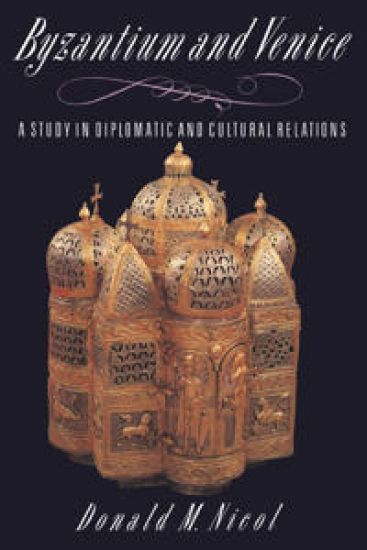
This book, the first of this scope to have been published, traces the diplomatic, cultural and commercial links between Constantinople and Venice from the foundation of the Venetian republic to the fall of the Byzantine Empire. It aims to show how, especially after the Fourth Crusade in 1204, the Venetians came to dominate first the Genoese and thereafter the whole Byzantine economy. At the same time the author points to those important cultural and, above all, political reasons why the relationship between the two states was always inherently unstable.
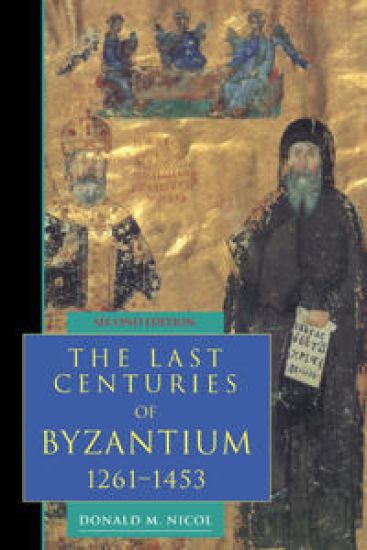
The Byzantine Empire, fragmented and enfeebled by the Fourth Crusade in 1204, never again recovered its former extent, power and influence. Its greatest revival came when the Byzantines in exile reclaimed their capital city of Constantinople in 1261 and this book narrates the history of this restored empire from 1261 to its conquest by the Ottoman Turks in 1453. First published in 1972, the book has been completely revised, amended, and in part rewritten, with its source references and bibliography updated to take account of scholarly research on this last period of Byzantine history carried out over the past twenty years.
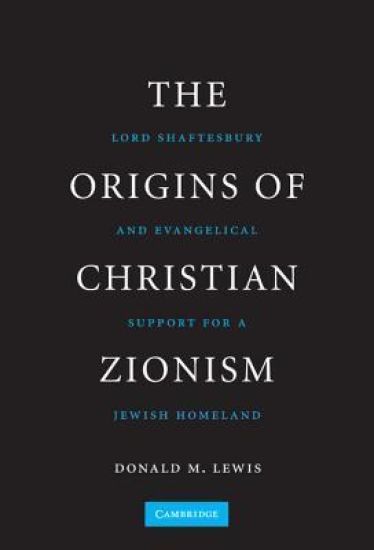
In this study of Lord Shaftesbury - Victorian England's greatest humanitarian and most prominent Christian Zionist - Donald M. Lewis examines why British evangelicals became fascinated with the Jews and how they promoted a 'teaching of esteem' that countered a 'teaching of contempt'. Evangelicals militated for the restoration of Jews to Palestine by lobbying the British cabinet on foreign policy decisions. Professing their love for the Jews, they effectively reshaped the image of the Jew in conversionist literature, gave sacrificially to convert them to Christianity, and worked with German Pietists to create a joint Anglican-Lutheran bishopric in Jerusalem, the center (in their minds) of world Jewry. Evangelical identity evolved during this process and had an impact on Jewish identity, transforming Jewish-Christian relations. It also changed the course of world history by creating a climate of opinion in the United Kingdom in favor of the Balfour Declaration of 1917, which pledged British support for a Jewish homeland in Palestine.
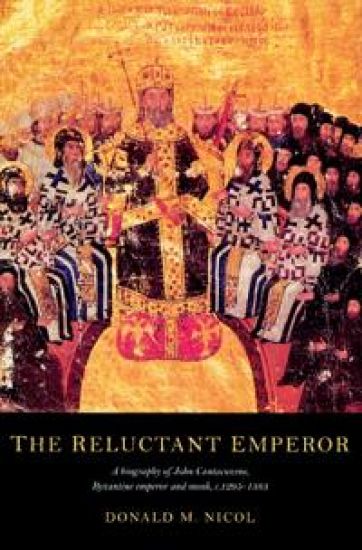
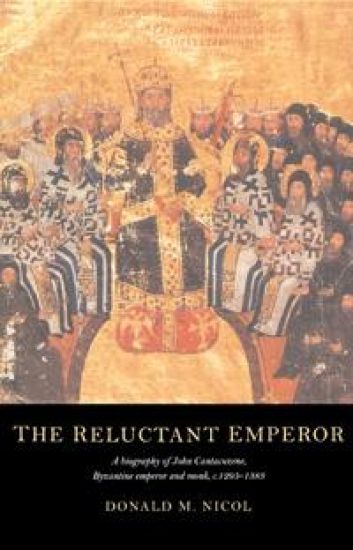
John Cantacuzene reigned as Byzantine emperor in Constantinople from 1347 to 1354. A man of varied talents, as a scholar, soldier, statesman, theologian and monk, he was unique in being the only emperor to narrate the events of his own career. His memoirs form one of the most interesting and literate of all Byzantine histories. Following his abdication in 1354, he lived the last thirty years of his life as a monk, a writer and a grey eminence behind the throne. This book is not a social or political history of the Byzantine Empire in the fourteenth century. It is a biography of a much maligned man who had a hope, however naive, of coming to terms with the emerging Muslim world of Asia and of winning the co-operation of western Christendom without compromising the Orthodox faith of the Byzantine tradition.
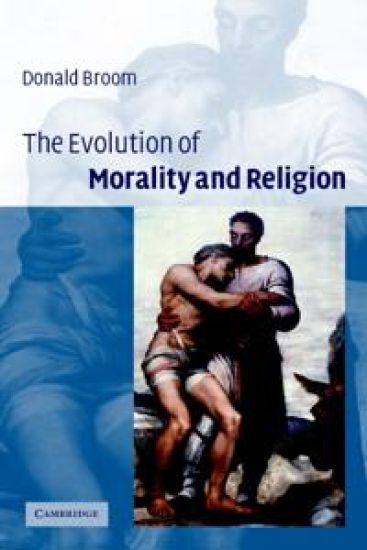
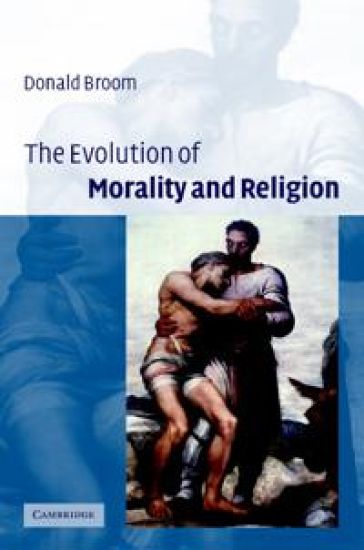
Accepted codes of conduct and established religions are features of human societies throughout the world. Why should this be? In this book, biologist Donald Broom argues that these aspects of human culture have evolved as a consequence of natural selection; that morally acceptable behaviour benefits the humans and other animals and that a principal function of religion is to underpin and encourage such behaviour. The author provides biological insights drawn especially from work on animal behaviour and presents ideas and information from the fields of philosophy and theology to produce a thought-provoking, interdisciplinary treatment. Scientists who read this book will gain an appreciation of the wider literature on morality and religion, and non-scientists will benefit from the author’s extensive knowledge of the biological mechanisms underlying the behaviour of humans and other social animals.
John Cantacuzene reigned as Byzantine emperor in Constantinople from 1347 to 1354. A man of varied talents, as a scholar, soldier, statesman, theologian and monk, he was unique in being the only emperor to narrate the events of his own career. His memoirs form one of the most interesting and literate of all Byzantine histories. Following his abdication in 1354, he lived the last thirty years of his life as a monk, a writer and a grey eminence behind the throne. This book is not a social or political history of the Byzantine Empire in the fourteenth century. It is a biography of a much maligned man who had a hope, however naive, of coming to terms with the emerging Muslim world of Asia and of winning the co-operation of western Christendom without compromising the Orthodox faith of the Byzantine tradition.
Theodore Spandounes belonged to a Byzantine refugee family who had settled in Venice after the Ottoman conquest of Constantinople in 1453. He wrote an account of the origins of the Turkish rulers and of their phenomenal rise to power. It was partly a plea to the Popes and princes of western Christendom to unite against the infidel and one of the earliest works of its kind. The first version of the book, written in Italian, appeared in 1509 and was translated into French in 1519. The final version was made in 1538 and a full Italian text was published in 1890 though without any historical commentary. This book presents an English translation of the full text with a preface, commentary and notes; a discussion of the sources which Spandounes might have consulted and an assessment of the value and interest of this hitherto neglected and undervalued treatise.
Accepted codes of conduct and established religions are features of human societies throughout the world. Why should this be? In this book, biologist Donald Broom argues that these aspects of human culture have evolved as a consequence of natural selection; that morally acceptable behaviour benefits the humans and other animals and that a principal function of religion is to underpin and encourage such behaviour. The author provides biological insights drawn especially from work on animal behaviour and presents ideas and information from the fields of philosophy and theology to produce a thought-provoking, interdisciplinary treatment. Scientists who read this book will gain an appreciation of the wider literature on morality and religion, and non-scientists will benefit from the author’s extensive knowledge of the biological mechanisms underlying the behaviour of humans and other social animals.
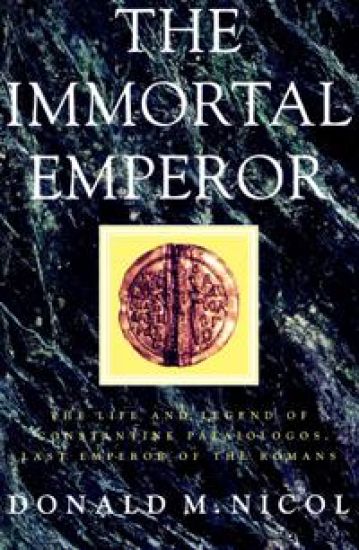
Constantine XI Palaiologos was the last Christian Emperor of Constantinople and Byzantium. In 1453, when Constantinople fell to the Ottoman Turks, he was last seen fighting at the city walls, but the actual circumstances of his death have remained surrounded in myth. In the years that followed it was said that he was not dead but sleeping - the ‘immortal emperor’ turned to marble, who would one day be awakened by an angel and drive the Turks out of his city and empire. Donald Nicol’s book tells the gripping story of Constantine’s life and death, and ends with an intriguing account of claims by reputed descendants of his family - some remarkably recent - to be heirs to the Byzantine throne.