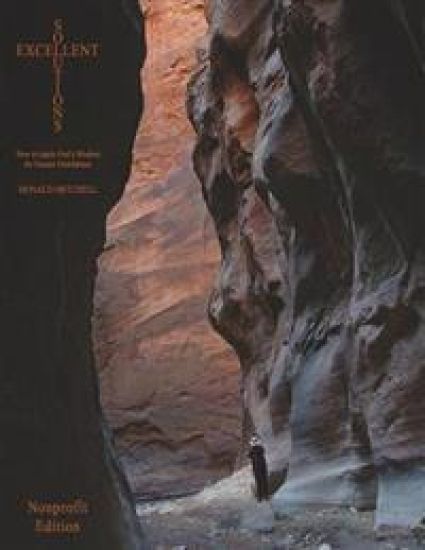
Some are discouraged by the state of the world. If you share any of these concerns, the nonprofit edition of Excellent Solutions provides silver linings for dark clouds, describing useful actions to turn well-justified hope into accomplishments.Excellent Solutions shows that there is more than sufficient time, effort, physical resources, and money available to greatly improve the spiritual, moral, health, emotional, and physical circumstances of almost everyone on Earth. Excellent Solutions describes ways of using these resources better to upgrade what we all do and how we conduct our lives to provide many more of such benefits.After reading this book, you will know how to devise and to apply such solutions to improve greatly your own life, as well as the lives of others.Foreword Clarion ReviewFive Stars (out of Five)Mitchell avoids narrow ideas, encourages positive thinking, and sets large goals to make the biggest possible spiritual and social impact.In Excellent Solutions: Nonprofit Edition, Donald Mitchell proposes to prove "that there is more than sufficient time, effort, physical resources, and money available to greatly improve the spiritual, moral, health, emotional, and physical circumstances of almost everyone on Earth." That is a significant challenge for an author to take on, but Mitchell's thorough and optimistic presentation provides a commendable and thoughtful plan for nonprofit organizations to follow as they strive to make important and lasting impacts on individuals and society.Mitchell breaks his process into four stages, each with its own section: "Set Goals for Excellent Solutions," "Eliminate 'Stalled' Thinking," "Create and Implement an Excellent Solution," and "Create and Implement an Excellent Solution By Using a Second Method.""Excellent solutions" are those that reach beyond simplistic answers and blossom exponentially into far-reaching, positive actions without significantly increasing the initial effort. He begins with theessential element of goal-setting, but as is the case with all thirty-one of his lessons, Mitchell stresses the need to think in terms of goals that are not limited by negativity or narrow focus.Mitchell excels at turning potentially complex ideas into easily understood steps that he reinforces with biblical passages, personal examples, and engaging explanations that communicate his points clearly without coming across as condescendingly simplistic. Rather, his style conveys the feeling of a favorite uncle teaching a child about important life lessons while giving constant encouragement. For example, near the end of one teaching segment, he writes, "When you have finished the five tasks, please accept my congratulations for having done so much valuable thinking."Biblical references and scripture passages abound, and Mitchell craftily uses them to support his concepts and to emphasize that his plan is biblically sound. His passion for his Christian principles and his belief in their ability to change the world, particularly through the effectiveness and excellent solutions of nonprofits, resonates throughout his writing. He does not simply want nonprofits to be successful in secular terms, but also in spiritual matters.Excellent Solutions is packed with useful and clearly explained information, but Mitchell adds a creative twist that gives the 450-plus page book some visually inspiring moments. Before each lesson, he inserts an incredibly beautiful full-color nature photo by Derrick Z. Jackson. Whether intentional or not, these brilliant pictures inspire reflection on creation's beauty around the world, subtly reinforcing Mitchell's global concepts.Mitchell practices what he teaches. He avoids narrow ideas, encourages positive thinking, and sets large goals to make the biggest possible spiritual and social impact-precisely what Excellent Solutions is all about.Jeff Friend
This book provides a critical evaluation of the transformation of cultural geography which has occurred over the past two decades. "Cultural Geography" explains cultural change in different geographical settings, from the politics of everyday life to the production and consumption of landscapes, to the politics of sexuality, gender, race, and nationality. Analyses recent transformations in cultural geographic theory, whilst salvaging the most valuable aspects of older traditions. Encourages debate over the ideology of culture, the production of value and the role of cultural struggle in reproducing social life. Illustrates cultural geographic theory using examples of contemporary "culture wars." Adopts an approach which is both accessible and meaningful to the advanced student, by relating difficult concepts to contemporary issues.
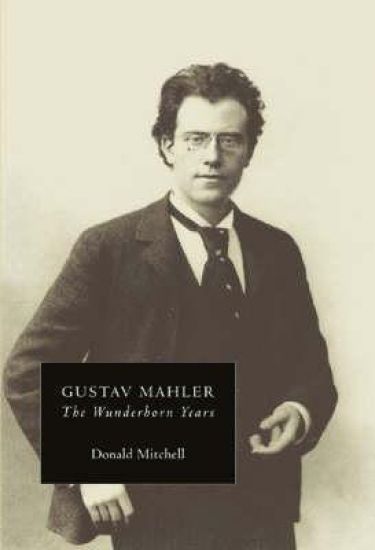
Donald Mitchell's second book on the life and work of Gustav Mahler examines the fruitful years of the First to the Fourth Symphonies, as well as the earlier song cycles from the Gesellen lieder to the magical Ruckert songs. A work of painstaking and imaginative scholarship presented in eminently readable language. MUSICAL QUARTERLY Mitchell has amassed and processed an imposing amount of material, most of it new... It includes a section on Mahler and Freud, discusses Bach's influence on Mahler, and reproduces contemporary criticism... Invaluable for Mahler scholars and lovers. ECONOMIST Donald Mitchell's second book on the life and work of Gustav Mahler focuses principally on Mahler's first settings of Wunderhorn texts, volumes I and II of the Lieder und Gesaenge; his first song-cycle, the Lieder eines fahrenden Gesellen; and the later orchestral settings of Wunderhorn poems. The central section of the book explores the extraordinary and often eccentric chronology of the First, Second and Third Symphonies' composition, an often minute exploration which reveals the interpenetration of song and symphony in this period of Mahler's art, emphasizes the significance for these works of imagery drawn from the Wunderhorn anthology, and calls attention to the ambiguous position occupied by much of Mahler's music atthis time, suspended as it was between the rival claims - and forms - of symphony and symphonic poem. The final section of the book not only looks at the Fourth Symphony as the final, perhaps most perfect, flowering of Mahler's Wunderhorn symphonies, but also investigates such fascinating topics as the relationship between Mahler and Berlioz, and the influence of Bach on Mahler's later masterpieces. This new edition of the book offers an entirelynew preface, in which Mitchell gives a unique account of the influence of politics, nationalism and fascism on the reception and rejection of Mahler's music, after the composer's death until the Mahler Renaissance of the 1950s and 1960s. It also includes extensive corrigenda and amplifying addenda, making it clear that the Wunderhorn influence persisted beyond the end of the period during which the Wunderhorn anthology was a constant sourceof inspiration. It is completed by an international bibliography which documents chronologically the reception and study of his music both in the past, and the prodigiously different circumstances of the present. DONALD MITCHELL was Founder Professor of Music at the University of Sussex. He is well known for his major studies of Mahler, among his many other books and studies. He was awarded the CBE in 2000.
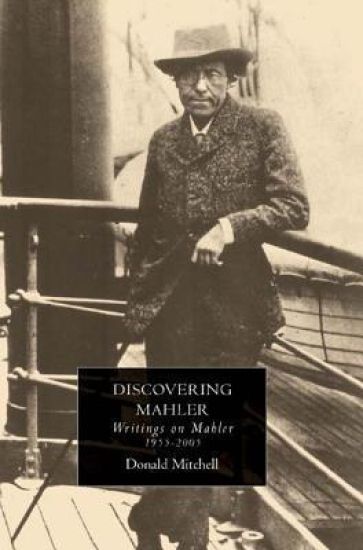
Discovering Mahler is the fourth and final volume of Donald Mitchell's unique studies of Mahler and his music. It fills the remaining gaps in the scrutiny of Mahler's works in the series, principally the Fifth, Sixth and Seventh Symphonies, with the Ninth and Tenth. Discovering Mahler is the fourth and final volume of Donald Mitchell's unique studies of Mahler and his music. This new publication fills the remaining gaps in the scrutiny of Mahler's works in the series, principally the Fifth, Sixth and Seventh Symphonies, with the Ninth and Tenth. It begins with a substantial survey of Mahler's music, commissioned for the sixth edition of Grove's Dictionary of Music and Musicians (1980), but here printed in full for the first time. A striking feature throughout this collection is the examination of the revelatory role of the performer; this is epitomized in transcripts of significant conversations about the Fifth and Seventh Symphonies with, respectively, Riccardo Chailly and Bernard Haitink. The concluding section consists of major lectures and celebratory essays, some here published for the first time in English. These form a fascinating and frequently moving personal testament to a lifetime, and specifically fifty working years, of discovering Mahler. Donald Mitchell's three previous studies of Mahler are among the enduring monuments of postwar Mahler literature. He was awarded the Gustav Mahler Medal of Honour of the International Gustav Mahler Society in Vienna in 1987, and was appointed CBE in 2002.
Buddhism: Introducing the Buddhist Experience is the only up-to-date introductory text that covers the full spectrum of writings, practices, and perspectives animating the global Buddhist tradition. Instructors struggle to expose students to a diverse array of Buddhist texts and voices. This volume is enhanced by primary sources and twenty-two gender-balanced personal narrative boxes. Each country chapter also concludes with an essay by a noted Buddhist practitioner-scholar. Another common challenge for instructors involves covering the variety of global Buddhist traditions; there are many such traditions, and only so much time in the semester. The authors solve this problem decisively. After discussing Buddhism's origins in India, they go on to cover: Theravada and Mahayana Buddhism; Buddhism in Southeast Asia, Tibet, China, Korea, and Japan; and the globalization of Buddhism with special emphasis on the United States. A final, related challenge for instructors is to avoid overwhelming students. Indeed, instructors seem to face a paradox: they can cover the full variety of Buddhist texts and traditions only if they assign an unmanageable amount of reading. Buddhism's brief, accessible, pedagogically rich chapters show that this paradox is only apparent. While the text is authoritative and comprehensive, its coverage respects the average student's attention-span.
A crucial year in the Britten/Auden relationship, which reshaped and redefined artistic direction in the immediate pre-war period. Benjamin Britten and W.H. Auden were key figures of the 1930s, and here Donald Mitchell traces their lives during one crucial year, 1936. They worked hard to establish themselves, first through the GPO film unit, in a collaboration which flowered and spilled over into the theatre, and then radio - a new medium that the liveliest creative minds of the time were exploring and exploiting. Britten and Auden also joined forces in works destined for the recital room and concert hall, among them Our Hunting Fathers, the political symbolism of which Donald Mitchell examines in depth, and On the Island, settings of early Auden that comprised Britten's first important set of songs to English texts. Much use is made of Britten's private diaries, which he kept on a daily basis, and a revealing portrait emerges of the two men's relationship, of their work together in many different fields, and of the reflection within that work of political ideas current at the time. DONALD MITCHELL was Britten's close friend and publisher from 1964 until the end of the composer's life, and his authorised biographer. The T S Eliot Memorial Lectures delivered in 1979
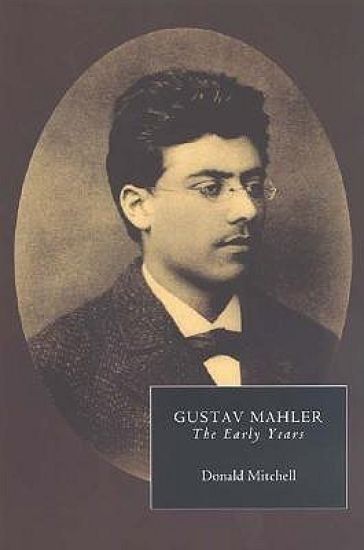
Without an understanding of the conflicts of Mahler's youth one cannot truly appreciate the impulses behind the major symphonies and song cycles of his later years. Available again for a new generation of Mahlerians, Donald Mitchell's famous study of the composer's early life and music was greeted as a major advance on its first appearance in 1958. Revised and updated in the early 1980s, thispaperback edition includes a new introduction by the author to bring this classic work once again to the forefront of Mahler studies. From his birth in Bohemia, then part of the mighty Austro-Hungarian empire, to a surveyof his early works, many now lost, Gustav Mahler: The Early Years forms an indispensable prelude to the period of the great compositions. The conflicts which came to mark Mahler's music and personality had their beginningsin his childhood and youth. Without understanding the territorial, social and familial conflicts of this time one cannot truly appreciate the impulses behind the major symphonies and song cycles of his later years. DONALD MITCHELL was born in 1925. Two composers have been central to his writings on music, Gustav Mahler and Benjamin Britten. His three studies of Mahler, The Early Years (1958), The Wunderhorn Years (1975), and Songs and Symphonies of Life and Death (1985), are among the enduring monuments of postwar Mahler literature. He was founder Professor of Music at the University of Sussex (1971-76), was visiting Professor atKing's College, London, and is currently a visiting Professor at the Universities of Sussex and York.
Tulpat ovat mielen asettamia jarruja, jotka hidastavat organisaation kehittymist . Monet ajan my t syv lle organisaatiokulttuuriin jumiutuneet vahingolliset asenteet ja prosessit, joiden oletetaan tuovan tehokkuutta toimintaan, itse asiassa rajoittavat potentiaalia ja pilaavat mahdollisuuksia luovaan uudistumiseen, muutokseen ja kasvuun. 2000 prosenttia tarjoaa yksityiskohtaisia ohjeita ja esimerkkej , miten tunnistaa tulpat omassa organisaatiossa tai omassa el m ss , ja miten p st niist eroon. Uutta virtaa alkaa l yty kun opitaan keskitt m n huomio mittareihin, jotka vaikuttavat tuloksiin eniten. Parhaisiin tuloksiin p semiseksi on syyt siirty oman mukavuusvy hykkeen ulkopuolelle ja alkaa m r tietoisesti etsi uudenlaisia luovia ratkaisuja muista toimintaymp rist ist . 2000 prosenttia opastaa l yt m n ratkaisuja, joiden my t on mahdollista saada aikaan nykyisill resursseilla 20 kertaa enemm n tuloksia, tai nykyisi tuloksia 20 kertaa lyhyemm ss ajassa. Peter Druckerin n kemys t st kirjasta oli, ett se oli ilmestyess n 20-30 vuotta aikaansa edell . 2000 prosenttia on k nnetty useille eri kielille. Kiinassa kommunistipuolue valitsi teoksen10 parhaan joukkoon amerikkalaisten uusien ideoiden joukosta. Japanin markkinoilla kirja oli myydyimpien listalla kuukausien ajan.
And God saw every thing that he had made, and, behold, it was very good ....- Genesis 1:31 (KJV)In this book, Donald Mitchell recounts a vivid waking vision of a semi-arid part of Malawi that he recognized, one that had stunningly become a modern-day version of what the original Garden of Eden might have looked like with windmills pumping water and irrigating the crops. What is this vision foretelling about Malawi? This book is about the expansion and improvement of God's Kingdom in Malawi through spiritual, economic, and practical empowerment tools developed at God's direction. Diligent application of these tools can rapidly turn around the fortunes of a nation - and Malawi, with its abundant natural resources, is like a low-hanging fruit for such a turnaround. By the application of the Kingdom of God's advancing goals, Malawi can achieve the astronomical results. And the attributes of these goals are love, mercy, justice, and wisdom. This book can turn around the fortunes of a people, a country, a nation. The work, however, requires many hands. If you opt to be part of it, you will complement the expansion of God's Kingdom. From the Foreword by Donald R. Kamdonyo, Ph.D.Lilongwe, Malawi
The People’s Property? is the first book-length scholarly examination of how negotiations over the ownership, control, and peopling of public space are central to the development of publicity, citizenship, and democracy in urban areas. The book asks the questions: Why does it matter who owns public property? Who controls it? Who is in it? Donald Mitchell and Lynn A. Staeheli answer the questions by focusing on the interplay between property (in its geographical sense, as a parcel of owned space) and people. Property rights are often defined as the "right to exclude." It is important, therefore, to understand who (what individual and corporate entities, governed by what kinds of regulations and restrictions) owns publicly accessible property. It is likewise important to understand the changing bases for excluding some people and classes of people from otherwise publicly accessible property. That is to say, it is important to understand how modes of access and possibilities for association in publicly accessible space vary for different individuals and different classes of people, if we are to understand the role public spaces play in shaping democratic possibilities. In what ways are urban public spaces "the people’s property" – and in what ways are they not? What does this mean for citizenship and the constitution of an inclusive, democratic polity? The book develops its argument through five case studies: protest in Washington DC; struggles over the Plaza of Santa Fe, NM; homelessness and property redevelopment in San Diego, CA; the enclosure of public space in a mall in Syracuse, NY; and community gardens in New York City. Though empirically focused on the US, the book is of broader interests as publics in all liberal democracies are under-going rapid reconsideration and transformation.
The People’s Property? is the first book-length scholarly examination of how negotiations over the ownership, control, and peopling of public space are central to the development of publicity, citizenship, and democracy in urban areas. The book asks the questions: Why does it matter who owns public property? Who controls it? Who is in it? Donald Mitchell and Lynn A. Staeheli answer the questions by focusing on the interplay between property (in its geographical sense, as a parcel of owned space) and people. Property rights are often defined as the "right to exclude." It is important, therefore, to understand who (what individual and corporate entities, governed by what kinds of regulations and restrictions) owns publicly accessible property. It is likewise important to understand the changing bases for excluding some people and classes of people from otherwise publicly accessible property. That is to say, it is important to understand how modes of access and possibilities for association in publicly accessible space vary for different individuals and different classes of people, if we are to understand the role public spaces play in shaping democratic possibilities. In what ways are urban public spaces "the people’s property" – and in what ways are they not? What does this mean for citizenship and the constitution of an inclusive, democratic polity? The book develops its argument through five case studies: protest in Washington DC; struggles over the Plaza of Santa Fe, NM; homelessness and property redevelopment in San Diego, CA; the enclosure of public space in a mall in Syracuse, NY; and community gardens in New York City. Though empirically focused on the US, the book is of broader interests as publics in all liberal democracies are under-going rapid reconsideration and transformation.