Kirjojen hintavertailu. Mukana 11 342 296 kirjaa ja 12 kauppaa.

Kirjahaku

Etsi kirjoja tekijän nimen, kirjan nimen tai ISBN:n perusteella.

1000 tulosta hakusanalla Donald R. Stephens

Psychosocial Care of the Adult Cancer Patient

Psychosocial Care of the Adult Cancer Patient

Donald R. Nicholas

Oxford University Press Inc
2015
sidottu
Increasing efficacy of biomedical treatments for cancer means that more and more people are living longer with the disease. The five-year relative survival rate for all cancers has increased considerably in the last three decades, with some survivors living for many years and thus facing increasingly complex psychosocial issues. As a result, the mental health subspecialty of psycho-oncology is growing and is responding to the many calls for increased availability of psychological services for cancer patients. Psychosocial Care of the Adult Cancer Patient introduces psychologists and other mental health professionals to the field of psycho-oncology, educates them about evidence-based interventions for individuals, groups, couples, and families, and describes how to successfully collaborate with oncologists and other cancer care professionals. Introductory in nature and providing ready access to a range of evidence-based interventions, this book briefs the reader on the field of psycho-oncology and the basics of cancer, explains screening and assessment for psychosocial distress, details the principles of evidence-based interventions, and concludes with case examples that illustrate the evidence-based practice competencies-ask, access, appraise, translate, integrate, and evaluate. In a unique writing style, the case examples reveal the decision-making process of an experienced clinician doing evidence-based practice. Practical strategies for addressing the psychological needs of cancer patients and their families are offered in an easy-to-use, quick reference format. Key points are highlighted and enhanced through the use of tables and figures designed to summarize and emphasize important information. This book will be of value to clinical and counseling psychologists and other mental health professionals, as well as graduate students in psychology, social work, mental health counseling, oncology nursing, and other cancer care professions.
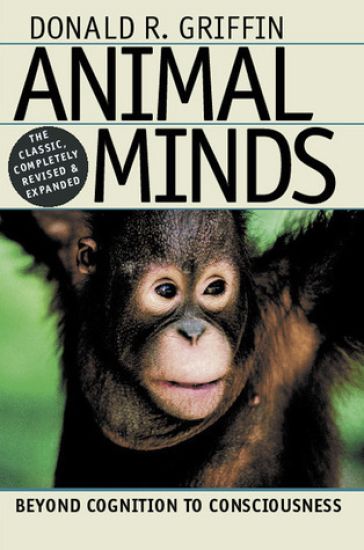
Animal Minds

Animal Minds

Donald R. Griffin

University of Chicago Press
2001
sidottu
This text takes the reader on a guided tour of scientific research concerning animal mentality. Are animals consciously aware of anything, or are they merely living machines incapable of conscious thoughts or emotions? How can we tell? Such questions have fascinated the author, Donald Griffin, for decades, and his years spent at the forefront of research in animal cognition make him one of the leading behavioural ecologists of the 20th century. This revised and expanded version of his book moves beyond considerations of animal cognition to argue that scientists should and can investigate questions of animal consciousness. Using examples, ranging from chimpanzees to dolphins to birds and bees, Griffin demonstrates how communication between animals can serve as a "window" into what animals think and feel. He even shows how the reader can learn when there is no verbal communication from the animal, instead look at the actions the animal is taking, and how they respond to their surrounding and adapt or die. Griffin also considers the up-and-coming research on animal consciousness, its pros and cons, and explores the philosophical and ethical implications of the research.
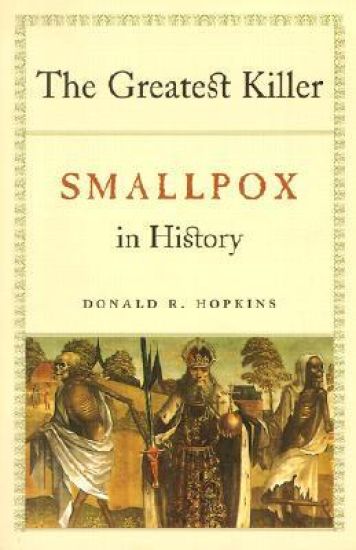
The Greatest Killer

The Greatest Killer

Donald R. Hopkins

University of Chicago Press
2002
nidottu
Once known a the "great fire, "the spotted death" or "destroying angel", smallpox has been rivaled only by plague as a source of supreme terror. Spreading easily through the air, especially in crowded urban conditions, smallpox even today is fatal to 25% of its victims; there is no known cure once symptoms appear. Although naturally occurring smallpox was eradicated in 1977, recent terrorist attacks in the United States have raised the appalling possibility that someone might craft a deadly biological weapon from stocks of the virus that remain in known (and perhaps unknown) laboratories. In "The Greatest Killer" Donald R. Hopkins provides a fascinating account of smallpox and its role in human history. Starting with its origins 10,000 years ago in Africa or Asia, Hopkins follows the disease on its rampage through both the ancient and modern worlds, including its spread to Europe and the Americas. He describes how smallpox often wiped out whole villages and decimated the populations of entire regions, and how the disease disrupted agriculture and trade. Smallpox changed the course of history as it removed or temporarily incapacitated heads of state, halted or exacerbated wars, and devastated populations that had never been exposed to the disease. In Hopkins's history, smallpox was one of the most dangerous - and influential -characters that shaped the course of world events.
Us Against Them

Us Against Them

Donald R. Kinder; Cindy D. Kam

University of Chicago Press
2009
sidottu
Ethnocentrism - our tendency to partition the human world into in-groups and out-groups - pervades societies around the world. Surprisingly, though, few scholars have explored its role in political life. Donald R. Kinder and Cindy D. Kam fill this gap with "Us Against Them", their definitive explanation of how ethnocentrism shapes American public opinion. Arguing that humans are broadly predisposed to ethnocentrism, Kinder and Kam explore its impact on our attitudes toward an array of issues, including the war on terror, humanitarian assistance, immigration, the sanctity of marriage, and the reform of social programs. The authors ground their study in previous theories from a wide range of disciplines, establishing a new framework for understanding what ethnocentrism is and how it becomes politically consequential. They also marshal a vast trove of survey evidence to identify the conditions under which ethnocentrism shapes public opinion. While ethnocentrism is widespread in the United States, the authors demonstrate that its political relevance depends on circumstance. Exploring the implications of these findings for political knowledge, cosmopolitanism, and societies outside the United States, Kinder and Kam add a new dimension to our understanding of how democracy functions.
Us Against Them

Us Against Them

Donald R. Kinder; Cindy D. Kam

University of Chicago Press
2009
nidottu
Ethnocentrism - our tendency to partition the human world into in-groups and out-groups - pervades societies around the world. Surprisingly, though, few scholars have explored its role in political life. Donald R. Kinder and Cindy D. Kam fill this gap with "Us Against Them", their definitive explanation of how ethnocentrism shapes American public opinion. Arguing that humans are broadly predisposed to ethnocentrism, Kinder and Kam explore its impact on our attitudes toward an array of issues, including the war on terror, humanitarian assistance, immigration, the sanctity of marriage, and the reform of social programs. The authors ground their study in previous theories from a wide range of disciplines, establishing a new framework for understanding what ethnocentrism is and how it becomes politically consequential. They also marshal a vast trove of survey evidence to identify the conditions under which ethnocentrism shapes public opinion. While ethnocentrism is widespread in the United States, the authors demonstrate that its political relevance depends on circumstance. Exploring the implications of these findings for political knowledge, cosmopolitanism, and societies outside the United States, Kinder and Kam add a new dimension to our understanding of how democracy functions.
Divided by Color

Divided by Color

Donald R. Kinder; Lynn M. Sanders

University of Chicago Press
1997
nidottu
When news of the O.J. Simpson verdict swept across the United States, a nation stood divided as blacks and whites reacted differently to the decision. Seldom has the racial division that permeates American society come so clearly and prominently into view. This book aims to supply the reasons for this division, asserting that racial resentment continues to exist. Despite a parade of recent books optimistically touting the demise of racial hostility in the United States, the authors marshal a wealth of the most current and comprehensive evidence available to prove their case. They reveal that racial resentment remains the most powerful determinant of white opinion on such racially-charged issues as welfare, affirmative action, school desegregation, and the plight of the inner city. The book seeks to explain just why black and white Americans believe what they do. It analyzes the critical factors that shape people's opinion on race-related issues, uncovering the relative importance of self-interest, group identity, ideological principles, as well as racial animosity. Finally, the authors explore how the racial divide has insinuated itself into the presidential election process, and they examine the role of political elites in framing racial issues for ordinary citizens.
Neither Liberal nor Conservative

Neither Liberal nor Conservative

Donald R. Kinder; Nathan P. Kalmoe

University of Chicago Press
2017
nidottu
Congress is crippled by ideological conflict. The political parties are more polarized today than at any time since the Civil War. Americans disagree, fiercely, about just about everything, from terrorism and national security, to taxes and government spending, to immigration and gay marriage. Well, American elites disagree fiercely. But average Americans do not. This, at least, was the position staked out by Philip Converse in his famous essay on belief systems, which drew on surveys carried out during the Eisenhower Era to conclude that most Americans were innocent of ideology. In Neither Liberal nor Conservative, Donald Kinder and Nathan Kalmoe argue that ideological innocence applies nearly as well to the current state of American public opinion. Real liberals and real conservatives are found in impressive numbers only among those who are deeply engaged in political life. The ideological battles between American political elites show up as scattered skirmishes in the general public, if they show up at all. If ideology is out of reach for all but a few who are deeply and seriously engaged in political life, how do Americans decide whom to elect president; whether affirmative action is good or bad? Kinder and Kalmoe offer a persuasive group-centered answer. Political preferences arise less from ideological differences than from the attachments and antagonisms of group life.
The Eocene-Oligocene Transition

The Eocene-Oligocene Transition

Donald R. Prothero

Columbia University Press
1994
pokkari
Describes the Eocene-Oligocene extinctions, an important turning-point in Earth history approximately 40 million years ago, when the first signs of Antarctic glaciation appeared. The text relates how, during a period of global cooling, the planet's climate and vegetation changed dramatically.
News from Abroad

News from Abroad

Donald R. Shanor

Columbia University Press
2003
sidottu
Over the last two decades, following major conflicts in Kuwait, Kosovo, Afghanistan, and Iraq, Americans began to participate more actively than ever before in the world's numerous nationalist, religious, and ethnic conflicts. During this time, however, American news organizations drastically reduced the resources devoted to in-depth coverage of international affairs. Viewing foreign bureaus as an expensive luxury, major news providers closed overseas offices and cut the number of full-time correspondents working abroad, relying instead upon improvised news crews flown in on short notice to cover the latest crisis. In this insightful and hard-hitting investigation, former international news correspondent Donald R. Shanor follows the deterioration of international reporting and assesses the dangers that arise when U.S. citizens and policymakers are uninformed about foreign events until local problems erupt into international crises. Shanor also considers three major factors-technology, immigration, and globalization-that are influencing and complicating the debate over whether quality or profit should prevail in foreign reporting. In only a decade, the Internet has become a primary source of information for millions of Americans, particularly for younger generations. At the same time, a surge in America's immigrant population is rapidly changing the country's ethic and cultural landscape-making news from abroad local news in many cities-while global business practices are broadening the range of issues directly affecting the average citizen. News from Abroad provides a comprehensive portrait of the contemporary state of international news coverage and argues for the importance of maintaining networks of experienced journalists who can cover difficult subjects, keep Americans informed about the global economy, deliver early warnings of impending disasters and threats to national security, and prevent the United States from falling into cultural isolation.
News from Abroad

News from Abroad

Donald R. Shanor

Columbia University Press
2003
pokkari
Over the last two decades, following major conflicts in Kuwait, Kosovo, Afghanistan, and Iraq, Americans began to participate more actively than ever before in the world's numerous nationalist, religious, and ethnic conflicts. During this time, however, American news organizations drastically reduced the resources devoted to in-depth coverage of international affairs. Viewing foreign bureaus as an expensive luxury, major news providers closed overseas offices and cut the number of full-time correspondents working abroad, relying instead upon improvised news crews flown in on short notice to cover the latest crisis. In this insightful and hard-hitting investigation, former international news correspondent Donald R. Shanor follows the deterioration of international reporting and assesses the dangers that arise when U.S. citizens and policymakers are uninformed about foreign events until local problems erupt into international crises. Shanor also considers three major factors-technology, immigration, and globalization-that are influencing and complicating the debate over whether quality or profit should prevail in foreign reporting. In only a decade, the Internet has become a primary source of information for millions of Americans, particularly for younger generations. At the same time, a surge in America's immigrant population is rapidly changing the country's ethic and cultural landscape-making news from abroad local news in many cities-while global business practices are broadening the range of issues directly affecting the average citizen. News from Abroad provides a comprehensive portrait of the contemporary state of international news coverage and argues for the importance of maintaining networks of experienced journalists who can cover difficult subjects, keep Americans informed about the global economy, deliver early warnings of impending disasters and threats to national security, and prevent the United States from falling into cultural isolation.
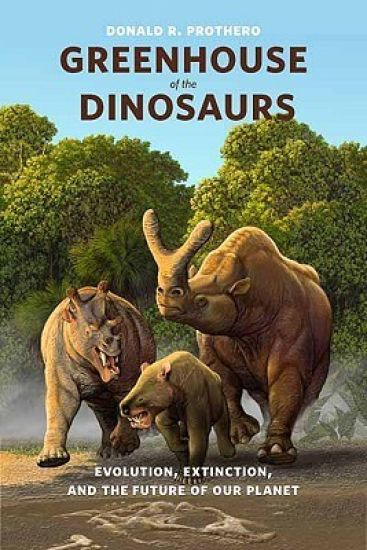
Greenhouse of the Dinosaurs

Greenhouse of the Dinosaurs

Donald R. Prothero

Columbia University Press
2009
sidottu
Donald R. Prothero's science books combine leading research with first-person narratives of discovery, injecting warmth and familiarity into a profession that has much to offer nonspecialists. Bringing his trademark style and wit to an increasingly relevant subject of concern, Prothero links the climate changes that have occurred over the past 200 million years to their effects on plants and animals. In particular, he contrasts the extinctions that ended the Cretaceous period, which wiped out the dinosaurs, with those of the later Eocene and Oligocene epochs. Prothero begins with the "greenhouse of the dinosaurs," the global-warming episode that dominated the Age of Dinosaurs and the early Age of Mammals. He describes the remarkable creatures that once populated the earth and draws on his experiences collecting fossils in the Big Badlands of South Dakota to sketch their world. Prothero then discusses the growth of the first Antarctic glaciers, which marked the Eocene-Oligocene transition, and shares his own anecdotes of excavations and controversies among colleagues that have shaped our understanding of the contemporary and prehistoric world. The volume concludes with observations about Nisqually Glacier and other locations that show how global warming is happening much quicker than previously predicted, irrevocably changing the balance of the earth's thermostat. Engaging scientists and general readers alike, Greenhouse of the Dinosaurs connects events across thousands of millennia to make clear the human threat to natural climate change.
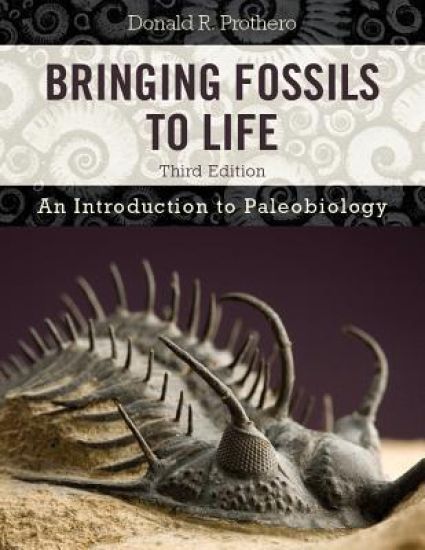
Bringing Fossils to Life

Bringing Fossils to Life

Donald R. Prothero

Columbia University Press
2013
sidottu
One of the leading textbooks in its field, Bringing Fossils to Life applies paleobiological principles to the fossil record while detailing the evolutionary history of major plant and animal phyla. It incorporates current research from biology, ecology, and population genetics, bridging the gap between purely theoretical paleobiological textbooks and those that describe only invertebrate paleobiology and that emphasize cataloguing live organisms instead of dead objects. For this third edition Donald R. Prothero has revised the art and research throughout, expanding the coverage of invertebrates and adding a discussion of new methodologies and a chapter on the origin and early evolution of life.
Bringing Fossils to Life

Bringing Fossils to Life

Donald R. Prothero

Columbia University Press
2013
pokkari
One of the leading textbooks in its field, Bringing Fossils to Life applies paleobiological principles to the fossil record while detailing the evolutionary history of major plant and animal phyla. It incorporates current research from biology, ecology, and population genetics, bridging the gap between purely theoretical paleobiological textbooks and those that describe only invertebrate paleobiology and that emphasize cataloguing live organisms instead of dead objects. For this third edition Donald R. Prothero has revised the art and research throughout, expanding the coverage of invertebrates and adding a discussion of new methodologies and a chapter on the origin and early evolution of life.
The Story of Life in 25 Fossils

The Story of Life in 25 Fossils

Donald R. Prothero

Columbia University Press
2015
sidottu
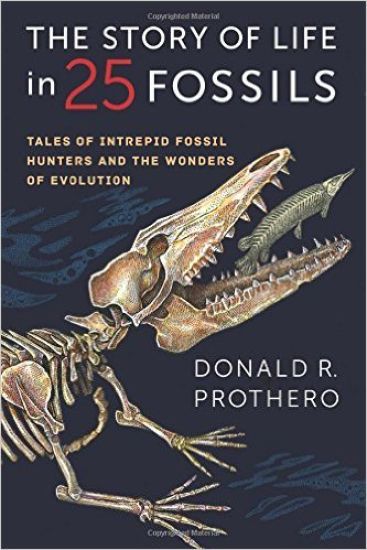
Every fossil tells a story. Best-selling paleontology author Donald R. Prothero describes twenty-five famous, beautifully preserved fossils in a gripping scientific history of life on Earth. Recounting the adventures behind the discovery of these objects and fully interpreting their significance within the larger fossil record, Prothero creates a riveting history of life on our planet. The twenty-five fossils portrayed in this book catch animals in their evolutionary splendor as they transition from one kind of organism to another. We witness extinct plants and animals of microscopic and immense size and thrilling diversity. We learn about fantastic land and sea creatures that have no match in nature today. Along the way, we encounter such fascinating fossils as the earliest trilobite, Olenellus; the giant shark Carcharocles; the "fishibian" Tiktaalik; the "Frogamander" and the "Turtle on the Half-Shell"; enormous marine reptiles and the biggest dinosaurs known; the first bird, Archaeopteryx; the walking whale Ambulocetus; the gigantic hornless rhinoceros Paraceratherium, the largest land mammal that ever lived; and the Australopithecus nicknamed "Lucy," the oldest human skeleton. We meet the scientists and adventurers who pioneered paleontology and learn about the larger intellectual and social contexts in which their discoveries were made. Finally, we find out where to see these splendid fossils in the world's great museums. Ideal for all who love prehistoric landscapes and delight in the history of science, this book makes a treasured addition to any bookshelf, stoking curiosity in the evolution of life on Earth.
The Story of Life in 25 Fossils

The Story of Life in 25 Fossils

Donald R. Prothero

Columbia University Press
2018
pokkari
Every fossil tells a story. Best-selling paleontology author Donald R. Prothero describes twenty-five famous, beautifully preserved fossils in a gripping scientific history of life on Earth. Recounting the adventures behind the discovery of these objects and fully interpreting their significance within the larger fossil record, Prothero creates a riveting history of life on our planet. The twenty-five fossils portrayed in this book catch animals in their evolutionary splendor as they transition from one kind of organism to another. We witness extinct plants and animals of microscopic and immense size and thrilling diversity. We learn about fantastic land and sea creatures that have no match in nature today. Along the way, we encounter such fascinating fossils as the earliest trilobite, Olenellus; the giant shark Carcharocles; the "fishibian" Tiktaalik; the "Frogamander" and the "Turtle on the Half-Shell"; enormous marine reptiles and the biggest dinosaurs known; the first bird, Archaeopteryx; the walking whale Ambulocetus; the gigantic hornless rhinoceros Paraceratherium, the largest land mammal that ever lived; and the Australopithecus nicknamed "Lucy," the oldest human skeleton. We meet the scientists and adventurers who pioneered paleontology and learn about the larger intellectual and social contexts in which their discoveries were made. Finally, we find out where to see these splendid fossils in the world's great museums. Ideal for all who love prehistoric landscapes and delight in the history of science, this book makes a treasured addition to any bookshelf, stoking curiosity in the evolution of life on Earth.
Evolution

Evolution

Donald R. Prothero

Columbia University Press
2017
sidottu
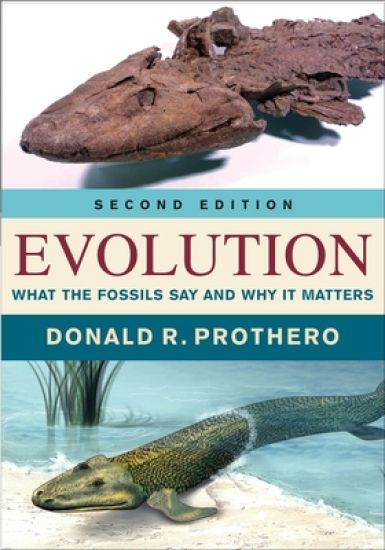
Donald R. Prothero's Evolution is an entertaining and rigorous history of the transitional forms and series found in the the fossil record. Its engaging narrative of scientific discovery and well-grounded analysis has led to the book's widespread adoption in courses that teach the nature and value of fossil evidence. Evolution tackles flood geology, rock dating, neo-Darwinism, and macroevolution. It includes extensive coverage of the primordial soup, invertebrate transitions, the development of the backbone, the reign of the dinosaurs, and the transformation from chimpanzee to human. The book details the many "missing links," including some of the most recent discoveries, that flesh out the fossil timeline and the evolutionary process. In this second edition, Prothero describes new transitional fossils from various periods, vividly depicting such bizarre creatures as the Odontochelys, or the "turtle on the half shell," fossil snakes with legs, and the "Frogamander," a new example of amphibian transition. Prothero's discussion of intelligent-design arguments includes more historical examples and careful examination of the "experiments" and observations that are exploited by creationists seeking to undermine sound science education. With new perspectives, Prothero reframes creationism more as a case study in denialism and pseudoscience than as a field with its own intellectual dynamism. The first edition was hailed as the best book on the fossil evidence for evolution, and this second edition will be welcome in the libraries of scholars, teachers, and general readers who stand up for sound science.
The Story of the Earth in 25 Rocks

The Story of the Earth in 25 Rocks

Donald R. Prothero

Columbia University Press
2018
sidottu
Every rock is a tangible trace of the earth's past. In The Story of the Earth in 25 Rocks, Donald R. Prothero tells the fascinating stories behind the discoveries that shook the foundations of geology. In twenty-five chapters-each about a particular rock, outcrop, or geologic phenomenon-Prothero recounts the scientific detective work that took us from the unearthing of exemplary specimens to tectonic shifts in how we view our planet and history. Prothero follows in the footsteps of the scientists who asked-and answered-geology's biggest questions: How do we know how old the earth is? What happened to the supercontinent Pangea? How did ocean rocks end up at the top of Mount Everest? What can we learn about our planet from meteorites and moon rocks? The Story of the Earth in 25 Rocks answers these questions through expertly chosen case studies, such as Pliny the Elder's firsthand account of the eruption of Vesuvius; the granite outcrops that led a Scottish scientist to theorize that the landscapes he witnessed were far older than Noah's Flood; the gypsum deposits under the Mediterranean Sea that indicate that it was once a desert; and how trying to date the age of meteorites revealed the dangers of lead poisoning. Each of these breakthroughs filled in a piece of the puzzle that is the earth, with scientific discoveries dovetailing with each other to offer increasingly solid evidence of the geologic past. Summarizing a wealth of information in an entertaining, approachable style, The Story of the Earth in 25 Rocks is essential reading for the armchair geologist, the rock hound, and all who are curious about the earth beneath their feet.
The Story of the Earth in 25 Rocks

The Story of the Earth in 25 Rocks

Donald R. Prothero

Columbia University Press
2020
pokkari
Every rock is a tangible trace of the earth’s past. The Story of the Earth in 25 Rocks tells the fascinating stories behind the discoveries that shook the foundations of geology. In twenty-five chapters—each about a particular rock, outcrop, or geologic phenomenon—Donald R. Prothero recounts the scientific detective work that shaped our understanding of geology, from the unearthing of exemplary specimens to tectonic shifts in how we view the inner workings of our planet. Prothero follows in the footsteps of the scientists who asked—and answered—geology’s biggest questions: How do we know how old the earth is? What happened to the supercontinent Pangea? How did ocean rocks end up at the top of Mount Everest? What can we learn about our planet from meteorites and moon rocks? He answers these questions through expertly chosen case studies, such as Pliny the Younger’s firsthand account of the eruption of Vesuvius; the granite outcrops that led a Scottish scientist to theorize that the landscapes he witnessed were far older than Noah’s Flood; the salt and gypsum deposits under the Mediterranean Sea that indicate that it was once a desert; and how trying to date the age of meteorites revealed the dangers of lead poisoning. Each of these breakthroughs filled in a piece of the greater puzzle that is the earth, with scientific discoveries dovetailing with each other to offer an increasingly coherent image of the geologic past. Summarizing a wealth of information in an entertaining, approachable style, The Story of the Earth in 25 Rocks is essential reading for the armchair geologist, the rock hound, and all who are curious about the earth beneath their feet.
The Story of the Dinosaurs in 25 Discoveries

The Story of the Dinosaurs in 25 Discoveries

Donald R. Prothero

Columbia University Press
2019
sidottu
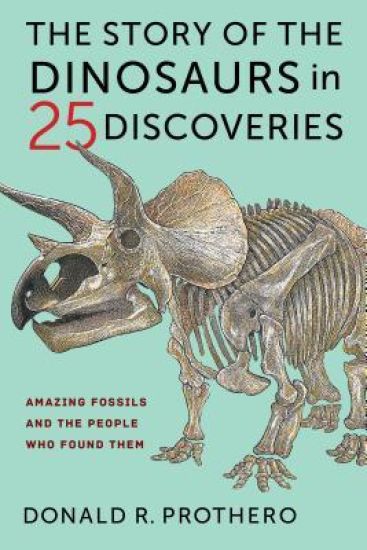
Today, any kid can rattle off the names of dozens of dinosaurs. But it took centuries of scientific effort—and a lot of luck—to discover and establish the diversity of dinosaur species we now know. How did we learn that Triceratops had three horns? Why don’t many paleontologists consider Brontosaurus a valid species? What convinced scientists that modern birds are relatives of ancient Velociraptor?In The Story of the Dinosaurs in 25 Discoveries, Donald R. Prothero tells the fascinating stories behind the most important fossil finds and the intrepid researchers who unearthed them. In twenty-five vivid vignettes, he weaves together dramatic tales of dinosaur discoveries with what modern science now knows about the species to which they belong. Prothero takes us from eighteenth-century sightings of colossal bones taken for biblical giants through recent discoveries of enormous predators even larger than Tyrannosaurus. He recounts the escapades of the larger-than-life personalities who made modern paleontology, including scientific rivalries like the nineteenth-century “Bone Wars.” Prothero also details how to draw the boundaries between species and explores debates such as whether dinosaurs had feathers, explaining the findings that settled them or keep them going. Throughout, he offers a clear and rigorous look at what paleontologists consider sound interpretation of evidence. An essential read for any dinosaur lover, this book teaches us to see an ancient world ruled by giant majestic creatures anew.
The Story of the Dinosaurs in 25 Discoveries

The Story of the Dinosaurs in 25 Discoveries

Donald R. Prothero

Columbia University Press
2021
pokkari
Today, any kid can rattle off the names of dozens of dinosaurs. But it took centuries of scientific effort—and a lot of luck—to discover and establish the diversity of dinosaur species we now know. How did we learn that Triceratops had three horns? Why don’t many paleontologists consider Brontosaurus a valid species? What convinced scientists that modern birds are relatives of ancient Velociraptor?In The Story of the Dinosaurs in 25 Discoveries, Donald R. Prothero tells the fascinating stories behind the most important fossil finds and the intrepid researchers who unearthed them. In twenty-five vivid vignettes, he weaves together dramatic tales of dinosaur discoveries with what modern science now knows about the species to which they belong. Prothero takes us from eighteenth-century sightings of colossal bones taken for biblical giants through recent discoveries of enormous predators even larger than Tyrannosaurus. He recounts the escapades of the larger-than-life personalities who made modern paleontology, including scientific rivalries like the nineteenth-century “Bone Wars.” Prothero also details how to draw the boundaries between species and explores debates such as whether dinosaurs had feathers, explaining the findings that settled them or keep them going. Throughout, he offers a clear and rigorous look at what paleontologists consider sound interpretation of evidence. An essential read for any dinosaur lover, this book teaches us to see an ancient world ruled by giant majestic creatures anew.