

Kirjahaku
Etsi kirjoja tekijän nimen, kirjan nimen tai ISBN:n perusteella.
1000 tulosta hakusanalla Donald Wright









This book represents a practical guide to ethical decision-making tailored specifically to the needs of those who practice and study public relations. It traces the development of ethical theory from ancient Greece through the works of Socrates, Plato, and Aristotle to modern day public relations executives including Harold Burson, Robert Dilenschneider, and Richard Edelman. The book helps readers build personal frameworks for ethical reasoning that will enable them not only to recognize the ethical issues at play in public relations practice but also to analyze the conflicting duties and loyalties in these situations. This volume fills a gap in the currently available books on the subject, most of which either lack theoretical grounding or practical application. Illustrative cases used in this book span a wide range of public relations functions. To update readers on issues discussed in this book, the authors have started an online conversation. Please join the discussion at http: //Updates.PRethics.com

This annotated bibliography provides the first comprehensive listing of the works of Donald Davie, an internationally known British poet and critic who has become a part of America's academic and literary scene. Complete and authoritative, it contains materials obtained directly from Davie between 1981 and 1988.Listings are organized in sections according to chronology and type of publication. The contents of separate publications are supplied, and reprints and collections as well as initial publications are noted. Interviews with Davie and works containing his published comments are included. The final section covers commercially produced recordings and a videotape of Davie reading from his work. This annotated checklist will be of interest to Davie's readers and to scholars of contemporary criticism and poetry.
Frank Lloyd Wright is one of the 20th century's best-known architects. Over 40 years after his death, historical and critical comment and debate are increasing and controversy continues to surround him. This volume is a chronologically arranged, annotated bibliography of English- and foreign-language sources including over 3,500 primary entries, with thousands more connected references, presented alphabetically by decades and genres.The book documents not only the literature on Wright from 1886 to the present, but also his own extensive writings. It covers source books, monographs, anthologies, exhibition catalogues, book and exhibition reviews, periodical articles, and obituaries. All references are indexed by personal names, buildings, and projects. There is also a photo-essay comprised entirely of images published here for the first time, and a comprehensive chronology of the architect's life and career, which spanned 70 years and produced about 450 buildings and almost 550 unrealized architectural projects. The book will be of great value to scholars, students, and practitioners.
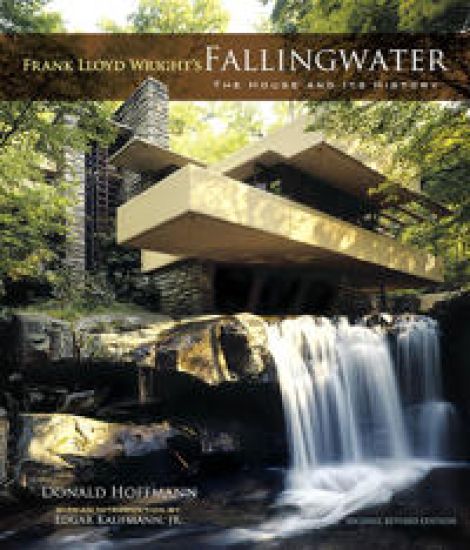
A total revision of the standard document on Fallingwater, the boldest, most personal architectural statement of Wright's mature years. Updated with valuable new material from the recently opened Frank Lloyd Wright Archives, the book gives special emphasis to Fallingwater's architectural innovations. "Fascinating." — The New York Times. 116 illustrations.
Frank Lloyd Wright : The Early Years : Progressivism : Aesthetics : Cities
Donald Johnson
Routledge
2018
nidottu
Frank Lloyd Wright : The Early Years : Progressivism : Aesthetics : Cities examines Wright's belief that all aspects of human life must embrace and celebrate an aesthetic experience that would thereby lead to necessary social reforms. Inherent in the theory was a belief that reform of nineteenth-century gluttony should include a contemporary interpretation of its material presence, its bulk and space, its architectural landscape. This book analyzes Wright's innovative, profound theory of architecture that drew upon geometry and notions of pure design and the indigenous as put into practice. It outlines the design methodology that he applied to domestic and non-domestic buildings and presents reasons for the recognition of two Wright Styles and a Wright School. The book also studies how his design method was applied to city planning and implications of historical and theoretical contexts of the period that surely influenced all of Wright's community and city planning.
Frank Lloyd Wright : The Early Years : Progressivism : Aesthetics : Cities
Donald Johnson
Routledge
2016
sidottu
Frank Lloyd Wright : The Early Years : Progressivism : Aesthetics : Cities examines Wright's belief that all aspects of human life must embrace and celebrate an aesthetic experience that would thereby lead to necessary social reforms. Inherent in the theory was a belief that reform of nineteenth-century gluttony should include a contemporary interpretation of its material presence, its bulk and space, its architectural landscape. This book analyzes Wright's innovative, profound theory of architecture that drew upon geometry and notions of pure design and the indigenous as put into practice. It outlines the design methodology that he applied to domestic and non-domestic buildings and presents reasons for the recognition of two Wright Styles and a Wright School. The book also studies how his design method was applied to city planning and implications of historical and theoretical contexts of the period that surely influenced all of Wright's community and city planning.
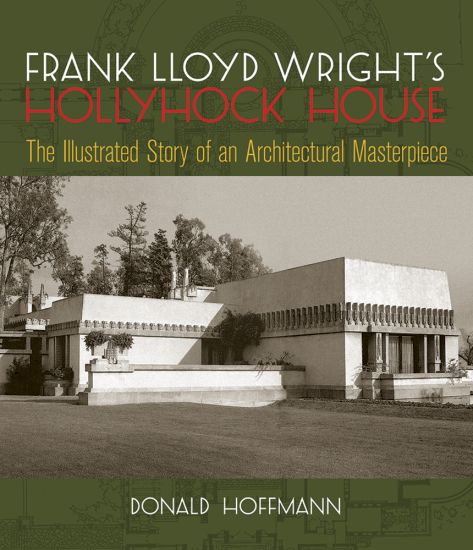
At the behest of oil heiress Aline Barnsdall, the twentieth century's greatest architect created one of his most imaginative and controversial residential designs. Built in Hollywood in 1920-21, Hollyhock House attests to the genius of Frank Lloyd Wright and was eventually designated a World Heritage Site by UNESCO. This splendid home and its construction are documented here in more than 120 illustrations -- photographs, floor plans, elevations, sketches, etc. -- accompanied by the author's detailed, perceptive text. Donald Hoffmann, noted Wright scholar and architectural critic, draws on a wealth of primary documents and his own direct observation not only to re-create the problems of clashing egos and rancor behind the house's turbulent history, but also to invite a true appreciation of its myriad aesthetic and architectural charms. The varied aspects of the house are captured in this lavishly illustrated tribute, which reveals the imaginatively shaped spaces, inner harmonies, daring conceptions, and exquisite details that make Hollyhock House a landmark of modern design.