

Kirjahaku
Etsi kirjoja tekijän nimen, kirjan nimen tai ISBN:n perusteella.
1000 tulosta hakusanalla Douglas Fogle

Guinevere Hollister, cousin to the Marquis of Heathgate, has fashioned a life as a poor relation, raising her daughter Rose in rural obscurity and focusing her considerable passion and intellect on stewarding the estate they live on. Douglas Allen, Viscount Amery, is sent to Gwen by their mutual relations for lessons in husbandry of the land. As Douglas and Gwen find common ground, and then mutual pleasure, Gwen's past rises up in the person of the powerful Duke of Moreland, who is bent on wresting control of Rose from her mother, even if it means Gwen must marry the Moreland heir.

Douglas - A Tragedy is an unchanged, high-quality reprint of the original edition of 1798. Hansebooks is editor of the literature on different topic areas such as research and science, travel and expeditions, cooking and nutrition, medicine, and other genres. As a publisher we focus on the preservation of historical literature. Many works of historical writers and scientists are available today as antiques only. Hansebooks newly publishes these books and contributes to the preservation of literature which has become rare and historical knowledge for the future.


This book has been considered by academicians and scholars of great significance and value to literature. This forms a part of the knowledge base for future generations. So that the book is never forgotten we have represented this book in a print format as the same form as it was originally first published. Hence any marks or annotations seen are left intentionally to preserve its true nature.


Announcing A+D (Architecture and Design), a new series from the Art Institute of Chicago, which highlights the work of important architects and designers from around the world. Innovatively designed by the New York firm 2x4, the titles are either historical in nature or investigate current critical thinking and practice in architecture and design.This handsome book presents the oeuvre of Douglas Garofalo, principal of Garofalo Architects, internationally renowned for its innovative residential, commercial, institutional, and public building projects. With an impressive list of clients that includes the Art Institute of Chicago, the Museum of Contemporary Art, Chicago, the Hyde Park Art Center, and the Smart Museum of Art at the University of Chicago, the firm has also designed a number of private residences and played a significant role in Chicago’s urban design and public planning.Douglas Garofalo looks at the architect’s work to date, drawing from the full spectrum of his built work, theoretical and visionary projects (including the Camouflage House outside Chicago), and competition entries (including those for the Chicago Housing Authority and the Chicago Public Schools). Illustrations of and informative entries on the drawings, models, and digital media that showcase this work are featured.Distributed for the Art Institute of ChicagoExhibition Schedule:The Art Institute of Chicago (June 15 – October 8, 2006)

From I Shall Return to Old Soldiers Never Die, General MacArthur's phraseology invariably captured an audience's attention. The MacArthur persona may be familiar to many Americans more because of his oratory than because of his military deeds. Covering both his martial and his political oratory, this book provides a balanced, full-length study of MacArthur's oratorical accomplishments and their impact. Part I is a critical analysis of MacArthur and his speeches, while Part II contains the texts of the addresses discussed.In their analysis, the authors avoid extremes of praise or blame. The highlight of the book is its account of MacArthur's rhetoric persuading Army and Navy chiefs to undertake the Inchon landing, arguably his finest hour. When MacArthur challenged Truman, taking policy differences to Congress, his rhetoric enabled more than one congressman to see deity in the general. Duffy and Carpenter analyze well the measured cadences of that speech as well as the platitudes of the keynote speech at the 1952 Republican National Convention. If 'Old Soldiers Never Die' polished his halo, the convention address tarnished it. This book captures both the brilliant flashes and the arrogant stupidities of the man. (Quoted from the foreword by Robert P. Newman)

Arguably the greatest collaboration in the whole history of comedy Bestselling author Douglas Adams wrote the storyline based on his CD-ROM game of the same name (as this novel, not as him, obviously). Terry Jones of Monty Python wrote the book. In the nude Parents be warned Most of the words in this book were written by a naked man So. You want to argue with that? All right, we give in. Starship Titanic is the greatest, most fabulous, most technologically advanced interstellar cruise line ever built. It is like a cross between the Queen Mary, the Chrysler Building, Tutankhamen's tomb, and Venice. Furthermore, it cannot possibly go wrong. . . . Sadly, however, seconds after its launch it undergoes SMEF, or Spontaneous Massive Existence Failure. And disappears. Except, everything's got to be somewhere. Coming home that night, on a little known planet called Earth, Dan and Lucy Gibson find something very large and very, very shiny sticking into their house. . .

For seventy years Douglas Haig had been portrayed on the one hand as the ‘Butcher of the Somme’ – inept, insensitive and archaic; and on the other as the ‘Saviour of Britain’ – noble, unselfish and heroic. This polarised, strident and ultimately inconclusive argument had resulted in Haig becoming detached from his own persona; he had become a shallow symbol of a past age to be pilloried or praised. The middle ground in the Haig debate had been as barren as No Man’s Land.There should be no mystery about Haig. Certain from a very early age of his own greatness, he preserved every record of his achievements: diaries, letters, official reports etc. The opinions of his contemporaries are likewise readily available. But until this book the material had not been used to construct a complete and accurate picture. Critics and supporters have raided the historical records for evidence of the demi-god or demon and have ignored that which conflicts with their preconceptions. They have likewise raced through his early life in order to get to the war, in the process ignoring the complex process of his development as a soldier. Analyses of Haig’s command have consequently been as shallow as the prevailing images of the man.After eight years of painstaking and detailed research into previously neglected sources, Gerard De Groot gave us a more complete and balanced picture. This book, originally published in 1988, which will appeal both to the general and the specialised reader, is not simply a critique of Haig’s command in the war, but an exploration into his personality. Close attention to his early life and career reveals him as a creature of his society, a man who mirrored both the virtues and the faults of Edwardian Britain. What emerges is an intense, dedicated, but ultimately flawed servant of his country whose ironic fate it was to grow up in one age and to command in another.

For seventy years Douglas Haig had been portrayed on the one hand as the ‘Butcher of the Somme’ – inept, insensitive and archaic; and on the other as the ‘Saviour of Britain’ – noble, unselfish and heroic. This polarised, strident and ultimately inconclusive argument had resulted in Haig becoming detached from his own persona; he had become a shallow symbol of a past age to be pilloried or praised. The middle ground in the Haig debate had been as barren as No Man’s Land.There should be no mystery about Haig. Certain from a very early age of his own greatness, he preserved every record of his achievements: diaries, letters, official reports etc. The opinions of his contemporaries are likewise readily available. But until this book the material had not been used to construct a complete and accurate picture. Critics and supporters have raided the historical records for evidence of the demi-god or demon and have ignored that which conflicts with their preconceptions. They have likewise raced through his early life in order to get to the war, in the process ignoring the complex process of his development as a soldier. Analyses of Haig’s command have consequently been as shallow as the prevailing images of the man.After eight years of painstaking and detailed research into previously neglected sources, Gerard De Groot gave us a more complete and balanced picture. This book, originally published in 1988, which will appeal both to the general and the specialised reader, is not simply a critique of Haig’s command in the war, but an exploration into his personality. Close attention to his early life and career reveals him as a creature of his society, a man who mirrored both the virtues and the faults of Edwardian Britain. What emerges is an intense, dedicated, but ultimately flawed servant of his country whose ironic fate it was to grow up in one age and to command in another.

Douglas McGregor, Revisited
Gary Heil; Warren Bennis; Deborah C. Stephens
John Wiley Sons Inc
2000
sidottu
"With every passing year, McGregor’s message becomes ever more relevant, more timely, and more important."Peter F. Drucker"The world that Douglas McGregor spoke of is here. . . . Those businesses that thrive today are not necessarily those with the most valuable resources, the greatest market share, or the most capital (though none of these hurt); rather, those businesses that are able to tap their human potential in the most productive manner are the ones who enjoy enduring success. This is the world that Douglas McGregor envisioned." from Douglas McGregor, RevisitedThe words of Douglas McGregor, one of the fore-fathers of management theory and one of the top business thinkers of all time, cannot and should not be ignored. McGregor’s vision of a more humanistic workplace may not have been widely accepted over three decades ago, but technological advancements that McGregor himself anticipated have paradoxically helped companies become more human. Viewing employees not as cogs in the machine but as living beings with individual goals—what McGregor called "the human side of the enterprise"—has proven to provide a remarkable competitive advantage.Now, with the rise of the networked economy, the growing power of frontline workers, and the shift in power from mass producer to individual consumer, authors Gary Heil, Warren Bennis, and Deborah Stephens assert that McGregor’s ideas are more important and relevant than ever before.Douglas McGregor, Revisited emphasizes McGregor’s lasting influence and updates his thinking with new concepts, fresh strategies, and modern implementation. This timely work traces McGregor’s original thinking, which has emerged in current approaches that stress distributed leadership, open-minded appraisal techniques, and employee/customer commitment.Highlighted throughout with gems of wisdom in McGregor’s own words, the book describes the value of his theories for today’s managers. The authors carefully outline how to put McGregor’s thinking into practice in your own business so you can:*Devise a better performance management system*Form and supervise effective management teams*Build cooperation instead of internal competition*Cultivate an intrinsically motivating, values-driven workplace*Create a cause worthy of employee commitmentAlso featured are examples from a host of companies and leaders who have flourished under McGregor’s approach. Authoritative and highly instructive, Douglas McGregor, Revisited offers new generations of managers important lessons from history and from the field.Praise for Douglas McGregor, Revisited"This book revisits in a contemporary manner the most important question facing management today: given what we know about human nature, how should work be managed so as to unleash the vast creative potential of human beings? The evidence is overwhelming that many people either come to an organization or can be appropriately led to exhibit the behavior McGregor characterized as ‘Theory Y.’ This book provides a ‘how-to’ approach for developing people at work and for establishing high performance organizations."Joseph A. Maciariello, Horton Professor of ManagementPeter F. Drucker Graduate School of Management, Claremont Graduate University and Claremont McKenna College. Author of Lasting Value: Lessons from a Century of Agility at Lincoln ElectricDouglas McGregor’s seminal works, The Human Side of the Enterprise and The Professional Manager, debunked Taylorism and described a revolutionary way to manage people. He was the first to apply the findings in behavioral science to the world of business. Based on what had been learned about human behavior, McGregor explored the implications of managing people in a different manner than tradition dictated.The nature of work today makes McGregor’s ideas more relevant than ever before. This important book applies his thinking to today’s business world, proving again that the human aspect of work is crucial to organizational effectiveness. It also suggests how you can change your thinking and implement his ideas in your own business and workplace.
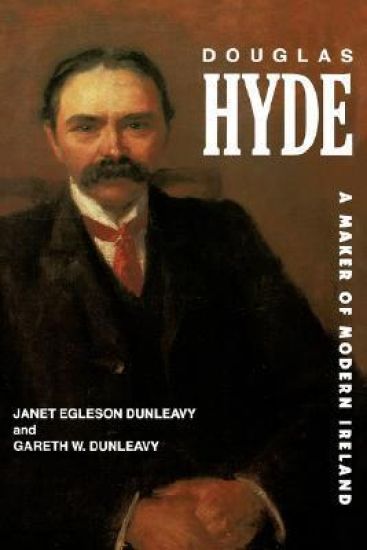
In 1938, at an age when most men are long retired, Douglas Hyde (1860-1949) was elected first president of modern Ireland. The unanimous choice of delegates from all political factions, he was no stranger to public life or to fame. Until now, however, there has been no full-scale biography of this important historical and literary figure. Known as a tireless nationalist, Hyde attracted attention on both sides of the Atlantic from a very early age. He was hailed by Yeats as a source of the Irish Literary Renaissance; earned international recognition for his contributions to the theory and methodology of folklore; joined Lady Gregory, W. B. Yeats, George Moore, and Edward Martyn in shaping an Irish theater; and as president of the Gaelic League worked for twenty-two years on behalf of Irish Ireland. Yet in spite of these and other accomplishments Hyde remained an enigmatic figure throughout his life. Why did he become an Irish nationalist? Why were his two terms as Irish Free State senator so curiously passive? Why, when he had threatened it earlier, did he oppose the use of physical force in 1916? How did he nevertheless retain the support of his countrymen and the trust and friendship of such a man as Eamon de Valera? Douglas Hyde: A Maker of Modern Ireland dispels for the first time the myths and misinformation that have obscured the private life of this extraordinary scholar and statesman.

From December 1915 until the armistice of November 1918, Sir Douglas Haig was commander-in-chief of the largest army his country had ever put into the field. He has been portrayed as both an incompetent 'butcher and bungler' and a clear-sighted, imperturbable 'architect of victory'. However, in this magisterial account, J. P. Harris dispels such stereotypes. A dedicated military professional, Haig nevertheless found it difficult to adjust to the unprecedented conditions of the Western Front. His capacity to 'read' battles and broader strategic situations often proved poor and he bears much responsibility for British losses 1915–17 that were excessive in relation to the results achieved. By late 1917 his own faith in ultimate victory had become so badly shaken that he advocated a compromise peace. However, after surviving the German spring offensives of 1918, he played a vital role in the campaign that finally broke the German army.

From December 1915 until the armistice of November 1918, Sir Douglas Haig was commander-in-chief of the largest army his country had ever put into the field. He has been portrayed as both an incompetent 'butcher and bungler' and a clear-sighted, imperturbable 'architect of victory'. However, in this magisterial account, J. P. Harris dispels such stereotypes. A dedicated military professional, Haig nevertheless found it difficult to adjust to the unprecedented conditions of the Western Front. His capacity to 'read' battles and broader strategic situations often proved poor and he bears much responsibility for British losses 1915–17 that were excessive in relation to the results achieved. By late 1917 his own faith in ultimate victory had become so badly shaken that he advocated a compromise peace. However, after surviving the German spring offensives of 1918, he played a vital role in the campaign that finally broke the German army.



The Works Of Douglas Jerrold 4
Douglas Jerrold; W. Blanchard (CON) Jerrold
Kessinger Pub
2007
pokkari

Meet Douglas, a dog with a big problem: he needs eyeglasses but doesn t know it, and his bad eyesight tends to land him in some pretty hairy situations. Readers will laugh along with the new picture book character Douglas as he chases a leaf that he mistakes for a squirrel, walks through wet cement because he can t see the warning sign, and annoys the neighbor s dog by mistakenly eating out of his bowl. And when Douglas s owner Nancy finally takes him to what is clearly an eyeglass store and Douglas asks, Why are you taking me to a shoe store? everyone will be giggling. After an eye exam confirms that Douglas needs glasses, and Nancy helps him find the perfect pair, readers will rejoice with Douglas as he sees all the amazing things he s been missing Both kids and parents will laugh out loud and may even recognize themselves while reading this utterly irresistible, hilarious picture book."

A generous selection of poems from 'one of the most talented and interesting poets writing in English today' (Robert Nye).In a distinguished poetic career, Douglas Dunn has won the Somerset Maugham Award, the Geoffrey Faber Memorial Prize, the Hawthornden Prize and the Whitbread Book of the Year. New Selected Poems 1964-2000 draws substantially upon the entire range of Dunn's poetry, from Terry Street (1969) to The Year's Afternoon (2000), and confirms his place 'among the finest of our poets' (Melvin Bragg).