Kirjojen hintavertailu. Mukana 11 627 536 kirjaa ja 12 kauppaa.

Kirjahaku

Etsi kirjoja tekijän nimen, kirjan nimen tai ISBN:n perusteella.

1000 tulosta hakusanalla Duncan B Barlow

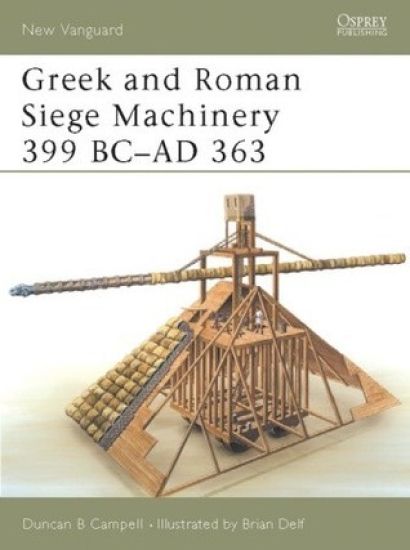
Greek and Roman Siege Machinery 399 BC–AD 363

Greek and Roman Siege Machinery 399 BC–AD 363

Duncan B Campbell

Osprey Publishing
2003
nidottu
Siege machinery first appeared in the West during the Carthaginian invasion of Sicily in the late 5th century BC, in the form of siege-towers and battering rams. After a 50-year hiatus they re-appeared in the Macedonian armies of Philip II and Alexander the Great, a period that saw the height of the machinery's development in the Ancient World. Experience of Carthaginian practice during the later 3rd century, and familiarity with the operations of Philip V of Macedon during the early-2nd century, prompted the introduction of the siege-tower and the battering-ram to Roman siegecraft. This title traces the development and use of these weapons across the whole of this period.
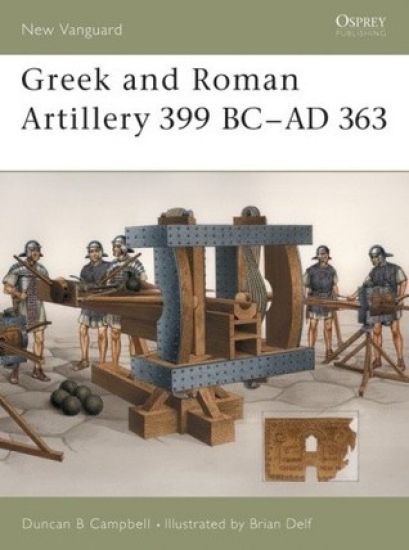
Greek and Roman Artillery 399 BC–AD 363

Greek and Roman Artillery 399 BC–AD 363

Duncan B Campbell

Osprey Publishing
2003
nidottu
The catapult (katapeltikon) was developed around 400 BC by engineers and craftsmen assembled by Dionysius I of Syracuse. Catapults are mentioned in Athens in the 360s and 350s BC, and by the 330s young men were routinely trained in their use. During these years, artillery appears to have been considered as a defensive weapon. They finally appear in the hands of an aggressor in 340 BC when Philip of Macedon assaulted Perinthus, but it was left to Alexander to fully develop the use of catapults. Under the Romans, catapults initially went through some minor variations with a view to improving their performance. This title decribes the development and operational use of siege artillery throughout the classical period.
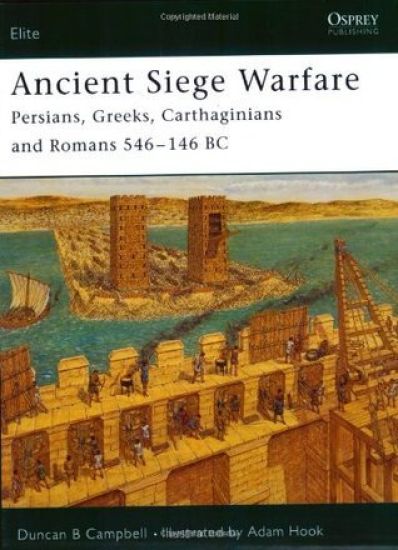
Ancient Siege Warfare

Ancient Siege Warfare

Duncan B Campbell

Osprey Publishing
2005
nidottu
Explores the central role sieges played in many conflicts of the ancient world and tracks developments in siege warfare from Ancient Persia through the Roman sieges of the second century BC.
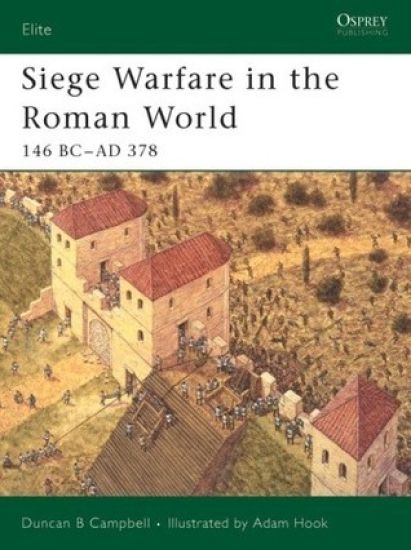
Siege Warfare in the Roman World

Siege Warfare in the Roman World

Duncan B Campbell

Osprey Publishing
2005
nidottu
Sieges played a central role in the many conflicts of the Ancient World and many famous generals, including Alexander the Great, Hannibal, Julius Caesar and Trajan, successfully used siegecraft to gain their objectives. This title explores the range of techniques and tactics which developed during the period, including crossing, penetrating and tunnelling through defences; starvation by blockade; and gaining access by deception. Describing the various techniques used, the author tracks the developments in siegecraft in the Roman world from 100 BC to AD 378.
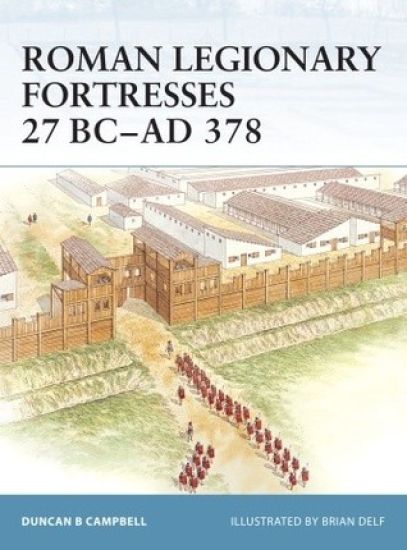
Roman Legionary Fortresses 27 BC–AD 378

Roman Legionary Fortresses 27 BC–AD 378

Duncan B Campbell

Osprey Publishing
2006
nidottu
The concept of a legionary fortress as a permanent structure dates from the reign of Augustus (27 BC-AD 14). It is only from that time that we find a standing army distributed around the empire, and their permanent fortresses developed from the temporary field fortifications of the legions on campaign. This book describes the development, design and construction of these fortresses throughout the length and breadth of the Empire. It also deals extensively with the experience of life within a typical fortress and covers the operational history of these fortifications, including the famous siege of Vetera in AD 69.
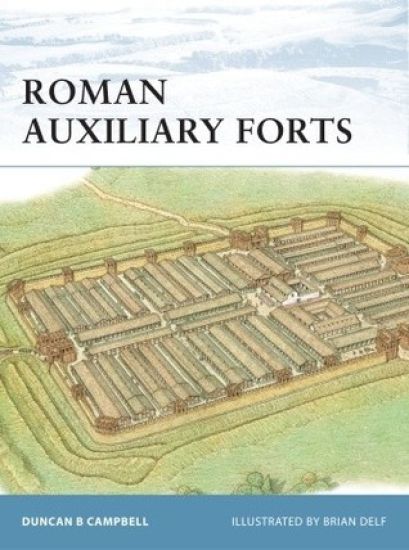
Roman Auxiliary Forts 27 BC–AD 378

Roman Auxiliary Forts 27 BC–AD 378

Duncan B Campbell

Osprey Publishing
2009
nidottu
With the vast expansion of the Roman Empire came a need for more and more fortifications to defend it. The borders of the Empire stretched through wildly different terrains which demanded a huge variety of different fortifications, depending on the local conditions and the threats faced by the different areas. The adoption of local troops (auxiliaries) and local building techniques at key strategic points on the outskirts of the empire led to an intriguing mix of strong Roman structure with unique culturally diverse elements. Describing the development of these hugely varied defensive systems, Duncan Campbell delves into the operation and social history behind the fortifications.With detailed colour artwork and maps, he traces their history through the Batavian Revolt of the 1st century AD, which saw auxiliary units scattered far from their native regions, until the decline of the late 3rd and 4th centuries placed their fortifications in an increasingly pressurized and eventually untenable position.
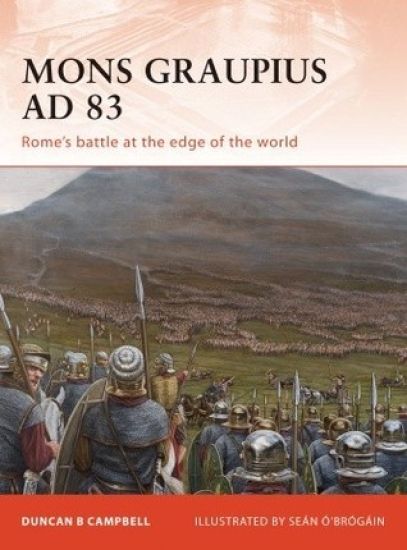
Mons Graupius AD 83

Mons Graupius AD 83

Duncan B Campbell

Osprey Publishing
2010
nidottu
In AD 77, Roman forces under Agricola marched into the northern reaches of Britain in an attempt to pacify the Caledonian tribesman. For seven years, the Romans marched and battled across what is now Scotland. Finally, in AD 83, they fought the final battle at Mons Graupius where 10,000 Caledonians were slaughtered from only 360 Roman dead. It proved the high-water mark of Roman power in Britain. Following unrest elsewhere in the empire, the north of Scotland was abandoned and Rome's forces began their long retreat. Never again would Roman arms stand on the edge of the known world.
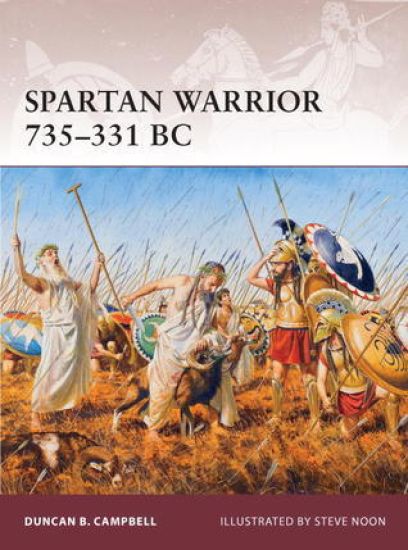
Spartan Warrior 735–331 BC

Spartan Warrior 735–331 BC

Duncan B Campbell

Osprey Publishing
2012
nidottu
Immortalized through their exploits at the battle of Thermopylae under the legendary Leonidas, as well as countless other victories throughout the classical period, the Spartans were some of the best-trained, -organized and most-feared warriors of the ancient world. The small state of Sparta, known to the Ancient Greeks as Lakedaimon, developed a unique warrior society that used serfs and non-citizens to do all of the manual work, leaving the free-born men of Sparta free to concentrate all of their energies on warfare. Forbidden from engaging in any form of manual labour, these Spartan warriors were trained from an early age in a brutal regime that gave them the necessary discipline and tolerance to withstand the pressures of phalanx warfare and endure all manner of hardships on campaign. This book covers all aspects of the Spartan warrior's life, from the earliest days of his training through his life in peace and war, culminating in the battlefield experiences of these feared combatants.
The Religious Attitude and Life in Islam

The Religious Attitude and Life in Islam

Duncan B. MacDonald

DARF PUBLISHERS LTD
1985
sidottu
This interesting book contains a series of lectures on comparative religion delivered by Duncan Black MacDonald before the University of Chicago in 1906. The author was at that time Professor of Semitic Languages at Hartford Theological Seminary, and had previously published other works on Islamic belief. 'The Religious Attitude and Life in Islam' is, however, a welcome departure from the systematical theological studies of Islamic faith. In this work the author attempts to convey the underlying social structures and character of the Muslim people which have helped mould their religious belief. Drawing on his extensive studies of Arabic texts the author has written a sensitive account of the essential nature of the Islamic faith and the well-spring from which the spirit of its people is drawn. Though eight decades have passed since its original publication, the work retains much that is of value to contemporary readers.
Development of Muslim Theology, Jurisprudence and constitutional theory (Edition1)
Delve into the rich tapestry of Islamic intellectual history with Duncan B. Macdonald's seminal work, Development of Muslim Theology, Jurisprudence, and Constitutional Theory. Through meticulous research and scholarly insight, Macdonald unravels the complex journey of Islamic thought from its inception to contemporary times.Embark on a captivating exploration as Macdonald guides you through the evolution of Islamic institutions. From the early days following the death of Muhammad to the flourishing era of the Abbasids, and onwards to the dynamic present, every chapter unfolds layers of historical significance and intellectual depth.Gain profound insights into the development of Islamic jurisprudence and theological thought. Macdonald meticulously examines the formation of legal principles and theological doctrines, shedding light on key figures and pivotal moments that shaped the Muslim world's intellectual landscape.Renowned for its scholarly rigor and clarity, Development of Muslim Theology, Jurisprudence, and Constitutional Theory stands as an indispensable resource for both academics and enthusiasts. Whether you're a student of history, law, or theology, Macdonald's comprehensive analysis offers invaluable perspectives on the intricate fabric of Islamic civilization.Published in 1903 by Charles Scribner's Sons, this timeless masterpiece continues to inspire generations with its depth of knowledge and scholarly integrity. With approximately 354 pages of profound insights, this book remains a cornerstone in the study of Islamic intellectual history.From the corridors of academia to the curious minds of readers worldwide, Development of Muslim Theology, Jurisprudence, and Constitutional Theory beckons you to embark on a journey of enlightenment. Whether you seek a deeper understanding of Islamic thought or a captivating narrative of intellectual evolution, this book promises to enrich your mind and broaden your horizons.Join Duncan B. Macdonald on a transformative odyssey through the annals of Islamic history. Let Development of Muslim Theology, Jurisprudence, and Constitutional Theory be your trusted companion in unlocking the mysteries and embracing the wisdom of one of the world's most enduring intellectual traditions.Are you ready to embark on this enlightening voyage? Open the pages of Macdonald's masterpiece and discover the timeless wisdom that continues to shape our world today.
The Economic Significance of Tree Size in Western Sierra Lumbering; B549

The Economic Significance of Tree Size in Western Sierra Lumbering; B549

M. R. (Marsden Robert) 1892- Brundage; Myron E. (Myron Edward) 189 Krueger; Duncan B. 1890 Dunning

Hassell Street Press
2021
nidottu
This work has been selected by scholars as being culturally important and is part of the knowledge base of civilization as we know it.This work is in the public domain in the United States of America, and possibly other nations. Within the United States, you may freely copy and distribute this work, as no entity (individual or corporate) has a copyright on the body of the work.Scholars believe, and we concur, that this work is important enough to be preserved, reproduced, and made generally available to the public. To ensure a quality reading experience, this work has been proofread and republished using a format that seamlessly blends the original graphical elements with text in an easy-to-read typeface.We appreciate your support of the preservation process, and thank you for being an important part of keeping this knowledge alive and relevant.
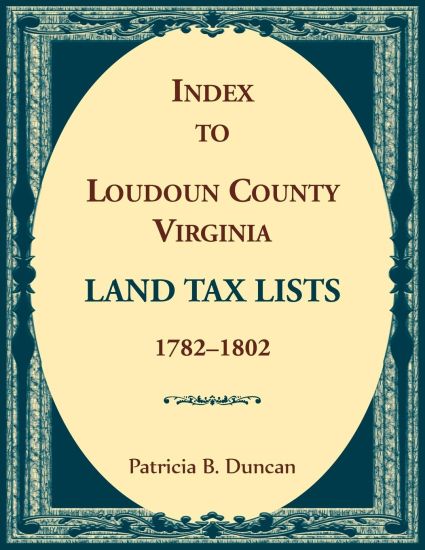
Index to Loudoun County, Virginia Land Tax Lists, 1782-1802
This is the first volume in a series of abstracts of the Loudoun County, Virginia Land Tax Books. It should be noted that it appeared many of the commissioners started with the previous year's list and made additions and deletions, as the lists are often in the same name order, and sometimes same misspelling, as the prior year. Some commissioners had a separate section for adjustments while others did not.Entries, grouped chronologically by commissioner and battalion, are usually arranged in a rough alphabetical order and include: the original page number, name of the owner/tenant, and acres/lot. Beginning in 1798, entries also include rate/acre, total value, and tax.To help find a name more quickly, the author entered most of the landowners' names in surname, given name format. However, it was not always possible to use this format for extended entries, so it is best to search for both formats.To aid in finding the location of land, the author has included deed information DB book: page] which may be related to that land. It may be the deed for the actual purchase or an earlier or later deed which seems to refer to that particular piece of land. These notations are hints only.Until 1798, rates per acre, values, and taxes were given in British Pounds Sterling ( ). As these figures are difficult to compare to dollars and cents, this information was not abstracted. Beginning with the 1798 records, all information given in the records is included in these abstracts.A full-name index adds to the value of this work.