Kirjojen hintavertailu. Mukana 11 699 587 kirjaa ja 12 kauppaa.

Kirjahaku

Etsi kirjoja tekijän nimen, kirjan nimen tai ISBN:n perusteella.

1000 tulosta hakusanalla Dylan Glynn

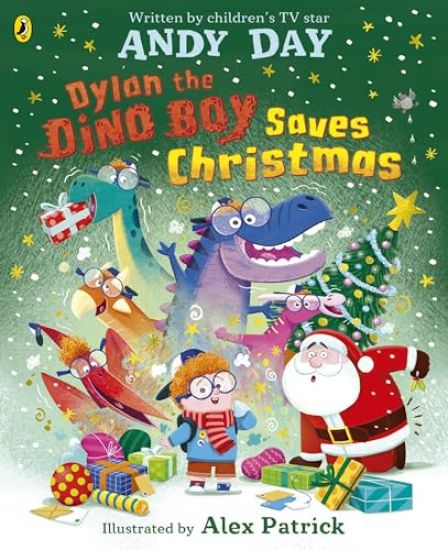
Dylan the Dino Boy Saves Christmas

Dylan the Dino Boy Saves Christmas

Andy Day

Penguin Random House Children's UK
2025
nidottu
A laugh-out-loud festive adventure written by children's TV star, Andy Day.Dylan is a pretty ordinary kid. Except for one thing: when he sneezes, he turns in a dinosaur!Usually turning into a dinosaur is great fun, but when Dylan catches his first cold a week before Christmas, his sneezes cause one disaster after another until it starts to look a lot like Christmas might be ruined! Will Dylan learn to love his dino-sneezes in time to save the day? A brilliantly funny, dino-tastic, festive adventure that celebrates what makes us extraROARdinary.
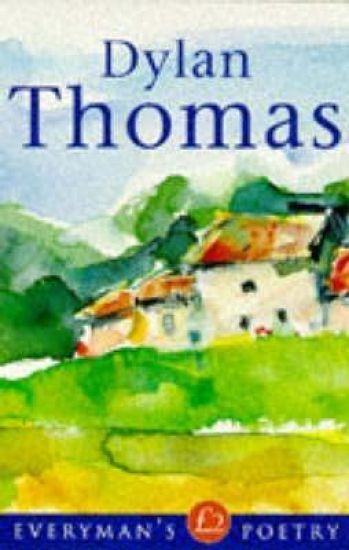
Dylan Thomas

Dylan Thomas

John Ackerman

Palgrave Macmillan
1995
nidottu
`That brilliant commentator on Dylan, John Ackerman' - Andrew Sinclair, Dylan Thomas: Poet of his People John Ackerman's highly acclaimed study of the poems and prose works of Dylan Thomas traces his development as a writer, linking this for the first time with his Welsh background. The formative influence of Swansea on the young poet, his family roots in West Wales and the childhood visits to Fernhill farm and the nearby Blaen Cwm cottage are all included, together with the Boat House anhd Laugharne, the absorbing village life and the inspiration of its now famous land- and sea-scapes. The impact of Welsh nonconformity and the chapel, and the radical politics of Wales are also explored as important influences on the poet's career. The 1994 preface, together with the introduction, throws new light on later poems like 'Prologue', the poet's work in film, broadcasting, as reader and as lecturer, while his own newly-discovered words, sharp and witty and with a poet's eye highlight his life, times and craft. The kaleidoscope of his changing worlds is seen in his homes in Wales and England, and his need in each one for a separate place to write, whether the hillside shed in Laugharne or a gypsy caravan in Oxfordshire or Camden.
Dylan Thomas

Dylan Thomas

Red Globe Press
2001
nidottu
A collection of essays on one of the twentieth century's most popular yet critically neglected authors, this book explores the full range of Thomas's work. It uses approaches - such as marxism, feminism and deconstruction - previously neglected by critics and focuses on his complex relationships with surrealism, modernism, Wales, popular culture, the USA and his own contemporaries. In doing so, it restores Thomas to his rightful place as a major twentieth century literary figure and cultural icon.
Dylan on Dylan

Dylan on Dylan

Jonathan Cott

Hodder Stoughton General Div
2007
pokkari
Gathered together for the first time: a rare and diverse collection of intimate interviews, straight from the mouth of America's most celebrated street poet. DYLAN ON DYLAN is a must-read for his millions of fans.
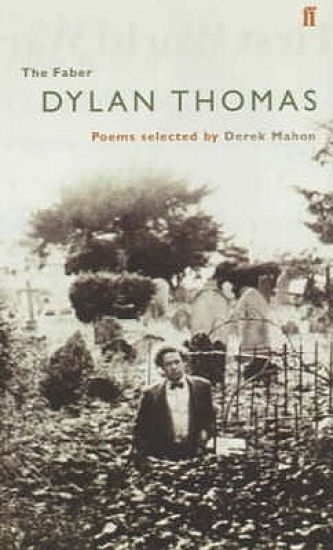
Dylan Thomas

Dylan Thomas

Dylan Thomas

Faber Faber
2004
nidottu
In this series, a contemporary poet selects and introduces a poet of the past. By their choice of poems and by the personal and critical reactions they express in their prefaces, the editors offer insights into their own work as well as providing an accessible and passionate introduction to some of the greatest poets in our literature.Dylan Thomas (1914-53) was born in Swansea and educated at Swansea Grammar School. He worked as a journalist and screenwriter in Swansea and London, contributing frequently to BBC Radio. His publications included The Map of Love (1939), Deaths and Entrances (1946) and Collected Poems (1952). Under Milk Wood, 'a play for voices', appeared posthumously.
Dylan Thomas

Dylan Thomas

Rushworth M. Kidder

Princeton University Press
2015
pokkari
Since the Bible appears so frequently in Dylan Thomas' work, some critics have decided that he must be a religious poet. Others, noting blasphemous statements and certain irreligious aspects of Thomas' personal life, contend that he was no such thing. Rushworth M. Kidder, investigating this problem, looks below the surface of the obviously religious imagery and discovers a more profound poetry. The first part of this book discusses the nature of religious poetry and the application of that term to Thomas' work; it then develops the necessary background based on his letters and prose comments to provide a foundation for the study; and finally it examines the relationship between the religious aspects of his poetry and his well-known ambiguity. The author re-defines the vocabulary for dealing with religious imagery by establishing three distinct categories of imagery: referential, allusive, and thematic. This original technique is used to examine critically Thomas' poems to show the development of his religious and poetic thought. There are numerous close, sensitive readings of individual poems to show how his poetry, like the Bible, teaches by parable, speaking deliberate ambiguity rather than simple dogma. This strategy inspired poetry that is technically complex but thematically simple, a mode of verse that became more explicitly religious in the poet's final years. Originally published in 1973. The Princeton Legacy Library uses the latest print-on-demand technology to again make available previously out-of-print books from the distinguished backlist of Princeton University Press. These editions preserve the original texts of these important books while presenting them in durable paperback and hardcover editions. The goal of the Princeton Legacy Library is to vastly increase access to the rich scholarly heritage found in the thousands of books published by Princeton University Press since its founding in 1905.
Dylan Thomas

Dylan Thomas

Rushworth M. Kidder

Princeton University Press
2016
sidottu
Since the Bible appears so frequently in Dylan Thomas' work, some critics have decided that he must be a religious poet. Others, noting blasphemous statements and certain irreligious aspects of Thomas' personal life, contend that he was no such thing. Rushworth M. Kidder, investigating this problem, looks below the surface of the obviously religious imagery and discovers a more profound poetry. The first part of this book discusses the nature of religious poetry and the application of that term to Thomas' work; it then develops the necessary background based on his letters and prose comments to provide a foundation for the study; and finally it examines the relationship between the religious aspects of his poetry and his well-known ambiguity. The author re-defines the vocabulary for dealing with religious imagery by establishing three distinct categories of imagery: referential, allusive, and thematic. This original technique is used to examine critically Thomas' poems to show the development of his religious and poetic thought. There are numerous close, sensitive readings of individual poems to show how his poetry, like the Bible, teaches by parable, speaking deliberate ambiguity rather than simple dogma. This strategy inspired poetry that is technically complex but thematically simple, a mode of verse that became more explicitly religious in the poet's final years. Originally published in 1973. The Princeton Legacy Library uses the latest print-on-demand technology to again make available previously out-of-print books from the distinguished backlist of Princeton University Press. These editions preserve the original texts of these important books while presenting them in durable paperback and hardcover editions. The goal of the Princeton Legacy Library is to vastly increase access to the rich scholarly heritage found in the thousands of books published by Princeton University Press since its founding in 1905.
Dylan at Newport, 1965: Music, Myth, and Un-Meaning

Dylan at Newport, 1965: Music, Myth, and Un-Meaning

Edward Renehan

New Street Communications, LLC
2015
nidottu
One of the most famous moments of the Sixties - and one which continues to this day to be grossly misconstrued, mistold, and loaded with undeserved meaning - is the night in July of 1965 when Bob Dylan played an electric set (or at least tried to play an electric set) at the Newport Folk Festival: an event after which, supposedly, the culture of the Sixties was never quite the same again. Even Dylan's most pre-eminent chronicler Sean Wilentz has mischaracterized this evening as the night when " Alan] Lomax along with Pete Seeger led the old guard that objected to the blasts of white-boy electricity, including Dylan's." Seeger biographer David Dunaway speaks of Dylan understanding that at Newport "the electric guitar meant a declaration of war" and that, intensely ambitious, he sought publicity by smuggling "rock into the citadel of folk music." In this narrative, battle lines were drawn, a fight waged, and a revolution begun. The over-simplification is too attractive to resist. Our tribal memory absolutely yearns for Dylan's abbreviated, 15-minute performance to be a pivot point not just from acoustic to electric, but also from traditional to commercial, from topical to cynical, and from roots to revolution. We also want Newport to be a "citadel of folk music,"and to be comfortable with any number of other safe, easy assumptions. For this symbology to work, however, we need an "old guard" to rebel against, and a youthful "new guard" to do the rising up. We also need to believe that traditional acoustic music cannot be (and was not at that time already) commercial, that electric music can never be traditional, that electric music is always commercial, that the Newport Fest (only a few years old) represented some sort of "hallowed ground" of acoustic music, and that various other straight lines apply. They don't. In this book, critically-acclaimed author Edward Renehan examines how and why.
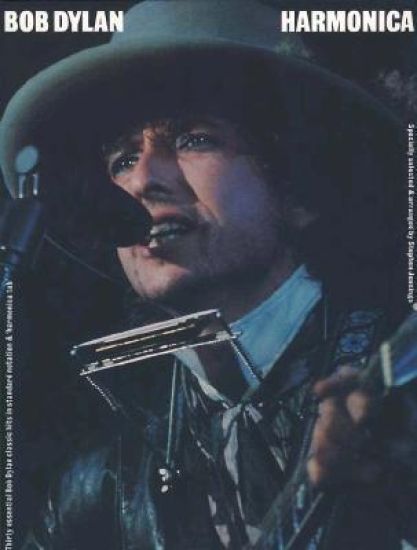
Dylan for Harmonica

Dylan for Harmonica

Bob Dylan

Music Sales Ltd
1996
nidottu
(Music Sales America). Thirty all-time great songs arranged for harmonica. The first 24 tunes are for both diatonic and chromatic harmonicas and the rest can only be played on 12-hole chromatic harmonicas. Contents: All Along the Watchtower * Blowin' in the Wind * Gotta Serve Somebody * Idiot Wind * Shelter from the Storm * Shenandoah * Shot of Love * Sad Eyed Lady of the Lowlands * I Want You * Is Your Love in Vain? * If Not for You * Something There Is About You * Stuck Inside of Mobile with the Memphis Blues Again * I Shall Be Released * Simple Twist of Fate * Brownsville Girl * Lay, Lady, Lay * Jokerman * Knockin' on Heaven's Door * Hurricane * Tangled up in Blue * Sara * Just like a Woman * Quinn the Eskimo (The Mighty Quinn) * Everything Is Broken * I'll Be Your Baby Tonight * In the Garden * Rainy Day Women No. 12 & 35 * Silvio * Under Your Spell.
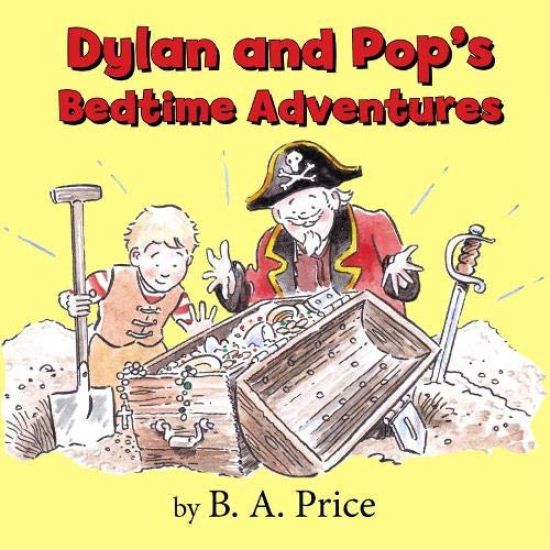
Dylan and Pop's Bedtime Stories

Dylan and Pop's Bedtime Stories

B.A. Price

Andrews UK Limited
2021
pokkari
When Dylan returns home with Teddy after a sleepover at Nana and Pop's his imagination is buzzing. No sleepover would be complete without one or two of Pop's fantastic bedtime stories. Here are some of Dylan and Pop's bedtime adventures, complete with magic and marvels, buccaneers and buried treasure, parties and pony rides.
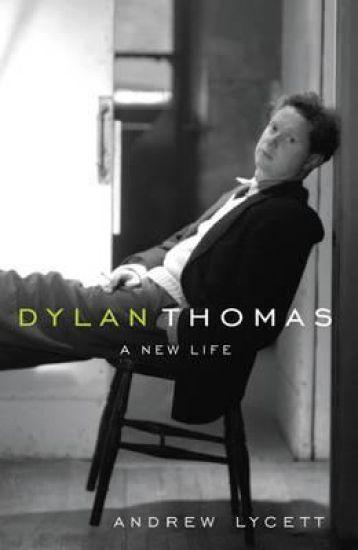
Dylan Thomas

Dylan Thomas

Andrew Lycett

Weidenfeld Nicolson
2004
pokkari
The definitive biography of the poet who was almost as notorious for his 'rock 'n' roll' lifestyle as his artistic workDylan Thomas was a romantic and controversial figure; a poet who lived to excess and died young. An inventive genius with a gift for both lyrical phrases and impish humour, he also wrote for films and radio, and was renowned for his stage performances. He became the first literary star in the age of popular culture - a favourite of both T.S. Eliot and John Lennon.As his status as a poet and entertainer increased, so did his alcoholic binges and his sexual promiscuity, threatening to destroy his marriage to his fiery Irish wife Caitlin. As this extraordinary biography reveals, he was a man of many contradictions. But out of his tempestuous life, he produced some of the most dramatic and enduring poetry in the English language.
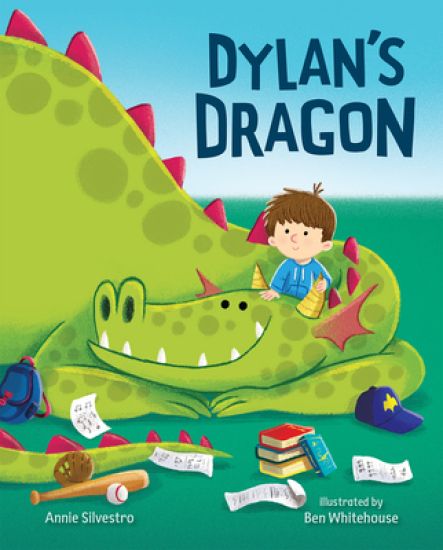
Dylan's Dragon

Dylan's Dragon

Annie Silvestro

Albert Whitman Company
2021
sidottu
Can an overscheduled kid find time to play with his dragon friend?Dylan loves playing, drawing, dreaming, and, best of all, dragons But his days and weeks are so full--with piano lessons, science club, baseball practice, karate class, and more--that when the dragon of his daydreams shows up, there's never any time to play. How can Dylan let his family know that his busy schedule needs room for dragon time?
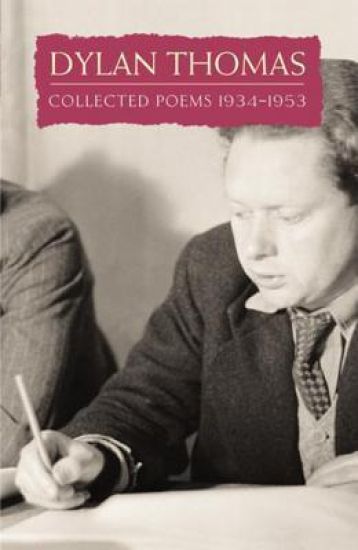
The Poems of Dylan Thomas

The Poems of Dylan Thomas

Dylan Thomas

NEW DIRECTIONS PUBLISHING CORPORATION
2017
sidottu
The reputation of Dylan Thomas (1914-1953) as one of the greatest poets of the twentieth century has not waned in the fifty years since his death. A Welshman with a passion for the English language, Thomas's singular poetic voice has been admired and imitated, but never matched.This exciting, newly edited annotated edition offers a more complete and representative collection of Dylan Thomas's poetic works than any previous edition. Edited by leading Dylan Thomas scholar John Goodby from the University of Swansea, The Poems of Dylan Thomas contains all the poems that appeared in Collected Poems 1934-1952, edited by Dylan Thomas himself, as well as poems from the 1930-1934 notebooks and poems from letters, amatory verses, occasional poems, the verse film script for "Our Country," and poems that appear in his "radio play for voices," Under Milk Wood. Showing the broad range of Dylan Thomas's oeuvre as never before, this new edition places Thomas in the twenty-first century, with an up-to-date introduction by Goodby whose notes and annotations take a pluralistic approach.
Dylan Thomas

Dylan Thomas

Barbara Hardy

University of Georgia Press
2000
sidottu
Dylan Thomas's expressive, highly imaginative re-creation of forms and language intimately portrays his inner self and his time, earning him renown as one of the "great individualists of modern art." In this contemplative, focused study of poems, stories and other works by Thomas, including Portrait of the Artist as a Young Dog and Under Milk Wood, Barbara Hardy emphasizes his creative achievements and high intelligence, analyzing his regional identity; response to other writers, especially James Joyce; modernist style; subject matter; use of language; and themes of art and the natural world.Thomas, a Welsh writer, never a nationalist, put into his writing a subtle response to regional landscape, particular people and places, and social context, including the 1930s depression, rural poverty, and war. His poetry and prose are passionate, sensuous, and artistically self-aware. The poetry is especially congenial in its imaginative celebration of greenness—literal, metaphorical, and political. To adapt the words of Charles Lamb, the poet is in "love with this green earth."Hardy describes Thomas as a resourceful "language-changer" who, like Shakespeare, Dickens, Hopkins, and Joyce, transforms the English language. Through writing so uniquely inventive that it alters the reader's perception of language, Thomas left us with works that are as fresh and relevant to today's world as they were at their debut.