Kirjojen hintavertailu. Mukana 11 244 527 kirjaa ja 12 kauppaa.

Kirjahaku

Etsi kirjoja tekijän nimen, kirjan nimen tai ISBN:n perusteella.

1000 tulosta hakusanalla EDWIN WALT KEMMERER

Edwin Chadwick: Nineteenth-Century Social Reform
Edwin Chadwick (1800-1890) is most famous for his contributions to the public health movement of the nineteenth century where his 1842 Report on the Sanitary Condition of the Labouring Population highlighted the unsanitary conditions that prevailed in the industrial towns and cities of Victorian Britain. While particular cities are mentioned in his work, such as London, Manchester, Leeds and Liverpool, his work had an effect on Britain as a whole as it changed government policy on a national level. Other facets of social welfare in which he was actively involved included the Poor Law, police, education and the evolving responsibilites of central and local government.This collection includes a reprint of Finer's biography, The Life and Times of Sir Edwin Chadwick, Chadwick's 1842 Sanitary Report and many of his rarer pamphlets and addresses to learned societies. Each of the volumes also contains a specially prepared Introduction.
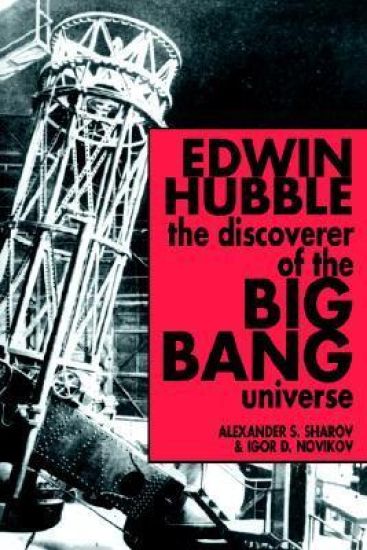
Edwin Hubble, The Discoverer of the Big Bang Universe

Edwin Hubble, The Discoverer of the Big Bang Universe

Alexander S. Sharov; Igor D. Novikov

Cambridge University Press
2005
pokkari
This book is the first complete account of the scientific life and work of Edwin Hubble, whose discoveries firmly established the United States as the leading nation in observational astronomy. One of the outstanding astronomers of the twentieth century, Hubble discovered the expansion of the Universe. He opened the world of galaxies for science when he showed that spiral nebulae beyond the Milky Way are galaxies extending to the limits of the Universe, and participating in a general expansion of the cosmos. The exploding Universe of Hubble, now termed the Big Bang, determined the origin of the elements, of galaxies and of the stars. The second part of the book describes the fundamental discoveries on the nature of the Universe made subsequently, and thus sets his achievements in context. Written by two prominent astronomers who have built on Hubble's work, this book is a classic of science, setting out the thrilling story of the exploding Universe.
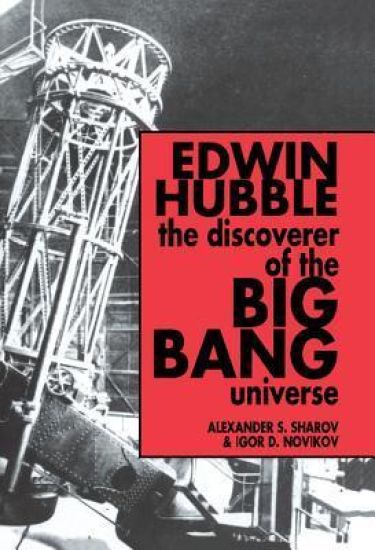
Edwin Hubble, The Discoverer of the Big Bang Universe

Edwin Hubble, The Discoverer of the Big Bang Universe

Alexander S. Sharov; Igor D. Novikov

Cambridge University Press
1993
sidottu
This book is the first complete account of the scientific life and work of Edwin Hubble, whose discoveries firmly established the United States as the leading nation in observational astronomy. One of the outstanding astronomers of the twentieth century, Hubble discovered the expansion of the Universe. He opened the world of galaxies for science when he showed that spiral nebulae beyond the Milky Way are galaxies extending to the limits of the Universe, and participating in a general expansion of the cosmos. The exploding Universe of Hubble, now termed the Big Bang, determined the origin of the elements, of galaxies and of the stars. The second part of the book describes the fundamental discoveries on the nature of the Universe made subsequently, and thus sets his achievements in context. Written by two prominent astronomers who have built on Hubble’s work, this book is a classic of science, setting out the thrilling story of the exploding Universe.
Edwin Muir Selected Poems

Edwin Muir Selected Poems

Edwin Muir

Faber Faber
2008
nidottu
Born on the Orkney island of Wyre in 1887, Edwin Muir settled in various parts of Europe during the first half of the twentieth century - from Glasgow, to Austria and Czechoslovakia throughout to 1920s, 1930s and again after the war. Muir's poetry bears oblique witness to the most traumatic years and events of this century, and is haunted by the symbolic 'fable' which he longed to find beneath the surface 'story' of mere events, as he came to terms with his own nature amidst the terror and confusion of the European maelstrom. As Seamus Heaney has written: 'Muir's poetic strength revealed itself in being able to co-ordinate the nightmare of history with that place in himself where he had trembled with anticipation . . . His simultaneous at-homeness and abroadness is exemplary.'