
Kirjahaku
Etsi kirjoja tekijän nimen, kirjan nimen tai ISBN:n perusteella.
1000 tulosta hakusanalla Edith Breburda

Edith
Salzwasser Verlag
2023
sidottu


Edith
Outlook Verlag
2024
sidottu
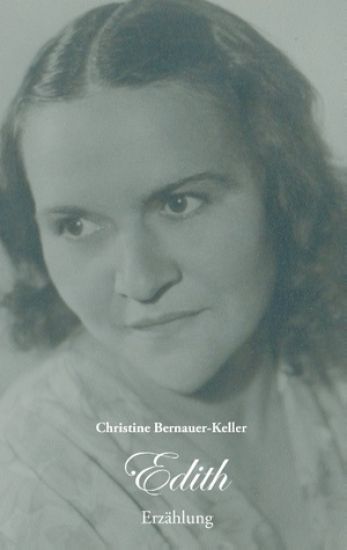


I karelska Raivola vid ryska gränsen är det midsommar och syrenen blommar. Edith är svårt sjuk och hennes liv hänger på en mycket skör tråd. Hon har hunnit bli 31 år och halva hennes liv har tuberkulosen rasat inom henne. Trots sin svåra sjukdom och ringa ålder är hon en berömd poet med fyra diktsamlingar bakom sig. Hon lever på gården i Raivola, ensam med sin mor och sina katter. Huset har förfallit. Efter den ryska revolutionen är familjens förmögenhet endast ett vackert minne. Det lilla som Ediths författande inbringar kan nätt och jämnt hålla hungern borta. Hon har ett stolt avsked till kärleken bakom sig, en blind hänförelse som hon fått plikta med hån och förnedring. Edith Södergran är den stora banbrytaren i svensk diktning. Ernst Brunner har här skrivit en förunderligt fängslande, rörande, sensuell och dramatisk roman om henne och hennes liv.

C'est quoi, dire ? Comment c'est ? Ce n'est pas parler intelligemment. C'est peut- tre cette capacit mettre en sons nos pulsions organiques, nos sensations, celles qui f condent notre pens e, nos fantasmes enfouis impossibles noncer mais que l'on peut faire entendre dans le tremblement de nos voix, dans l' ructation de nos cris, dans la violente douceur de nos murmures. Comme chez Racine, comme chez Duras, comme chez Piaf, dith.


Edith
Antigonos Verlag
2025
sidottu

Edith
Antigonos Verlag
2025
sidottu

One of ‘the heirs to John le Carré’ The Times ‘A tremendous achievement’ WILLIAM BOYD ‘Behold the new Golden Age of Spy Kings’ Sunday Times To betray, you must first belong… In June 1934, Kim Philby met his Soviet handler, the spy Arnold Deutsch. The woman who introduced them was called Edith Tudor-Hart. She changed the course of 20th century history. Then she was written out of it. Drawing on the Secret Intelligence Files on Edith Tudor-Hart, along with the private archive letters of Kim Philby, this finely worked, evocative and beautifully tense novel – by the granddaughter of Kim Philby – tells the story of the woman behind the Third Man. A future classic: ‘A fine achievement’ THE TIMES ‘Completely fascinating. A sophisticated and brilliantly constructed fictional retelling of a crucial relationship in 20th century espionage history. A tremendous achievement’ WILLIAM BOYD ‘Atmospheric and rigorously researched’ Sunday Times ‘Persuasive… involving… impressive’ LITERARY REVIEW ‘A fascinating contribution to the literature of the Cambridge spies by a clever, nimble writer with some genuine skin in the game’ CHARLES CUMMING ‘Complex and powerfully written… a persuasive repurposing of the lives of real-life figures’ i NEWSPAPER ‘A dextrous writer who gives her tale a quickening, thrillerish propulsion’ NEW STATESMAN ‘Mother, lover, revolutionary, spy… Philby’s stunning fourth novel thrusts this former bit-player in the Cambridge Spy scandal to the centre stage where she belongs… Her best book yet’ ERIN KELLY ‘Blending SIS files and imagined letters from her grandfather, Philby shines a spotlight on Edith Tudor-Hart as activist, spy and often desperate single, working mother’ SARAH VAUGHAN ‘Completely absorbing’ MICK HERRON ‘A tense and brilliantly structured story of power and intrigue’ JANE SHEMILT ‘Unforgettable… a fascinating exploration of a key moment in history and a stunning piece of fiction’ HOLLY WATT

Edith Wharton's The House of Mirth
Oxford University Press Inc
2004
nidottu
Edith Wharton is recognized as one of the twentieth century's most important American writers. The House of Mirth not only initiated three decades of Wharton's popular and critical acclaim, it helped move women's literature into a new place of achievement and prominence. The House of Mirth is perhaps Wharton's best-known and most frequently read novel, and scholars and teachers consider it an essential introduction to Wharton and her work. Moreover, the novel lends itself to a variety of topics of inquiry and critical approaches of interest to readers at various levels. This casebook collects critical essays addressing a broad spectrum of topics and utilizing a range of critical and theoretical approaches. It also includes Wharton's introduction to the 1936 edition of the novel and her discussion of the composition of the novel from her autobiography.

Edith Landmann-Kalischer
OXFORD UNIVERSITY PRESS INC
2024
sidottu
This volume brings together essential essays by an important but neglected thinker in early twentieth-century German philosophy, Edith Landmann-Kalischer. As the first English translation of her writings, this volume represents a landmark step in the effort to restore to its rightful place her philosophy and, in particular, its methodologically unified approach to aesthetic, moral, and epistemic value. The three essays translated - “On the Cognitive Value of Aesthetic Judgments: A Comparison of Sensory Judgments and Value Judgments” (1905), “On Artistic Truth” (1906), and “Philosophy of Values” (1910) - demonstrate a philosophical mind at home with the then emerging disciplines of phenomenology and psychology during one of the most fecund eras of philosophy in German-speaking lands. Drawing on the ferment of this period and engaging with its leading thinkers (e.g., Brentano, Husserl), Landmann-Kalischer crafts a unique and powerful contribution to aesthetics, the philosophy of art, and value theory. And far from speaking simply to the concerns of her day, in these essays she tackles questions that remain as pressing for us today as they were in her time. Are beauty, goodness, and truth real or merely subjective? How do we experience these values? Does our experience of value lead to judgments that can be true or false? Can those experiences lead to knowledge? Is a science of value possible at all? In Landmann-Kalischer's essays, we find rigorously argued and compelling answers to these questions.

Edith Landmann-Kalischer
OXFORD UNIVERSITY PRESS INC
2023
nidottu
This volume brings together essential essays by an important but neglected thinker in early twentieth-century German philosophy, Edith Landmann-Kalischer. As the first English translation of her writings, this volume represents a landmark step in the effort to restore to its rightful place her philosophy and, in particular, its methodologically unified approach to aesthetic, moral, and epistemic value. The three essays translated - “On the Cognitive Value of Aesthetic Judgments: A Comparison of Sensory Judgments and Value Judgments” (1905), “On Artistic Truth” (1906), and “Philosophy of Values” (1910) - demonstrate a philosophical mind at home with the then emerging disciplines of phenomenology and psychology during one of the most fecund eras of philosophy in German-speaking lands. Drawing on the ferment of this period and engaging with its leading thinkers (e.g., Brentano, Husserl), Landmann-Kalischer crafts a unique and powerful contribution to aesthetics, the philosophy of art, and value theory. And far from speaking simply to the concerns of her day, in these essays she tackles questions that remain as pressing for us today as they were in her time. Are beauty, goodness, and truth real or merely subjective? How do we experience these values? Does our experience of value lead to judgments that can be true or false? Can those experiences lead to knowledge? Is a science of value possible at all? In Landmann-Kalischer's essays, we find rigorously argued and compelling answers to these questions.
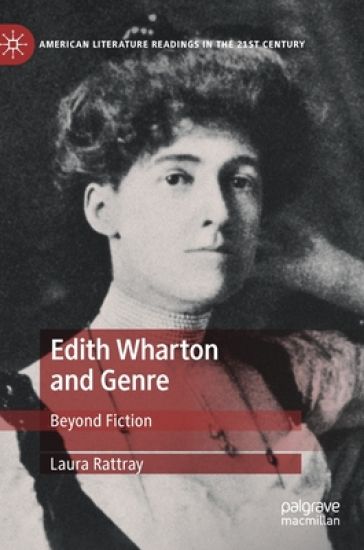
Based on extensive new archival research, Edith Wharton and Genre: BeyondFiction offers the first study of Wharton’s full engagement with original writing ingenres outside those with which she has been most closely identified. So muchmore than an acclaimed novelist and short story writer, Wharton is reconsideredin this book as a controversial playwright, a gifted poet, a trailblazing travelwriter, an innovative and subversive critic, a hugely influential design writer, andan author who overturned the conventions of autobiographical form. Herversatility across genres did not represent brief sidesteps, temporary diversionsfrom what has long been read as her primary role as novelist. Each was pursuedfully and whole-heartedly, speaking to Wharton’s very sense of herself as anartist and her connected vision of artistry and art. The stories of these other EdithWhartons, born through her extraordinary dexterity across a wide range ofgenres, and their impact on our understanding of her career, are the focus of thisnew study, revealing a bolder, more diverse, subversive and radical writer thanhas long been supposed.

Edith Wharton and the Conversations of Literary Modernism
J. Haytock
Palgrave Macmillan
2008
sidottu
This study imagines modernism as a series of conversations and locates Edith Wharton s voice in those debates.
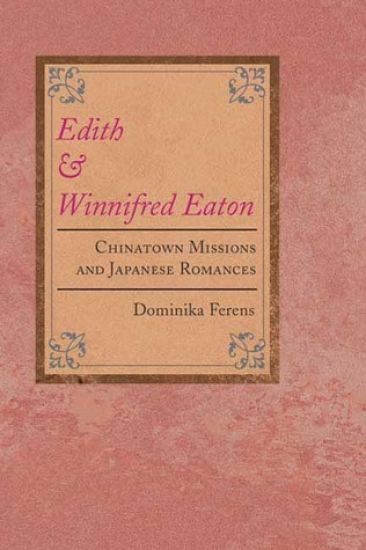
Daughters of a British father and a Chinese mother, Edith and Winnifred Eaton pursued wildly different paths. While Edith wrote stories of downtrodden Chinese immigrants under the pen name Sui Sin Far, Winnifred presented herself as Japanese American and published Japanese romance novels in English under the name Onoto Watanna. In this invigorating reappraisal of the vision and accomplishments of the Eaton sisters, Dominika Ferens departs boldly from the dichotomy that has informed most commentary on them: Edith's "authentic" representations of Chinese North Americans versus Winnifred's "phony" portrayals of Japanese characters and settings. Arguing that Edith as much as Winnifred constructed her persona along with her pen name, Ferens considers the fiction of both Eaton sisters as ethnography. Edith and Winnifred Eaton suggests that both authors wrote through the filter of contemporary ethnographic discourse on the Far East and also wrote for readers hungry for "authentic" insight into the morals, manners, and mentality of an exotic other. Ferens traces two distinct discursive traditions–-missionary and travel writing–-that shaped the meanings of "China" and "Japan" in the nineteenth century. She shows how these traditions intersected with the unconventional literary careers of the Eaton sisters, informing the sober, moralistic tone of Edith's stories as well as Winnifred's exotic narrative style, plots, settings, and characterizations. Bringing to the Eatons' writings a contemporary understanding of the racial and textual politics of ethnographic writing, this important account shows how these two very different writers claimed ethnographic authority, how they used that authority to explore ideas of difference, race, class and gender, and how their depictions of nonwhites worked to disrupt the process of whites' self-definition.

When Edith Wharton became friends with Henry James, she joined a group of men who became her "inner circle." This group included both well-known figures, such as James, Percy Lubbock, and Bernard Berenson, and several now forgotten, including John Hugh Smith, Walter Berry, Gaillard Lapsley, Robert Norton, and Howard Sturgis.Drawing on unpublished archival material by and about members of the circle, Susan Goodman here presents an intimate view of this American expatriate community, as well as the larger transatlantic culture it mirrored. She explores how the group, which began forming around 1904 and lasted until Wharton's death in 1937, defined itself against the society its founders had left in the United States, while simultaneously criticizing and accommodating the one it found in Europe. Tracing Wharton's individual relationships with these men and their relationships with one another, she examines literary kinships and movements in the biographical and feminist context of gender, exile, and aesthetics. She also relates the group to other literary circles, such as the Bloomsbury group and Gertrude Stein's salon.

Edith Wharton's Brave New Politics
University of Wisconsin Press
1995
sidottu
Most critics claim that Edith Wharton's creative achievement peaked with her novels ""The House of Mirth"" and ""The Age of Innocence"", dismissing her later fiction as reactionary, sensationalistic and aesthetically inferior. In ""Edith Wharton's Brave New Politics"", Dale M. Bauer overturns these traditional conclusions. She shows that Wharton's post-World War I writings are acutely engaged with the cultural debates of her day - from reproductive control, to authoritarian politics, to mass culture and its ramifications. Bauer examines the social and political critique implicit in Wharton's later works, from ""Summer"" (1917) to her last novel ""The Bucaneers"" (published posthumously in 1938). She integrates historical, political and feminist concerns to recast Wharton's antimodernism and to recover the novelist's understanding of public life and private morality. ""Edith Wharton's Brave New Politics"" illustrates how literary criticism can change the course of a literary career. In her refutation of the dominant interpretations of Wharton's literary work, Bauer challenges the prevailing conception of this genteel woman of letters, showing that to read Wharton's works in isolation from her complex politics is to misunderstand Wharton's aims and to miss entirely the exhilarating power of these later fictions.