
Kirjahaku
Etsi kirjoja tekijän nimen, kirjan nimen tai ISBN:n perusteella.
1000 tulosta hakusanalla Edith Piaf

SYNOPSIS: EDITH by Jo BarneyEdith, sixty-seven, wakes on Christmas morning to find her husband Art lying next to her, dead. Their shotgun wedding, forty-some years before, has not led to a happy-ever-after scenario. Edith is pretty sure she doesn't like Art, perhaps never has, and she is sure he has felt the same way, but their senses of responsibility have kept them together. Edith has focused on raising her son Brian, who has become successful in all parts of his life: job, marriage, fatherhood, and he is the joy of her life, just about the only one.Art is cremated and buried, but a mystery uncovered by an autopsy (required because of his sudden, unexpected demise) involves a high alcohol blood content, barbiturates, and Valium. Art, to Edith's knowledge, did not take sedatives or other psychotropic drugs, drank, yes, but not to excess. The insurance company questions the possibility of suicide and the resulting lower payout. Edith, so angry at her husband for guilt-punishing her and their son in this way, goes through the dead man's pockets, discovers a secret life involving bars, restaurants, a hotel, and as she follows up on the clues to this life--matchbooks, receipts, a pink Kleenex--she discovers Art's connection to an l8-year-old girl, dark-skinned, curly wig, and beautiful.She also meets the girl's social worker and Seth, a good-looking older black man who says she is handsome. Edith, trying to begin life over, is glad she's had her hair colored and a make-over.In the meantime, Brian's wife Kathleen reveals that Brian is coming home at night smelling like another woman, sometimes like citrus. He's taken large sums out of their savings account. Brian, the perfect son, apparently isn't so perfect. Edith hasn't liked Kathleen much, but their husbands' secret transgressions bring the two women closer, and they separately and together attempt to find out what is going on. The men, one dead, the other saying, "It's going to be all right," aren't talking.Their clues lead them to a bar, to a rib joint, to a high-class restaurant, and to the Hilton; Edith agrees to meet Latisha, who calls herself Art's friend, and who is about to go to college. Kathleen discovers more money missing and that Brian has a code in his datebook that indicates secret meetings. She goes to a lawyer, discusses divorce.Edith decides that Latisha, the black-haired teenager, may be either Art's lover or his daughter. Either way, she's had it with Art's secrets, but somewhere in her sleepless nights she also realizes that if he committed suicide, it could have been her fault, her un-love of him. A phone call from a kind policemen lessens her guilt about his death, but not about what Art might have been up to the nights he left the house late at night, coming home smelling like alcohol and one night, oranges. Seth and the social worker who has worked with Latisha are brother and sister. They know more than anyone what has gone on, what is happening at this point, including who Latisha's mother is. But not everything. They don't know who is paying for Latisha'scollege tuition and that both Art and Brian have been involved with Patsy, Latisha's mother. Brian isn't the perfect son Edith believed he was, and the mysteries settle into truths, as he confesses to his mother. Edith discovers that Art's pockets have revealed his secrets and have brought her a new life.


Martina Devlin, an award-winning columnist for the Irish Independent and podcaster for Dublin City of Literature #CityofBooks, has delivered a new novel based on the life of Edith Somerville of ‘Somerville and Ross’ fame – authors of The Irish R.M. In this work, set during the turbulent period of Irish Independence 1921–22, Somerville finds herself at a crossroads. Her position as a member of the Ascendancy is perilous as she struggles to keep her family home, Drishane House in West Cork, while others are burned out. After years in a successful writing partnership with Violet Martin, Edith continues to write after her partner’s death, comforted in the belief they continue to connect through automatic writing and séances. Against a backdrop of Civil War politics and lawlessness erupting across the country via IRA flying columns, people across Ireland are forced to consider where their loyalties lie. In Edith, Devlin limns a vivid historical context in this story of proto-feminist Edith Somerville courageously trying to keep home and heart in one piece. The story of Somerville and Ross is unique in the history of Irish women writers. Academic Shawn R. Mooney described these best-selling authors as ‘undeniably New Women: single, educated and economically independent writers whose lives and literary collaboration were unique manifestations of late-nineteenth century feminist strivings toward political and sexual equality’. Devlin depicts Edith in the round, suffering from loss, striving for safety, and keeping hold of hope in this captivating narrative set in the early years of a nascent state — a triumph of ventriloquism rooted in a society on the cusp of change.
Je m'appelle dith. Je suis n e en France, Grenoble. J'ai t plac e par les services sociaux dans une famille d'accueil. l' ge de 19 ans je me suis enfuie. Je suis arriv e Paris. La vie d'aventures qui m'a emmen e J rusalem et en Inde, n' tait pas celle que j'avais imagin e enfant. Ma m re, laquelle j'avais t arrach e alors que j' tais encore une enfant, avait r v pour moi, une vie paisible, entour e de ma famille. Le destin avait pr vu bien autre chose. La paix, je l'ai trouv e apr s un tr s long voyage. Les impr vus, les contretemps ont jalonn mon existence. J'ai aim vous faire part de mes espoirs et de mes d sespoirs.


Edith
Salzwasser Verlag
2023
sidottu


Edith
Outlook Verlag
2024
sidottu
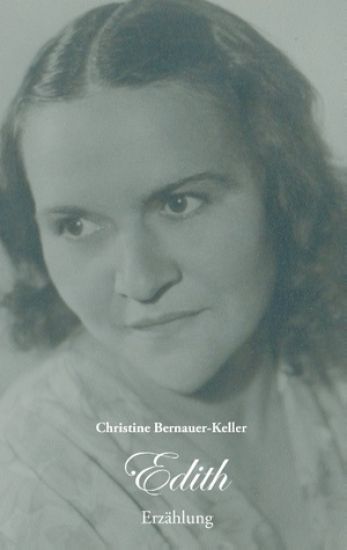


I karelska Raivola vid ryska gränsen är det midsommar och syrenen blommar. Edith är svårt sjuk och hennes liv hänger på en mycket skör tråd. Hon har hunnit bli 31 år och halva hennes liv har tuberkulosen rasat inom henne. Trots sin svåra sjukdom och ringa ålder är hon en berömd poet med fyra diktsamlingar bakom sig. Hon lever på gården i Raivola, ensam med sin mor och sina katter. Huset har förfallit. Efter den ryska revolutionen är familjens förmögenhet endast ett vackert minne. Det lilla som Ediths författande inbringar kan nätt och jämnt hålla hungern borta. Hon har ett stolt avsked till kärleken bakom sig, en blind hänförelse som hon fått plikta med hån och förnedring. Edith Södergran är den stora banbrytaren i svensk diktning. Ernst Brunner har här skrivit en förunderligt fängslande, rörande, sensuell och dramatisk roman om henne och hennes liv.

C'est quoi, dire ? Comment c'est ? Ce n'est pas parler intelligemment. C'est peut- tre cette capacit mettre en sons nos pulsions organiques, nos sensations, celles qui f condent notre pens e, nos fantasmes enfouis impossibles noncer mais que l'on peut faire entendre dans le tremblement de nos voix, dans l' ructation de nos cris, dans la violente douceur de nos murmures. Comme chez Racine, comme chez Duras, comme chez Piaf, dith.


Edith
Antigonos Verlag
2025
sidottu

Edith
Antigonos Verlag
2025
sidottu

One of ‘the heirs to John le Carré’ The Times ‘A tremendous achievement’ WILLIAM BOYD ‘Behold the new Golden Age of Spy Kings’ Sunday Times To betray, you must first belong… In June 1934, Kim Philby met his Soviet handler, the spy Arnold Deutsch. The woman who introduced them was called Edith Tudor-Hart. She changed the course of 20th century history. Then she was written out of it. Drawing on the Secret Intelligence Files on Edith Tudor-Hart, along with the private archive letters of Kim Philby, this finely worked, evocative and beautifully tense novel – by the granddaughter of Kim Philby – tells the story of the woman behind the Third Man. A future classic: ‘A fine achievement’ THE TIMES ‘Completely fascinating. A sophisticated and brilliantly constructed fictional retelling of a crucial relationship in 20th century espionage history. A tremendous achievement’ WILLIAM BOYD ‘Atmospheric and rigorously researched’ Sunday Times ‘Persuasive… involving… impressive’ LITERARY REVIEW ‘A fascinating contribution to the literature of the Cambridge spies by a clever, nimble writer with some genuine skin in the game’ CHARLES CUMMING ‘Complex and powerfully written… a persuasive repurposing of the lives of real-life figures’ i NEWSPAPER ‘A dextrous writer who gives her tale a quickening, thrillerish propulsion’ NEW STATESMAN ‘Mother, lover, revolutionary, spy… Philby’s stunning fourth novel thrusts this former bit-player in the Cambridge Spy scandal to the centre stage where she belongs… Her best book yet’ ERIN KELLY ‘Blending SIS files and imagined letters from her grandfather, Philby shines a spotlight on Edith Tudor-Hart as activist, spy and often desperate single, working mother’ SARAH VAUGHAN ‘Completely absorbing’ MICK HERRON ‘A tense and brilliantly structured story of power and intrigue’ JANE SHEMILT ‘Unforgettable… a fascinating exploration of a key moment in history and a stunning piece of fiction’ HOLLY WATT

Edith Wharton's The House of Mirth
Oxford University Press Inc
2004
nidottu
Edith Wharton is recognized as one of the twentieth century's most important American writers. The House of Mirth not only initiated three decades of Wharton's popular and critical acclaim, it helped move women's literature into a new place of achievement and prominence. The House of Mirth is perhaps Wharton's best-known and most frequently read novel, and scholars and teachers consider it an essential introduction to Wharton and her work. Moreover, the novel lends itself to a variety of topics of inquiry and critical approaches of interest to readers at various levels. This casebook collects critical essays addressing a broad spectrum of topics and utilizing a range of critical and theoretical approaches. It also includes Wharton's introduction to the 1936 edition of the novel and her discussion of the composition of the novel from her autobiography.

Edith Landmann-Kalischer
OXFORD UNIVERSITY PRESS INC
2024
sidottu
This volume brings together essential essays by an important but neglected thinker in early twentieth-century German philosophy, Edith Landmann-Kalischer. As the first English translation of her writings, this volume represents a landmark step in the effort to restore to its rightful place her philosophy and, in particular, its methodologically unified approach to aesthetic, moral, and epistemic value. The three essays translated - “On the Cognitive Value of Aesthetic Judgments: A Comparison of Sensory Judgments and Value Judgments” (1905), “On Artistic Truth” (1906), and “Philosophy of Values” (1910) - demonstrate a philosophical mind at home with the then emerging disciplines of phenomenology and psychology during one of the most fecund eras of philosophy in German-speaking lands. Drawing on the ferment of this period and engaging with its leading thinkers (e.g., Brentano, Husserl), Landmann-Kalischer crafts a unique and powerful contribution to aesthetics, the philosophy of art, and value theory. And far from speaking simply to the concerns of her day, in these essays she tackles questions that remain as pressing for us today as they were in her time. Are beauty, goodness, and truth real or merely subjective? How do we experience these values? Does our experience of value lead to judgments that can be true or false? Can those experiences lead to knowledge? Is a science of value possible at all? In Landmann-Kalischer's essays, we find rigorously argued and compelling answers to these questions.