Kirjojen hintavertailu. Mukana 11 699 587 kirjaa ja 12 kauppaa.

Kirjahaku

Etsi kirjoja tekijän nimen, kirjan nimen tai ISBN:n perusteella.

1000 tulosta hakusanalla Edouard Toulouse

Edouard Glissant and Postcolonial Theory

Edouard Glissant and Postcolonial Theory

University of Virginia Press
1999
nidottu
Edouard Glissant has written extensively in French about the colonial experience in the Caribbean. Since he is known primarily as a novelist and poet, his theoretical essays have so far remained largely unread by the English-language theorists in this field. This book situates Glissant within ongoing debates in postcolonial theory, making illuminating connections between his work and that of Frantz Fanon, Gayatri Spivak, Homi Bhabha, and Henry Louis Gates Jr.Focusing on language and subjectivity, Edouard Glissant and Postcolonial Theory moves between an analysis of Glissant's theoretical work and detailed readings of his novels to elucidate a network of related issues. Celia Britton addresses the major themes central to his writing-the reappropriation of history, standard and vernacular language, hybridity, subalternity, the problematizing of identity, and the colonial construction of the Other-and asks provocative questions relating to each. How does the colonized subject relate to a language initially imposed by the colonizer but subsequently, to some extent, subverted and reappropriated? How does this strategic use of language come to function as a crucial mode of cultural resistance? What role can fictional representation play in this process?This book represents the first presentation of Glissant's incisive theoretical work and analysis of his immensely powerful and subtle novels in the context of postcolonial studies. By juxtaposing them, Britton illuminates the significant contribution Glissant has made to this theoretical endeavor.
The Collected Poems of Édouard Glissant

The Collected Poems of Édouard Glissant

Édouard Glissant

University of Minnesota Press
2019
nidottu
The complete poems of the two-time finalist for the Nobel Prize in Literature, available in English for the first time This volume collects and translates-most for the first time-the nine volumes of poetry published by Édouard Glissant, a poet, novelist, and critic increasingly recognized as one of the great writers of the twentieth century. The poems bring to life what Glissant calls “an archipelago-like reality,” partaking of the exchanges between Europe and its former colonies, between humans and their geographies, between the poet and the natural world. Reciting and re-creating histories of the African diaspora, Columbus’s “discovery” of the New World, the slave trade, and the West Indies, Glissant underscores the role of poetic language in changing both past and present irrevocably. As translator Jeff Humphries writes in his introduction, Glissant’s poetry embraces the aesthetic creed of the French symbolists MallarmÉ and Rimbaud (“The poet must make himself into a seer”) and aims at nothing less than a hallucinatory experience of imagination in which the differences among poem, reader, and subject dissolve into one immediate present.Born in Martinique in 1928, influenced by the controversial Martinican poet/politician AimÉ CÉsaire, and educated at the Sorbonne in Paris, Édouard Glissant has emerged as one of the most influential postcolonial theorists, novelists, playwrights, and poets not only in the Caribbean but also in contemporary French letters. He has twice been a finalist for the Nobel Prize in Literature as well as the recipient of both the Prix Renaudot and the Prix Charles Veillon in France. His works include Poetics of Relation, Caribbean Discourse, Faulkner Mississippi, and the novel The Ripening. He currently serves as Distinguished Professor of French at City University of New York, Graduate Center.
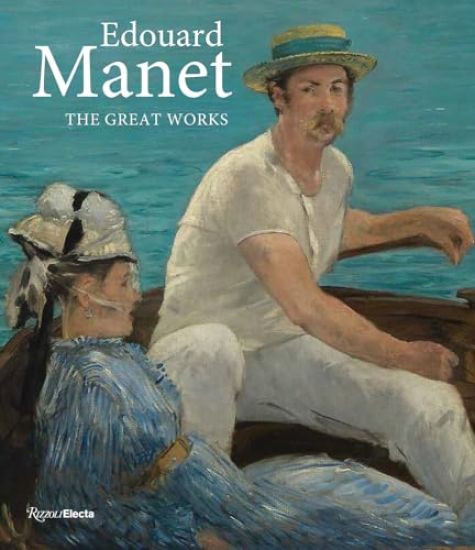
Édouard Manet

Édouard Manet

Kathryn Calley Galitz

RIZZOLI INTERNATIONAL PUBLICATIONS
2026
sidottu
With over 100 seminal paintings, this book celebrates the artist who bridged the transition from Realism to Impressionism and is seen as giving rise to Modernism. Combining painterly technique with strikingly modern images of contemporary life, much of Manet s work documented daily life in Paris, depicting scenes ranging from the recently built boulevards with their sidewalk cafes, industrial marvels such as the railways, and pleasure grounds ranging from newly landscaped parks to horse racing. He also painted provocative scenes of the demimonde in popular bars and cabarets. Included here are popular and iconic works such as Le Dejeuner sur l herbe, with its shocking juxtaposition of a nude woman amid fully dressed men, and Olympia, Manet s modern reworking of Titian s Venus of Urbino that Parisian society initially rejected as scandalous. Little has been published on Manet recently, so this comprehensive survey is long overdue. His bold style, muscular brushwork, frank subject matter, and compositions that pushed boundaries and confronted societal norms continue to influence and inspire today s young artists.
Edouard Benedictus Decorative Scrapbook Paper
This collection of decorative scrapbook papers features twenty floral Art Deco designs by Edouard Benedictus (1878-1930) from his book Variations Quatre Vingt Six Motifs D coratifs En Vingt Planches (1928). Edouard was a French painter, inventor composer, scientist book binder and textile designer. How to use the scrapbook papers: The one-sided designs are ideal for scrapbook projects, collage, framing, decoupage, greeting cards, mixed media and junk journals. The pages within this book can be removed by using a box cutter or scissors.
Édouard Glissant

Édouard Glissant

Sam Coombes

Bloomsbury Academic
2018
sidottu
Édouard Glissant was a leading voice in debates centering on the postcolonial condition and on the present and future of globalisation. Prolific as both a theorist and a literary author, Glissant started his career as a contemporary of Frantz Fanon in the early days of francophone postcolonial thought. In the latter part of his career Glissant’s vision pushed beyond the boundaries of postcolonialism to encompass the contemporary phenomenon of globalisation.Sam Coombes offers a detailed analysis of Glissant’s thought, setting out the reasons why Glissant’s vision for a world of intercultural interaction both reflects but also seeks to provide a correction to some of the leading tendencies commonly associated with contemporary theory today.
Édouard Glissant

Édouard Glissant

Sam Coombes

Bloomsbury Academic
2018
nidottu
Édouard Glissant was a leading voice in debates centering on the postcolonial condition and on the present and future of globalisation. Prolific as both a theorist and a literary author, Glissant started his career as a contemporary of Frantz Fanon in the early days of francophone postcolonial thought. In the latter part of his career Glissant’s vision pushed beyond the boundaries of postcolonialism to encompass the contemporary phenomenon of globalisation.Sam Coombes offers a detailed analysis of Glissant’s thought, setting out the reasons why Glissant’s vision for a world of intercultural interaction both reflects but also seeks to provide a correction to some of the leading tendencies commonly associated with contemporary theory today.
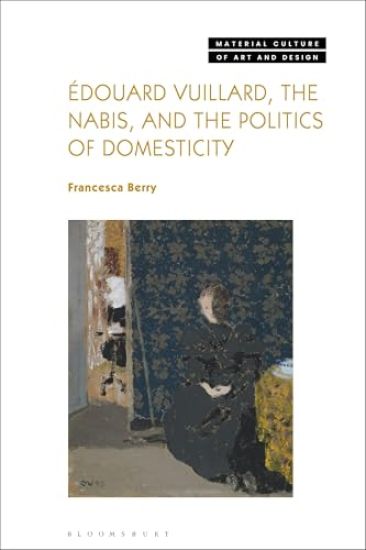
Édouard Vuillard, the Nabis, and the Politics of Domesticity

Édouard Vuillard, the Nabis, and the Politics of Domesticity

Francesca Berry

BLOOMSBURY PUBLISHING PLC
2025
sidottu
This ground-breaking book is the first to address the feminine and feminist politics of Intimiste art - a modernist mode of art making developed in the 1890s by Édouard Vuillard while associated with the Nabi 'brotherhood'.Coined by contemporary critics, 'intimisme' encapsulated the shared approach of these artists to depicting intimate settings and themes. Vuillard's paintings, which are typically small, employ bold pigments and economic brushstrokes to depict female figures in tightly composed apartment interiors. Those portrayed include his mother and sister, just as wives and lovers dominate the art of other Nabis, including Maurice Denis and Pierre Bonnard.Francesca Berry comparatively analyses the gender politics of Nabi art to reveal real differences. Through skilled visual interpretation she argues that Vuillard attempted a profound engagement with the material conditions of feminine domesticity in cooperation with his first and most sustained audience: women. He did so, the author reveals, in artworks that explore a complex range of feminine experiences such as sexual initiation, stillbirth, illicit work, and unceasing housework. The personal gender politics of Intimiste practice also are foregrounded. Vuillard's studio-bedroom afforded him access to quotidian femininity. But at what risks to his sister's privacy and to his mother's subjectivity?Making an artistic project of feminine domesticity also meant entering the field of politics. The 1890s was the decade of state legislation and feminist demands with respect to work in the home and women's familial rights. Personal in motif and Symbolist in form, Berry's extensive historical research reveals these artworks also to have been social and political, sometimes even feminist, in meaning. Transcending the structural repression of domesticity in histories of modernist art, this book powerfully overturns residual myths of aesthetic introspection and social retreat that for too long have been attached to Nabi Symbolism.