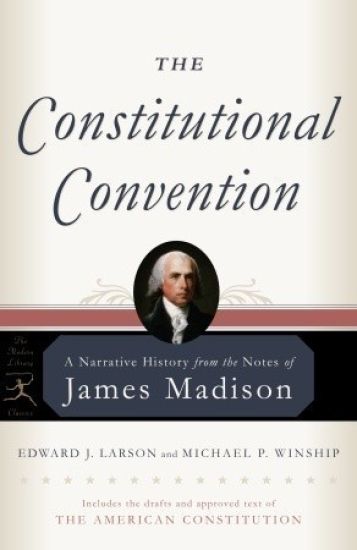
In 1787, the American union was in disarray. The incompatible demands of the separate states threatened its existence; some states were even in danger of turning into the kind of tyranny they had so recently deposed. A truly national government was needed, one that could raise money, regulate commerce, and defend the states against foreign threats-without becoming as overbearing as England. So thirty-six-year-old James Madison believed. That summer, the Virginian was instrumental in organizing the Constitutional Convention, in which one of the world's greatest documents would be debated, created, and signed. Inspired by a sense of history in the making, he kept the most extensive notes of any attendee.Now two esteemed scholars have made these minutes accessible to everyone. Presented with modern punctuation and spelling, judicious cuts, and helpful notes-plus fascinating background information on every delegate and an overview of the tumultuous times-here is the great drama of how the Constitution came to be, from the opening statements to the final votes. This Modern Library Paperback Classic also includes an Introduction and appendices from the authors.
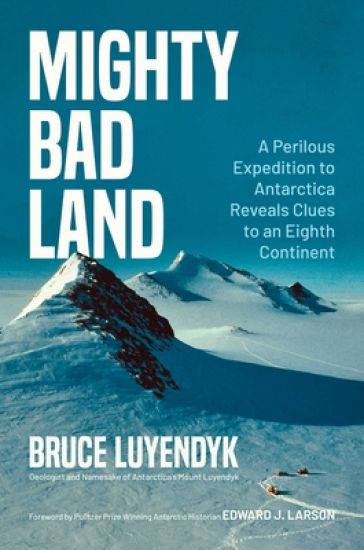
A tale of grit and real teamwork in the wilds of Antarctica when the hunger for knowledge reigns supreme.Anything can happen in a pure wilderness experienced by few humans—a place where unseen menace waits everywhere. This story is an unembellished account of a scientist and his team exploring the last place on Earth. But, unlike most recent books on Antarctica, the reader becomes embedded with geologist Bruce Luyendyk’s team. They share the challenges, companionship, failures, bravery, and success brought to light from scientific research pursued in an unforgiving place, Marie Byrd Land, or Mighty Bad Land. The geologists make surprising discoveries. Luyendyk realizes that vast submarine plateaus in the southwest Pacific are continental pieces that broke away from the Marie Byrd Land sector of Gondwana. He coined “Zealandia” to describe this newly recognized submerged continent. Only the tops of its mountains poke above sea level to host the nation of New Zealand. This stunning revelation of a submerged eighth continent promises economic and geopolitical consequences reverberating into the twenty-first century. The story occurs in the 1990s and fills a gap in the timeline of Antarctic exploration between the Heroic Age, the age of military exploration, and before the modern era of science. Danger is exponentially greater, isolation a constant threat without GPS, satellite phones, and the internet. As the expedition’s leader, Luyendyk stands up to his demons that surface under the extreme duress of his experience, like nearly losing two team members.
Christopher B. Barrett; Tim Benton; Jessica Fanzo; Mario Herrero; Rebecca J. Nelson; Elizabeth Bageant; Edward Buckler; Karen Cooper; Isabella Culotta; Shenggen Fan; Rikin Gandhi; Steven James; Mark Kahn; Laté Lawson-Lartego; Jiali Liu; Quinn Marshall; Daniel Mason-D'Croz; Alexander Mathys; Cynthia Mathys; Veronica Mazariegos-Anastassiou; Alesha Miller; Kamakhya Misra; Andrew Mude; Jianbo Shen; Lindiwe Majele Sibanda; Claire Song; Roy Steiner; Philip Thornton; Stephen Wood
This open access book is the result of an expert panel convened by the Cornell Atkinson Center for Sustainability and Nature Sustainability. The panel tackled the seventeen UN Sustainable Development Goals (SDGs) for 2030 head-on, with respect to the global systems that produce and distribute food. The panel’s rigorous synthesis and analysis of existing research leads compellingly to multiple actionable recommendations that, if adopted, would simultaneously lead to healthy and nutritious diets, equitable and inclusive value chains, resilience to shocks and stressors, and climate and environmental sustainability.
Christopher B. Barrett; Tim Benton; Jessica Fanzo; Mario Herrero; Rebecca J. Nelson; Elizabeth Bageant; Edward Buckler; Karen Cooper; Isabella Culotta; Shenggen Fan; Rikin Gandhi; Steven James; Mark Kahn; Laté Lawson-Lartego; Jiali Liu; Quinn Marshall; Daniel Mason-D'Croz; Alexander Mathys; Cynthia Mathys; Veronica Mazariegos-Anastassiou; Alesha Miller; Kamakhya Misra; Andrew Mude; Jianbo Shen; Lindiwe Majele Sibanda; Claire Song; Roy Steiner; Philip Thornton; Stephen Wood
This open access book is the result of an expert panel convened by the Cornell Atkinson Center for Sustainability and Nature Sustainability. The panel tackled the seventeen UN Sustainable Development Goals (SDGs) for 2030 head-on, with respect to the global systems that produce and distribute food. The panel’s rigorous synthesis and analysis of existing research leads compellingly to multiple actionable recommendations that, if adopted, would simultaneously lead to healthy and nutritious diets, equitable and inclusive value chains, resilience to shocks and stressors, and climate and environmental sustainability.
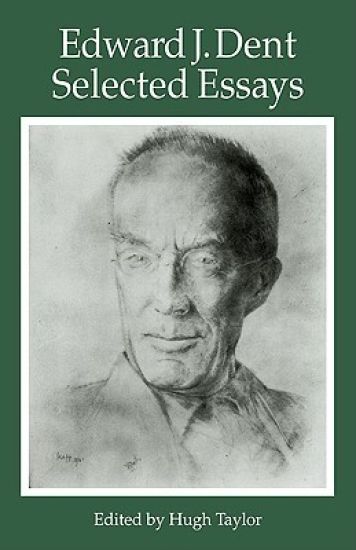
During his long career, Edward Dent wrote on a variety of musical subjects, ranging from substantial articles in the most learned journals to less weighty pieces in Radio Times. This volume aims to reflect that variety. Some of the articles are now of primarily historical interest, others offer insights of a fundamental kind; all are informed by Dent's witty and distinctive prose style. In editing this collection, Hugh Taylor has drawn on writings from 1903 to 1951 and included two pieces originally written in Italian and published here in English for the first time. As well as providing footnotes, which amplify certain of Dent's statements and draw attention to subsequent research, Mr Taylor has listed sources for Dent's many textual references and quotations. Brought together in this way Dent's learned but always readable criticism will appeal to the reader with a general interest in music as well as to the music student and specialist.
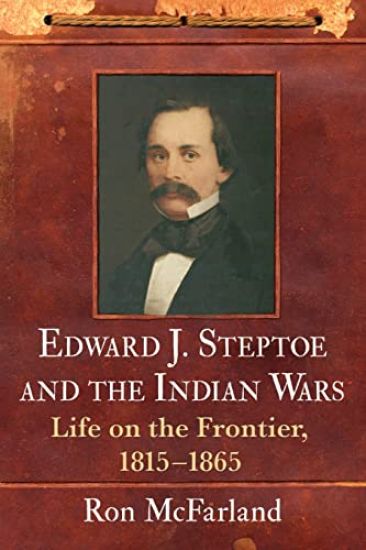
Lieutenant Colonel Edward J. Steptoe's escape from encirclement by 1,000 Northern Plateau Indians in 1858 is a familiar story from the Indian Wars. Yet the details of the Battle of Pine Creek (or Tohotonimme) and its aftermath remain subjects of debate. Outnumbered six to one, Steptoe's 164 troops slipped away in the night. Newspapers called it a "disaster." A few weeks later, Colonel George Wright avenged the defeat and Steptoe, who had suffered a stroke months before the battle, lived his final years in relative obscurity in his native Virginia as the Civil War erupted. This definitive biography of Steptoe chronicles the career of a field officer who served nearly four years in the Second Seminole War, won commendation for gallantry during the Mexican War, performed admirably (though controversially) in the Utah Territory, undertook construction of forts at Walla Walla in the newly defined Washington Territory and engaged with various tribes throughout his deployments. His personal letters reveal a thoughtful, sensitive commander who came to question his choice of career even before his final battle.
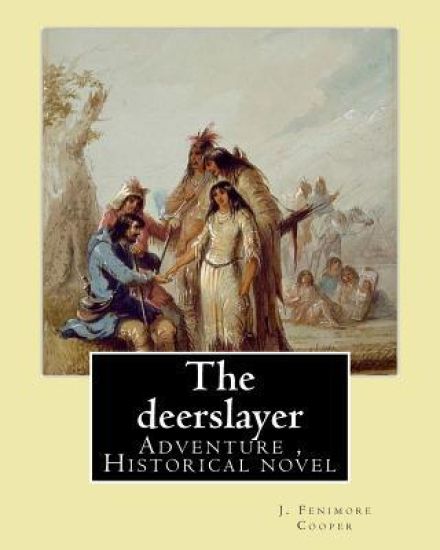
The Deerslayer, or The First Warpath (1841) was the last of James Fenimore Cooper's Leatherstocking Tales to be written. Its 1740-1745 time period makes it the first installment chronologically and in the lifetime of the hero of the Leatherstocking tales, Natty Bumppo. The novel's setting on Otsego Lake in central, upstate New York, is the same as that of The Pioneers, the first of the Leatherstocking Tales to be published (1823). The Deerslayer is considered to be the prequel to the rest of the series. Fenimore Cooper begins his work by relating the astonishing advance of civilization in New York State, which is the setting of four of his five Leatherstocking Tales. Plot: This novel introduces Natty Bumppo as "Deerslayer" a young frontiersman in early 18th-century New York, who objects to the practice of taking scalps, on grounds that every living thing should follow "the gifts" of its nature, which would keep European Americans from taking scalps. Two characters who actually seek to take scalps are Deerslayer's foil Henry March (alias "Hurry Harry") and the former pirate 'Floating Tom' Hutter, to whom Deerslayer is introduced en route to a rendezvous with the latter's lifelong friend Chingachgook (initially apparent in The Last of the Mohicans). Shortly before the rendezvous, Hutter's residence is besieged by the indigenous Hurons, and Hutter and March sneak into the camp of the besiegers to kill and scalp as many as they can; but are captured in the act, and later ransomed by Bumppo, Chingachgook, and Hutter's daughters Judith and Hetty. Bumppo and Chingachgook thereafter plan to rescue Chingachgook's kidnapped betrothed Wah-ta-Wah (alias 'Hist') from the Hurons; but, in rescuing her, Bumppo is captured. In his absence, the Hurons invade Hutter's home, and Hutter is scalped alive. On his deathbed, he confesses that Judith and Hetty were not his daughters by birth, and Judith determines to discover her natural father's identity; but her search reveals only that her late mother had been of aristocratic descent, and had married 'Floating Tom' after the collapse of an illicit affair. Later, Judith attempts and fails to rescue Deerslayer; and they are all saved at last when March returns with English reinforcements, who massacre the Hurons and mortally wound Hetty. After Hetty's death, Judith proposes marriage to Deerslayer, but is refused, and is last described as the paramour of a soldier. Fifteen years later, Bumppo and Chingachgook return to the site, to find Hutter's house in ruins.... James Fenimore Cooper (September 15, 1789 - September 15, 1851) was a prolific and popular American writer of the early 19th century. His historical romances of frontier and Indian life in the early American days created a unique form of American literature. He lived most of his life in Cooperstown, New York, which was founded by his father William on property that he owned. Cooper was a lifelong member of the Episcopal Church and, in his later years, contributed generously to it.He attended Yale University for three years, where he was a member of the Linonian Society, but was expelled for misbehavior. Before embarking on his career as a writer, he served in the U.S. Navy as a Midshipman, which greatly influenced many of his novels ands other writings. The novel that launched his career was The Spy, a tale about counterespionage set during the Revolutionary War and published in 1821. He also wrote numerous sea stories, and his best-known works are five historical novels of the frontier period known as the Leatherstocking Tales. Among naval historians, Cooper's works on the early U.S. Navy have been well received, but they were sometimes criticized by his contemporaries. Among his most famous works is the Romantic novel The Last of the Mohicans, often regarded as his masterpiece.... Edward J. Wheeler (Wheeler, Edward J., approximately 1848-1933)
From "The Last Dream of Bwona Khubla" From steaming lowlands down by the equator, where monstrous orchids blow, where beetles big as mice sit on the tent-ropes, and fireflies glide about by night like little moving stars, the travelers went three days through forests of cactus till they came to the open plains where the oryx are.When Bwona Khubla had gone there three years ago, what with malaria with which he was shaking all over, and what with disgust at finding the water-hole dry, he had decided to die there, and in that part of the world such decisions are always fatal. In any case he was overdue to die, but hitherto his amazing resolution, and that terrible strength of character that so astounded his porters, had kept him alive and moved his safari on.There is not doubt that he was a fearful man. . . .*This peculiar collection is a very real treat: we envy you the reading of it. Among the treasures in this volume are "The Last Dream of Bwona Khubla," "How the Office of Postman Fell Vacant in Offord-Under-the-Wold," "The Prayer of Boob Aheera," "East and West," "A Pretty Quarrel," "How the Gods Avenged Meoul Ki Ning," "The Gift of the Gods," "The Sack of Emeralds," "The Old Brown Coat," "An Archive of the Older Mysteries," and "A City of Wonder," and a section he called Beyond the Fields We Know, which included "Publisher's Note," "Idle Days on the Yann," "A Shop in Go-By Street," and "The Avenger of Perd ndaris."
There be islands in the Central Sea, whose waters are bounded by no shore and where no ships come -- this is the faith of their people. In the mists before the Beginning, Fate and Chance cast lots to decide whose the Game should be; and he that won strode through the mists to MANA-YOOD-SUSHAI and said: "Now make gods for Me, for I have won the cast and the Game is to be Mine." Who it was that won the cast, and whether it was Fate or whether Chance that went through the mists before the Beginning to MANA-YOOD-SUSHAI -- none knoweth.More than eighty books of Lord Dunsany's work were published and his oeuvre includes many hundreds of published short stories, as well as successful plays, novels and essays.
Included in this 1908 compilation are a number of Dunsany's classic tales, incuding "The Sword of Welleran," "The Fall of Babbulkund," "The Kith of the Elf Folk," "The Highwayman," "In the Twilight," "The Ghosts," "The Whirlpool," "The Hurricane," "The Fortress Unvanquishable, Save for Sacnoth," "The Lord of Cities," "The Doom of La Traviata," and "On the Dry Land."
Included in this volume: "A Tale of London" "Thirteen at Table" "The City on Mallington Moor" "Why the Milkman Shudders When He Perceives the Dawn" (also published in a chapbook) "The Bad Old Woman in Black" "The Bird of the Difficult Eye" "The Long Porter's Tale" "The Loot of Loma" "The Secret of the Sea" "How Ali Came to the Black Country" "The Bureau d'Echange de Maux" "A Story of Land and Sea" "A Tale of the Equator" "A Narrow Escape" "The Watch-Tower" "How Plash-Goo Came to the Land of None's Desire" "The Three Sailors' Gambit" "The Exiles' Club" "The Three Infernal Jokes"
There be islands in the Central Sea, whose waters are bounded by no shore and where no ships come -- this is the faith of their people. In the mists before the Beginning, Fate and Chance cast lots to decide whose the Game should be; and he that won strode through the mists to MANA-YOOD-SUSHAI and said: "Now make gods for Me, for I have won the cast and the Game is to be Mine." Who it was that won the cast and whether it was Fate or whether Chance that went through the mists before the Beginning to MANA-YOOD-SUSHAI -- none knoweth.More than eighty books of Lord Dunsany's work were published and his oeuvre includes many hundreds of published short stories, as well as successful plays, novels and essays.
I was chief of the Air Force's project for investigating UFO reports -- Project Blue Book.It is well known that ever since the first flying saucer was reported in June 1947 the Air Force has officially said that there is no proof that such a thing as an interplanetary spaceship exists. But what is not well known is that this conclusion is far from being unanimous among the military and their scientific advisers because of the one word, proof; so the UFO investigations continue.What constitutes proof? Does a UFO have to land at the River Entrance to the Pentagon, near the Joint Chiefs of Staff offices? Or is it proof when a ground radar station detects a UFO, sends a jet to intercept it, the jet pilot sees it, and locks on with his radar, only to have the UFO streak away at a phenomenal speed? Is it proof when a jet pilot fires at a UFO and sticks to his story even under the threat of court-martial? Does this constitute proof? I'll give you the facts -- all of the facts. And you can decide for yourself. -- Edward J. Ruppelt
I was chief of the Air Force's project for investigating UFO reports -- Project Blue Book.It is well known that ever since the first flying saucer was reported in June 1947 the Air Force has officially said that there is no proof that such a thing as an interplanetary spaceship exists. But what is not well known is that this conclusion is far from being unanimous among the military and their scientific advisers because of the one word, proof; so the UFO investigations continue.What constitutes proof? Does a UFO have to land at the River Entrance to the Pentagon, near the Joint Chiefs of Staff offices? Or is it proof when a ground radar station detects a UFO, sends a jet to intercept it, the jet pilot sees it, and locks on with his radar, only to have the UFO streak away at a phenomenal speed? Is it proof when a jet pilot fires at a UFO and sticks to his story even under the threat of court-martial? Does this constitute proof? I'll give you the facts -- all of the facts. And you can decide for yourself. -- Edward J. Ruppelt
This first full biography of Edward J. Dent (1876-1957), Cambridge Professor of Music and foremost musicologist, tells the story of a remarkable man who played a crucial role in the formation of twentieth-century culture and cultural institutions. Operating at both personal and international levels, Dent knew and quietly influenced musicians, poets, artists, writers, politicians, theatrical producers and designers, including Busoni, E.M. Forster, Sassoon and Maynard Keynes. The book covers not only his pioneering music scholarship and cultural activities but also his personal crusades on behalf of music and opera, gays, refugees and the culturally destitute. Drawn from a wide variety of unpublished sources, from behind Dent's carefully constructed public persona of a cosmopolitan gentleman scholar the picture emerges of a more complex and fascinating human being: a lifelong pacifist and agnostic; a scion of the upper classes who voted Labour; 'the kindest heart and the wickedest tongue in Cambridge', who always helped friends in need; a natural rebel and iconoclast; an English internationalist. His seminal books and articles remain fresh and vital and his writing hugely entertaining, while his ideas on the importance of the arts in everyday life are as relevant as ever. Dent's fundamental belief in 'training the imagination' and in personal friendships, along with his lifelong quest to 'understand all music', kept music and the arts alive through the most dire periods in the last century and into our own.
Premier livre en fran ais sur Edward J Wormley, c l bre designer am ricain qui vivait New York et travaillait depuis les ann es 30 pour la soci t Dunbar bas e Berne dans l'Indiana. Le nom de Dunbar a presque supplant celui de l'artiste par le recours de tr s belles et audacieuses campagnes de publicit , orient es sur la marque, une plong e dans l'univers de "Mad Men". Voyage dans l' poque et le processus commercial des mod les. Les images d'archives nous prom nent dans une Am rique d'apr s-guerre prosp re, heureuse et conqu rante. Les objets dessin s par Wormley furent plusieurs fois s lectionn s pour les expositions du "Good Design" au MoMa organis es par Edgar Kaufmann jr, le commanditaire de la Maison sur la cascade de Frank Lloyd Wright. Seul livre disponible actuellement sur Wormley, cette tude r serve une part importante la diffusion des meubles de Wormley en Europe par le designer belge Jules Wabbes, notamment par l'am nagement de l'ambassade des tats-Unis La Haye construite par Marcel Breuer. Un livre de r f rence pour les amateurs de vintage compos d'archives in dites. Bibliographie. Index. 116 p. 19 ill. couleurs. 87 n.b.