
Kirjahaku
Etsi kirjoja tekijän nimen, kirjan nimen tai ISBN:n perusteella.
1000 tulosta hakusanalla Edward Lewis

Teachings of the Secret Order of the Christian Brotherhood and School of Christian Initiation
Edward Lewis Hodges
Literary Licensing, LLC
2013
nidottu
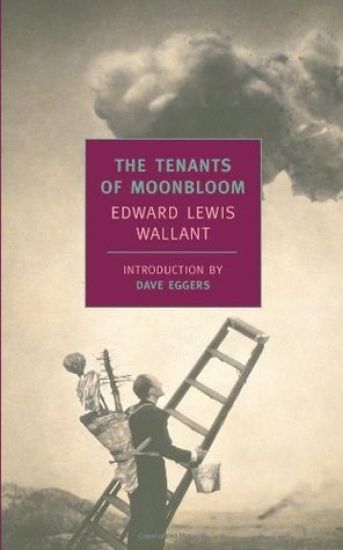
Norman Moonbloom is a loser, a drop-out who can't even make it as a deadbeat. His brother, a slumlord, hires him to collect rent in the buildings he owns in Manhattan. Making his rounds from apartment to apartment, Moonbloom confronts a wildly varied assortment of brilliantly described urban characters, among them a gay jazz musician with a sideline as a gigolo, a Holocaust survivor, and a brilliant young black writer modeled on James Baldwin. Moonbloom hears their cries of outrage and abuse; he learns about their secret sorrows and desires. And as he grows familiar with their stories, he finds that he is drawn, in spite of his best judgment, into a desperate attempt to improve their lives. Edward Lewis Wallant's astonishing comic tour de force is a neglected masterpiece of 1960s America.

For most of us, remembering the Holocaust requires effort; we listen to stories, watch films, read histories. But the people who came to be called "survivors" could not avoid their memories. Sol Nazerman, protagonist of Edward Lewis Wallant's The Pawnbroker, is one such sufferer. At 45, Nazerman, who survived Bergen-Belsen although his wife and children did not, runs a Harlem pawnshop. But the operation is only a front for a gangster who pays Nazerman a comfortable salary for his services. Nazerman's dreams are haunted by visions of his past tortures. (Dramatizations of these scenes in Sidney Lumet's 1964 film version are famous for being the first time the extermination camps were depicted in a Hollywood movie.) Remarkable for its attempts to dramatize the aftereffects of the Holocaust, The Pawnbroker is likewise valuable as an exploration of the fraught relationships between Jews and other American minority groups. That this novel, a National Book Award finalist, remains so powerful today makes it all the more tragic that its talented author died, at age 36, the year after its publication. The book sold more than 500,000 copies soon after it was published.

The first book in an exciting adventure series "The Temple Buck Quartet" that chronicles the rise and fall of the American Rocky Mountain fur trade. This volume is a coming-of-age story set in the first two years of the fur trade, 1822-24.Temple Buck is a young man whose rollicking tale begins with growing up in the Ohio wilderness before he is kidnapped by an evil keelboat captain. After his rescue by a beautiful St. Louis madam, he finally enlists in the first expedition up the Missouri River to the beaver-rich Rockies for a wealth of adventure and new experiences. This painstakingly researched tale blends historical and fictional characters into a colorful tapestry of actual events spiced with bloody battles, Indian customs, homespun humor, and earthy romance.


The Dairy Cow. A Monograph on the Ayrshire Breed of Cattle
Edward Lewis Sturtevant; Joseph N. Sturtevant
Outlook Verlag
2024
nidottu
The Law of Inheritance. Or, the Philosophy of Breeding
Edward Lewis Sturtevant
Outlook Verlag
2024
pokkari
Reprint of the original, first published in 1875.
The Law of Inheritance. Or, the Philosophy of Breeding
Edward Lewis Sturtevant
Outlook Verlag
2024
sidottu
Reprint of the original, first published in 1875.

The Law of Inheritance. Or, the Philosophy of Breeding
Edward Lewis Sturtevant
Antigonos Verlag
2025
nidottu

The Dairy Cow. A Monograph on the Ayrshire Breed of Cattle
Edward Lewis Sturtevant; Joseph N. Sturtevant
Antigonos Verlag
2025
nidottu

A Critical And Exegetical Commentary On The Books Of Chronicles, Volume 10
Edward Lewis Curtis
Nabu Press
2011
pokkari

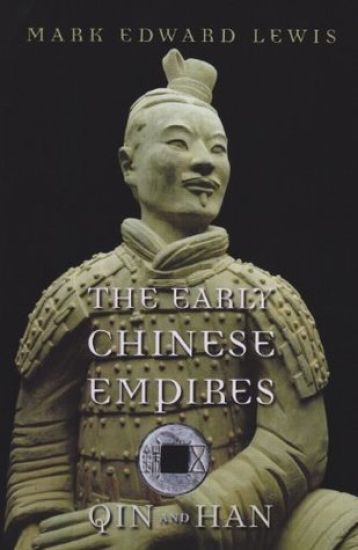
In 221 BC, the First Emperor of Qin unified the lands that would become the heart of a Chinese empire. Though forged by conquest, this vast domain depended for its political survival on a fundamental reshaping of Chinese culture. With this informative book, we are present at the creation of an ancient imperial order whose major features would endure for two millennia.The Qin and Han constitute the “classical period” of Chinese history—a role played by the Greeks and Romans in the West. Mark Edward Lewis highlights the key challenges faced by the court officials and scholars who set about governing an empire of such scale and diversity of peoples. He traces the drastic measures taken to transcend, without eliminating, these regional differences: the invention of the emperor as the divine embodiment of the state; the establishment of a common script for communication and a state-sponsored canon for the propagation of Confucian ideals; the flourishing of the great families, whose domination of local society rested on wealth, landholding, and elaborate kinship structures; the demilitarization of the interior; and the impact of non-Chinese warrior-nomads in setting the boundaries of an emerging Chinese identity.The first of a six-volume series on the history of imperial China, The Early Chinese Empires illuminates many formative events in China’s long history of imperialism—events whose residual influence can still be discerned today.
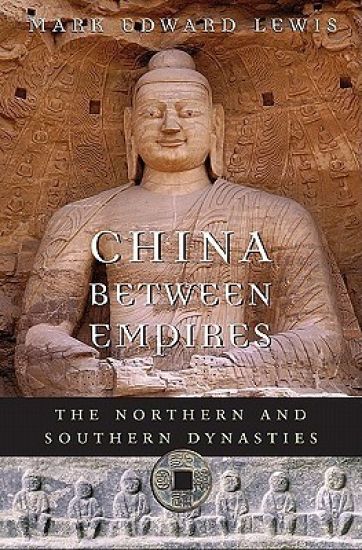
After the collapse of the Han dynasty in the third century CE, China divided along a north-south line. Mark Lewis traces the changes that both underlay and resulted from this split in a period that saw the geographic redefinition of China, more engagement with the outside world, significant changes to family life, developments in the literary and social arenas, and the introduction of new religions.The Yangzi River valley arose as the rice-producing center of the country. Literature moved beyond the court and capital to depict local culture, and newly emerging social spaces included the garden, temple, salon, and country villa. The growth of self-defined genteel families expanded the notion of the elite, moving it away from the traditional great Han families identified mostly by material wealth. Trailing the rebel movements that toppled the Han, the new faiths of Daoism and Buddhism altered every aspect of life, including the state, kinship structures, and the economy.By the time China was reunited by the Sui dynasty in 589 ce, the elite had been drawn into the state order, and imperial power had assumed a more transcendent nature. The Chinese were incorporated into a new world system in which they exchanged goods and ideas with states that shared a common Buddhist religion. The centuries between the Han and the Tang thus had a profound and permanent impact on the Chinese world.
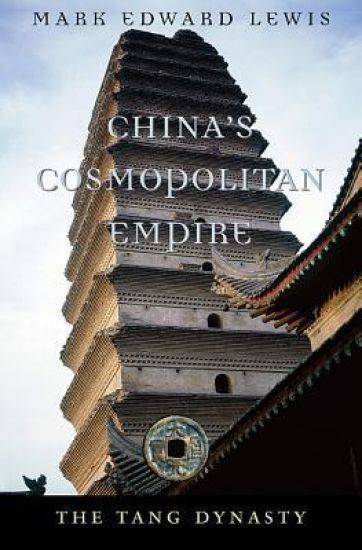
The Tang dynasty is often called China’s “golden age,” a period of commercial, religious, and cultural connections from Korea and Japan to the Persian Gulf, and a time of unsurpassed literary creativity. Mark Lewis captures a dynamic era in which the empire reached its greatest geographical extent under Chinese rule, painting and ceramic arts flourished, women played a major role both as rulers and in the economy, and China produced its finest lyric poets in Wang Wei, Li Bo, and Du Fu.The Chinese engaged in extensive trade on sea and land. Merchants from Inner Asia settled in the capital, while Chinese entrepreneurs set off for the wider world, the beginning of a global diaspora. The emergence of an economically and culturally dominant south that was controlled from a northern capital set a pattern for the rest of Chinese imperial history. Poems celebrated the glories of the capital, meditated on individual loneliness in its midst, and described heroic young men and beautiful women who filled city streets and bars.Despite the romantic aura attached to the Tang, it was not a time of unending peace. In 756, General An Lushan led a revolt that shook the country to its core, weakening the government to such a degree that by the early tenth century, regional warlordism gripped many areas, heralding the decline of the Great Tang.