Kirjojen hintavertailu. Mukana 11 244 527 kirjaa ja 12 kauppaa.

Kirjahaku

Etsi kirjoja tekijän nimen, kirjan nimen tai ISBN:n perusteella.

1000 tulosta hakusanalla Edwin Diamond

Edwin Booth

Edwin Booth

L Oggel

Greenwood Press
1992
sidottu
Edwin Booth was the foremost Shakespearean actor in late nineteenth-century America, enjoying almost mythic status. This comprehensive analysis and documentation of his career provides an aperture from which to view theatre and society of the period. The scholarly bibliography of over 1,000 annotated entries includes substantive writings about Booth in books, journals, and dissertations covering 130 years during and after his career as well as ephemeral references to Booth in the major journals of his day and a section of specialized reference materials relating to Booth. Among its unique features are a section on Booth's own writings and a section on Booth manuscript materials identified in sixty-four repositories in the United States and England.A biographical sketch analyzes Booth's career in terms of the major periods and upheavals in his life: his early fame, the death of his first wife, the assassination of President Lincoln by his brother, his management of Booth's Theatre, and his national and international tours. Accompanying this is a chronology of major events, a genealogical chart, and reproductions of portraits and playbills. Fully indexed, this volume makes a wealth of material readily available to Booth scholars as well as to others researching related theatre and social history.
Edwin Sandys and the Reform of English Religion
This book examines the complexities of reformed religion in early-modern England, through an examination of the experiences of Edwin Sandys, a prominent member of the Elizabethan Church hierarchy. Sandys was an ardent evangelical in the Edwardian era forced into exile under Mary I, but on his return to England he became a leader of the Elizabethan Church. He was Bishop of Worcester and London and finally Archbishop of York. His transformation from Edwardian radical to a defender of the Elizabethan status quo illustrated the changing role of the Protestant hierarchy. His fight against Catholicism dominated much of his actions, but his irascible personality also saw him embroiled in numerous conflicts and left him needing to defend his own status.
Edwin Hubble

Edwin Hubble

G.E Christianson

CRC Press
2019
nidottu
Edwin Hubble: Mariner of the Nebulae is both the biography of an extraordinary human being and the story of the greatest quest in the history of astronomy since the Copernican revolution. The book is a revealing portrait of scientific genius, an incisive engaging history of ideas, and a shimmering evocation of what we see when gazing at the stars. Born in 1889 and reared in the village of Marshfield, Missouri, Edwin Powell Hubble-star athlete, Rhodes Scholar, military officer, and astronomer- became one of the towering figures in twentieth-century science. Hubble worked with the great 100-inch Hooker telescope at California's Mount Wilson Observatory and made a series of discoveries that revolutionized humanity's vision of the cosmos. In 1923 he was able to confirm the existence of other nebulae (now known to be galaxies) beyond our own Milky Way. By the end of the decade, Hubble had proven that the universe is expanding, thus laying the very cornerstone of the big bang theory of creation. It was Hubble who developed the elegant scheme by which the galaxies are classified as ellipticals and spirals, and it was Hubble who first provided reliable evidence that the universe is homogeneous, the same in all directions as far as the telescope can see. An incurable Anglophile with a penchant for tweed jackets and English briars, Hubble, together with his brilliant and witty wife, Grace Burke, became a fixture in Hollywood society in the 1930s and 40s. They counted among their friends Charlie Chaplin, the Marx brothers, Anita Loos, Aldous and Maria Huxley, Walt Disney, Helen Hayes, and William Randolph Hearst. Albert Einstein, a frequent visitor to Southern California, called Hubble's work "beautiful" and modified his equations on relativity to account for the discovery that the cosmos is expanding.
Edwin H. Sutherland

Edwin H. Sutherland

David Friedrichs; Isabel Schoultz; Aleksandra Jordanoska

Routledge
2020
nidottu
Edwin H. Sutherland is widely identified as the single most important and influential criminologist of the twentieth century. He is especially well-known for his path-breaking criminology textbook (first published in 1924), his promotion of a sociological (and scientific) approach to the understanding of crime and its control, his theory of differential association, and his work over his final ten years on white-collar crime, a term he is credited with having introduced. This book explores the contemporary meaning of Edwin Sutherland and considers why criminologists today should continue to engage with his work. What can and should Sutherland mean to future 21st century criminologists, those working in the field say between 2021 and 2050, or some one hundred years after the 1921 to 1950 period that encompassed Sutherland’s criminological career? Which dimensions of Sutherland’s work have best survived the march of time and which are most likely to – and deserve to – survive going forward?Making the case that Sutherland is important to both mainstream and critical criminologists, to positivistic criminologists and those who study crimes of the powerful, this book is essential reading for both students and scholars interested in exploring the enduring legacy of this key thinker in criminology.
Edwin Howland Blashfield
Edwin Howland Blashfield (1848–1936) rose to prominence as a muralist during the “American Renaissance,” the period between the 1893 World’s Columbian Exposition and the United States’ entry into World War I. Blashfield’s monumental work can be viewed in courthouses, state capitols, churches, universities, museums, and other places across the United States. New scholarship highlights Blashfield’s contributions to the beauty of civic spaces and his lasting influence on public art in America. The first book in decades to focus on the renowned muralist, this covers the artist as defender of the classical tradition, surveys his artistic production, observes the works from a conservator’s perspective, and discusses his legacy. It references Blashfield’s writing and leadership of numerous cultural organizations, as well as his paintings, in examining his efforts to codify the professional relationship between architects and artists and promote the blending of classic principles with American symbolism, history and contemporary realities.
Edwin Chadwick: Nineteenth-Century Social Reform
Edwin Chadwick (1800-1890) is most famous for his contributions to the public health movement of the nineteenth century where his 1842 Report on the Sanitary Condition of the Labouring Population highlighted the unsanitary conditions that prevailed in the industrial towns and cities of Victorian Britain. While particular cities are mentioned in his work, such as London, Manchester, Leeds and Liverpool, his work had an effect on Britain as a whole as it changed government policy on a national level. Other facets of social welfare in which he was actively involved included the Poor Law, police, education and the evolving responsibilites of central and local government.This collection includes a reprint of Finer's biography, The Life and Times of Sir Edwin Chadwick, Chadwick's 1842 Sanitary Report and many of his rarer pamphlets and addresses to learned societies. Each of the volumes also contains a specially prepared Introduction.
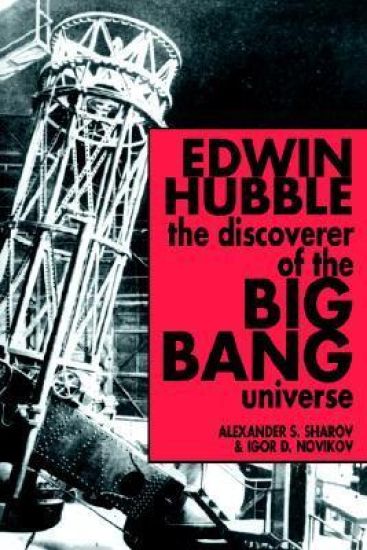
Edwin Hubble, The Discoverer of the Big Bang Universe

Edwin Hubble, The Discoverer of the Big Bang Universe

Alexander S. Sharov; Igor D. Novikov

Cambridge University Press
2005
pokkari
This book is the first complete account of the scientific life and work of Edwin Hubble, whose discoveries firmly established the United States as the leading nation in observational astronomy. One of the outstanding astronomers of the twentieth century, Hubble discovered the expansion of the Universe. He opened the world of galaxies for science when he showed that spiral nebulae beyond the Milky Way are galaxies extending to the limits of the Universe, and participating in a general expansion of the cosmos. The exploding Universe of Hubble, now termed the Big Bang, determined the origin of the elements, of galaxies and of the stars. The second part of the book describes the fundamental discoveries on the nature of the Universe made subsequently, and thus sets his achievements in context. Written by two prominent astronomers who have built on Hubble's work, this book is a classic of science, setting out the thrilling story of the exploding Universe.
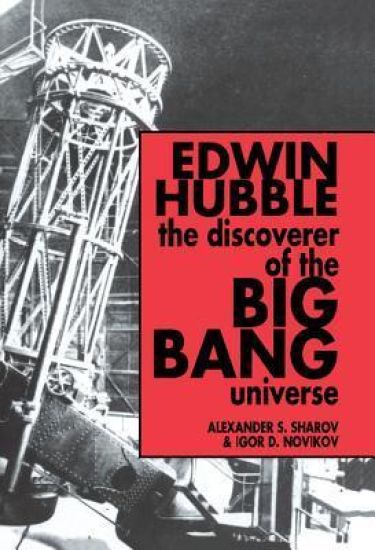
Edwin Hubble, The Discoverer of the Big Bang Universe

Edwin Hubble, The Discoverer of the Big Bang Universe

Alexander S. Sharov; Igor D. Novikov

Cambridge University Press
1993
sidottu
This book is the first complete account of the scientific life and work of Edwin Hubble, whose discoveries firmly established the United States as the leading nation in observational astronomy. One of the outstanding astronomers of the twentieth century, Hubble discovered the expansion of the Universe. He opened the world of galaxies for science when he showed that spiral nebulae beyond the Milky Way are galaxies extending to the limits of the Universe, and participating in a general expansion of the cosmos. The exploding Universe of Hubble, now termed the Big Bang, determined the origin of the elements, of galaxies and of the stars. The second part of the book describes the fundamental discoveries on the nature of the Universe made subsequently, and thus sets his achievements in context. Written by two prominent astronomers who have built on Hubble’s work, this book is a classic of science, setting out the thrilling story of the exploding Universe.