Kirjahaku
Etsi kirjoja tekijän nimen, kirjan nimen tai ISBN:n perusteella.
1000 tulosta hakusanalla Eileen M Foti
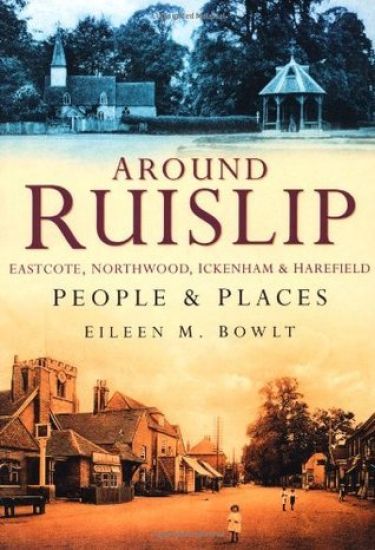
Around Ruislip, Eastcote, Northwood, Ickenham and Harefield
Eileen M. Bowlt
The History Press Ltd
2007
nidottu
Around Ruislip People & Places illuminates many aspects of Ruislip, Northwood, Eastcote, Harefield and Ickenham in years gone by. The anecdotes range from medieval times when Ruislip boasted a small castle and numerous mysterious moats were scattered along the valleys of the River Pinn and Yeading Brook, to a First World War munitions factory, a Cold War American airbase, and pioneering medical research at Mount Vernon, Northwood, in the twentieth century. Characters from the area's history, both well known and long forgotten, are brought back to life, while the stories behind individual streets and buildings are also explored. Eileen M. Bowlt's new book will be essential reading for anyone interested in the history of this part of Middlesex.
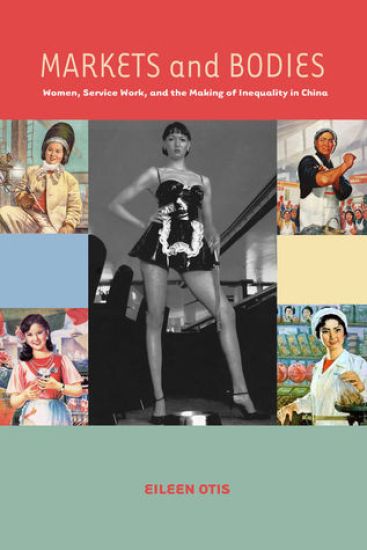
Insulated from the dust, noise, and crowds churning outside, China's luxury hotels are staging areas for the new economic and political landscape of the country. These hotels, along with other emerging service businesses, offer an important, new source of employment for millions of workers, but also bring to light levels of inequality that surpass most developed nations. Examining how gender enables the globalization of markets and how emerging forms of service labor are changing women's social status in China, Markets and Bodies reveals the forms of social inequality produced by shifts in the economy. No longer working for the common good as defined by the socialist state, service workers are catering to the individual desires of consumers. This economic transition ultimately affords a unique opportunity to investigate the possibilities and current limits for better working conditions for the young women who are enabling the development of capitalism in China.

Insulated from the dust, noise, and crowds churning outside, China's luxury hotels are staging areas for the new economic and political landscape of the country. These hotels, along with other emerging service businesses, offer an important, new source of employment for millions of workers, but also bring to light levels of inequality that surpass most developed nations. Examining how gender enables the globalization of markets and how emerging forms of service labor are changing women's social status in China, Markets and Bodies reveals the forms of social inequality produced by shifts in the economy. No longer working for the common good as defined by the socialist state, service workers are catering to the individual desires of consumers. This economic transition ultimately affords a unique opportunity to investigate the possibilities and current limits for better working conditions for the young women who are enabling the development of capitalism in China.
Mary Shelley and the Rights of the Child
Eileen M. Hunt
University of Pennsylvania Press
2019
pokkari
From her youth, Mary Shelley immersed herself in the social contract tradition, particularly the educational and political theories of John Locke and Jean-Jacques Rousseau, as well as the radical philosophies of her parents, the feminist Mary Wollstonecraft and the anarchist William Godwin. Against this background, Shelley wrote Frankenstein; or, the Modern Prometheus, first published in 1818. In the two centuries since, her masterpiece has been celebrated as a Gothic classic and its symbolic resonance has driven the global success of its publication, translation, and adaptation in theater, film, art, and literature. However, in Mary Shelley and the Rights of the Child, Eileen Hunt Botting argues that Frankenstein is more than an original and paradigmatic work of science fiction-it is a profound reflection on a radical moral and political question: do children have rights? Botting contends that Frankenstein invites its readers to reason through the ethical consequences of a counterfactual premise: what if a man had used science to create a human life without a woman? Immediately after the Creature's "birth," his scientist-father abandons him and the unjust and tragic consequences that follow form the basis of Frankenstein's plot. Botting finds in the novel's narrative structure a series of interconnected thought experiments that reveal how Shelley viewed Frankenstein's Creature for what he really was-a stateless orphan abandoned by family, abused by society, and ignored by law. The novel, therefore, compels readers to consider whether children have the right to the fundamental means for their development as humans-namely, rights to food, clothing, shelter, care, love, education, and community. In Botting's analysis, Frankenstein emerges as a conceptual resource for exploring the rights of children today, especially those who are disabled, stateless, or genetically modified by medical technologies such as three-parent in vitro fertilization and, perhaps in the near future, gene editing. Mary Shelley and the Rights of the Child concludes that the right to share love and community, especially with parents or fitting substitutes, belongs to all children, regardless of their genesis, membership, or social status.

Mary Shelley and the Rights of the Child
Eileen M. Hunt
University of Pennsylvania Press
2017
sidottu
From her youth, Mary Shelley immersed herself in the social contract tradition, particularly the educational and political theories of John Locke and Jean-Jacques Rousseau, as well as the radical philosophies of her parents, the feminist Mary Wollstonecraft and the anarchist William Godwin. Against this background, Shelley wrote Frankenstein; or, the Modern Prometheus, first published in 1818. In the two centuries since, her masterpiece has been celebrated as a Gothic classic and its symbolic resonance has driven the global success of its publication, translation, and adaptation in theater, film, art, and literature. However, in Mary Shelley and the Rights of the Child, Eileen Hunt Botting argues that Frankenstein is more than an original and paradigmatic work of science fiction-it is a profound reflection on a radical moral and political question: do children have rights? Botting contends that Frankenstein invites its readers to reason through the ethical consequences of a counterfactual premise: what if a man had used science to create a human life without a woman? Immediately after the Creature's "birth," his scientist-father abandons him and the unjust and tragic consequences that follow form the basis of Frankenstein's plot. Botting finds in the novel's narrative structure a series of interconnected thought experiments that reveal how Shelley viewed Frankenstein's Creature for what he really was-a stateless orphan abandoned by family, abused by society, and ignored by law. The novel, therefore, compels readers to consider whether children have the right to the fundamental means for their development as humans-namely, rights to food, clothing, shelter, care, love, education, and community. In Botting's analysis, Frankenstein emerges as a conceptual resource for exploring the rights of children today, especially those who are disabled, stateless, or genetically modified by medical technologies such as three-parent in vitro fertilization and, perhaps in the near future, gene editing. Mary Shelley and the Rights of the Child concludes that the right to share love and community, especially with parents or fitting substitutes, belongs to all children, regardless of their genesis, membership, or social status.
Artificial Life After Frankenstein brings the insights born of Mary Shelley's legacy to bear upon the ethics and politics of making artificial life and intelligence in the twenty-first century. What are the obligations of humanity to the artificial creatures we make? And what are the corresponding rights of those creatures, whether they are learning machines or genetically modified organisms? In seeking ways to respond to these questions, so vital for our age of genetic engineering and artificial intelligence, we would do well to turn to the capacious mind and imaginative genius of Mary Wollstonecraft Shelley (1797-1851). Shelley's novels Frankenstein; or, The Modern Prometheus (1818) and The Last Man (1826) precipitated a modern political strain of science fiction concerned with the ethical dilemmas that arise when we make artificial life-and make life artificial-through science, technology, and other forms of cultural change. In Artificial Life After Frankenstein, Eileen Hunt Botting puts Shelley and several classics of modern political science fiction into dialogue with contemporary political science and philosophy, in order to challenge some of the apocalyptic fears at the fore of twenty-first-century political thought on AI and genetic engineering. Focusing on the prevailing myths that artificial forms of life will end the world, destroy nature, and extinguish love, Botting shows how Shelley modeled ways to break down and transform the meanings of apocalypse, nature, and love in the face of widespread and deep-seated fear about the power of technology and artifice to undermine the possibility of humanity, community, and life itself. Through their explorations of these themes, Mary Shelley and authors of modern political science fiction from H. G. Wells to Nnedi Okorafor have paved the way for a techno-political philosophy of living with the artifice of humanity in all of its complexity. In Artificial Life After Frankenstein, Botting brings the insights born of Shelley's legacy to bear upon the ethics and politics of making artificial life and intelligence in the twenty-first century.
Beyond her most famous creation—the nightmarish vision of Frankenstein's Creature—Mary Shelley's most enduring influence on politics, literature, and art perhaps stems from the legacy of her lesser-known novel about the near-extinction of the human species through war, disease, and corruption. This novel, The Last Man (1826), gives us the iconic image of a heroic survivor who narrates the history of an apocalyptic disaster in order to save humanity—if not as a species, then at least as the practice of compassion or humaneness. In visual and musical arts from 1826 to the present, this postapocalyptic figure has transmogrified from the "last man" into the globally familiar filmic images of the "invisible man" and the "final girl." Reading Shelley's work against the background of epidemic literature and political thought from ancient Greece to Covid-19, Eileen M. Hunt reveals how Shelley's postapocalyptic imagination has shaped science fiction and dystopian writing from H. G. Wells, M. P. Shiel, and George Orwell to Octavia Butler, Margaret Atwood, and Emily St. John Mandel. Through archival research into Shelley's personal journals and other writings, Hunt unearths Shelley's ruminations on her own personal experiences of loss, including the death of young children in her family to disease and the drowning of her husband, Percy Bysshe Shelley. Shelley's grief drove her to intensive study of Greek tragedy, through which she developed the thinking about plague, conflict, and collective responsibility that later emerges in her fiction. From her readings of classic works of plague literature to her own translation of Sophocles's Oedipus Rex, and from her authorship of the first major modern pandemic novel to her continued influence on contemporary popular culture, Shelley gave rise to a tradition of postapocalyptic thought that asks a question that the Covid-19 pandemic has made newly urgent for many: What do humans do after disaster?

Acknowledging the fact that handwriting is an art form conveying a unique personal graphic style adds an important dimension. Just as no two sets of fingerprints are alike, no two handwritings are identical. The concept of ownership is a key element of th
Non-Canonical Psalms from Qumran: A Pseudepigraphic Collection
Eileen M. Schuller
Scholars Press
1986
nidottu
Leading Air Mobility Operations in Complex Humanitarian Emergencies
Eileen M Isola
Hutson Street Press
2025
sidottu
Leading Air Mobility Operations in Complex Humanitarian Emergencies
Eileen M Isola
Hutson Street Press
2025
pokkari

This book places youth violence within a Routine Activity Ecological Framework. Youth violence, specifically youth exposure to community violence and youth perpetration of violent behaviors, occur within various contexts. Ahlin and Antunes situate their discussion of youth violence within an ecological framework, identifying how it is nested within four mesosystem layers: community, family, peers and schools, and youth characteristics. Contextualized using an ecological framework, the Routine Activity Theory and Lifestyles perspective (RAT/LS) are well suited to guide an examination of youth violence risk and protective factors across the four layers. Drawing on scholarship that explores predictors and consequences of youth violence, the authors apply RAT/LS theory to explain how community, family, peers, schools, and youth characteristics influence youth behavior. Each layer of the ecological framework unfolds to reveal the latest scholarship and contextualizes how concepts of RAT/LS, specifically the motivated offender, target suitability, and guardianship, can be applied at each level. This book also highlights the mechanisms and processes that contribute to youth exposure to and involvement in violence by exploring factors examined in the literature as protective and risk factors of youth violence. Youth violence occurs in context, and, as such, the understanding of multilevel predictors and preventive measures against it can be situated within an RAT/LS ecological framework. This work links theory to extant research. Ahlin and Antunes demonstrate how knowledge of youth violence can be used to develop a robust theoretical foundation that can inform policy to improve neighborhoods and youth experiences within their communities, families, and peers and within their schools while acknowledging the importance of individual characteristics. This monograph is essential reading for those interested in youth violence, juvenile delinquency, and juvenile justice research and anyone dedicated to preventing crime among youths.
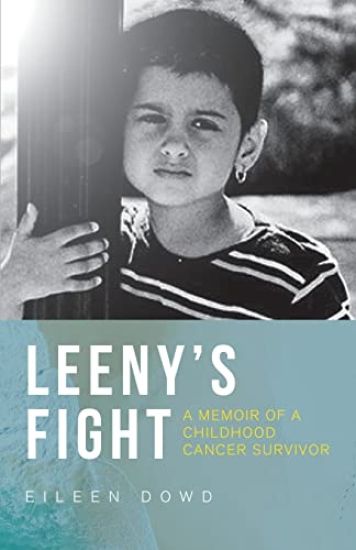
For Eileen Dowd, the journey with cancer was not only the fight for her life but the mental toll of becoming and being a childhood cancer survivor for a lifetime. In Leeny's Fight, Dowd shares the stories of her childhood cancer diagnosis, the heartbreaking loss of her best friend and many others to cancer, and the mental health challenges she faced as a result. Told from the perspective of family members as well as her own, each chapter is an emotional retelling of all she endured in her early life and a celebration of her triumphs as she faced and conquered each new challenge in her adolescence and adulthood. Authentic, insightful, and moving, Leeny's Fight shows that even in your darkest hour, there is hope to be found
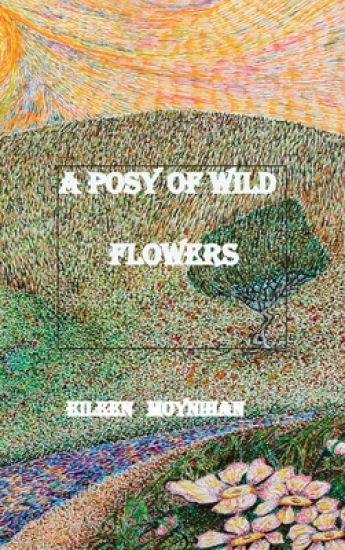
A children's book of poetry by Eileen Moynihan about wild flowers and trees found in Ireland, with Irish names added. It is Illustrated with fabulous flower fairies painted by Angela Corkery. The magical cover is by Dan Flynn, photographed by Sally Martin. A book to treasure and keep.
Leading Air Mobility Operations in Complex Humanitarian Emergencies
Eileen M Isola
Biblioscholar
2012
pokkari